
Leica M11 Monochrom: My Long-Term Review
I have used every digital Leica M Monochrom generation. I started with the original Leica M Monochrom, based on the M9 generation, then moved through the M Monochrom Typ 246 and M10 Monochrom, and now the M11 Monochrom.
Of all the digital M cameras Leica has made, the Monochrom remains my favourite. It is also probably the camera I have the strongest personal connection with.
That may sound strange coming from someone who loves colour photography as much as I do. I always have a colour camera with me, and there are many situations where colour is an essential part of the story. But when I take a Monochrom with me, I deliberately photograph differently.
I can't shoot colour with these. It is a deliberate choice.
There is something liberating about removing colour from the equation. You stop thinking about the relationship between colours and start paying much more attention to light, shadow, texture, shape, expression and contrast. With the Monochrom, I often find myself seeing the final photograph in my head before I even lift the camera.
Perhaps that is the strange appeal of paying more for less. Leica removes something from the camera, but that limitation becomes part of the creative process.
For the kind of photography I make, particularly my vintage, cinematic and Old Hollywood-inspired portraits, that makes an enormous difference.
This is my long-term Leica M11 Monochrom review after extensive use of the camera for portrait photography, personal projects and large prints. Having used every generation of the digital Leica M Monochrom, from the original M9 Monochrom and Typ 246 to the M10 Monochrom and M11 Monochrom, this is less a specification test than a real-world look at what it is like to live and work with Leica's dedicated black and white rangefinder.
Why use an M rangefinder for portraits?
Luc Thoelen, photographed with the original Leica M Monochrom and Thambar-M 90mm f/2.2.
This is probably the first question someone should ask before even getting to the Monochrom.
Why use a manual-focus rangefinder for portraits when modern cameras can focus on an eye almost instantly, track a subject and give you an enormous amount of technical assistance?
For me, the answer has never really been about efficiency.
The M form factor inspires me to make photographs.
An M is small, relatively quiet and unobtrusive. When I am working with a model, the camera does not feel like a large piece of technology sitting between us. It helps maintain a certain intimacy, and that is important for the kind of portraits I make.
There is also something about the physical experience of using an M that changes how I work. I am thinking about the frame, the light and the person in front of me rather than constantly thinking about the camera itself.
I use both the rangefinder and the external electronic viewfinder depending on the situation. The rangefinder gives me that traditional M experience and is wonderful when I want to work intuitively. When I am using a very fast lens or need exact focusing on the eyes, I prefer the EVF. It also gives me an immediate view of the actual black and white image, which can be useful when judging the tonal structure of a portrait.
I normally tell my models and clients that the camera only makes black and white photographs. There is no colour version waiting for me later.
I do often bring a colour camera with me as well, but I deliberately make different photographs with it. I might use different lenses, different compositions or simply respond differently to the same light.
The Monochrom changes the way I see.
Why Leica Monochrom?
The obvious answer is that it produces beautiful black and white files.
But that is not really enough to explain why I keep returning to it.
The dedicated monochrome sensor does not have a conventional colour filter array, so it records luminance information rather than trying to reconstruct colour information before turning it into black and white. That gives the files a particular quality, but I would never argue that simply owning a Monochrom automatically makes better black and white photographs.
Light still matters. Exposure still matters. The lens matters. Your processing matters.
What the Monochrom does is give you a very particular starting point.
And more importantly, it forces you to think in black and white from the beginning.
I often know immediately whether a certain light will work with the Monochrom. I look for strong tonal separation, texture and shadows. I am much less interested in making everything evenly lit.
That is one of the reasons the camera works so well for my style.
Why the Monochrom fits my photography
There is another reason the Monochrom makes so much sense for me, and it has very little to do with specifications.
A large part of my photography is a kind of visual throwback. I am often looking back towards the Roaring Twenties, the 1930s and the golden era of Old Hollywood. I like creating photographs that feel as though they could belong to another period, even when they are made with modern cameras, modern lenses and modern lighting.
Lauro in his vintage Peugeot, photographed with the Leica M11 Monochrom and Noctilux 50mm f/1.
Black and white immediately removes one of the strongest visual references to the present day.
Once colour disappears, I can concentrate much more on light and darkness, on the shape of a face, the texture of clothing, the architecture around the subject and the way a shadow falls across a room.
That is very close to how I already think when I art-direct a project.
I often use Fresnel lighting and other hard, directional sources because I want the light itself to become part of the story. A Fresnel allows me to create a very controlled beam, strong highlights and defined shadows. Instead of trying to illuminate everything, I can decide exactly what should be seen and what should disappear into darkness.
That relationship between light and darkness is fundamental to the kind of imagery I make.
The Monochrom simply speaks the same visual language.
When I develop a project myself, I also make this clear from the beginning to everyone involved. The models, performers and other people working with me know that the project is deliberately going to be black and white.
There are no questions afterwards about whether we can also make a colour version.
There won't be one.
That clarity is actually quite liberating for everyone involved. The people I work with seem to understand it very quickly, and more often than not they embrace it. They know that the final photographs are supposed to feel connected to the era we are representing, rather than simply being contemporary photographs converted to black and white afterwards.
That becomes part of the creative direction from the beginning.
The wardrobe, makeup, location, posing, lighting and camera all contribute to the same idea.
The Monochrom is therefore not simply the camera I use to finish the photograph in black and white. It is part of the art direction from the moment the project starts.
That is an important distinction for me.
Where the Monochrom really began for me
Valérie, photographed with the original Leica M Monochrom CCD and Thambar-M 90mm f/2.2 LTM.
My relationship with the Monochrom really began when Leica reissued the Thambar-M. My good friend Bill Rosauer, editor of Viewfinder for Leica Society International, reached out to me and asked if I would write about both the original Thambar and the new reissue. At the time, I already knew the Thambar, but putting it on the M9 Monochrom changed the way I looked at both the lens and the camera.
Luc Thoelen, photographed with the original Leica M Monochrom CCD and Thambar-M 90mm f/2.2 LTM.
There was something almost magical about that combination. The M9 Monochrom had a particular way of rendering black and white, and the Thambar added its own very distinctive softness and glow. Together, they produced something that felt much closer to the visual language I was looking for than a technically perfect modern combination ever could. I became slightly addicted to the look.
I started photographing more and more portraits with the M9 Monochrom and Thambar, working with different models and experimenting with the way the lens responded to light. At that time I had not yet moved into the LED lighting I use today. I was working with two lights, one positioned above the subject and another behind, creating a very different kind of atmosphere from the hard, directional lighting that would later become such an important part of my work.
One of the portraits I made during this period was of Luc Thoelen, a true dandy. As I mentioned earlier in this review, I am always looking for male talent with a very specific character and presence, particularly when it fits the visual language I am trying to create. Luc certainly had it. I also photographed Fay Loren with the same M9 Monochrom and Thambar combination.
Those photographs eventually led to Bill asking me to write a review for LSI Viewfinder comparing the original Thambar with the newly reissued version. The article was later also shared on Thorsten Overgaard's website, where it remains available today.
Looking back, this was more than simply a lens review. It was really the moment when the Monochrom started to become part of my photographic language. The M9 Monochrom and Thambar showed me how powerful the combination of a dedicated monochrome sensor and a lens with a strong optical personality could be. It also set me on a path of making much more deliberate portrait work in black and white.
I will inevitably write a full review dedicated to the Thambar at some point, because the lens deserves that story in its own right. But for this review, the M9 Monochrom and the Thambar belong together. That combination was where my real love for the Monochrom began.
The Leica M246 and the world of live events
Chanelle and Oberon, photographed with the Leica M Monochrom Typ 246 and Thambar-M 90mm f/2.2.
The M246 became the Monochrom I used extensively when I was still photographing some of the largest vintage-inspired and burlesque events in Europe. This was a very different environment from the controlled portrait sessions I had been doing with the M9 Monochrom and Thambar. These events were fast, unpredictable and constantly changing, with different lighting conditions, people moving and dancing, and very little opportunity to slow down and carefully compose every frame.
The M246 was a much better tool for that environment. The higher ISO gave me considerably more freedom when the light dropped, while Live View changed the way I could work with the camera. In a fast-paced situation, being able to use Live View to focus and compose made it easier to nail focus when people were moving or when the lighting made traditional rangefinder focusing more difficult.
The EVF was particularly useful in these situations. I could compose more precisely, check focus and work from different angles without having to bring the camera to my eye in the traditional way every time. Combined with the excellent battery life, the M246 became a camera I could take into an entire event and simply trust to keep working.
I never bonded with the M246 in quite the same emotional way as I did with the M9 Monochrom or later the M10 and M11, but in those environments it delivered. It was a working camera, and a very capable one. Looking back, I think that period taught me something important about the Monochrom series: each generation may have its own personality, but the camera becomes interesting when its particular strengths meet the kind of photography you are actually doing.
For the M246, that meant crowded rooms, changing light, movement, dancing and long nights. The combination of higher ISO, Live View, EVF and long battery life made it one of the Monochroms I relied on most during that period.
Leica M10 Monochrom, when portraits became the focus
By the time I moved to the M10 Monochrom, my photography was changing. I was gradually leaving the large vintage-inspired and burlesque events behind and concentrating much more on portraits and the kind of controlled, art-directed work I still do today.
An Irish tailor in Dublin, photographed with the Leica M10 Monochrom and Noctilux 50mm f/1.
The M10 felt much more like a portrait workhorse to me. The slimmer M10 body made a real difference when working for longer periods, and the external EVF was a significant improvement for the way I photograph. When I am working with fast lenses and need to place focus precisely on the eyes, being able to compose and focus through the EVF gave me much more confidence.
The 40.9-megapixel files also felt like a very comfortable amount of resolution. There was enough information to crop when necessary without feeling that I was working with enormous files simply for the sake of having more pixels. The increase in ISO capability over the M246 was another important step, although by this point I was no longer photographing dark, fast-moving events every weekend. I was using more controlled lighting, so I rarely had a reason to go beyond ISO 3,200.
In many ways, the M10 Monochrom was simply a very good camera to work with. It did not have the romance of discovering the M9 Monochrom with the Thambar, nor did it have the particular place the M246 had during my event years. It was something different: a dependable portrait camera that gave me enough resolution, enough ISO performance and a form factor that felt right in my hands.
I spent a lot of time with the M10 Monochrom and genuinely never felt that I needed anything more. It was already such a beast.
Even today, in 2026, I still consider the M10 Monochrom a highly capable camera. If you are unsure whether the Monochrom concept is for you, I would have no problem recommending that you pick one up and see what it does for your photography.
Leica M11 Monochrom, the upgrade I did not think I needed
The M11 Monochrom is a slightly strange chapter in this story because, if I am honest, I still don't completely know why I upgraded.
I never felt that I needed to leave the M10 Monochrom behind. It was already an exceptional camera and, after moving increasingly towards portrait work, I had very little to complain about. The decision to try the M11 was not the result of a long list of things I felt were missing. It was more of an impulsive decision. Leica Camera Belgium gave me the opportunity to try one, and somehow I became hooked.
It has now become the Monochrom I have used for the longest period and, certainly, the one I have used most intensively.
The 60-megapixel sensor is useful, particularly because I am making more large prints these days. I have always believed that a photograph can change when you see it at a much larger physical size. A large print is not simply a bigger version of the file on your screen. You start to notice different things in the image, the tonal transitions, the texture, the imperfections and the way the photograph holds together as an object. Having 60 megapixels gives me a lot of information to work with when I want to make those larger prints.
I have recently experienced that difference quite literally with some of my own prints. One of the photographs I made for my second solo exhibition with Leica, Echoes of Elegance: A Timeless Journey, at the Leica Store Paris Beaumarchais, was shot with the M11 Monochrom and a 28mm Summicron, with Caroline posing beside a Ferrari Dino.
Caroline in a Ferrari Dino, photographed with the Leica M11 Monochrom and limited-edition Summicron-M 28mm f/2 in Matt Black.
The wider perspective was not my usual way of working, but here it allowed the curves and lines of the car, including the rear window, to become part of the pin-up-inspired composition. Seeing the photograph printed large on Dibond was quite different from seeing it on a screen.
I had another print made from a photograph of Flo, lying on the floor and playing chess, photographed with the M11 Monochrom and the Thambar. The softness and glow of the Thambar, combined with its spot filter turning the chess pieces in the foreground into a beautiful blur, became much more apparent in the physical print. You can almost feel the photograph rather than simply look at it. This is where the combination of the M11's high-resolution sensor and softer, characterful lenses really works for me. The sensor gives me the information and resolution to make a substantial print, while the lens takes away some of that clinical digital sharpness. The result can have almost a medium-format presence in a black and white print, while retaining the softness and optical character I want.
Lauro, photographed with the Leica M11 Monochrom and Noctilux 50mm f/1.
But interestingly, more megapixels were not the real game changer for me. Neither was the higher ISO. They are impressive improvements on paper, and they certainly give the M11 more capability, but they did not fundamentally change the way I photograph.
The things that changed my relationship with the camera were much simpler.
As an M purist, I thought I would miss the traditional baseplate. I expected to dislike the change because there is something so satisfying about the classic M construction and the ritual of removing the baseplate to access the battery and SD card. In reality, I don't miss it at all.
Being able to change the battery directly is much more practical when I am shooting for a long time. It sounds like a small change, but these are exactly the details that become important when a camera is something you use intensively rather than occasionally.
USB-C charging is another one. It makes the M11 much easier to live with, particularly when travelling or working on location. I can charge it with the same kind of connection I already carry for so many other devices, rather than having to think about another dedicated charger.
But for me, the biggest upgrade was the internal memory.
I genuinely love being able to take the M11 Monochrom out with just the camera and start shooting without thinking about an SD card. Of course, I still use SD cards and there is nothing wrong with them. It is simply the freedom of not having to worry about one.
There is something very liberating about knowing that the camera already has enough storage inside it to go out and make photographs. No card to remember. No card to forget. No need to stop and think about whether I actually put one in the camera before leaving.
That may sound like a very small thing compared with going from 41 to 60 megapixels, but it is probably the feature I appreciate most in everyday use.
The M11 Monochrom is therefore not the camera that convinced me to upgrade because of one spectacular specification. It became the camera I kept using because Leica removed a number of small frustrations from the experience.
The result is still very much an M. The rangefinder is still there. The manual focusing is still there. The limitations are still there. But the camera feels more effortless to live with, and that matters when it becomes the camera you reach for again and again.
The M11 Monochrom is therefore the camera I reach for most often, but that does not make the older cameras obsolete. Quite the opposite. Each generation has its own character, and the fact that I still enjoy using a camera from 2012 says quite a lot about the underlying concept.
Leica M Monochrom Generations: From the M9 Monochrom to the M11 Monochrom
The story of the Monochrom is actually quite remarkable.
Leica introduced the original M Monochrom in 2012, creating the first digital rangefinder designed exclusively around black and white photography. It was based on the M9 generation and used an 18-megapixel full-frame CCD sensor without a colour filter array. Its sensitivity ranged from ISO 320 to 10,000.
Four generations later, the M11 Monochrom has a 60.3-megapixel BSI CMOS sensor, ISO 125 to 200,000, three selectable resolutions of 60, 36 and 18 megapixels, 256GB of internal storage and USB-C connectivity.
That is a huge technical evolution, but what interests me is how much of the original idea has remained intact.
“Stairway to Heaven”, Chanelle photographed with the Leica M Monochrom Typ 246 and Noctilux-M 50mm f/0.95.
Leica M Monochrom, 2012
Sensor: 18MP full-frame CCD monochrome sensor
ISO: 320 to 10,000
Based on: Leica M9 generation
Key idea: The first digital M designed exclusively for black and white
The original M Monochrom was a fairly radical idea when Leica introduced it. Instead of giving photographers another colour camera with a black and white mode, Leica removed the colour information at the sensor level.
There was no Live View, no video and none of the modern conveniences we now take for granted. It was essentially an M9 turned towards one very specific purpose: black and white photography.
And somehow, that simplicity is part of what makes it so charming.
The 18-megapixel CCD sensor is still capable of producing beautiful files, with a rendering that feels quite different from the newer CMOS generations. The ISO range now looks modest, but at the time ISO 10,000 from a dedicated monochrome sensor was remarkable.
For me, the original M9 Monochrom has become almost nostalgic. It is a camera from 2012 that can still produce photographs I would be very happy to publish today.
One important point if you are buying one now: make sure the sensor has been replaced.
And if you find a silver M9 Monochrom, do not let it go.
I foolishly did.
Leica M Monochrom Typ 246, 2015
Sensor: 24MP full-frame CMOS monochrome sensor
ISO: 320 to 25,000
Processor: Leica Maestro
Key upgrades: Live View, 1080p video, 2GB buffer, faster processing, higher resolution and much higher ISO
The Typ 246 was a much bigger technological step than the numbers alone suggest.
Leica moved from 18 to 24 megapixels and from CCD to a new CMOS monochrome sensor, while increasing the maximum ISO from 10,000 to 25,000. The camera also gained Live View, allowing electronic focusing and composition on the rear screen, along with 1080p video and support for Leica R lenses via an adapter.
And there was one rather unique detail about the 246 that is easy to forget today: it was the only Leica M Monochrom with video.
That means the Typ 246 was not only the bridge between the original, very stripped-back M Monochrom and the later generations. It was also the only M camera in the Monochrom family that could record video in black and white.
The Maestro processor and larger 2GB buffer also made the camera considerably faster and more responsive than the original M Monochrom.
This was the generation that made the Monochrom much more of a modern digital camera while retaining the same fundamental idea.
I never quite bonded with the 246 in the same way I did with the original or the later generations. That is purely personal. It is still a very capable camera and one that can produce beautiful files.
Leica M10 Monochrom, 2020
Sensor: 40.9MP full-frame CMOS monochrome sensor
ISO: 160 to 100,000
Body: Based on the M10-P
Key upgrades: Much higher resolution, dramatically expanded ISO range, slimmer M10 generation body and quieter operation
The M10 Monochrom was where I felt Leica really pushed the dedicated monochrome sensor into another level.
Going from 24 to around 41 megapixels was a substantial increase, but the bigger change for me was the ISO range. Leica extended it from ISO 25,000 on the 246 to ISO 100,000. The M10 Monochrom also adopted the body and handling philosophy of the M10-P, including its exceptionally quiet shutter.
The files have enormous detail and the camera is particularly good when working with difficult or high-contrast light.
I spent a lot of time with the M10 Monochrom and genuinely never felt that I needed anything more.
It was already such a beast.
Even today, in 2026, I still consider the M10 Monochrom a highly capable camera. If you are unsure whether the Monochrom concept is for you, I would have no problem recommending that you pick one up and see what it does for your photography.
Leica M11 Monochrom, 2023
Sensor: 60.3MP full-frame BSI CMOS monochrome sensor
ISO: 125 to 200,000
Resolutions: 60MP, 36MP and 18MP
Storage: 256GB internal memory plus SD
Connectivity: USB-C, Bluetooth and Leica FOTOS
Key upgrades: New BSI sensor, Triple Resolution technology, much larger internal storage, USB-C and a significantly more modern workflow
The key Leica M11 Monochrom specifications are familiar by now, but the interesting part is what those numbers actually mean when you use the camera.
The jump from 40 to 60 megapixels is significant, but what impressed me most was how Leica combined that resolution with a much more modern camera platform.
The new BSI CMOS sensor gives me 60 megapixels when I want maximum information, but I can also choose 36 or 18 megapixels. The ISO range stretches from 125 all the way to 200,000.
Then there are the things that do not necessarily make the photographs better but make the camera much nicer to live with.
The 256GB internal memory is one of those features that sounds insignificant until you have it. USB-C charging and connectivity make the camera much easier to use when travelling or working on location. Leica also integrated the camera much more deeply into the Leica FOTOS ecosystem.
I never thought I needed to upgrade from the M10 Monochrom. It was already such a beast.
Then Leica Camera Belgium let me try the M11 Monochrom.
I was hooked.
What matters to me is that Leica has modernised the platform without losing the fundamental character of the M. The camera is more capable and easier to live with, but it still asks me to work in essentially the same way.
Four generations, one idea
Looking at the four cameras together makes the evolution quite clear.
M9 Monochrom: 18MP CCD, ISO 320 to 10,000
M Monochrom Typ 246: 24MP CMOS, ISO 320 to 25,000
M10 Monochrom: 40.9MP CMOS, ISO 160 to 100,000
M11 Monochrom: 60.3MP BSI CMOS, ISO 125 to 200,000
The numbers are impressive, but I don't think the story of Monochrom is really about megapixels.
It is about Leica refining the same idea over more than a decade.
The original was deliberately simple and somewhat radical. The 246 brought the concept into the modern digital era and, uniquely, added black and white video. The M10 Monochrom dramatically increased resolution and low-light capability while retaining the discreet M10-P form. The M11 Monochrom takes that foundation and adds the modern workflow I now appreciate much more than I expected.
And yet, when I pick up any of them, I am still thinking about the same things: light, shadow, expression and the frame.
That is perhaps the most impressive part.
Modern sensor, old glass
One of my favourite combinations with the M11 Monochrom is actually quite simple: a very modern, high-resolution sensor combined with an old lens.
There is a temptation with a 60-megapixel camera to think that you need equally modern, perfectly corrected optics. I don't.
In fact, I often prefer the opposite.
Many older Leica lenses have lower contrast, gentler transitions and optical imperfections that I find much more interesting than clinical perfection. You can get glow, flare, field curvature, softer edges and unusual rendering that gives an image a sense of history.
The high-resolution sensor does not make these lenses irrelevant. It gives me enough information to see their character properly.
For my work, technical perfection is only one part of the equation. Sometimes I want the lens to contribute something emotionally to the image.
Some of my favourite Leica lenses for Monochrom
Leica Summicron 35mm f/2, first version
The original eight-element Summicron 35mm is one of those lenses that continues to make sense on a modern digital M.
It has a beautiful balance between sharpness and softness, with gentle tonal transitions and a rendering that feels much less clinical than many modern 35mm lenses.
It is particularly good when I want the environmental character of a wider focal length without making the lens itself the story.
On the Monochrom, the combination of its rendering and the sensor's tonal information works beautifully.
Leica Summilux 35mm f/1.4 Steel Rim
The Steel Rim Summilux is a completely different personality.
This is the lens I reach for when I want more atmosphere. The classic versions have that beautiful glow and halo-like rendering, particularly when shooting wide open, and the bokeh can become wonderfully unpredictable.
It is beautifully made, small and elegant, and it can give a portrait an immediately recognisable character.
The minimum focusing distance of the classic versions is one of its limitations, but I am willing to accept that because of what the lens gives me.
It is one of those lenses where the imperfections are precisely why I like it.
Leica Noctilux 50mm f/1
If I had to choose one lens as my ultimate Monochrom lens, it would probably be the Noctilux 50mm f/1.
It is also one of my favourite lenses of all time.
“The Driver”, photographed with the Leica M11 Monochrom and Noctilux 50mm f/1.
On colour cameras, the lens has a distinctive rendering that can sometimes lean towards a slightly blueish character. On the Monochrom, that colour information disappears and what remains is the extraordinary way it handles light, focus and transitions.
At f/1 the depth of field is extremely shallow, but I am not always looking for perfect technical sharpness. I want atmosphere. I want the subject to emerge from the frame and the background to dissolve around them.
It is very cinematic.
Leica Noctilux-M 50mm f/1.2
Florence Agrati, photographed with the Leica M11 Monochrom and Noctilux-M 50mm f/1.2.
The Noctilux-M 50mm f/1.2 is another lens I particularly enjoy on the Monochrom. The original version has become more of a collector's piece today, but the reissue gives me a chance to actually use that optical character without treating the lens like something that needs to be protected from the world.
Wide open at f/1.2, it has exactly the kind of glow and vintage rendering I enjoy for portraits. There is softness around the highlights and a gentle character that works beautifully with the Monochrom, particularly when the light is controlled and I want the photograph to feel atmospheric rather than clinically sharp.
But what makes the lens more interesting to me is how much it changes when you stop it down. Around f/2.8, it becomes remarkably sharp and controlled while still retaining some of the character that makes the lens special. On the M11 Monochrom, that combination works extremely well. I can use it wide open when I want that dreamy, vintage Noctilux look, or stop it down when I want much more definition without losing the personality of the lens.
It is one of those lenses that reminds me why I enjoy pairing modern Monochrom sensors with older optical ideas. The M11 can capture an enormous amount of information, but the lens decides how that information is drawn.
Leica Summicron 50mm f/2 Rigid
The Rigid Summicron is almost the opposite approach.
It is relatively compact, beautifully made and has a lovely solidity to its rendering. The brass construction and classic optical design give it a particular character, while the f/2 aperture keeps it much easier to work with than the Noctilux.
The standard Rigid focuses to around one metre, while the Dual Range version can focus considerably closer with its dedicated close-focus system.
For a more restrained 50mm look, this is a wonderful lens.
Fay, photographed with the Leica M11 Monochrom and Dual Range Summicron, using its close-focusing capability for a tighter portrait.
Leica Thambar-M 90mm f/2.2
The Thambar-M is probably the most obvious lens for someone interested in my particular Hollywood-inspired aesthetic.
I have written about it many times, although I still need to give it the dedicated review it deserves.
In harsh direct light, the Thambar can become extraordinarily dreamy. The centre spot filter pushes the rendering even further, creating an extremely soft, almost pictorial quality and a bokeh that is very difficult to confuse with anything else.
I actually like using it with external lighting because the contrast of hard light gives the lens something to work against.
Stop it down a little, around f/3.4, and it becomes more controlled while retaining much of its character.
It is certainly not an everyday 90mm lens, but that is exactly why I love it.
Valérie, photographed with the original Leica M Monochrom CCD and Thambar-M 90mm f/2.2 LTM.
Some non-Leica lenses I recommend
There are also many lenses outside the Leica catalogue that I really enjoy using with the Monochrom. I have tested quite a few smaller manufacturers over the years, and some have become permanent parts of my M-system kit.
Mara de Nudée, photographed with the Leica M11 Monochrom and Light Lens Lab Z21 50mm f/1.5.
Zenitar 35mm f/1
The Zenitar 35mm f/1 is one of my all-time favourite 35mm lenses.
It is unusual, fast and full of personality. It does not try to behave like a perfectly corrected modern lens, and that is exactly what makes it interesting.
On the Monochrom it can produce a very cinematic rendering, particularly when working with controlled light.
Chanelle in a ballerina-inspired portrait, photographed with the Leica M11 Monochrom and Zenitar 35mm f/1.
Mandler 35mm f/2
The Mandler 35mm f/2 has a more classic character.
It gives me a very nice balance between definition, contrast and softness, with a rendering that works particularly well for portraits.
Omnar Bertele 50mm f/2 MC FLB
The Omnar Bertele 50mm f/2 is another interesting match for the M11 Monochrom.
There is enough definition to make good use of the high-resolution sensor, but it does not feel sterile. Compared with the Noctilux it is much more understated, but it still has a distinct optical signature.
Light Lens Lab 50mm f/1.5 Z21
The Light Lens Lab 50mm f/1.5 Z21 is another favourite.
It has the kind of vintage character I look for, particularly when shooting portraits with controlled light. There is a cinematic quality to the rendering that works beautifully with the Monochrom.
Light Lens Lab 50mm ZS6
The Light Lens Lab 50mm ZS6 takes another approach, with its roots in the historic Dallmeyer Super-Six.
Again, what interests me is not simply resolution. It is personality. The lens has a particular optical signature that gives photographs something different from a highly corrected modern lens.
Light Lens Lab 75mm f/1.5 Z21
The 75mm f/1.5 Z21 is an interesting portrait focal length because it sits between the classic 50mm and 90mm perspectives.
The f/1.5 aperture gives plenty of room for subject separation, while the rendering retains the vintage quality I like from Light Lens Lab.
Yulia with a vintage Mercedes-Benz, photographed with the Leica M11 Monochrom and Light Lens Lab 75mm f/1.5 Z21.
The lights I use with the Monochrom
Fay, photographed with the Leica M11 Monochrom and Dual Range Summicron using hard directional Harlowe lighting.
The camera is only half of the equation.
For my Monochrom work, light is absolutely fundamental. I have never been particularly interested in making everything evenly illuminated. I want to create structure with light before I ever open Lightroom.
That is why I use Harlowe lighting extensively.
Harlowe Pro 300W Studio Light
The Pro 300W is my main workhorse when I need serious output.
I carry it on location quite often, and sometimes I take two. It is obviously heavier than the smaller Harlowe lights, but for a light with this amount of output it remains very practical for location work. It can also be battery powered, although when I have access to mains power I prefer to plug it in.
For Monochrom portraits, I often use it without a diffuser and shape the light directly with barndoors.
That gives me the hard, directional light I want.
The smaller lights I really cannot work without
For smaller spaces, the Harlowe Max 80W has become one of the lights I really cannot work without.
They are lightweight, battery powered and incredibly easy to move around. I often carry two because having two small sources gives me far more flexibility than bringing one large light into a small location.
Bars, hotel rooms, small studios or interiors where there is simply not much room for equipment are exactly where these lights make sense.
The batteries last well, and because the units are so easy to reposition I can change the lighting setup very quickly while working.
The Max Spectra 120W sits above the Max 80W in size and output. It is a useful middle ground when I want something more substantial than the small 80W units without immediately going to the Pro 300W.
I also nearly always carry a reflector.
I don't use it to eliminate the shadows. I use it to put just a little information back into them.
That distinction is important.
Light is everything
A lot of photographers are understandably nervous about hard light. There is often an instinct to soften everything, fill the shadows and make sure that the exposure is as even as possible.
That is almost the opposite of how I work.
I want the shadows.
Jennifer, photographed with the Leica M11 Monochrom and Zenitar 35mm f/1.
With the Monochrom, shadows become part of the composition. They give the face structure, create depth and separate the subject from the background.
Working with continuous LED lighting is particularly useful for this because I can see what the light is doing before I take the photograph. With the M11 Monochrom and the EVF, I can see the black and white image developing in front of me and move the light accordingly.
Barndoors are extremely useful here. Instead of simply flooding the scene with light, I can control exactly where it falls.
The reflector then gives me a small amount of information in the darker areas without destroying the contrast.
I am not trying to eliminate the shadow. I am trying to control it.
That approach gives me the tonal structure I want before I ever get to the computer.
The Monochrom is about contrast
This is also why I don't completely agree with the criticism that some Monochrom files can look flat.
Sometimes they can.
But very often the problem is not the camera.
Flat light produces flat photographs.
If the light has very little direction or contrast, there is only so much the camera can do. The Monochrom records that light extremely well, but it cannot invent structure that was never there.
Give it directional light, strong tonal differences and something interesting to work with, and the character changes completely.
This is one reason I enjoy using the M11 Monochrom with older lenses. I can combine a highly capable sensor with optics that introduce their own transitions and imperfections, then use light to build the structure of the photograph.
The Roaring Twenties: when simplicity does the work
One of my favourite recent projects with the M11 Monochrom was a series I photographed with Simon and Benita, a young couple with a real passion for the Roaring Twenties and vintage culture. Unlike many of my shoots, which take place in bars, hotels or elaborate environments, this one was deliberately stripped back. We worked in a small podcast studio with a black background, a few pieces of vintage furniture, vintage chairs and a plant. That was almost everything we needed.
Benita and Simon, photographed with the Leica M11 Monochrom and Noctilux-M 50mm f/1.2 during their Roaring Twenties-inspired portrait session.
I wanted the photographs to feel as though they could have been made in another era. Not because I wanted to recreate a historical studio photograph literally, but because I wanted the simplicity of those portraits to come through. Simon and Benita had already brought so much to the photograph through their styling. The pearls, the clothing, Simon's moustache, their expressions and the way they interacted as a couple were the story. I did not want the location competing with them.
Simon, photographed with the Leica M11 Monochrom and Thambar-M 90mm f/2.2, with a Harlowe light creating a subtle rim of light from behind.
I used two Harlowe 300W lights and two additional 80W lights. The main light was heavily controlled with a grid and came predominantly from one direction. I used a reflector to put just a little information back into the shadows, but I deliberately did not want to remove the contrast. I wanted deep blacks, strong whites and enough light in the eyes to give the portraits life. I also introduced a little light from behind where needed, particularly around the hair, and kept some of the hazy light that I often like to work with.
The lighting was simple, but it was very deliberate. I knew where I wanted the light to come from, where I wanted the shadows to fall and where I wanted the subjects to disappear into the black background. There was no need to illuminate the entire room. The darkness was part of the photograph.
For the lenses, I brought two very different characters: the Thambar and the reissue Noctilux-M 50mm f/1.2. In many ways they did exactly what I needed. The Thambar gave me the softness and glow I associate with that older portrait language, while the Noctilux gave me a different kind of separation and atmosphere. With the Noctilux at f/1.2, the light seems to fall away around the subjects, while the Thambar can make the portrait feel almost hazy and pictorial.
What I particularly wanted was for Simon and Benita to play together as a couple rather than simply being photographed individually. Their relationship became part of the composition. I wanted moments that suggested a young couple from the 1920s, with the drama coming from the light, the expressions and the way they interacted with each other. The pearls, the clothes, the moustache, the vintage furniture and the strong directional light were enough. Nothing else needed to be added.
This was also one of those projects where I could already see the photographs in black and white before I took them. I knew I did not want colour competing with the styling or the light. I wanted the monochrome image to speak for itself. Deep blacks, bright whites, the texture of the clothing, the skin, the pearls and the way the light caught their eyes were the important elements.
That is where the M11 Monochrom really succeeded for me. It was not simply recording a scene that I would later convert to black and white. The black and white photograph already existed in my head while I was positioning the lights and directing the couple. I could look through the EVF and judge the tonal relationships immediately, moving a light or asking Simon or Benita to change their position because I knew what that change would do to the final photograph.
The editing afterwards was relatively straightforward. I added some grain, worked with dodging and burning to shape the light and brought in a little of my characteristic yellowish warmth to the monochrome files. I did not need to build the photograph from scratch in post-production. The important decisions had already been made on set.
That is perhaps what I like most about this series. It was technically quite simple, but visually it was exactly what I wanted. There was no elaborate location to hide behind and no complicated set to carry the photograph. It was Simon and Benita, their styling, the vintage furniture, the black background, two lenses, controlled light and the decision to photograph everything in monochrome.
Benita, photographed with the Leica M11 Monochrom and Thambar-M 90mm f/2.2.
Sometimes that is enough.
The portraits remind me why I keep coming back to this camera. When I know what I want the photograph to look like, the Monochrom lets me concentrate on getting there rather than wondering what the image might become later. The camera, the lenses and the light all speak the same language, and when they do, there is very little left to add.
Editing the Monochrom files
I used Silver Efex in the past, and there is absolutely nothing wrong with it. It is a powerful tool and many photographers have built an entire black and white workflow around it.
For me, however, I found it too cumbersome.
These days I prefer to stay within the Adobe family because it keeps my workflow much simpler.
One thing I think a lot of photographers forget is that getting the most out of a monochromatic sensor does not necessarily mean leaving the file completely untouched.
I like to tune my Monochrom files.
Not heavily. I am not interested in turning every photograph into an obvious effect. But a black and white photograph can still have its own tonal personality.
Chanelle, photographed with the Leica M Monochrom Typ 246 and Thambar-M 90mm f/2.2.
Sometimes I adjust the white balance and colour temperature slightly towards a silver or yellowish tone. It is not really sepia. It is much subtler than that.
I am thinking more about the feeling of some old 1930s photographs, where the monochromatic image can have a slightly warmer silver quality rather than looking like a perfectly neutral digital black and white conversion.
I might introduce a little of that warmth differently into the midtones, shadows and highlights. Sometimes the shadows stay relatively neutral while the highlights move slightly warmer. Sometimes the whole image receives only the smallest adjustment.
The point is not to make it look yellow.
The point is to create my own version of black and white.
I usually start with the basic tonal structure, often using an S-curve, adjusting blacks and whites and then working through the midtones. After that I use dodging and burning to bring attention to particular areas of the frame.
I also add grain.
For me, grain is almost essential.
Digital files can be incredibly clean, particularly from a 60-megapixel sensor, and that cleanliness is not always what I want. Grain introduces texture and helps the image feel less clinically digital.
Then comes the more precise work.
I like to dodge and burn quite heavily when the photograph allows it, sometimes pushing particular structures until they almost look drawn with a crayon. It can be the texture of a wall, the contour of a face, the edge of a piece of clothing or the transition between light and shadow.
That is where the photograph starts to become mine.
Filters can also be very useful with the Monochrom. They are not simply technical accessories. Different filters can change how colours translate into luminance, which can dramatically alter the relationship between skin, clothing, background and foliage.
The important thing is not to overdo any of this.
The Monochrom already gives you a beautiful starting point. I don't want to destroy that character with processing. I want to reveal it and then give the file a little of my own visual language.
For me, editing should refine the photograph rather than rescue it.
Filters, lenses and the purist approach
There is one practical problem with shooting filters that becomes particularly obvious when you also shoot colour. You have to remember that the filter is there. With a colour camera, leaving a yellow or orange filter on the lens when you change lenses can very quickly become an expensive mistake. I have done the mental check more than once: new lens, look at the front, remember the filter, take it off, put it somewhere, then realise a few minutes later that you actually wanted it on the next lens as well.
Fay in silhouette, photographed with the Leica M11 Monochrom and Noctilux-M 50mm f/1.2.
That is one reason I have come to prefer keeping a filter permanently attached to a particular lens. Rather than treating filters as accessories that I constantly swap depending on the scene, I tend to think of them as part of the character of that lens. One lens, one filter, and I leave it there. It is a small thing, but it fits the same purist mindset that attracts me to the Monochrom in the first place. I like making the decision before I start shooting and then working within that decision rather than constantly changing things.
It is also one of the reasons I have always liked certain 39mm filter-thread lenses. The Summicron Rigid, the 35mm f/2 eight-element, and the Light Lens Lab ZS6 Super Six all share that 39mm filter thread, which makes them particularly convenient in my system. I have most of my colour filters in 39mm, many of them older Leica filters, so these lenses naturally became part of that little ecosystem. There is something very satisfying about mounting an old Leica filter on an old Leica lens and then putting the combination on a modern Monochrom. The optical history of the system becomes part of the way I photograph with it.
I do not use red filters very often. They are much more dramatic and, for me, tend to make more sense for city landscapes, architecture or skies where I deliberately want a stronger separation and much deeper tonal contrast. For portraits, I generally prefer yellow or orange. They give me more useful control over skin, clothing and the background without pushing the image quite as aggressively into a graphic interpretation.
The orange filter in particular has become one of my favourites. I used it extensively with the M11 Monochrom in Paris, where it became part of the way I approached the city rather than simply an effect applied afterwards. It changes the way certain colours are translated into luminance, which means I am already making a tonal decision at the moment I press the shutter.
That is perhaps the most important thing about filters on a Monochrom. They are not really an editing tool. They are part of the photographic decision itself. Lens, aperture, focus, light and filter all become part of the image before it exists. And again, that brings me back to the reason I enjoy the Monochrom so much. It asks me to make fewer decisions afterwards because I am making more of them while I am actually photographing.
Halloween at the Castle
A good example of how all of this comes together was a Halloween project I started last year with Lune Mortelle (Laura) in Hollywood.
This year I worked with Lune Mortelle and Lauro on a darker concept inspired by Nosferatu, old Frankenstein films and the atmosphere of classic black and white horror cinema.
Lune Mortelle and Lauro on the staircase, photographed with the Leica M11 Monochrom and Summaron-M 28mm f/5.6.
We were shooting inside an old castle, using one of its staircases as part of the story.
Normally I would probably reach for a 35mm or 50mm for this kind of portrait work, but I deliberately went wider and used a classic Summaron 28mm f/5.6 screw-mount lens.
The Summaron is not a fast lens by modern standards, but it has an enormous amount of character and it is surprisingly sharp.
The M11 Monochrom's high ISO capability made the combination completely practical.
I used two Harlowe 300W LED lights, without diffusers and with barndoors, to create hard directional light. The goal was deep contrast, harsh shadows and rich blacks and whites rather than a clean studio portrait.
Lune Mortelle and Lauro in a Halloween-inspired scene, photographed with the Leica M11 Monochrom and Summaron-M 28mm f/5.6.
At f/5.6 I could also get enough depth of field to keep both subjects sharp when I wanted to, while the 28mm perspective allowed the architecture and staircase to become part of the photograph.
That is where the Monochrom really makes sense to me.
The camera gives me the flexibility. The old lens gives me character. The lighting creates the drama. The editing brings the final image together.
None of those elements has to do all the work.
The things the Monochrom does not solve
After using the Monochrom for so many years, I also know very well what it does not do. This is not a camera I would recommend simply because it is a Leica M or because the files are technically impressive. You have to genuinely want to photograph in black and white.
That sounds obvious, but it is probably the most important consideration. With a Monochrom, there is no colour file waiting for you afterwards. If you make a photograph and later decide that the scene would have worked better in colour, there is nothing you can do about it. For me, that limitation is part of the appeal, but I understand why it would be a deal breaker for someone else. I still carry a colour camera with me precisely because there are photographs where colour is part of the story.
Then there is the M system itself. Manual focusing remains manual focusing. There is no eye-detection autofocus waiting to save you when a subject moves. The rangefinder is wonderfully intuitive once you know it, and the external EVF gives me another way to work when I need precise focus, but neither changes the fundamental nature of the camera.
Morbid Halloween, photographed with the Leica M11 Monochrom and Dual Range Summicron.
The M is also not the fastest way to photograph moving people. I know this particularly well from my years photographing events. When people are dancing, moving unpredictably or constantly changing direction, a modern autofocus camera is simply more efficient. The M246 worked surprisingly well for me in that environment because of its Live View, EVF and higher ISO, but I was still working within the limitations of an M.
The 60-megapixel sensor of the M11 also makes one of those limitations more obvious: focus errors. More resolution gives you more information, but it also gives you more opportunity to see when you missed the critical point of focus. With a fast lens and a portrait made at a very shallow depth of field, being slightly off the eye is no longer something that disappears into a smaller file. You see it.
And there is another misconception I would like to avoid. The M11 Monochrom does not magically create beautiful black and white photographs simply because it has a monochrome sensor. The sensor gives me an excellent starting point, but it cannot create light that was never there. The lens still matters. Exposure still matters. The way I shape the light matters enormously. If I put a Monochrom in flat, uninspiring light, I can still make a flat, uninspiring photograph.
That is probably why I have never seen the Monochrom as a complete photographic system on its own. Even though it is my favourite camera, I often still have another camera with me. Sometimes I need colour. Sometimes colour is simply the right choice for the story. The fact that I choose Monochrom deliberately does not mean I have stopped loving colour.
And then there is the price. A Monochrom is an expensive camera designed around a deliberately restricted visual language. You are paying a premium for a camera that removes colour rather than giving you more of it. From a purely practical point of view, that can be difficult to justify.
For me, however, the question has never really been whether the Monochrom gives me more than another camera. The question is whether the limitation makes me photograph differently.
After using one for so many years, I know that it does.
Final thoughts
Sarah, photographed with the Leica M10 Monochrom and Thambar-M 90mm f/2.2.
The M has always been the camera that sings to me. Not because it is necessarily the best portrait camera. Not because its lenses have autofocus, because they don't. Not because they are the sharpest lenses available. There is simply something about the form, the way you hold it, the way you look through it, and the way it asks you to work that has always felt right to me.
And from all the M cameras I have used, the Monochrom has become the most sacred.
Perhaps that is because it is also the most difficult M to afford yourself. Not only financially, but photographically. You are giving something up before you even take the first picture. There is no colour file waiting for you later. You cannot decide afterwards that the image might have worked better in colour. You have to open yourself to the limitation and, more importantly, know why you are accepting it.
For me, that reason is portraits.
When I take the Monochrom to a portrait session, I usually already know what I want the final images to become. Sometimes I bring it as a second camera, alongside a colour camera. But it is not always a backup. Sometimes it is the primary camera because the goal of the project is to create something in black and white. When I know that from the beginning, I work differently. I adjust the lights differently. I choose different lenses. I think more carefully about contrast, shadows, texture and expression. Over time I have learned which lenses, which filters and which lighting setups make the Monochrom sing.
That is the important part. The camera cannot do that for you.
The Monochrom is not for everybody, and it does not try to be. You have to meet it halfway. You have to open your eyes and decide what you are trying to achieve before you press the shutter. But when everything comes together, when the light, lens, subject and intention are all pointing in the same direction, there is a moment when the camera simply feels right.
And every time I import those files into Lightroom, I am happy that I chose it.
I still miss the M9 Monochrom for sentimental reasons. I miss the sound of its shutter, its limitations, its CCD sensor and perhaps the feeling of discovering what the Monochrom could be in the first place. There was something very special about that camera. But the M11 Monochrom is something else entirely.
The files are extraordinary. With the right lens, they can have an almost medium-format presence, with deep blacks, beautiful tonal separation and an enormous amount of information to work with. Of course, the final image still needs editing. The Monochrom does not magically produce a finished photograph. But editing these files is a pleasure. There is so much there to shape, and the tonal richness gives me room to bring the image towards the atmosphere I had in mind when I took it.
And perhaps this is what makes the Monochrom so important to Leica.
We often talk about Leica in terms of cameras and lenses, but what people are really buying into is much bigger than that. It is the history, the heritage and the feeling of being connected to something that has existed for generations. The Monochrom makes that feeling particularly strong for me.
When I think about black and white photography, I think about the magnificent images made by the great masters. I think about another era, when colour was not everywhere, when people were not carrying phones, when portraits had a different kind of presence and when elegance still played a much larger role in how people presented themselves.
Maybe that makes me nostalgic. I am comfortable with that.
It is probably one of the reasons the Monochrom fits my photography so naturally. My work is already looking backwards in a way. I am drawn to Old Hollywood, to the Roaring Twenties, to vintage lenses, hard light, shadows, elegant clothes and the atmosphere of another time. The Monochrom does not fight that philosophy. It reinforces it.
And the people I photograph understand that.
The models, the couples, the people I work with on personal projects, they know that when I bring the Monochrom, I am not simply choosing a different camera. I am choosing a different visual language. They understand that the photographs will be black and white, and they do not ask for the colour files. They trust the vision.
That matters to me.
Because in the end, the Monochrom is not really about removing colour. It is about deciding what you want to see instead.
The M11 Monochrom gives me the most technically capable version of that idea I have ever used. But the reason I keep reaching for it has very little to do with specifications.
It is because the M sings to me.
And the Monochrom is the M I love most.
The Monochrom in Practice
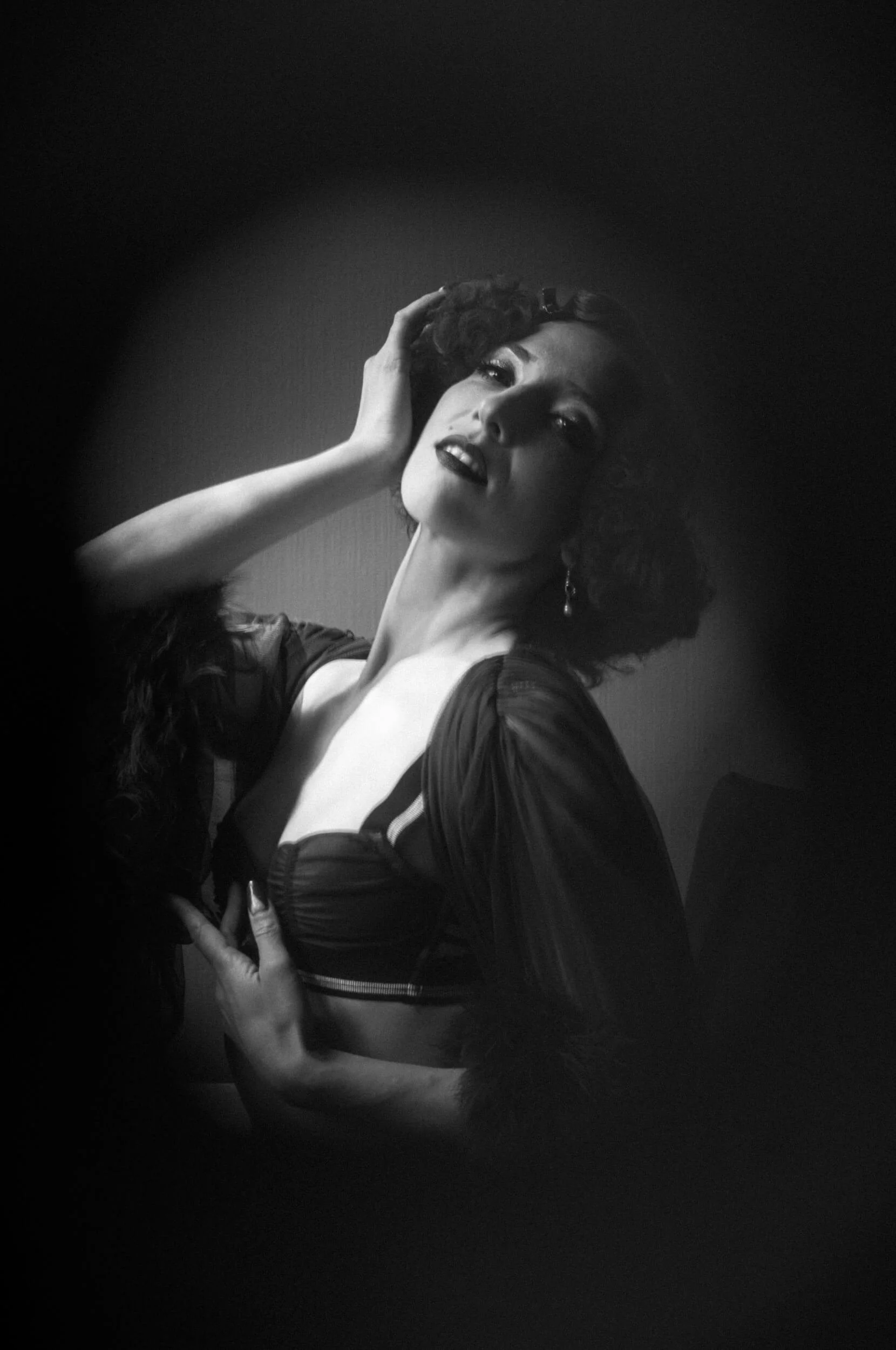
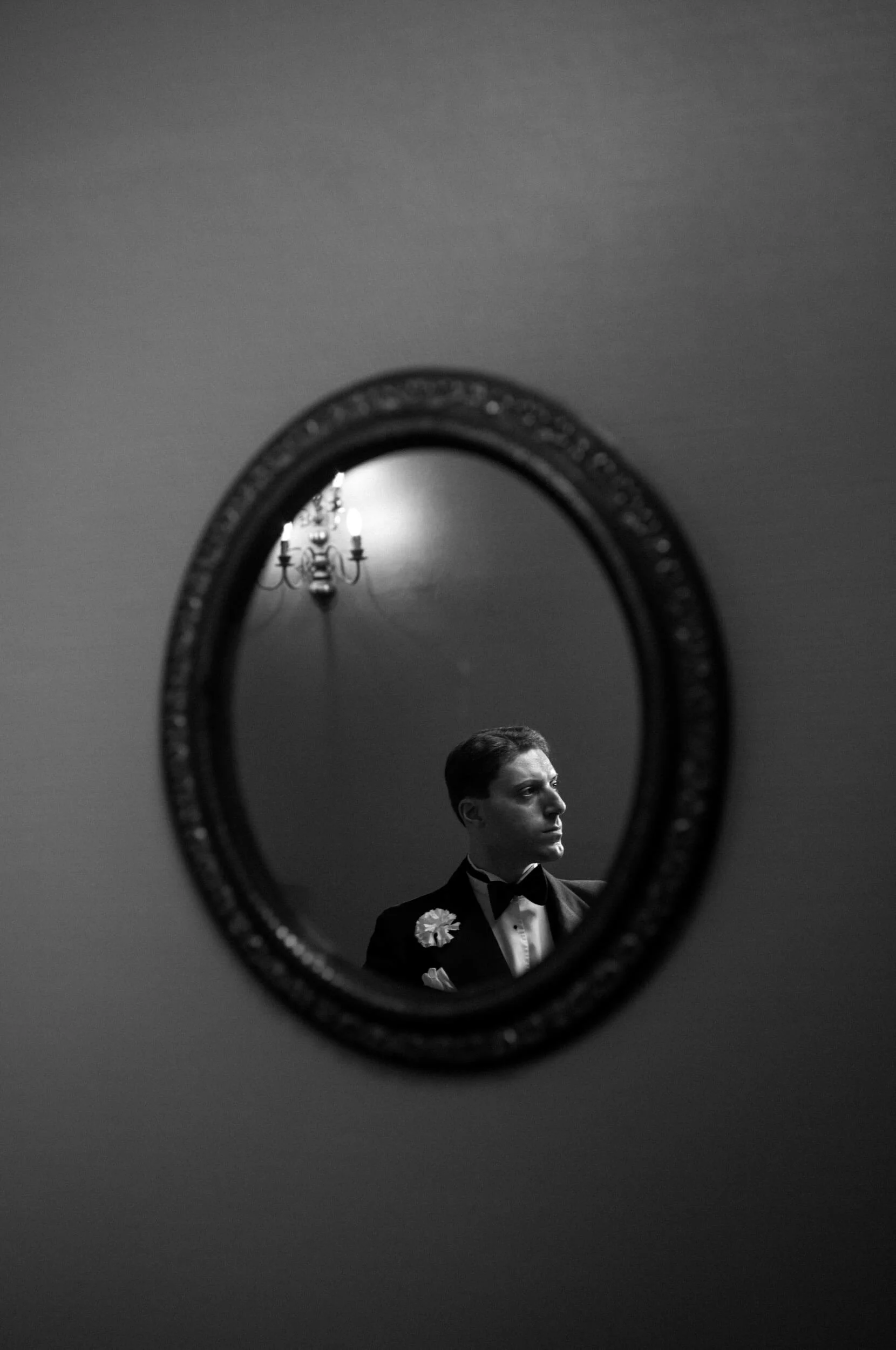
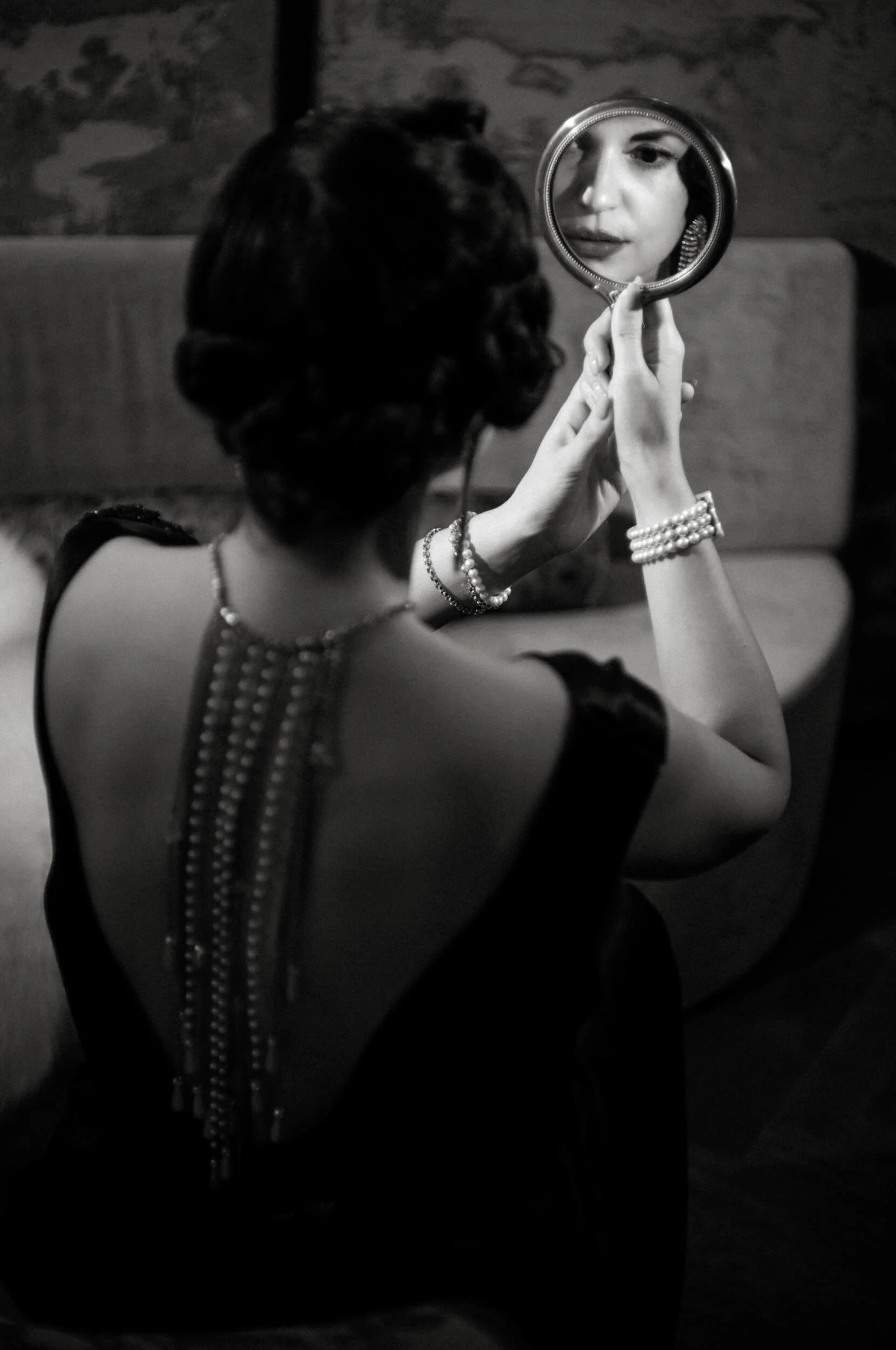
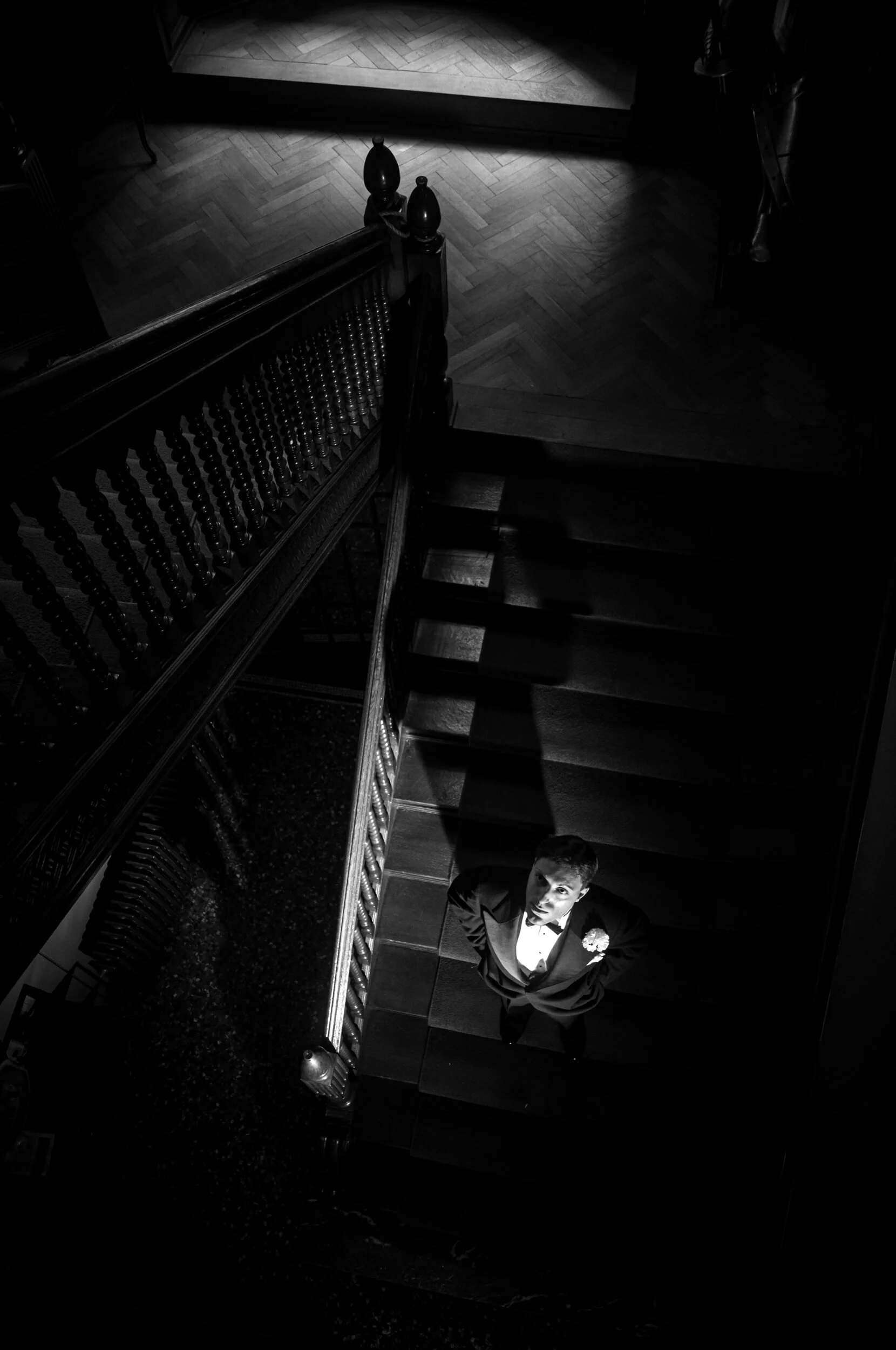
Rather than ending this review with specifications, I wanted to leave you with some of the photographs that made me fall in love with the Monochrom in the first place.
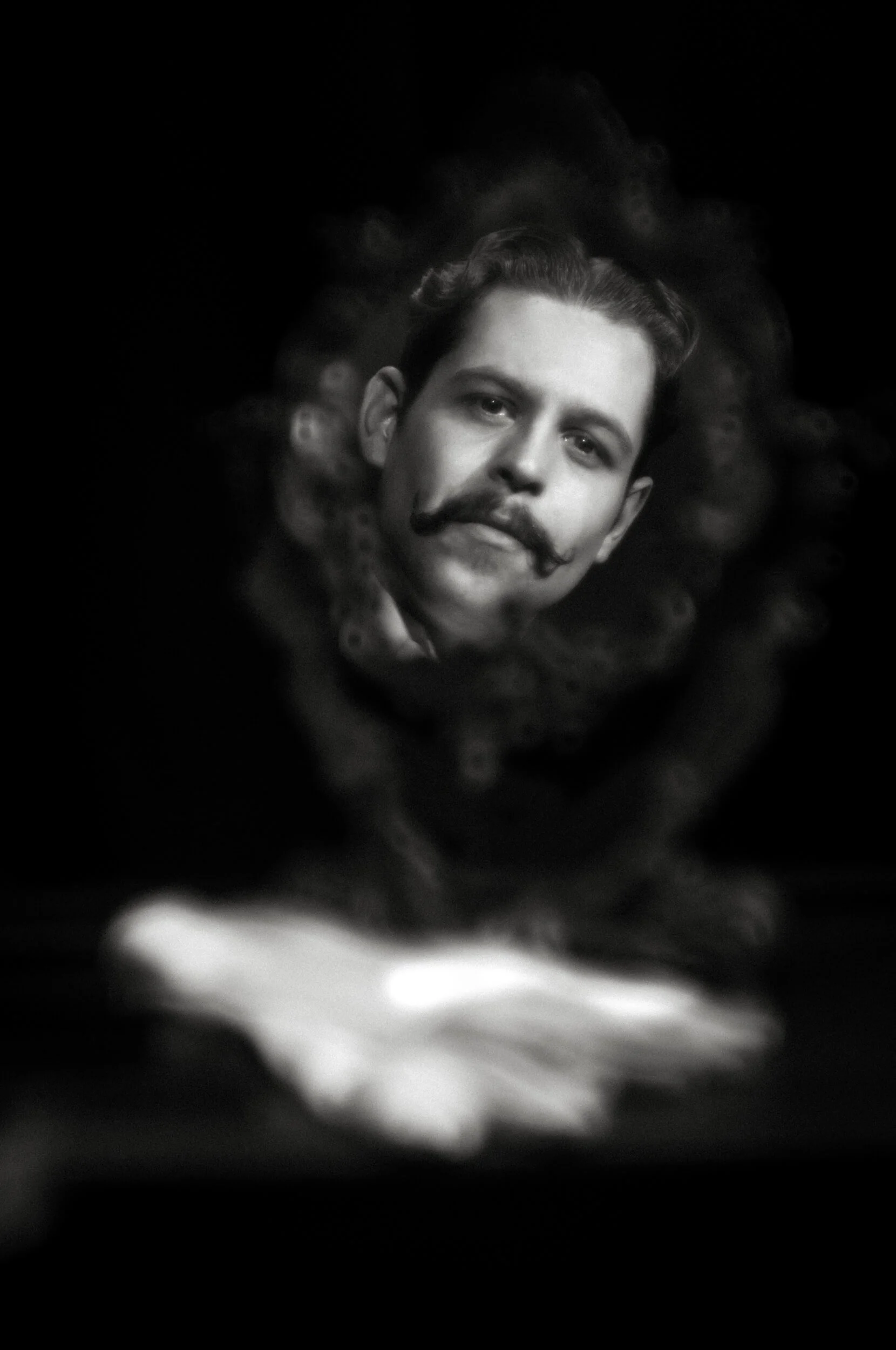
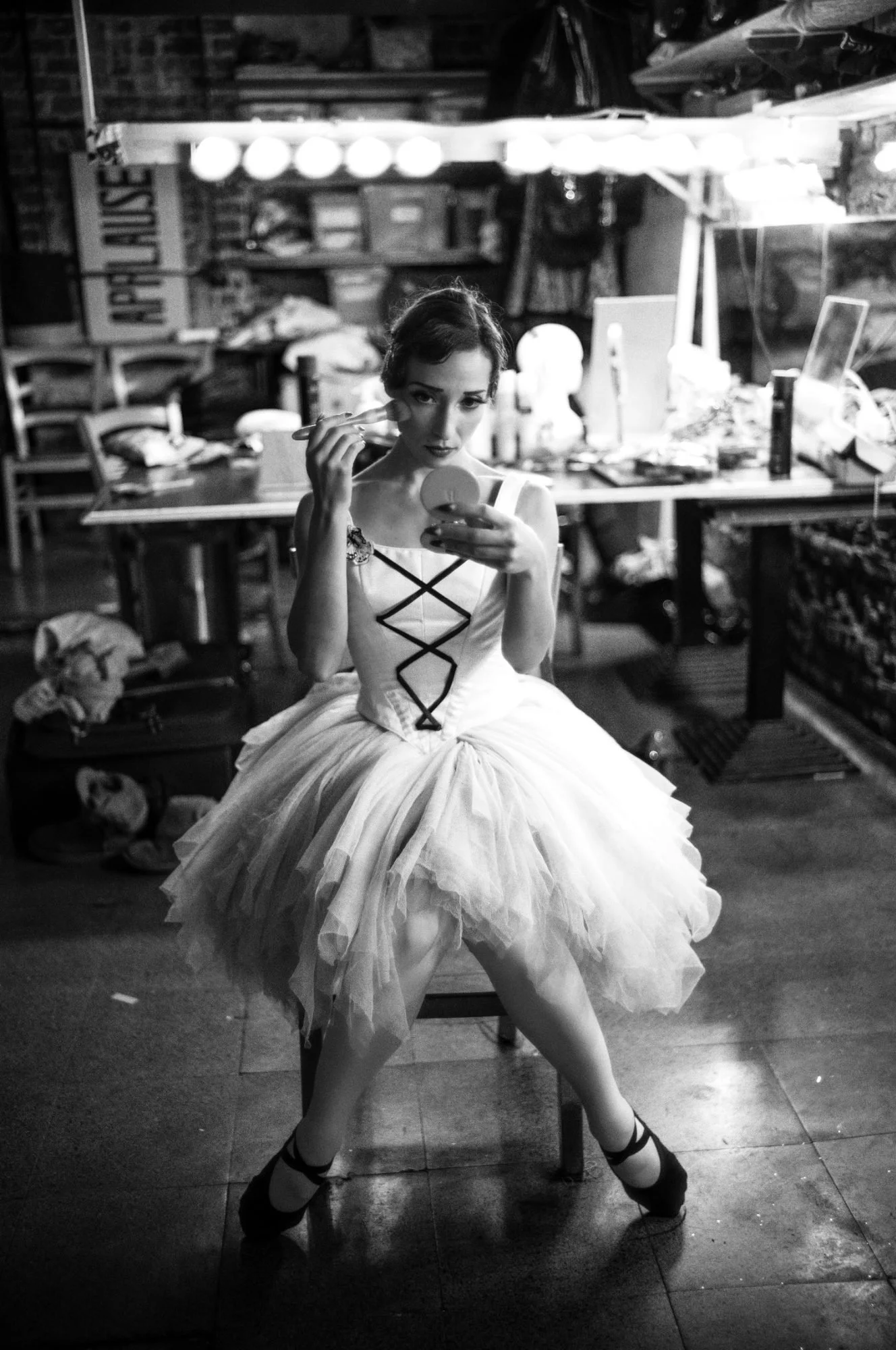
These are images made over the years with the M11 Monochrom, different Leica and vintage lenses, and the lighting approach I have developed around this camera. Some were carefully planned portraits, others came from personal projects and experiments, but they all share the same idea: seeing the photograph in black and white before pressing the shutter.
This is what the Monochrom looks like when it becomes part of the way I see.
A few words of thanks
A review like this is never really made alone.
I would like to thank Stefan Daniel, Murat Akkas, Christophe Mueller and Stefan Janssen at Leica Camera AG for their continued support and for believing in my work with the M system.
A special thank you goes to my good friend Bill Rosauer, better known as Dr. Leicaman. His invitation to write about the Thambar-M many years ago played an important role in my own Monochrom journey. Looking back, that project was really the beginning of the photographic language I have developed around these cameras. Bill continues to share his knowledge and passion for Leica through Dr. Leicaman Tours.
I also want to thank Kiran Karnani at Harlowe Creators, who has consistently believed in my vision as an artist and supported the way I approach light and photography.
And last, but certainly not least, thank you to all the models featured in this review. Every photograph starts with a person in front of the camera, and I could not have created these images without your trust, your presence and your willingness to step into the worlds we create together.
