
Mandler 35mm f/2 Review: A Modern Take on Leica’s “King of Bokeh”
Ô de Mon Chéri at Minuit Express, Paris — photographed with the Leica M11-D and Mandler 35mm f/2.
The Mandler 35mm f/2 — my companion for a long weekend in Paris.
I once owned the Leica Summicron-M 35mm f/2 Version IV, better known as the “King of Bokeh”. And I sold it. Not because there was anything wrong with the lens. At the time, I simply wasn't really a 35mm photographer. I gravitated more towards 50mm and longer focal lengths, especially when photographing people. A 35mm felt a little too wide for the way I worked, and while I appreciated the Summicron for what it was, I never really found myself reaching for it.
Over the last few years, however, that has slowly changed. I have started working with 35mm lenses more and more. There is something about the focal length that has grown on me: it gives you enough space to include the environment without completely losing the person in front of you. It can feel intimate without being as isolating as a 50mm or 75mm. For travel, portraits and simply walking around with a camera, that balance makes a lot of sense.
My relationship with the Leica 35mm Summicron V4 has also changed with time. The lens has acquired almost legendary status, largely because of its “King of Bokeh” nickname. But I have always thought that description was a little misleading. If I had to give that title to a Leica lens, I would personally look much more towards the pre-ASPH Summilux-M 35mm f/1.4 and perhaps even the extraordinary Summilux-M 35mm f/1.4 Double Aspherical.
The irony is that the “King of Bokeh” nickname was never really intended to describe a lens that simply produced the smoothest, dreamiest background blur. The reputation became much bigger than the original description. What makes the Summicron V4 interesting is its overall rendering and the way it transitions between the subject and the areas around it, particularly when stopped down. Wide open at f/2, it can actually look considerably less romantic than the legend surrounding it might suggest.
And yet, the Summicron V4 remains one of the most sought-after 35mm M-mount lenses. It was produced in both Canada and Germany, and over the years the different versions have developed their own reputations among Leica users and collectors. There are also long-standing reports of mechanical issues affecting some examples, including loose aperture rings and problems involving plastic components in parts of the construction. That doesn't mean every Canadian V4 is problematic, but it is something I would want to know before buying a decades-old example today.
So when a good friend, John Görten, suggested that I try the Mandler 35mm f/2, it wasn't because I was looking for a replacement for my old Summicron.
In fact, the Mandler wasn't really on my radar at all.
That made the decision rather easy. I had nothing to prove, no Leica lens to replace and no reason to convince myself that a modern interpretation of an old classic was somehow better than the original. I simply wanted to see what it was like to live with one.
And as it happened, the timing couldn't have been better.
The Mandler arrived just before one of my yearly trips to Paris.
I don't go to Paris anymore to photograph the Eiffel Tower or the Louvre. I've seen them. I've photographed them. These days, I go to Paris to slow down. To have a long breakfast, wander without much of a plan, sit on a bench in the Jardin des Tuileries and watch people. To watch tourists queue for the Louvre pyramid, lovers meeting near the Eiffel Tower, someone smoking outside a café or the light disappearing between the Haussmann buildings.
That doesn't mean I don't photograph the landmarks. I still brought the Mandler to the Louvre and the Eiffel Tower, and those photographs are part of the story too. They simply aren't the reason I take a camera to Paris anymore.
Paris has always had that effect on me. There is something romantic and slightly melancholic about wandering its streets without really needing to arrive anywhere. Sometimes I feel a little like Owen Wilson's character in Midnight in Paris, walking through the city at night and looking up at balconies, wondering what is happening behind the windows where the lights are still on.
For these trips I have also started travelling lighter. I don't always want to carry my most expensive Leica glass through a city. There is something liberating about putting a smaller, less precious lens on the camera and simply going outside.
The Mandler 35mm f/2 seemed like it might be exactly that kind of lens: something I could put on a Leica M, carry through Paris all day and simply forget about the equipment for a while.
Why I Review Lenses Outside the Leica World
Ô de Mon Chéri at Minuit Express, Paris. Although originally photographed in colour with the Leica M11-D, this image worked better for me in black and white.
I don't review everything that comes across my desk. A large part of my work remains focused on Leica, its cameras, its lenses and, perhaps most importantly, the heritage behind them. That history is a big part of why I am drawn to the Leica system in the first place.
But I also think it is interesting to look beyond the obvious choices.
Over the last few years, Asian optical manufacturers have made enormous progress. The quality of lenses coming from China and other parts of Asia has improved to a point where I think they deserve to be taken seriously, particularly by photographers entering the Leica M system who may not immediately have the budget — or simply don't want — to build a collection of expensive Leica glass.
That is one of the reasons I like doing these reviews.
I don't see them as an attempt to undermine Leica or diminish what Leica has achieved. Quite the opposite. The history and heritage of Leica lenses are part of what makes this system so fascinating, and I have enormous respect for that.
But a Leica M camera is also a photographic tool. And I believe it is worth showing what can be achieved when you put something different in front of it.
For someone buying their first Leica M, the idea that they need a bag full of Leica lenses costing several thousand euros each can be intimidating. It shouldn't be. The camera is capable of producing beautiful photographs with many different lenses, and some of the newer Asian designs offer an interesting way into the system.
What matters to me is not whether the name engraved on the lens is Leica.
What matters is what I can create with it.
That is also why I don't simply test these lenses by photographing brick walls, reading resolution charts and deciding whether they are “as good as Leica”. Those tests have their place, and I will always discuss optical performance where it matters, but ultimately I am interested in something else:
Can I use this lens to make photographs that still feel like mine?
The Mandler 35mm f/2 is a particularly interesting example because its inspiration is so deeply connected to Leica history. It takes a classic optical idea, recreates it with modern manufacturing and puts it into the hands of photographers who may never have considered buying the original.
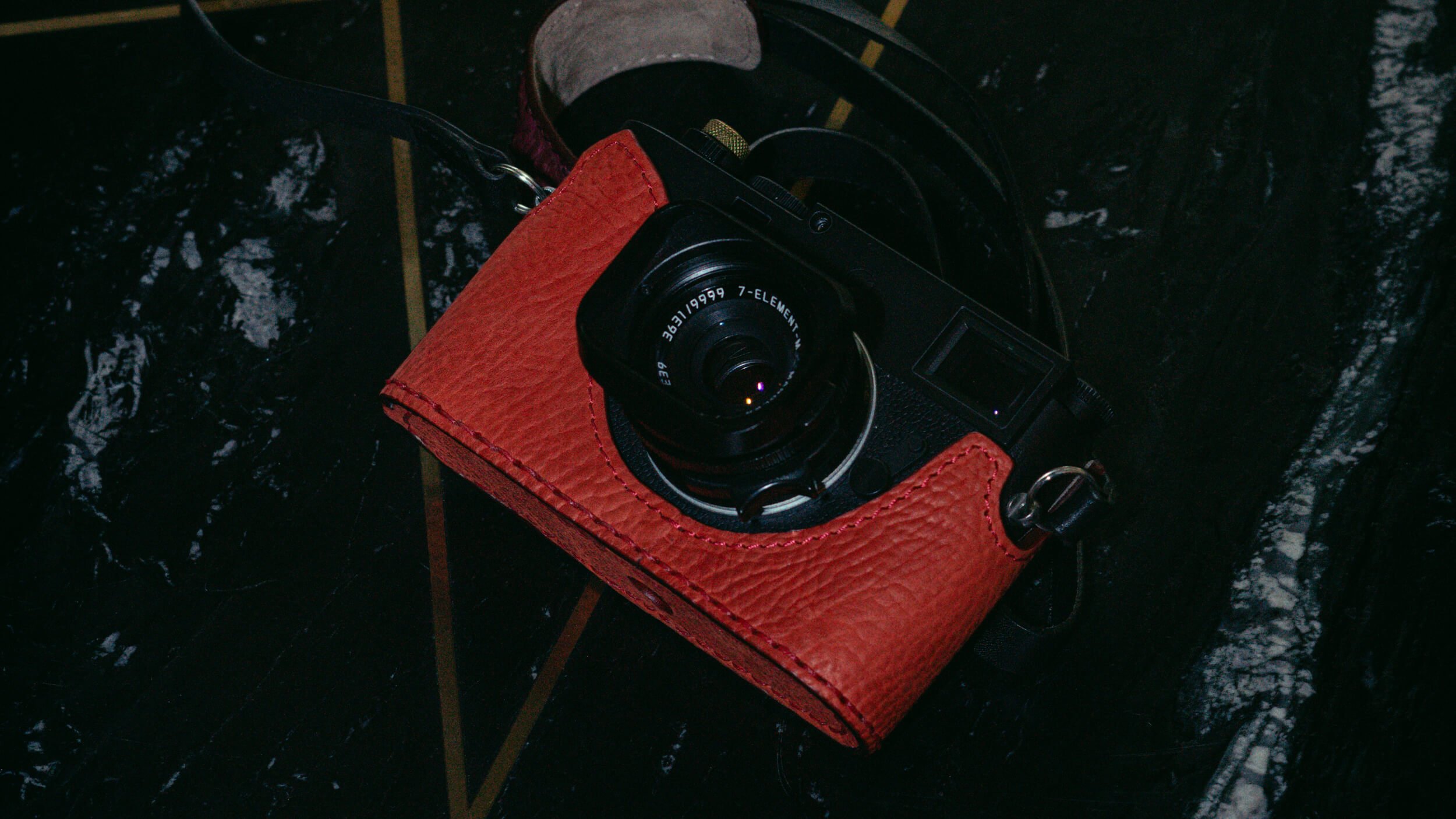
The Leica M11 Monochrom with the Mandler 35mm f/2, paired with a handmade Angelo Pelle leather case from Italy.
A 35mm Lens for the Way I Photograph
Ô de Mon Chéri at Minuit Express in Paris. The Harlowe light remains in the frame on purpose — part of the setup, but also part of the atmosphere I wanted to create. Photographed with the Leica M11-D and Mandler 35mm f/2.
Paris also gave me the perfect opportunity to put the Mandler through a very different kind of test. I had arranged a shoot with the Parisian jazz and chanson singer Ô de mon Chéri, and we photographed inside Minuit Express, the cocktail bar at Hôtel La Bourdonnais.
It is the kind of location where the surroundings are not just a backdrop. They are part of the photograph. The bar has its own character, with its train-inspired interiors, dark corners, lights, textures and little details that make the setting as important as the person standing in it.
This is where I started to understand why 35mm has become more useful to me. For the way I photograph people, I don't necessarily want to fill the entire frame with a face. I want to photograph the person in their environment. A full-body or half-body portrait at 35mm gives me enough space to show the surroundings without making the subject feel disconnected from them. There is also something about the perspective of 35mm that works particularly well for these kinds of portraits. For me, 35mm works best when I give myself enough distance for a full-body or half-body portrait. It keeps the proportions natural while giving me considerably more of the environment than a 50mm or 75mm would.
And although I am still a sucker for bokeh, I have started to appreciate something else about a 35mm f/2. There is enough separation to keep the background from becoming distracting, but not so much that it disappears completely.
At f/2, the background can still tell you where you are.
That was exactly what I wanted with Ô de mon Chéri. I didn't want to photograph her against a wall of anonymous blur. I wanted to show her in her world, surrounded by the atmosphere of the Minuit Express, with enough separation for her to remain the obvious subject.
That distinction is important to me. I love beautiful bokeh, but sometimes the background is part of the story. A lens that turns everything behind your subject into a completely anonymous wash of colour can actually remove information that matters.
With the Mandler at f/2, I could still isolate Ô de mon Chéri while retaining enough of the environment to make the photograph feel like it happened somewhere.
And f/2 is actually fast enough for the kind of work I was doing, particularly when combined with the lighting I brought with me.
I have reached a point where I don't really want to shoot without additional light anymore. For this session I brought two Harlowe LED lights. They are battery powered, compact and easy enough to carry through Paris, which makes a difference when your entire lighting kit has to come with you on foot or in a taxi.
We only had around two hours to make the shoot happen, and the bar was open to the public while we were working. There was no luxury of closing the room, taking our time and carefully controlling every detail. We had to move quickly, work around people and make the most of whatever space was available.
The combination of the Mandler's 35mm field of view and the small Harlowe lights turned out to be remarkably practical.
For the wider portraits I used the Mandler, while I also brought a 75mm lens for tighter compositions, upper-body portraits and details.
I actually think that combination says quite a lot about how I see the 35mm. I don't consider it my universal portrait lens. For me, its sweet spot is more around full-body to half-body portraits, where the environment still has room to breathe.
And perhaps that is why I have started to appreciate 35mm so much more than I did when I owned the Summicron V4.
I used to think of 35mm as simply a wider alternative to a 50mm.
Now I see it differently.
It can be a storytelling focal length.
It allows me to photograph the person, the room and the atmosphere in the same frame without having to choose between them.
The Mandler arrived in Paris as a lens I was curious about. After a few days of walking, photographing the city and then putting it to work in a real portrait session, I was beginning to wonder whether I had underestimated 35mm all along.
Travelling Lighter with the Mandler 35mm f/2
There is another reason why I have become more conscious about the lenses I take with me when I travel. A while ago, I was robbed of some of my Leica gear on a train on my way to Como. Since then, I have become much more careful about travelling with too much equipment. Expensive Leica lenses are wonderful to use, but carrying a bag full of them through a city also means carrying the worry that comes with them.
So for this trip to Paris, I packed lighter. I brought the Leica M11-D for colour, but most of my photographs while wandering around Paris were made with the Leica M11 Monochrom and the Mandler 35mm f/2.
There is also a reason why I have been taking fewer photographs on holidays over the last few years. I don't really consider myself a street photographer, and I don't photograph landscapes simply because I happen to be standing in front of one. I need a photograph to fit into something. It needs to have a reason for being there, to fit my visual language or at least add something to it.
That is also why I have become more selective about what I photograph when I travel. I don't want to come home with thousands of images that then need to be edited, catalogued and somehow given meaning afterwards. Photography should still be enjoyable, especially on holiday. When I photograph, I want the camera to liberate me rather than give me another task.
This was the idea behind my long weekend in Paris. Aliya and I didn't plan every hour or make a list of photographs we needed to take. We simply wanted to embrace the city as it came to us. We walked, had breakfast, stopped somewhere when we felt like it, watched people and wandered into streets we hadn't planned to visit. Occasionally, something caught my attention and I made a photograph.
The Mandler fitted perfectly into that way of travelling. With the M11 Monochrom, I found myself looking differently at Paris. Without colour competing for my attention, I started noticing shadows, patterns, architecture and the way light moved across the streets. I wasn't trying to document everything we saw. I was simply looking for moments that fitted the way I already like to photograph.
I also added an orange filter to the Mandler. On the Monochrom, it gives the images a little more separation and pop, particularly in skies, clouds and darker tones. It also helped me get closer to the character I wanted without having to spend too much time editing afterwards.
I don't enjoy spending hours editing my holiday photographs in the same way I edit my portraits. My portrait work is different. There I can spend time shaping the light, refining the tones and working on every small detail because the final image is part of a much larger creative process. I don't want to do that with every photograph I make while walking around Paris. The editing time is something I want to reserve for my portraits.
For these photographs, I wanted the opposite. I wanted to see something, lift the camera, make the photograph and keep walking. Normally, I prefer the look and feel of the brass Mandler versions, but for this trip I was happy with the black aluminium one. It is lighter, more discreet and easy to carry around all day. Most of the time, I had no camera bag with me, just the Leica M11 Monochrom and the Mandler around my neck. For this particular trip, that was enough.
What Is the Mandler 35mm f/2?
The Mandler 35mm f/2 is a modern M-mount lens inspired by one of the most recognisable periods in Leica's optical history. Its name is a deliberate reference to Walter Mandler, the legendary Leica optical designer whose work shaped some of the company's most celebrated lenses.
The idea behind the lens is not to recreate the past simply for the sake of nostalgia. Mandler takes inspiration from the optical character of classic lenses and combines that philosophy with contemporary manufacturing. That makes the 35mm f/2 interesting to me: it looks backwards for inspiration, but it is very much a lens made for the cameras and photographers of today.
The Mandler 35mm f/2 in black aluminium. Compact, understated and based on one of the most sought-after classic 35mm Leica designs.
Mandler told me that choosing the 35mm f/2 V4 as its inaugural lens was a deliberate tribute to Dr. Walter Mandler and his seven-element design from the 1970s. According to the company, the combination of its compact size and distinctive optical character made it the right lens to represent what Mandler wants to do as a brand: revisiting classic optical designs while using modern manufacturing to bring their character to a new generation of photographers.
The connection to the Leica Summicron-M 35mm f/2 Version IV is particularly relevant. The V4 is one of those Leica lenses that has developed a life of its own beyond its original specifications. Its compact size, rendering and famous reputation have made it a reference point for photographers looking for a more characterful 35mm M-mount lens.
The Mandler clearly enters that conversation, but I don't think it is useful to approach it simply as a reproduction of the Leica. It has its own optical behaviour, and after spending time with it in Paris, I found myself treating it less as an imitation and more as an interpretation of an idea.
Mandler told me that it wanted to preserve what it describes as the original V4's “atmospheric rendering”: a sharp centre, softer edges at wider apertures, a slight swirl in the bokeh and a rich colour signature. At the same time, modern manufacturing allowed the company to improve flare resistance, chromatic control and central sharpness without removing the characteristics that made the original design interesting in the first place.
The Mandler also made me think about how much the M-mount lens landscape has changed. For decades, photographers working with a Leica M had relatively few choices if they wanted a compact, characterful lens. Today there is a much wider range of manufacturers exploring different interpretations of classic optical designs and bringing them to modern M-mount cameras.
That is something I find genuinely exciting.
I remain deeply interested in Leica's lenses and their history, but appreciating that heritage doesn't mean closing the door to everything that came afterwards.
In fact, seeing how modern manufacturers interpret those older optical ideas can make you appreciate the originals even more.
The Mandler 35mm f/2 is available in three finishes: black aluminium, silver aluminium and silver brass. I chose the black aluminium version for this review. Normally I am drawn to the weight and tactile character of brass lenses, but for this particular trip the lighter aluminium version made more sense. I wanted something I could carry through Paris all day without thinking about it.
That compactness is part of the appeal of the lens.
A 35mm f/2 M-mount lens doesn't need to dominate the camera. It can simply stay there, ready for whatever happens next. And after spending a long weekend walking through Paris with the M11 Monochrom and the Mandler attached, I began to understand that this may be one of the lens's greatest strengths.
Build Quality and Handling
A quiet corner in Le Marais, Paris. Not every photograph needs to be about the grandeur of the city. Stopping down the Mandler 35mm f/2, I found myself drawn to these smaller details and unexpected moments of beauty.
The Mandler has impressed me with its build quality. Focusing is precise and smooth, and my copy has focused accurately even when shooting wide open at f/2. The aperture ring has a dense, positive click to it, and once I set the aperture it stays firmly in place. I have used the lens mostly at f/2, but also stopped down to f/4 and occasionally between f/5.6 and f/8, particularly when walking around Paris.
The aperture numbers and distance scale are clearly marked and easy to read, which is something I appreciate when working quickly. The lens also feels very solid in the hand. There is no rattle or looseness, even after carrying it around Paris for hours at a time.
The minimum focusing distance is 0.7m, which is the traditional minimum focusing distance of the Leica M rangefinder system. I would not have minded being able to focus a little closer for the occasional tighter environmental portrait, but for the way I use a 35mm, it was never a real limitation.
Mandler explained to me that reducing the minimum focusing distance in such a compact lens would have required compromises in size and optical performance, particularly towards the edges of the frame. I can understand that decision. For full-body, half-body and environmental portraits, 0.7m works perfectly well, and I generally don't want to get extremely close to someone with a 35mm anyway.
I also asked Mandler specifically about the mechanical construction. This was important to me because some original Summicron-M 35mm f/2 Version IV lenses have developed a reputation for issues involving plastic components or adhesive-dependent parts of the construction.
According to Mandler, the 35mm f/2 uses full-metal construction, with aluminium alloy or chrome-plated brass depending on the version. The focusing helicoid and aperture mechanism use precision-machined metal components, while specialised damping grease is intended to keep the operation smooth and consistent across different temperatures.
I also asked directly whether the Mandler uses plastic or nylon components in structural areas of the lens. Mandler told me that all load-bearing structures and fastening components are metal and secured through mechanical threading. According to the company, it deliberately avoided the type of plastic retaining structures and adhesive-dependent construction found in parts of some original V4 designs, which could potentially loosen over time.
I also really like the square hood. It is a clip-on design, similar in principle to the original Leica hood, but in this case it is made from metal rather than plastic. For me, it is more than just a cosmetic improvement. The hood protects the front of the lens, clips securely into place and stayed there throughout my time in Paris. You can also use a filter and place the hood over it without any problem, which makes it practical for everyday use. I would consider the hood a must-have accessory with this lens.
Of course, only time will tell how the Mandler itself ages. I cannot tell you after the relatively short period I have used it whether it will still feel the same after twenty years. Mandler told me that the lens uses an all-metal mechanical construction and that it deliberately eliminated plastic structural parts and adhesive-dependent fastening solutions associated with some examples of the original V4. That is reassuring, and my own copy feels very well built. But the real answer will come with years of use.
This Is Not a Technical Test
There is one thing worth mentioning before I get too deep into the optical characteristics of the lens. I am not particularly disciplined about coding my lenses on the Leica M11-D or M11 Monochrom. I often forget to do it. That might sound strange in a lens review, but for me it is simply not that important. I usually know which lens I am using, and I am much more interested in the photograph than in recording every technical detail about how I made it.
For this trip it was actually very easy to keep track. Most of the photographs were made with the Mandler 35mm f/2. I only switched to the Light Lens Lab 75mm f/2 for some of the closer portraits and details. I shot the Mandler wide open quite often, but I also stopped down throughout the trip. I haven't gone back through every photograph to determine whether each frame was made at f/2, f/4, f/5.6 or f/8, and I don't really want to turn this review into that kind of exercise.
This is not a technical review in the traditional sense.
I am not going to photograph the same brick wall at every aperture and then tell you which corner becomes sharpest at which setting. There are plenty of reviews that do that far better than I could.
What I am interested in is what the lens does when I actually use it.
A passage in Paris photographed with the Leica M11 Monochrom and Mandler 35mm f/2. This review is about how the lens works in real photographs, not charts or brick-wall tests.
How does it feel to walk around with it? What happens when I photograph someone? What does the rendering add to the image? Does it make me want to take another photograph? Does it fit the way I see?
For me, those things are more important than knowing the exact aperture of every photograph I made in Paris.
I also don't feel the need to make the lens disappear through software correction. One of the reasons I use lenses like the Mandler is precisely because they have their own optical character. I know that Leica's lens coding can be useful for automatic corrections and metadata, but I don't feel that every lens needs to be made invisible by software. I am quite happy to see what the lens itself is doing.
And in the end, I usually know which lens I used anyway.
This review is therefore much more about the experience and the photographs than about numbers. I want to understand what the Mandler adds to the way I photograph, rather than simply establish whether it can resolve another line on a chart.
And of course, the photographs you see here are my photographs. I have edited them in the way I normally edit my work and added my own signature style. I am a fine art portrait photographer, and I don't separate the lens from the way I create an image. The lens is one part of the process; the light, the subject, the composition and finally my own editing all shape the photograph.
That is also how I approach my lens reviews. I don't want to show you an unedited test file and pretend that tells the whole story. I want to show you what I can actually create with the lens. If a lens becomes part of my photographic process, then that is what interests me.
The Rendering: More Than Just the King of Bokeh
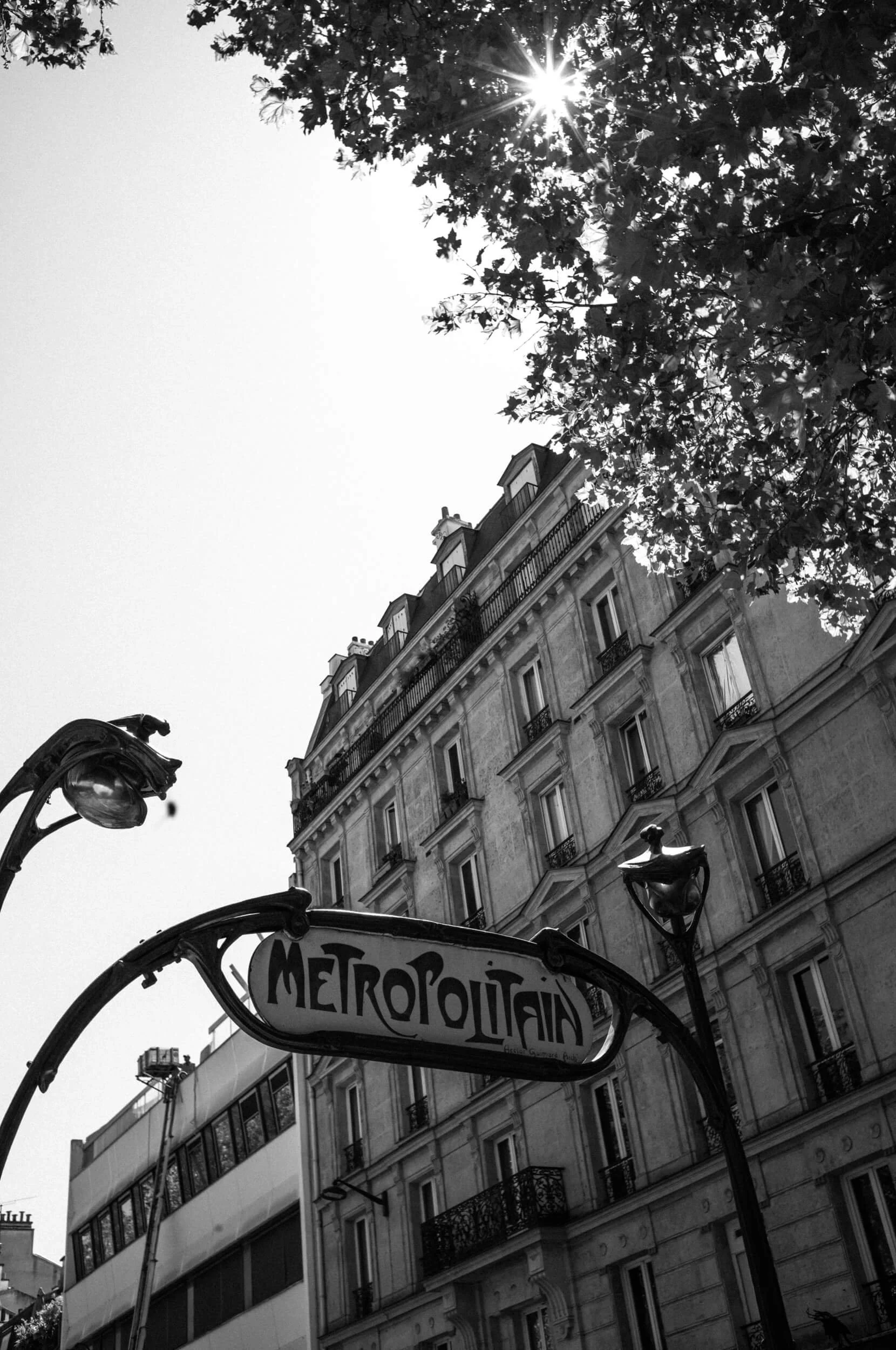
A black and white photograph of an ornate Paris Metro sign framed by leaves and soft out-of-focus foliage, showing the Mandler 35mm f/2’s rendering and gentle background separation.
One of the first things I noticed when looking through my Paris files was that the Mandler has a little more field curvature than I remember from the V4 I once owned. I don't see that as a negative. In fact, for the way I photograph, it can give the image a slightly dreamy quality without becoming overly vintage or uncontrolled.
That is probably the best way I can describe the Mandler's rendering. It has character, but it is not an extreme character lens. When I compare it with lenses such as the Leica Summicron V1 or the 35mm Steel Rim, the Mandler feels more controlled. Those older lenses can give you much more obvious optical signatures, while the Mandler sits somewhere in between. It gives me enough imperfection to make the photograph interesting, but not so much that the lens starts dictating the image.
That is important to me because I don't actually need a lens to be as sharp as possible. My photographs are not technical exercises. When I photograph a person, I want the face and eyes to have enough definition, but I also want the transition into the rest of the image to feel natural. I want some atmosphere around the subject.
At f/2, this is where I found the Mandler most interesting. The centre of the frame has enough definition for a portrait, while the areas further away from the subject begin to lose some of that precision. Combined with the field curvature, this gives the image a softer transition without turning everything into a blur.
And this brings me back to the “King of Bokeh” discussion. I don't think the Mandler is interesting simply because it can blur a background. Almost any fast lens can do that to some degree. What interests me is what remains visible when the background is out of focus.
For my environmental portraits, that matters a lot. I want to see the room, the architecture, the light and the atmosphere around the person. I want the background to become quieter, but I don't necessarily want it to disappear.
Bacha Coffee: The King of Black & White
We arrived late on Thursday evening, so I left the camera in the bag. Friday morning was deliberately slow. Aliya and I walked the dog, had some viennoiserie and simply enjoyed being in Paris. I like to live a little more like a Parisian when I am here. There is no need to turn every walk into a photography session.
It wasn't until the afternoon that I decided to take a camera with me.
Coffee cups, a silver coffee pot and tableware at Bacha Coffee in Paris, photographed in black and white with the Mandler 35mm f/2.
Our first stop was Bacha Coffee on the Champs-Élysées. The Paris flagship occupies three floors and takes its inspiration from Dar el Bacha in Marrakech, the original home of Bacha Coffee dating back to 1910. The interior is full of marble, tiles, carved wood, geometric patterns, warm lighting and details that immediately give the place a strong sense of character.
It is also very colourful.
Which is probably why I enjoyed photographing it with the Leica M11 Monochrom.
I brought only the M11 Monochrom, the Mandler 35mm f/2 and an orange filter. I knew I was deliberately removing a lot of the colour from the scene, but I wasn't interested in reproducing the interior exactly as I saw it. I wanted to see what happened when all that colour was reduced to light, shadow, texture and pattern.
The traditional coffee pot, the cups, the sandwiches, the tiled floors, the lights and the corridors all started to work differently in black and white. Some of the details became stronger because I wasn't distracted by their colour. The interior also has something that reminded me of old travel photographs and, at times, even the atmosphere I associate with the Orient Express.
The Mandler's 35mm focal length was perfect for this. I could include the table and the coffee, but also enough of the room to give the photograph a sense of place. I didn't want a close-up of a coffee cup floating against an out-of-focus background. I wanted to show where that coffee was being served.
This is probably one of the clearest examples of why I have started enjoying 35mm more. The subject can be something as simple as a coffee and a sandwich, but the surroundings become part of the photograph. The Mandler gives me enough separation at f/2 to keep the attention where I want it, while still retaining enough of the room to tell the story.
And with the M11 Monochrom, the Mandler and the orange filter, Bacha Coffee became my first real photographic introduction to Paris that weekend.
A very colourful place.
Photographed in black and white.
What I particularly liked about the Mandler in black and white was that its character did not disappear once colour was removed from the equation. The softer falloff towards the edges, the way highlights transition into darker areas and the slight imperfection in the rendering still remain. With the M11 Monochrom, I found that this gave the photographs a little more atmosphere than I would expect from a perfectly corrected modern lens.
You will probably notice that my Monochrom images here are not completely neutral black and white, but they are not sepia either. I added a subtle touch of yellow to the midtones and shadows because it fitted the way I wanted to see Paris: a little warmer, slightly nostalgic, but without turning the photographs into something overly vintage. It is only a small adjustment, but I feel it works with the mood I wanted to create.
The Monochrom files are simply a joy to work with, and I think the Mandler works very well with them. There is enough sharpness and definition where I need it, but the lens still brings character to the image without becoming too vintage or mushy. That balance is probably what I appreciate most about it.
From the Champs-Élysées to the Louvre
From the Champs-Élysées, we walked towards the Petit Palais and then continued on towards the Louvre. It was a long walk, but one of the things Aliya and I enjoy most about Paris is simply walking through the city and looking at the buildings. Not only the architecture itself, but also the tourists around it, the way people react to these places and how they become part of the surroundings.
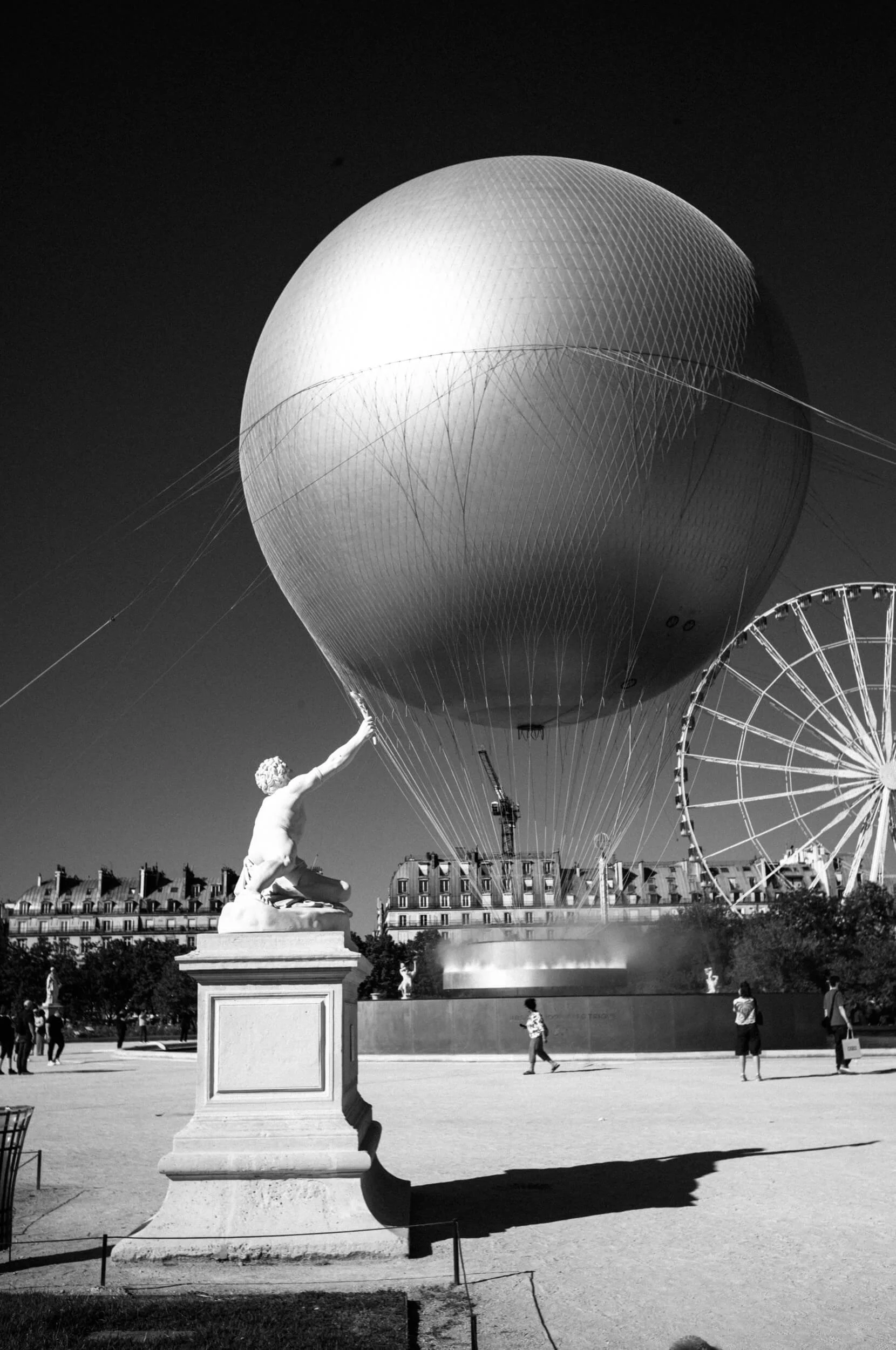
The Paris 2024 Olympic Cauldron in the Jardin des Tuileries. Designed by Mathieu Lehanneur, the installation returned to Paris for the summer of 2026.
The Louvre Pyramid, Paris. Leica M11 Monochrom + Mandler 35mm f/2.
After a long walk we stopped in the Jardin des Tuileries to catch our breath and sit for a while. We watched people, as we always do, before continuing towards the Louvre. By the time we reached the pyramid, the sun was already getting lower, around six or seven in the evening, and the light had changed completely.
This is when Paris becomes particularly interesting to me. The glass pyramid catches the last light, while around the entrance of the Louvre the sunlight creates beautiful shadows and reflections against the doors and stone. There was a lot to photograph, but again I found myself spending more time watching than actually taking pictures.
I could sit there for quite a while watching other tourists photograph the Louvre. Sometimes I would lift the M11 Monochrom, frame something and then simply lower the camera again without pressing the shutter. I don't always need to make the photograph. Sometimes I am happy just seeing it.
The combination of the M11 Monochrom and the Mandler around my neck made that even easier. There was no camera bag, no lenses to change and no equipment to think about. Just the 35mm, the orange filter and a camera that was ready when I wanted it.
The shadows and reflections around the Louvre worked particularly well in black and white. The M11 Monochrom reduced the scene to what I was actually interested in: the light, the geometry, the people moving through the frame and the contrast between the bright areas and the deep shadows.
This was probably the moment when I realised how much I was enjoying this setup. I wasn't walking around Paris thinking about photography all the time. I was walking around Paris, and sometimes I photographed something.
And having the Mandler 35mm f/2 around my neck made that very easy.
We finished the evening in Le Marais, walking there entirely on foot. By then I had stopped taking photographs. The light outside was beautiful, but I was more interested in simply enjoying the evening with Aliya than looking for another frame.
We ended up at Ober Mamma for dinner and I had a wonderful truffle pasta. It might not be the most traditionally French choice, but we enjoy the atmosphere there, and the place is almost always packed. Sometimes that is enough. After a day of walking through Paris, watching people and making a few photographs, it was nice to simply sit down, eat and enjoy the evening.
Le Train Bleu: Back to the Belle Époque
The following morning we started with breakfast at Le Train Bleu, inside the Gare de Lyon. It was my first time there, and I immediately understood why the restaurant has become such an iconic Parisian interior. The space dates back to the 1900 Paris Exposition and was inaugurated in 1901. The paintings, chandeliers, gilding, woodwork and leather banquettes are almost overwhelming in the best possible way.
Outside Le Train Bleu, Gare de Lyon, Paris. Leica M11-D + Mandler 35mm f/2.
I had a feeling there would be a lot of blues and yellows in the interior, so this time I took the M11-D rather than the Monochrom. The waiter was kind enough to seat us in the main area near the window, with a view towards the trains. It was hard not to think about another era of travelling. Sitting there with breakfast in front of us and the trains passing outside, I could easily imagine why places like this have such a strong connection with the romance of rail travel.
Breakfast at Le Train Bleu, Gare de Lyon, Paris. Leica M11-D + Mandler 35mm f/2.
Breakfast at Le Train Bleu, Gare de Lyon, Paris. Leica M11-D + Mandler 35mm f/2.
Croissants, pain au chocolat, coffee and, finally, some proper French butter. After the more exotic atmosphere of Bacha Coffee the day before, this felt much more traditionally French. It was also a perfect opportunity to see how the Mandler handled an indoor scene where the colours were an important part of the photograph.
The blues and yellows of the paintings and interior came through beautifully. I shot quite a few frames at f/2, including some of the corridors, and the lens gave me enough light to work comfortably indoors. The background blends away, but it doesn't disappear completely. The chandeliers, paintings and architectural details remain recognisable, which is exactly what I want from a 35mm environmental photograph.
The croissants and pastries on the counter were another good example. At f/2, the Mandler gave them enough separation from the background to make them stand out, but there was still enough of the surroundings left in the frame. With the light, the colours and the rendering of the pastry itself, some of these photographs almost started to look like little still-life paintings.
At our table I stopped down to around f/4. I wanted a little more of the breakfast to remain in focus, while still keeping the background under control. This is also where I like having a 35mm. I can photograph the food, Aliya, the table and the interior without having to stand halfway across the room.
At some point I walked towards the toilet and, luckily, I had brought the camera with me. I ended up making a few photographs of the corridors and passageways. They were probably some of the most interesting frames of the morning. The paintings, lamps, carpets and long perspective of the corridor really do make you feel as though you have stepped into another period.
Le Train Bleu is probably better known for its lunch and dinner than for breakfast. The restaurant is famous for dishes such as its tartare prepared at the table and the roast leg of lamb served from the carving trolley, while the rum baba is another of its traditional dishes.
But breakfast is actually a wonderful time to visit with a camera. Breakfast is served until 11:00 in the Lounge Bar, and the atmosphere is considerably more relaxed than during the busy lunch and dinner services.
August also helps. Paris is noticeably calmer than during the busiest periods of the year, and an early breakfast gives you much more freedom to look around without constantly worrying about getting in someone's way. For a photographer, that makes a difference.
I came to Le Train Bleu for breakfast, but I left with a small collection of photographs of its interiors, corridors, paintings, coffee and pastries. Once again, the Mandler was doing exactly what I wanted from a 35mm: keeping the subject important while allowing the place itself to remain part of the photograph.
A quiet breakfast table at Le Train Bleu in Paris, with cappuccino, croissants, sliced bread, preserves and fresh orange juice, photographed in warm morning light.
Ô de Mon Chéri: The Mandler 35mm f/2 as a Portrait Lens
The other reason I brought the Mandler to Paris was a portrait shoot with Ô de Mon Chéri. It was my first time photographing Aude, which is always a little exciting. Not stressful, but exciting. You don't quite know how the chemistry between photographer and subject will develop until you start working together.
Aude reclining on a velvet sofa in a warm, atmospheric Parisian interior, photographed with dramatic red and amber lighting during a private portrait session.
Aude at Minuit Express, Hôtel La Bourdonnais, Paris. Leica M11-D + Mandler 35mm f/2.
We had around two hours, from 15:30 until about 18:00, inside the Minuit Express cocktail bar at Hôtel La Bourdonnais. The bar was open to the public, so we had to work with the space as it was rather than taking over the entire room. I was also working alone. There was no assistant to position lights, move things around or help me while I was directing Aude, so I had to keep everything fairly simple.
I brought two Harlowe lights, a 120W and an 80W. The 120W is the newer model with built-in RGB, and I also brought an octagonal softbox. Initially I thought I would use the softbox more, but once I started building the setup, I found that using the two lights with colour gels made much more sense for the atmosphere I had in mind.
I generally like to build my own little world when I shoot. I look at the background first, use existing decorative lights where possible and then add my own light around them. Mirrors are particularly useful because I can use them to bounce light into places that would otherwise remain dark. I don't want everything to look perfectly controlled or polished. I like a little tension in the light, some reflections and imperfections, and a sense that the photograph belongs to a place.
The mood I had in mind was somewhere between Paris in the 1930s and the old Shanghai atmosphere of In the Mood for Love. The Minuit Express was perfect for that. The bar already had so much character that I didn't want to flatten it with a technically perfect lighting setup. I wanted to work with what was there and add just enough of my own light to shape Aude within it.
This was also where the 35mm started to make complete sense to me.
For full-body portraits, 35mm gives me enough space to use the room. I can place Aude within the bar rather than simply photographing her against it. With a 50mm or 75mm, I would naturally move closer and the environment would become less important. With the Mandler, I could step back, keep Aude at a comfortable distance and still have enough of the bar in the frame to make it part of the story.
And this is where I think the Mandler's rendering works particularly well for my photography. It isn't overly perfect or clinically sharp. At f/2, there is enough softness and separation to give the image some atmosphere, but the lens doesn't completely remove the surroundings.
It also has a different relationship with light than some of the more extreme vintage lenses I use. The Mandler can flare and it does react to light sources in the frame, but it is much more controlled than something like the 35mm f/1.4 Steel Rim. Rather than simply washing the image in flare, it seems to bounce and spread the light through the frame in a way that I find quite attractive.
I noticed this particularly in the photographs where bottles and glasses appear behind Aude. The glass catches the light and creates little highlights in the background, while the Mandler turns them into soft points of colour and shape. There is a little bit of cat-eye character in the bokeh towards the edges, which I actually like. It gives the background some movement without becoming the subject of the photograph.
When I focus on Aude's eye, the earrings often catch a small reflection from the lights. Combined with the softer areas around her, those little points of light give the images a quality that I really like. The eyes themselves still have enough definition, but they don't have that overly clinical sharpness that can sometimes make a portrait feel too digital to me.
This is also where the lighting becomes important. The Harlowe lights gave me small highlights in the eyes, and those little reflections add life to the portraits. I am not trying to make every eyelash razor sharp. I want the eyes to hold the viewer, while the light, glass, reflections and softer background create the atmosphere around them.
Aude at Minuit Express, Hôtel La Bourdonnais, Paris. Leica M11-D + Mandler 35mm f/2.
Of course, working this way comes with a price. There were a few photographs I missed. I was directing Aude, controlling the lights, watching the background, framing the shot and manually focusing at the same time. Some frames were simply not quite there.
But I kept some of them anyway.
Not because they were technically perfect, but because I liked what was happening in the photograph. Sometimes the expression, the light or the atmosphere was more important to me than having every part of the frame perfectly sharp.
That is probably the best explanation of why the Mandler works for me.
Sharpness isn't the thing I am chasing.
I am looking for mood, light and a particular mixture of influences — Paris in the 1930s, old Shanghai and the romantic atmosphere of In the Mood for Love. I want the photograph to feel like it belongs somewhere, even if that place only exists for a moment.
The Mandler 35mm f/2 gave me enough technical control to make that possible, but enough optical character that I didn't feel I was fighting against the lens to get there.
Final thoughts on the Mandler 35mm f/2
Paris dissolving into light. The Eiffel Tower, seen through the Mandler 35mm f/2 on the Leica M11 Monochrom. Not every photograph needs to explain everything.
After spending time with the Mandler in Paris, I can understand much better why the Leica Summicron 35mm f/2 Version IV became so sought after. I owned a V4 myself in the past, before eventually selling it because I simply wasn't using 35mm enough at the time. The compact size, the rendering and that particular combination of sharpness and softness are still very attractive to me. Of course, the “King of Bokeh” reputation has also grown considerably through years of articles, reviews and the Leica community surrounding the lens. At this point, the mythology around the V4 is almost as interesting as the lens itself.
The Mandler has a little more field curvature than I remember from the V4 I owned, and I actually like what that does to the images. Mandler told me that field curvature is an inherent characteristic of this classic optical design and that it deliberately chose to preserve it rather than correct it away.
I can understand that decision. Modern lenses often pursue perfectly corrected edges at every aperture, but that is not necessarily what I am looking for in a lens like this. When I place a subject more centrally, the softer falloff towards the edges can give the image a slightly dreamier and more painterly quality.
At the same time, the Mandler still feels more controlled to me than some of the more extreme vintage 35mm lenses I have used, such as the Steel Rim or the eight-element Summicron V1.
For me, it sits somewhere between the classic character of those lenses and the more controlled rendering I remember from the V4.
Emotionally, however, the Mandler will never replace the V4 I once owned. The Leica is a piece of photographic history. If you have decided that you want an original Summicron V4, you are buying more than its optical performance. You are buying the history, the Leica name, the particular version, the age of the lens and everything that has grown around it over the decades.
The Mandler cannot give you that feeling.
But I don't think it needs to.
With the prices of original V4s continuing to rise, the difference becomes increasingly difficult to justify purely on the basis of what the lens can produce in a photograph. The Mandler gives you the opportunity to experience this kind of classic 35mm rendering without having to make that particular investment.
I see the Mandler more as an entry point into the Leica M world than as a replacement for Leica itself. If you are new to the M system, it is a good way to discover whether this type of rendering and this focal length suit your photography. And if you already own Leica glass, it can simply be another character lens to put on the camera when you want something different.
Mandler also told me that it is researching several other iconic classic optical designs, although the company is not ready to announce them yet. After my experience with the 35mm f/2, I am certainly curious to see what comes next.
A small detail, found somewhere between Paris and the journey.
A Word of Thanks
A special thank you to Ô de Mon Chéri for stepping in front of my camera for the first time and trusting me with the shoot at Minuit Express.
Thank you to John Görten for putting the Mandler 35mm f/2 on my radar in the first place. I probably wouldn't have picked up this lens if you hadn't mentioned it to me.
And thank you to the Mandler team for taking the time to answer my questions about the lens and for sharing some of the thinking and craftsmanship behind it. It made writing this review all the more interesting.
About Milan Swolfs
Milan Swolfs is a fine art portrait photographer from Antwerp, Belgium, renowned for his distinctive blend of burlesque and vintage aesthetics. His work channels the timeless Hollywood glamour of the 1920s and 1930s, capturing both men and women in bold yet elegantly refined portraits.
Beginning his career photographing Europe’s largest burlesque events, Milan later transitioned into fine art photography. As an ambassador for Leica Camera and Harlowe Creators, his work has been featured in LFI (Leica Fotografie International), Medium Format Magazine, and Viewfinder. In 2022, he debuted his solo exhibition, Light of Seduction, at the Leica Store in Porto. Most recently, from late 2024 to early 2025, his latest exhibition, Echoes of Elegance: A Timeless Journey, was showcased at the Leica Store Beaumarchais in Paris.
Milan’s portraits celebrate individuality and classic beauty, reviving the charm and allure of a bygone era.
