
Long live the King of the Night by Milan Swolfs
From the legendary 50mm f/1.2 to the latest 35mm f/1.2 ASPH. Six decades of Leica Noctilux history, optical innovation, portraits and personal stories.
The Leica Noctilux is one of the most recognisable lens families in photography. Introduced in 1966 with the original 50mm f/1.2, the Noctilux has spent six decades exploring the possibilities of exceptionally fast optics, distinctive image rendering and available-light photography. Today, the family includes six different models, ranging from the classic 50mm f/1 and the 50mm f/0.95 ASPH to the portrait-oriented 75mm f/1.25 and the latest 35mm f/1.2 ASPH.
For many Leica photographers, the Noctilux is the ultimate dream lens. It certainly was for me.
When I started exploring the Leica M system, it did not take long before the Noctilux caught my attention. I read about its history, looked at photographs made with it and, like many photographers, began to wonder what it would be like to use one myself.
The Noctilux has always occupied a special place in the Leica family. Not necessarily because it is the sharpest, the most practical or even the most technically perfect lens, but because it offers something that is much harder to describe. A particular way of rendering light, separating a subject from its surroundings and giving an image a certain atmosphere.
Over six decades, Leica has developed six different Noctilux models, each reflecting its time and the optical philosophy behind it. Some have become legendary collector's pieces, others are still working tools for photographers around the world. And then there are those lenses that you buy, sell, miss, and eventually find yourself wanting again.
My own relationship with the Noctilux has followed a similar path. It is a story of chasing light, discovering character, making a few expensive mistakes and finding the lens that eventually became part of my photographic signature.
The six Leica Noctilux lenses: A personal overview
Having owned and used all six Noctilux models, I have had the pleasure of experiencing just how different they can be.
On paper, they share the same philosophy: exceptionally fast optics and the ability to work with very little light. In practice, each has its own personality, rendering and purpose. Some have become personal favourites, others are more specialised tools, and a few have left a lasting impression on my photographic journey.
Here is my personal take on each of them.
-
The original. A piece of Leica history with unmistakable character.
The first Noctilux is a very special lens. Its aspherical optical design was remarkable for its time, but what I love most is its distinctive rendering. There is a gentle glow, a beautiful softness and a vintage quality that can make portraits feel almost dreamlike. It is a lens I once owned and used, and one I still think about. For me, it represents the beginning of everything that followed.
-
The Mandler classic. My signature lens.
This is the Noctilux that feels most like me. Designed by Walter Mandler, the 50mm f/1 has a rendering I keep coming back to. The gentle transitions, expressive bokeh and beautiful handling of light make it an incredibly personal tool. I currently use the E60 version 4, and it remains the lens I instinctively reach for when creating my portraits. If I had to choose just one Noctilux, this would be it.
-
The dream lens. More light, more separation, more drama.
When I started my Leica journey, this was the lens I dreamed of owning. The f/0.95 brings a more modern rendering, with higher contrast and extraordinary subject separation. It is a substantial lens and requires some practice to focus accurately, especially wide open, but the results can be spectacular. I have used it for everything from portraits to live events and burlesque performances. It is a lens that can really shine when the light gets low.
-
The portrait specialist. Refined, controlled and beautifully detailed.
The 75mm takes the Noctilux concept in a different direction. Its longer focal length and refined rendering make it particularly suitable for tighter portraits. I love using it for upper-body compositions and headshots, where the separation and smooth transitions are extraordinary. It is a heavy lens and certainly more specialised, but for dedicated portrait work it is an exceptional tool. I sometimes describe it as a 50mm APO on steroids.
-
A modern interpretation of a classic. Perhaps the most overlooked Noctilux.
I had the pleasure of creating the official Leica launch campaign images for this lens. I think it deserves more attention than it receives. Wide open, it offers a softer, characterful rendering, while stopping down reveals a much more defined and controlled image. It is also a relatively compact and enjoyable lens to carry around. For photographers looking for a Noctilux with a little more everyday practicality, this is a very interesting option.
-
The all-rounder. A new perspective on the Noctilux experience.
The newest member of the family brings something genuinely different. The 35mm focal length makes it incredibly versatile, moving comfortably between environmental portraits, landscapes, travel photography and closer details. Its close-focusing ability adds even more flexibility. It combines the distinctive Noctilux look with a focal length I find particularly natural for storytelling. If somebody asked me which Noctilux to choose for general photography, this would probably be my recommendation.
But to understand why these lenses have become so legendary, it is worth going back to where it all began. Here is my journey through six decades of Noctilux, including the lenses I have owned, the ones I have let go, and the ones that have found their way back into my camera bag.
1966 — The original Leica Noctilux 50mm f/1.2
The original box of the Leica Noctilux-M 50mm f/1.2 AA, carrying its historical price marking of 1,900 Deutsche Mark. A small detail from the early history of one of Leica's most legendary lenses.
The story begins in 1966 with the original Noctilux-M 50mm f/1.2. A remarkable lens for its time, it was the first serial-production photographic lens to feature two aspherical elements, establishing the Noctilux name as something rather special.
The achievement was built on decades of optical expertise at Leitz, going back to Professor Max Berek, who played a fundamental role in the development of Leica's early lenses. By the 1960s, optical designers such as Helmut Marx and Paul Sindel were pushing those boundaries further. The Noctilux was their answer to the challenge of creating a high-speed lens with excellent image quality, even at its maximum aperture.
But designing the lens was only half the challenge. At the time, producing aspherical surfaces to the required precision was an extraordinarily demanding process. Both elements had to be ground and polished by hand using specially developed machinery and techniques. It was painstaking work, requiring exceptional skill and precision. The complexity of manufacturing these elements was one of the reasons production remained relatively limited.
Its purpose was very much connected to available-light photography. At a time when film speeds and photographic technology placed real limitations on photographers, that extra light made a difference. It allowed people to work in conditions where other lenses would have struggled.
According to Leica, only 1,757 black-finish production examples of the original Noctilux-M 50mm f/1.2 were manufactured. Another fascinating detail is that Helmut Marx used an Elliott 402F computer to assist with the complex optical calculations. It is a reminder that this lens was pushing technological boundaries long before computer-aided optical design became commonplace.
I first became fascinated with this lens through my friend Hari, who owns one and actually uses it. Seeing what he was doing with it made me curious enough to look for one myself. Eventually, I found an exceptionally pristine example, complete with its original box.
There was something quite wonderful about that box. It still carried the marking of 1,900 Deutsche Mark, and the space intended for the serial number had never been filled in. That blank space has become an interesting detail for collectors, with original boxes in this condition attracting particular attention.
It is one of those small historical details that makes collecting Leica equipment so fascinating.
I did not simply keep the lens in a cabinet. I took it out and used it for several shoots. Its rendering had exactly the kind of vintage character I enjoy: a gentle glow, distinctive bokeh and a softness that could make portraits feel almost dreamlike.
Eventually, somebody made me a very good offer and I decided to sell it. I do not regret the decision, although I still think about that lens from time to time.
In May 2026, I had the pleasure of presenting Noctilux: Chasing Light – The Emotional Power of Fast Lenses in Cinematic Portraiture at the Leica Store Manchester.
I was joined by David Stephens, whose extensive knowledge of Leica history added another dimension to the afternoon. He even brought along the original Noctilux 50mm f/1.2 AA. Naturally, we couldn't resist taking it out for a photographic walk. We headed to the John Rylands Library, where I had the opportunity to use this remarkable piece of Leica history again with the M EV1. It was a wonderful reminder of what makes the original so special.
During that presentation, I used a line that, for me, captures the difference between two of the most iconic Noctilux lenses:
The 0.95 gave me light. The 1.2 gave me character.
A reflection in the bathroom mirror, photographed with the original Leica Noctilux-M 50mm f/1.2 AA on the Leica M10-R. The lens's distinctive glow and dreamy rendering turn an ordinary moment into something cinematic.
There is another fascinating detail for collectors: the original Noctilux-M 50mm f/1.2 AA was also made in a very small number of silver-chrome prototype examples. The regular production lens was finished in black, making these early silver versions particularly unusual.
I spoke about these with Marco Schouten of Schouten Select Cameras & Accessories, who knows the Leica collector market exceptionally well. According to Marco, there are probably no more than ten authentic silver-chrome prototypes in existence. He has personally owned and sold one, and has also encountered several examples presented as originals that he identified as fakes. The correct prototype serial number is an essential part of establishing their authenticity.
These lenses are not simply rare variations in finish. They are pieces of Leica's development history, and some of their prototype numbers are documented in the reference literature, including Jim Lager's Leica: An Illustrated History, Volume II: Lenses. For collectors, the distinction between an authentic prototype and a later imitation is enormously important.
One particularly remarkable example of the early development history is the Noctilux 50mm f/1.2 B702 chrome prototype from 1964. Unlike the later production models, its front ring did not yet carry the Noctilux name. It even retained a small piece of graph paper attached over the depth-of-field scale, used to record factory test results. This extraordinary piece of Leica history achieved €360,000 including buyer's premium at Leitz Photographica Auction 41 in 2022.
It is perhaps no coincidence that Leica later paid tribute to these remarkable lenses with the silver-chrome edition of the 2021 Noctilux-M 50mm f/1.2 ASPH, limited to 100 pieces worldwide.
Through the Eyes of the Noctilux 50mm f/1.2 AA (1966)



1975 — My signature: Leica Noctilux 50mm f/1
Kirby Marzelle in a cinematic Parisian interior. Photographed with the Leica M10-P Reporter and Noctilux-M 50mm f/1 Version 4.
The Leica Noctilux-M 50mm f/1 E60 Version 4. My signature lens, and the one I keep coming back to.
Developed by Dr Walter Mandler and launched in 1975, the Noctilux-M 50mm f/1 would remain in production until 2008, making it one of the longest-running and most recognisable members of the family.
Optically, Mandler took a different approach from the original f/1.2. Rather than using aspherical surfaces, he designed the f/1 with entirely spherical elements. The secret lay partly in the use of glass with an exceptionally high refractive index, allowing him to achieve this remarkable aperture without the complex manufacturing processes required for aspherical elements. It was a clever solution that made the lens more suitable for series production while giving it the distinctive rendering that has made it so desirable today.
This is my favourite Noctilux. More importantly, it has become my signature lens.
I have owned different versions over the years, including the E58 and E60. My E58 was stolen during a trip to Italy, near Lake Como. Along with it went my Leica M10-R Black Paint and a prototype Summilux-M 35mm f/1.4 Steel Rim. It was a painful loss, particularly because I knew that lens so well.
Eventually, I returned to the 50mm f/1 with an E60 version 4.
There is something about the way this lens draws an image that I keep coming back to. The transitions are gentle, the glow is beautiful and the bokeh can become wonderfully expressive. In black and white, especially with the M11 Monochrom, it produces tones that I find difficult to replace with anything else.
After using it for so many years, I know this lens almost instinctively. I know how it responds to light and what to expect when I open the aperture. There is a certain comfort in that familiarity. I simply reach for it.
That familiarity is important. A lens can be technically impressive, but when you know it so well that it becomes an extension of the way you see, it starts to play a different role in your photography.
The 50mm f/1 is not necessarily the most versatile Noctilux, nor is it the most modern. But it is the one that feels most like me.
Kirby Marzelle in a cinematic portrait, photographed with the Leica M10-P Reporter and Noctilux-M 50mm f/1. Featured in my solo exhibition “Echoes of Elegance: A Timeless Journey” at Leica Store Paris Beaumarchais.
There is one more special edition worth mentioning: The Last 100. When Leica discontinued the classic Noctilux f/1 in 2008, after more than three decades in production, the final 100 lenses were presented as an exclusive collector's edition.
Each came in a beautifully lacquered wooden case, crafted by the renowned French cabinetmaker Elie Bleu. The presentation also included a leather-bound, gilt-edged book documenting Leica's history, optical design and craftsmanship. Even the case was designed with protection against humidity in mind.
It was a fitting farewell to one of Leica's most iconic lenses. The 50mm f/1 had been part of the M system for more than thirty years, and its discontinuation marked the end of an era. The Last 100 remains a particularly special chapter in the history of the Noctilux, and a beautiful tribute to the lens that would become my own signature.
For a closer look at my experience with this lens, read my dedicated Leica Noctilux-M 50mm f/1 review.
Through the Eyes of the Noctilux 50mm f/1 (1975)

2008 — The dream: Leica Noctilux 50mm f/0.95 ASPH
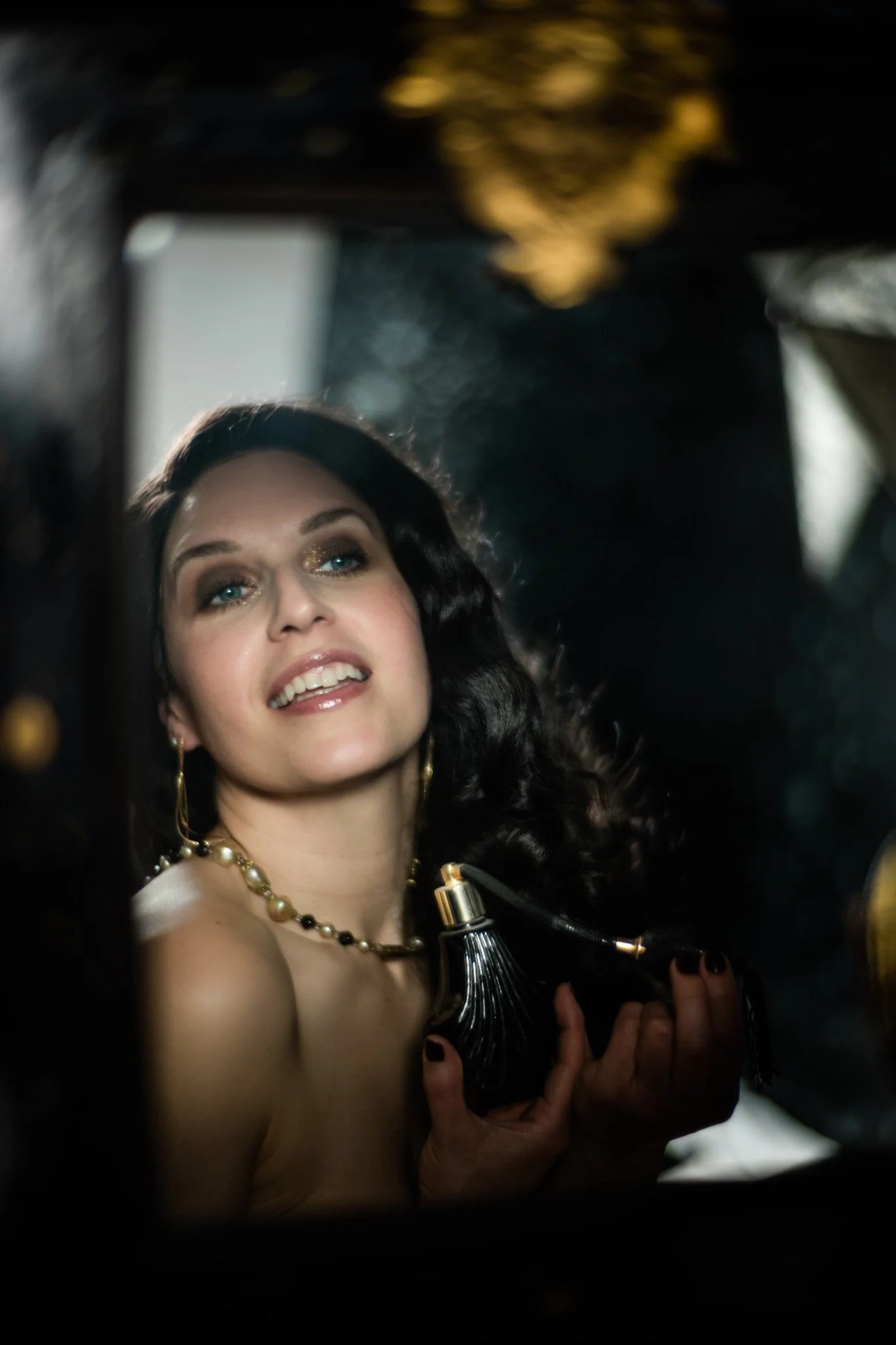
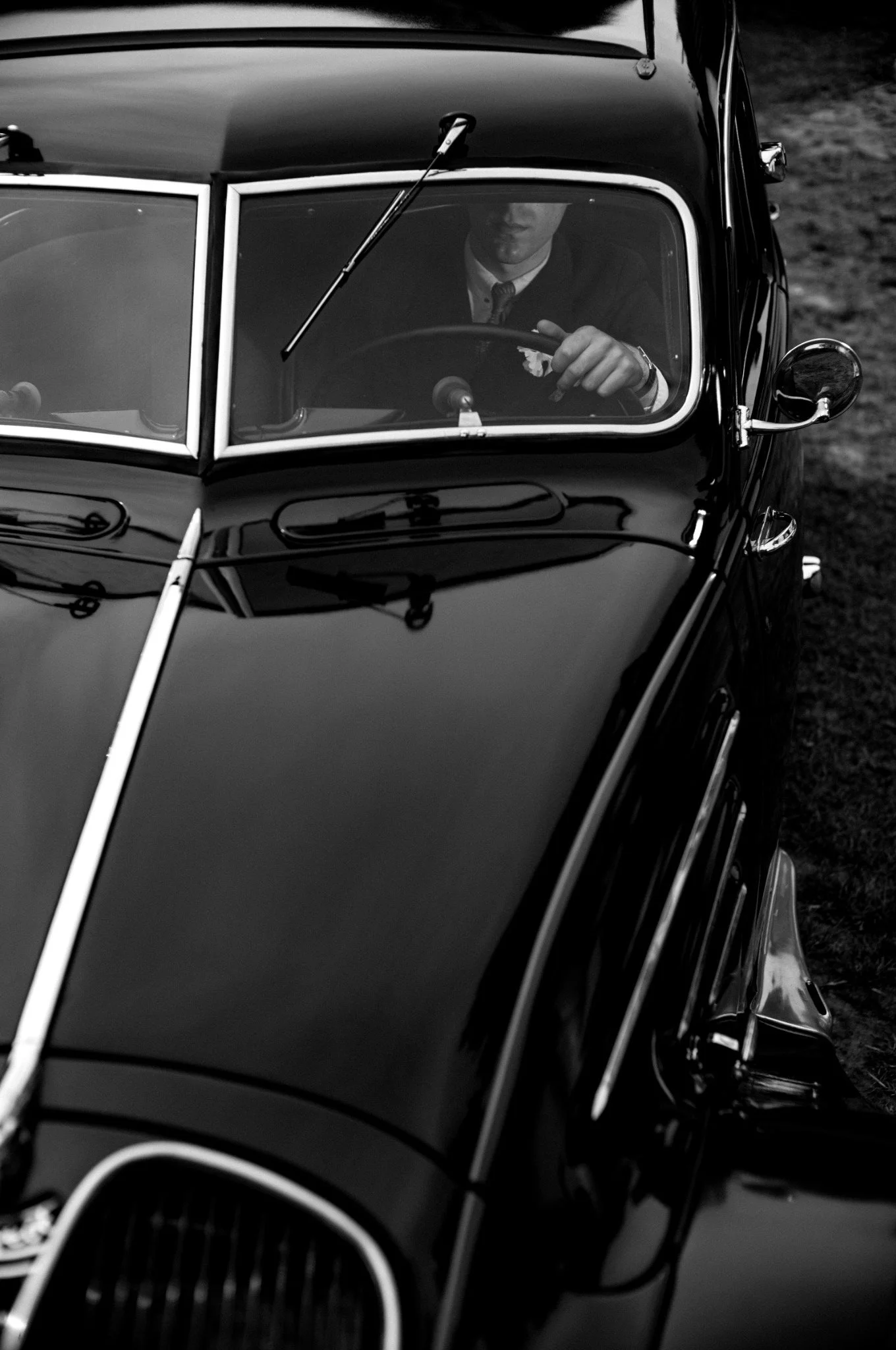
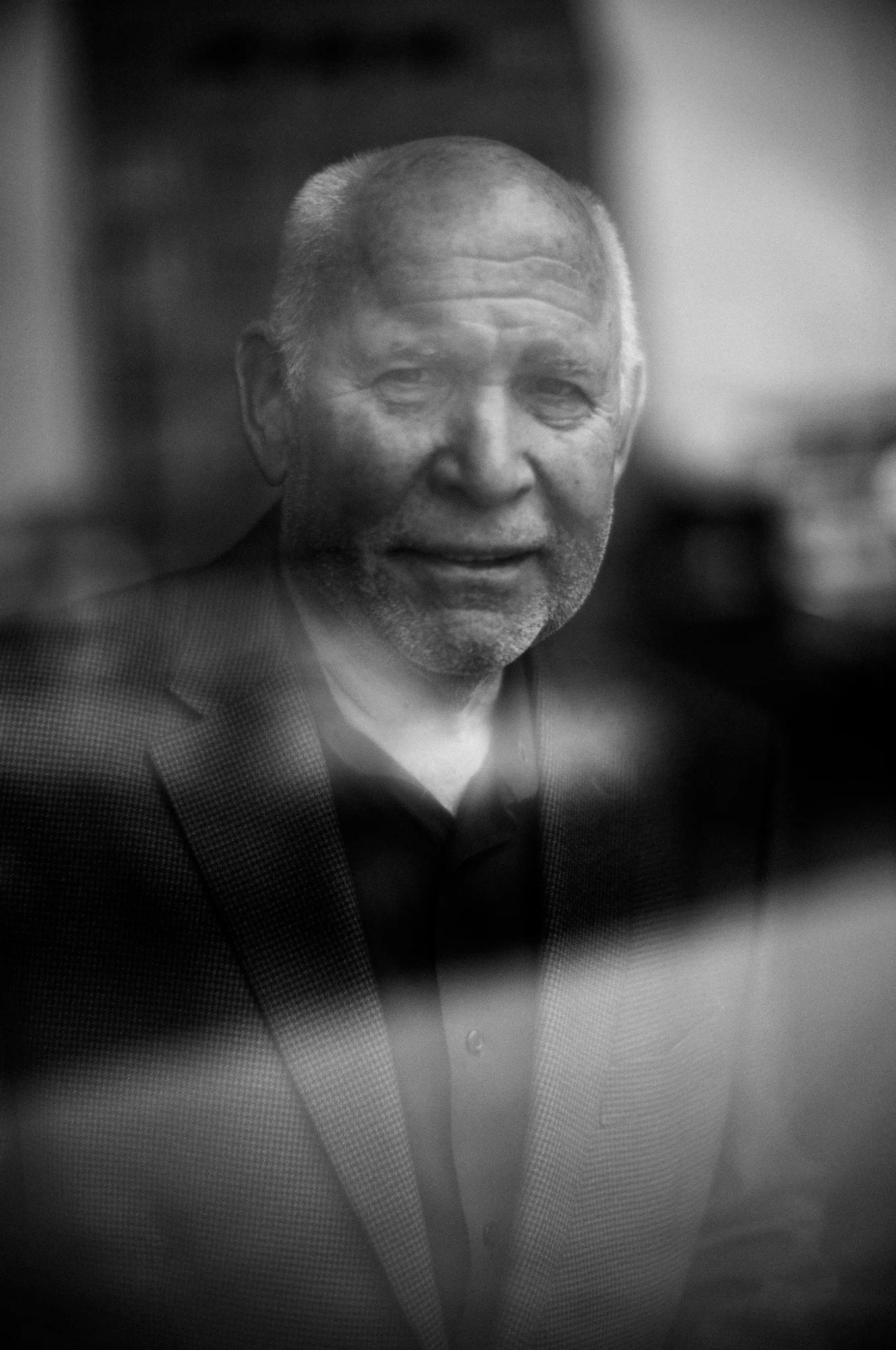
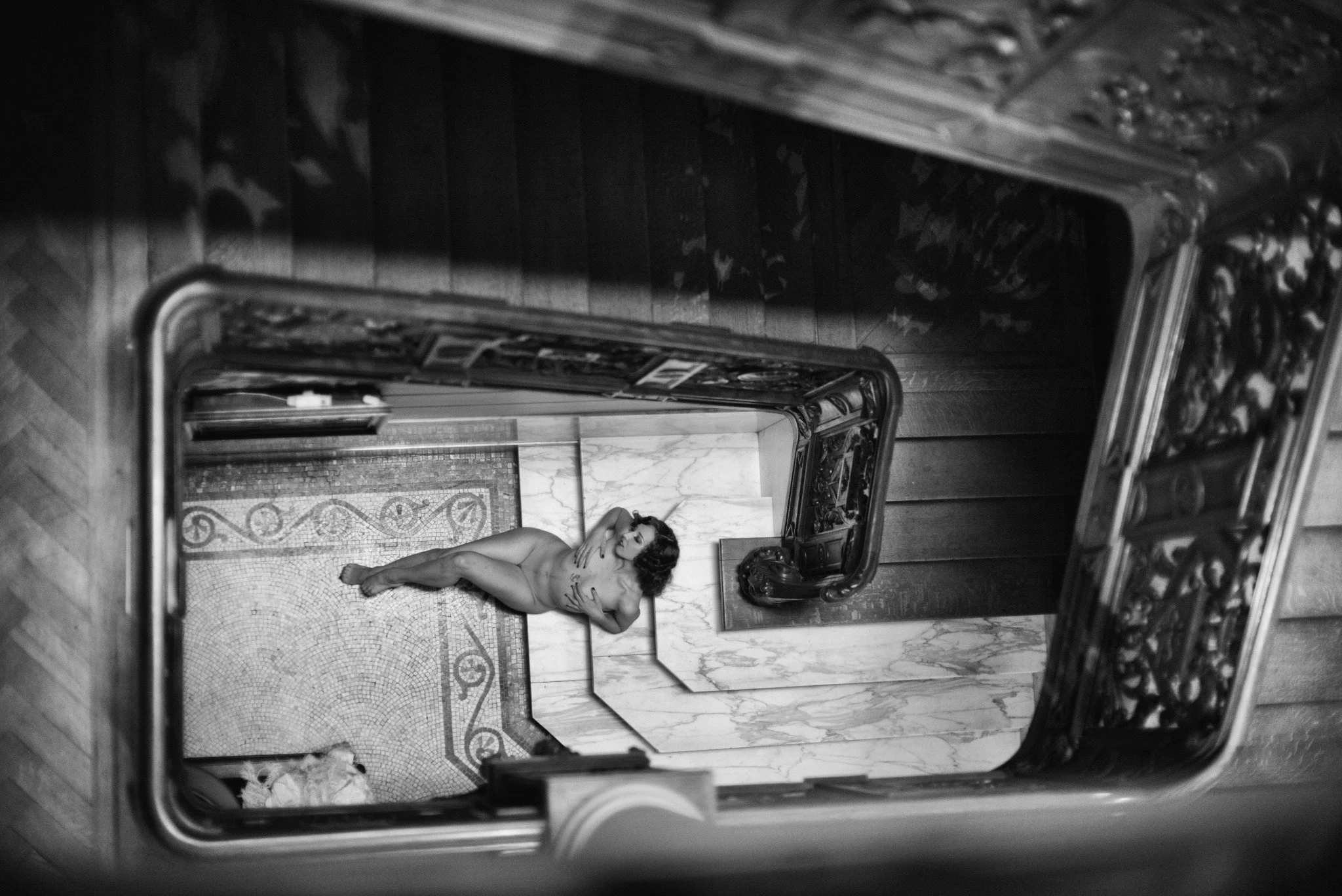
A moment in Florence, with a touch of the Roaring Twenties. Photographed with the Leica SL Typ 601 and Noctilux-M 50mm f/0.95 ASPH.
The next chapter arrived in 2008, when Leica introduced the Noctilux-M 50mm f/0.95 ASPH. It marked a new era for the Noctilux, becoming the first model designed by Peter Karbe and his optical development team.
This was far more than a modest evolution of Walter Mandler’s f/1.0. Leica had pushed the boundaries of optical design even further, creating what was then the world's fastest aspherical lens for 35mm photography. Its entirely new optical construction consists of eight elements in five groups, combining two aspherical surfaces with specialised optical glass and a floating rear element to maintain excellent performance across the focusing range.
It was a remarkable engineering achievement. Leica had managed to squeeze even more light through a 50mm lens while raising the bar for contrast, resolution and optical performance. The Noctilux had entered a new era, and I was about to become rather attached to it.
When I started my Leica journey with the M8 and M9, the 50mm f/0.95 was the lens I wanted more than anything else.
Back then, high ISO performance was considerably more limited than it is today. The ability to shoot at f/0.95 was not just about creating a particular look. It was a genuine advantage when working with available light, especially indoors or in dimly lit environments.
I remember working hard and selling a few things to finally buy one in early 2010. It was a dream come true.
The 50mm f/0.95 ASPH is a very different lens from the older f/1.2 and f/1. Its rendering is more modern, with higher contrast and an extraordinary ability to separate a subject from the background. The fall-off can be dramatic, particularly when photographing portraits wide open.
It is also a substantial piece of glass. Focusing at f/0.95 requires concentration, and the combination of its weight and size makes it a lens you notice when carrying it around.
Eventually, I became a little bored with it and sold it. But I soon started missing it and, before long, bought another one. I suppose I am not the only photographer who has gone through this. Some lenses simply have a way of finding their way back into your camera bag.
I understand why photographers love the f/0.95. It can produce images that are difficult to achieve with other lenses, and its ability to work in very low light remains impressive. But over time, I found myself returning to the more gentle rendering of the 50mm f/1.
The f/0.95 was an important chapter in my photographic life. It gave me the light I was chasing when I first entered the Leica world.
Yet it was not the lens that would eventually become the signature of my work.
Through the Eyes of the Noctilux 50mm f/0.95 ASPH (2008)
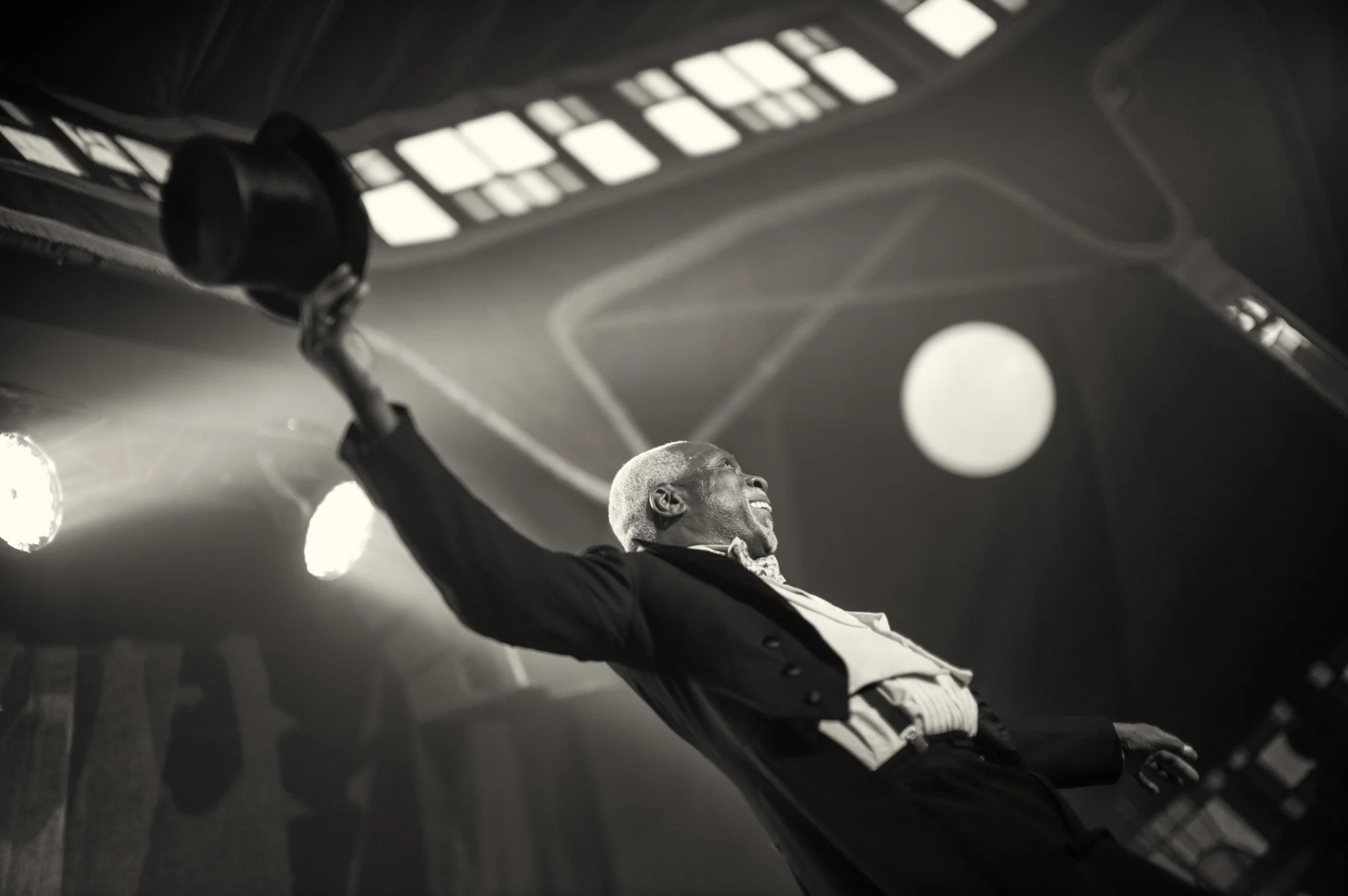
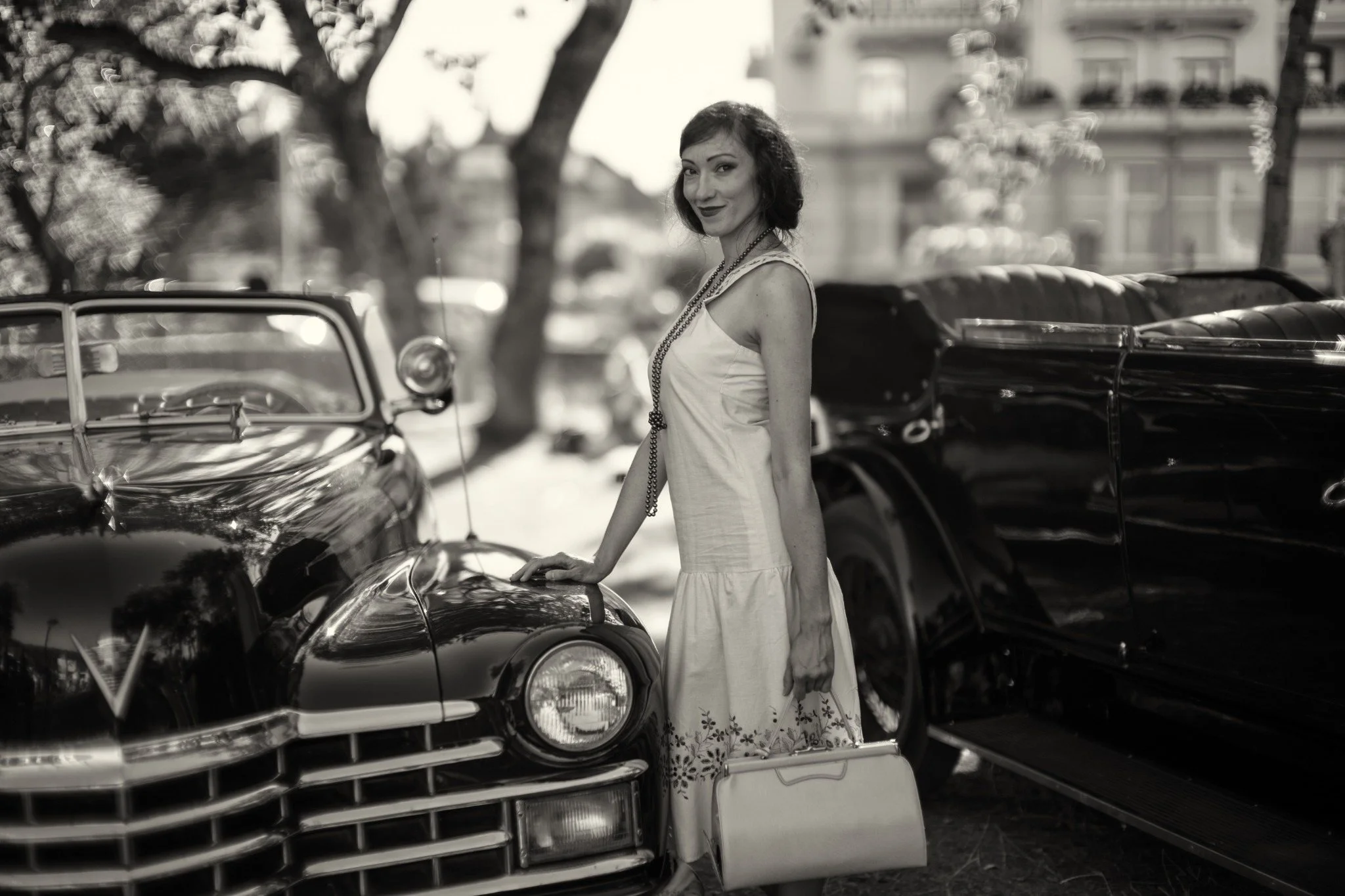
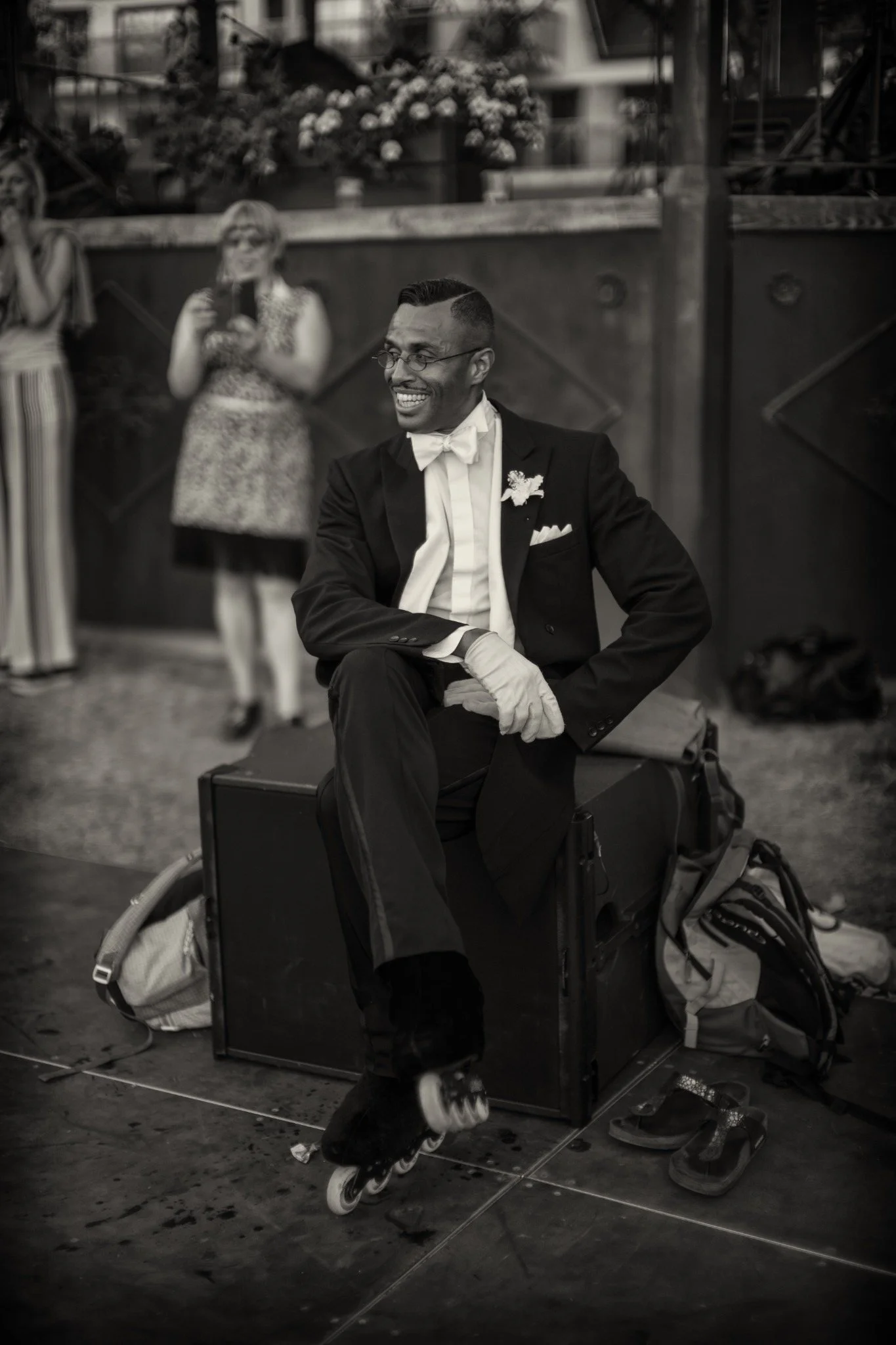
The special editions of the Leica Noctilux 50mm f/0.95
The f/0.95 also developed an interesting life beyond its regular production versions. Leica and its partners released a number of special editions, each with its own identity. For collectors, this created an entire subculture around a lens that was already something of an icon.
The silver version is an interesting example. Leica released special silver editions for the Leica Shop Vienna anniversary celebrations, including a 20th-anniversary edition in 2011 and another for the store's 25th anniversary in 2016. In between those releases, Leica also introduced silver anodised as a regular production finish in 2014. The Vienna editions are particularly beautiful, combining a silver finish with a classic-inspired barrel design that recalls the aesthetic of earlier Leica lenses.
There was also a special Korean edition, limited to 70 pieces, created to mark the 70th anniversary of Korean independence. It was finished in black paint and is now another sought-after collector's variation.
In 2015, Leica introduced the Edition 0.95, a collaboration with the luxury accessories collection associated with S.T. Dupont. The lens was limited to 95 pieces worldwide. Its black finish, distinctive detailing and white-filled 0.95 engraving gave it a very different appearance from the standard lens. It was part of a wider collection that included writing instruments and other accessories.
Perhaps the most striking edition arrived in 2023: the Noctilux-M 50mm f/0.95 ASPH. Titan. Limited to just 100 pieces worldwide, it featured visible components made from solid titanium. Leica originally priced it at €16,500 including VAT. Today, it attracts a substantial premium in the collector's market, although individual auction results are not necessarily representative of its everyday market value.
What is interesting about all these editions is that the optical formula remains the same. You are still buying the 50mm f/0.95 experience. The differences are in the materials, finishes, design details and rarity. For some, that is exactly the appeal. For others, the regular black version is all they need.
A special mention here goes to Charlize, better known as the Nocti Girl, who has become one of the most recognisable advocates for the 0.95 Noctilux. Her enthusiasm for this lens is a reminder that the relationship between a photographer and a Noctilux can become something quite personal. Some people simply fall in love with the way the 0.95 sees the world.
2017 — A different perspective: Leica Noctilux 75mm f/1.25 ASPH
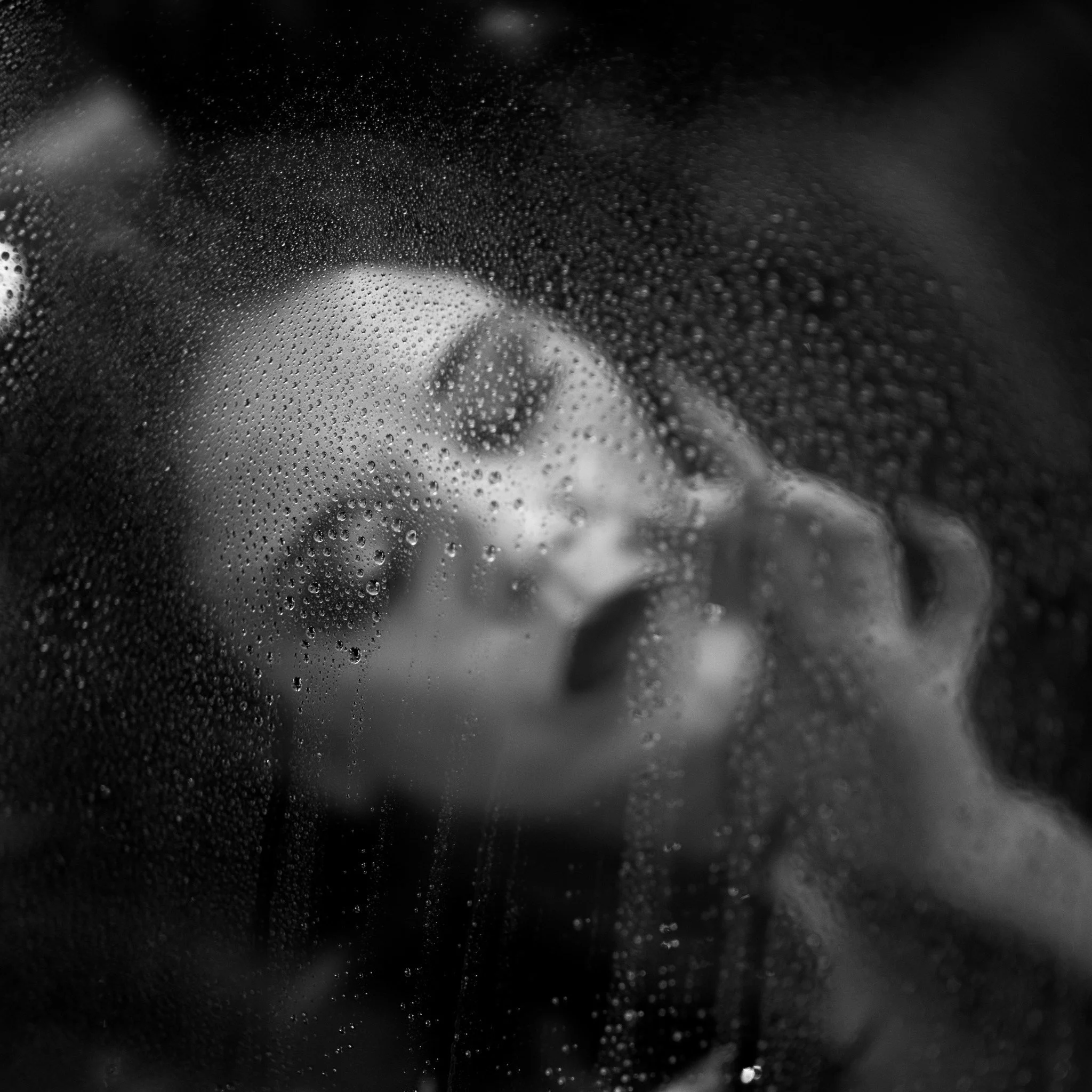
Caroline Venturini in a moment of reflection. The interplay of glass, light and reflections creates an almost cinematic atmosphere. Photographed with the Leica SL2-S and Noctilux-M 75mm f/1.25 ASPH. Featured in my solo exhibition “Echoes of Elegance: A Timeless Journey” at Leica Store Paris Beaumarchais.
Announced in 2017 and released in 2018, the Noctilux-M 75mm f/1.25 ASPH took the family in a new direction. For the first time, the focal length moved beyond the familiar 50mm. It was also the first Noctilux to offer a closer minimum focusing distance, at 0.85 metres rather than the one metre of the 50mm family.
That might sound like a small technical detail, but it opened up new possibilities. The longer focal length offers a very different perspective, particularly for portrait photographers.
In fact, I think the 75mm f/1.25 is probably the best Noctilux for traditional portraiture. It is particularly well suited to upper-body portraits and tighter compositions, from the shoulders upwards to a closer portrait around the neck and head. It gives you a beautiful perspective, allowing you to isolate your subject and create an exceptionally refined separation between the person and the background.
I own this lens and use it primarily for these tighter portraits. It is not something I carry around every day. It is a very heavy lens, and that is one of the reasons it remains a more specialised tool.
The rendering is extremely controlled, with plenty of detail and a smooth transition into the out-of-focus areas. In certain situations, the images almost have a medium-format quality, which is quite an achievement on an M camera.
During my Manchester presentation, I described it as a 50mm APO on steroids. It retains some of that recognisable Noctilux look, but it is a more refined and controlled interpretation. It does not quite have the same rock-and-roll character that I associate with the 50mm Noctilux lenses.
Perhaps that is why I sometimes find myself reaching for the older Summilux-M 75mm f/1.4 by Walter Mandler instead. It has a softer, more vintage character that I personally enjoy.
That does not take anything away from the 75mm Noctilux. For dedicated portrait work, it is an extraordinary lens. It simply illustrates that the most technically accomplished lens is not always the one that speaks to you most strongly.
Through the Eyes of the Noctilux 75mm f/1.25 ASPH (2017/2018)





2021 — Often overlooked: Leica Noctilux 50mm f/1.2 ASPH
Six decades of Noctilux history, side by side. The original 1966 Noctilux-M 50mm f/1.2 AA meets Leica's 2021 reissue, the Noctilux-M 50mm f/1.2 ASPH. Two interpretations of the same legendary focal length, separated by 55 years.
In 2021, Leica brought the Noctilux-M 50mm f/1.2 back to life. The new lens closely followed the concept and optical heritage of the original, but with a newly developed optical design rather than an exact reproduction. It retained much of the softer, more dreamlike character that made the 1966 version so special, while bringing it into a contemporary photographic context.
I had the pleasure of creating the official Leica launch campaign images, which made this release a particularly meaningful moment in my own relationship with the Noctilux family.
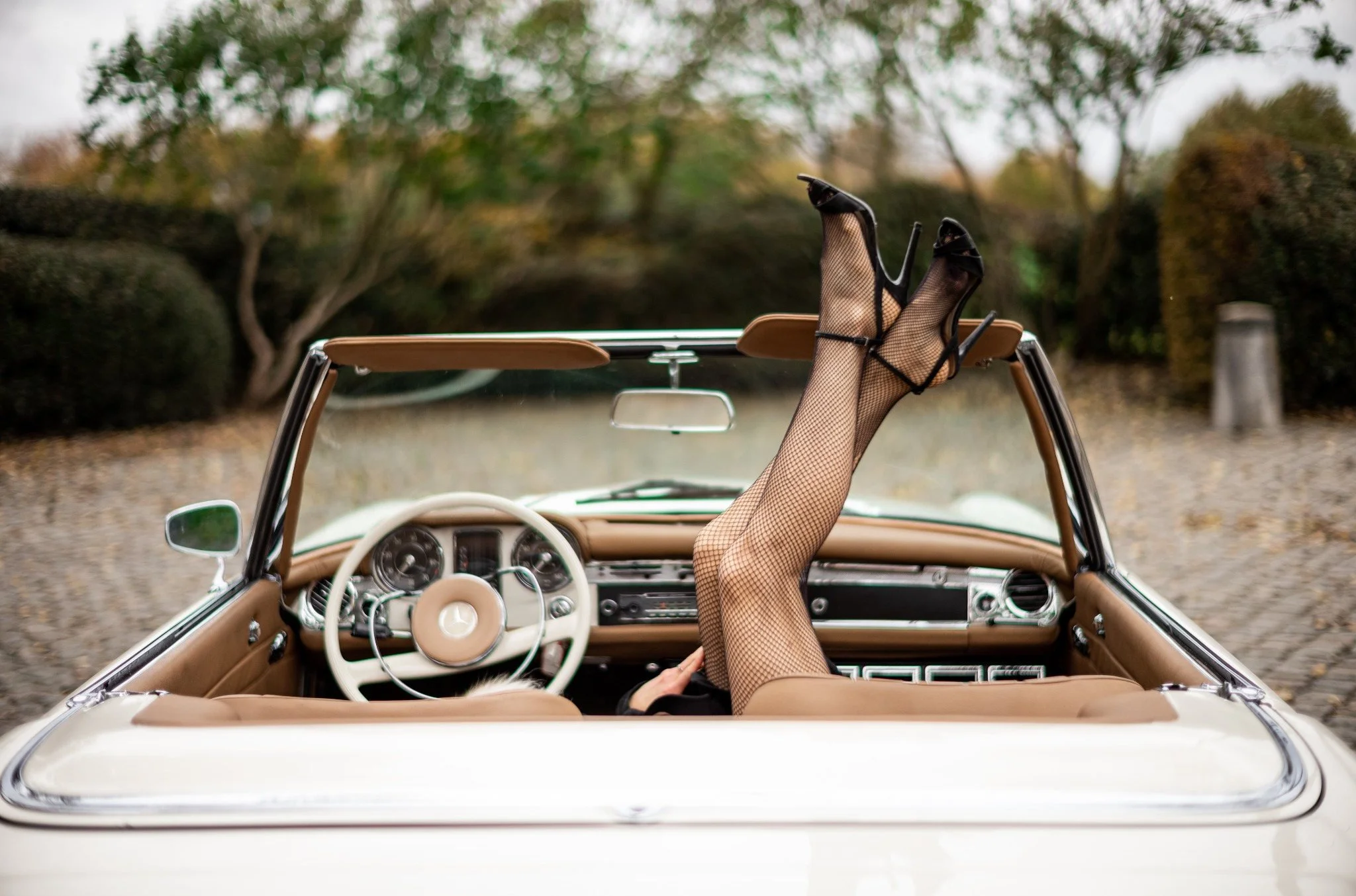
An image from the official launch campaign of the Leica Noctilux-M 50mm f/1.2 ASPH, photographed with the Leica M10-R and a timeless Mercedes-Benz Pagode.
I think this reissue is often overlooked. Many photographers do not quite understand where it sits in the family, or perhaps they compare it too directly with the original f/1.2 and expect it to be a completely different lens. I would actually recommend giving it a closer look.
One of its most interesting qualities is its dual character. Wide open, it offers plenty of that Noctilux atmosphere. The rendering is soft and full of character, perhaps a little too soft for some photographers. Stop it down slightly, however, and you gain a much more defined image with enough sharpness for a wide range of subjects.
That makes it a surprisingly versatile lens. It is also one of the more compact Noctiluxes, and much easier to take along for a day of photography than the larger 50mm f/1, 50mm f/0.95 or 75mm f/1.25.
The different finishes add another dimension. There is the standard black version, the very limited silver edition, which has an obvious appeal for collectors, and the more recent glossy black aluminium finish. The latter is particularly interesting because it brings a different aesthetic to the lens without using the traditional brass construction.
Chanelle in a scene inspired by the glamour of another era. Photographed with the Leica M10-R and Noctilux-M 50mm f/1.2 ASPH, capturing the lens's soft rendering and beautiful tonal character.
I think the 50mm f/1.2 ASPH makes a lot of sense for photographers who already own several Leica lenses. Most Noctilux owners are not using one lens for absolutely everything. They have their Summiluxes, Summicrons and perhaps a few vintage favourites as well. And while the larger Noctiluxes are wonderful, their weight and size can sometimes make you think twice before taking them along.
The reissue is a different proposition. It offers a taste of the Noctilux character in a package that is genuinely enjoyable as a walk-around lens.
For me, the original f/1.2 remains the more interesting lens in terms of rendering. But the modern version has its own balance of character and performance. It is not simply a tribute to the past. It is a very capable lens in its own right, and one I think deserves considerably more attention.
Through the Eyes of the Noctilux 50mm f/1.2 ASPH (2021)
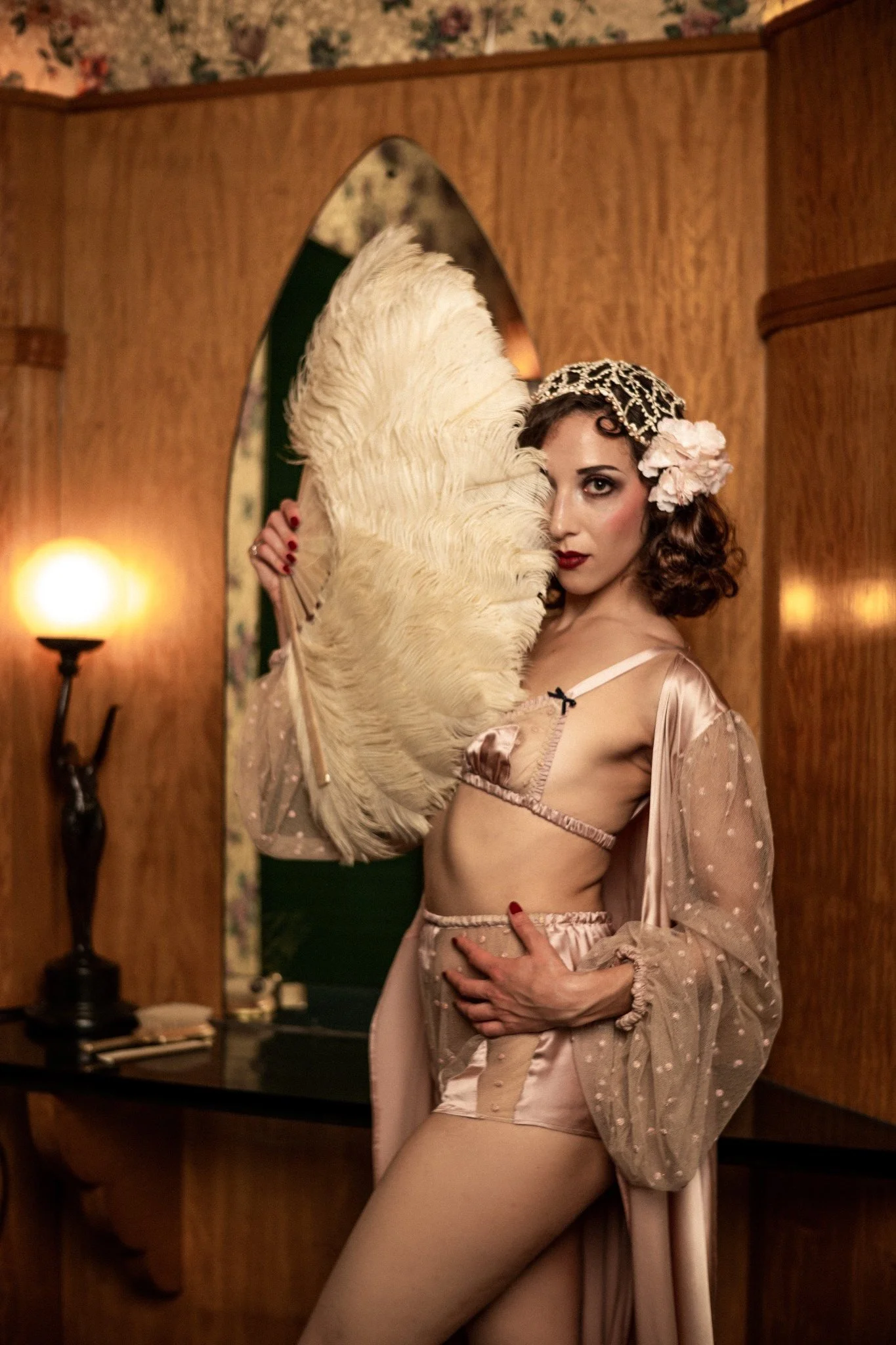
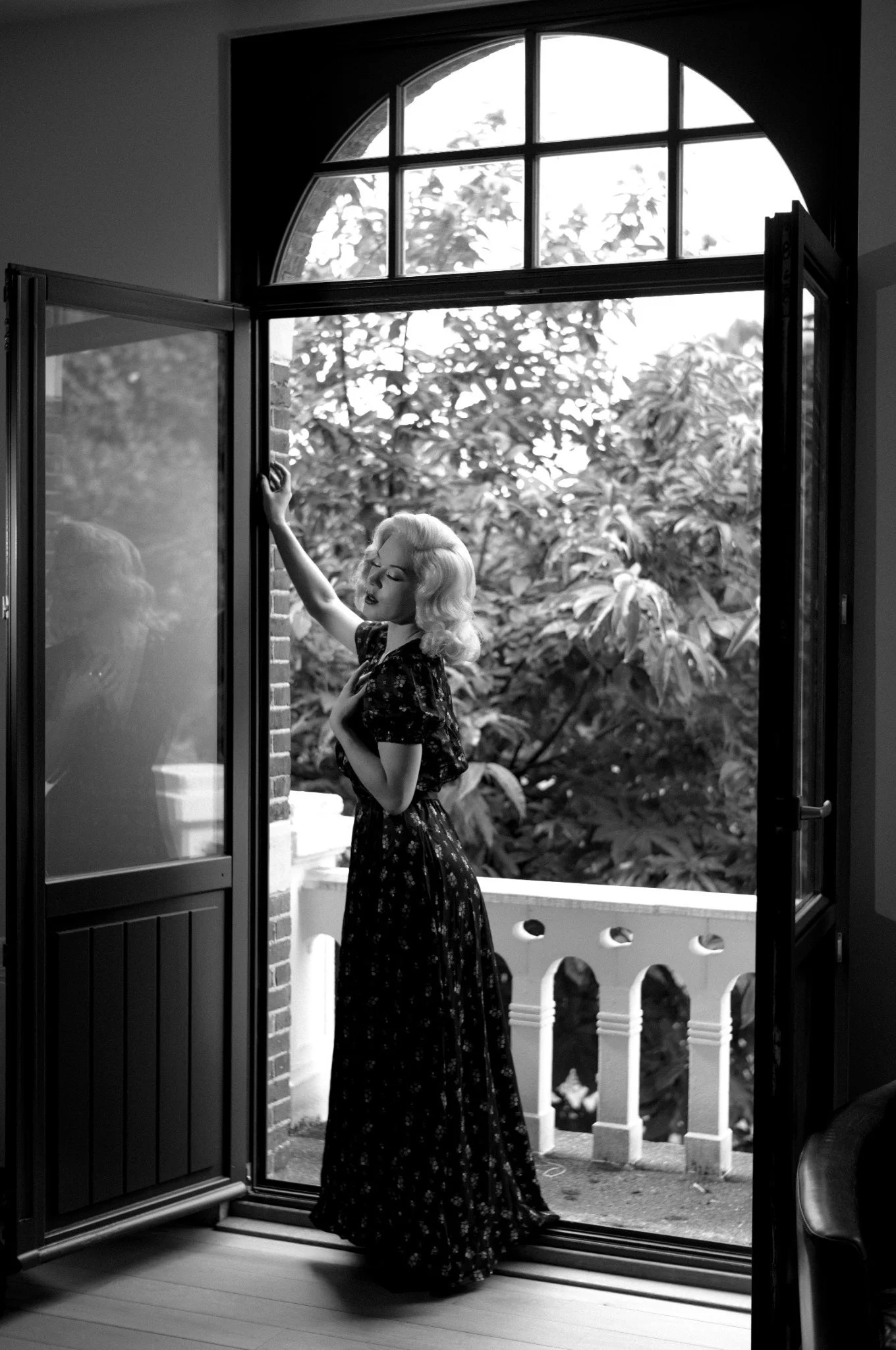

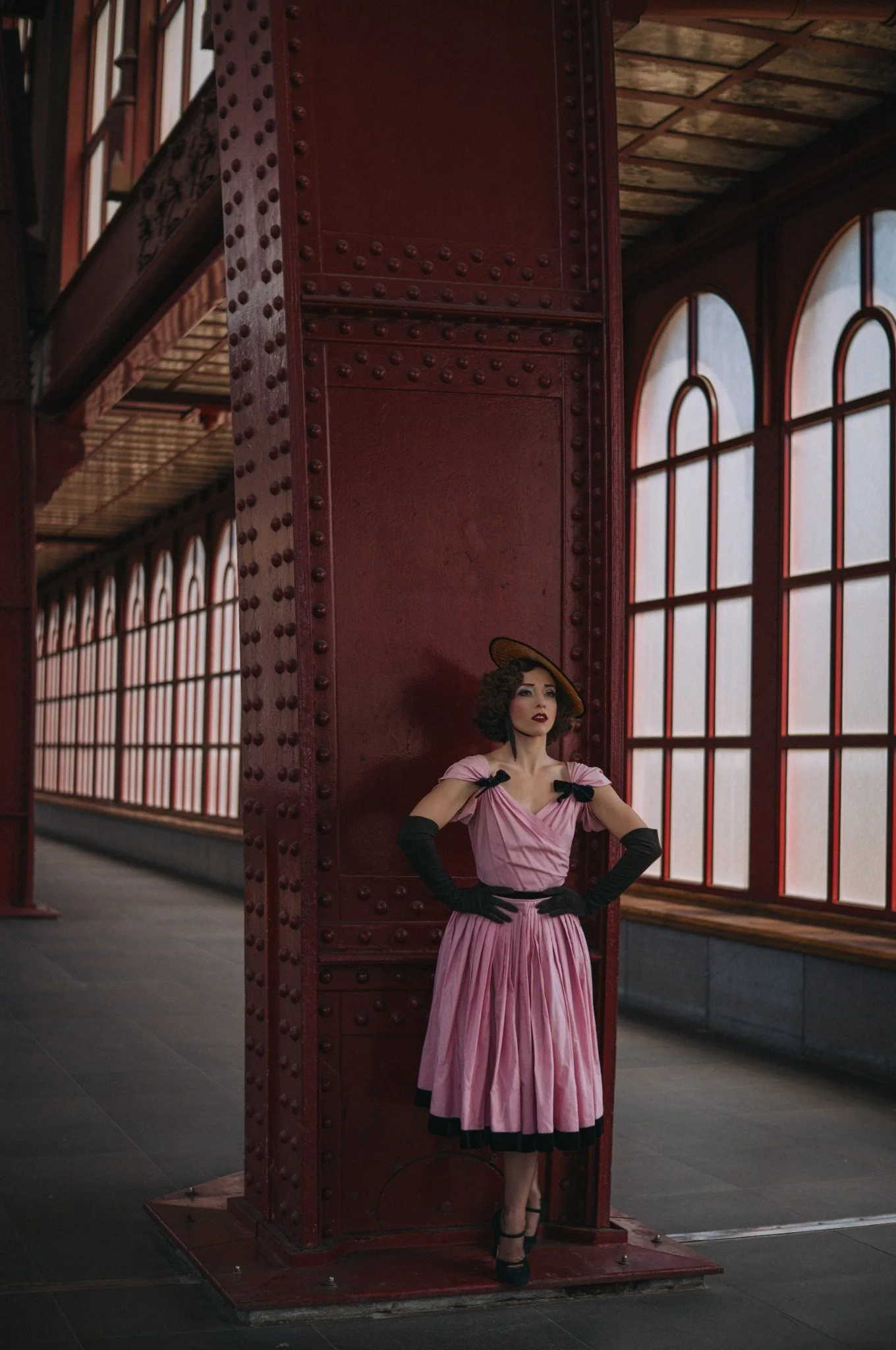

2026 — The all-rounder: Leica Noctilux 35mm f/1.2 ASPH
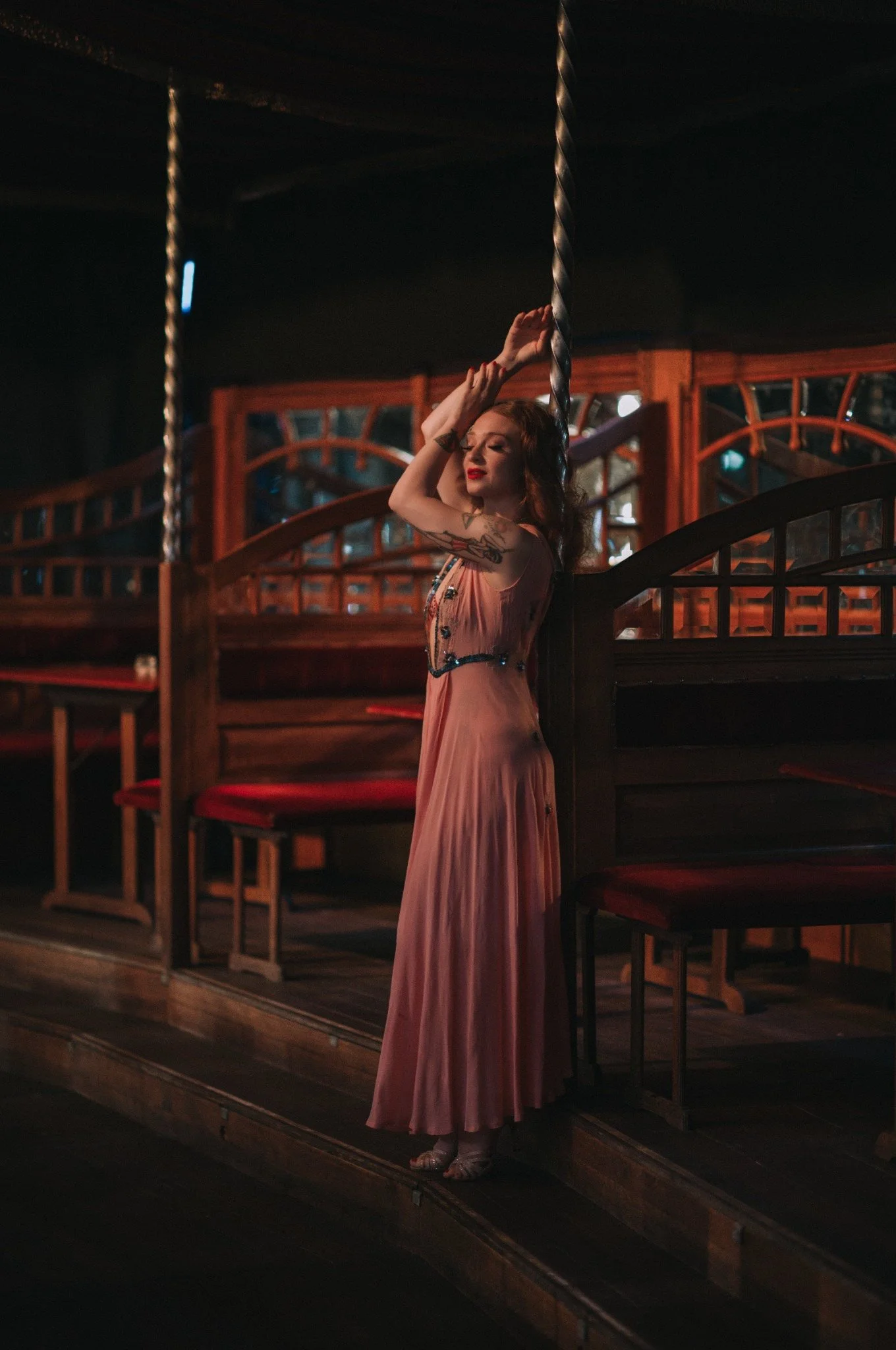
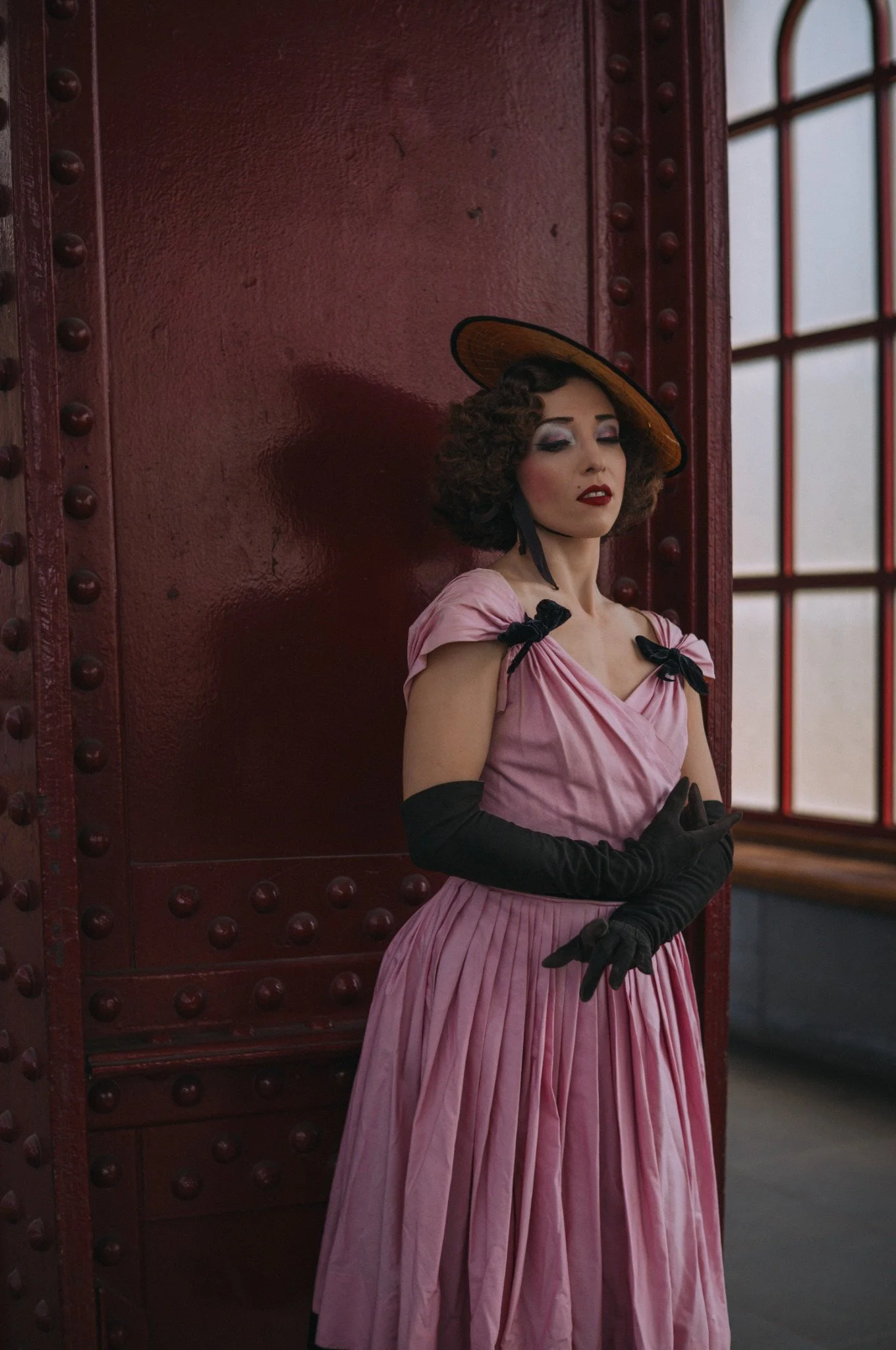
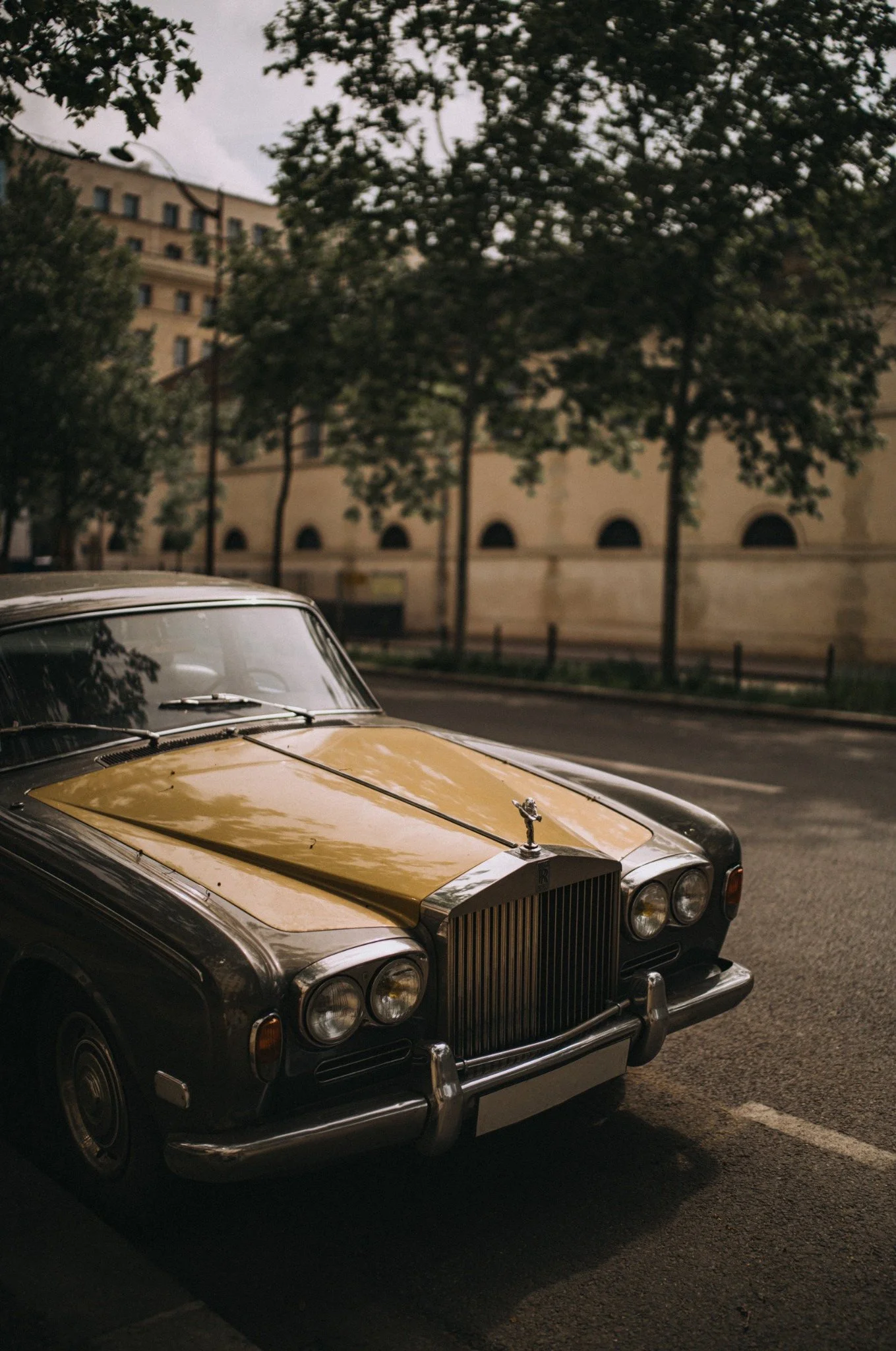
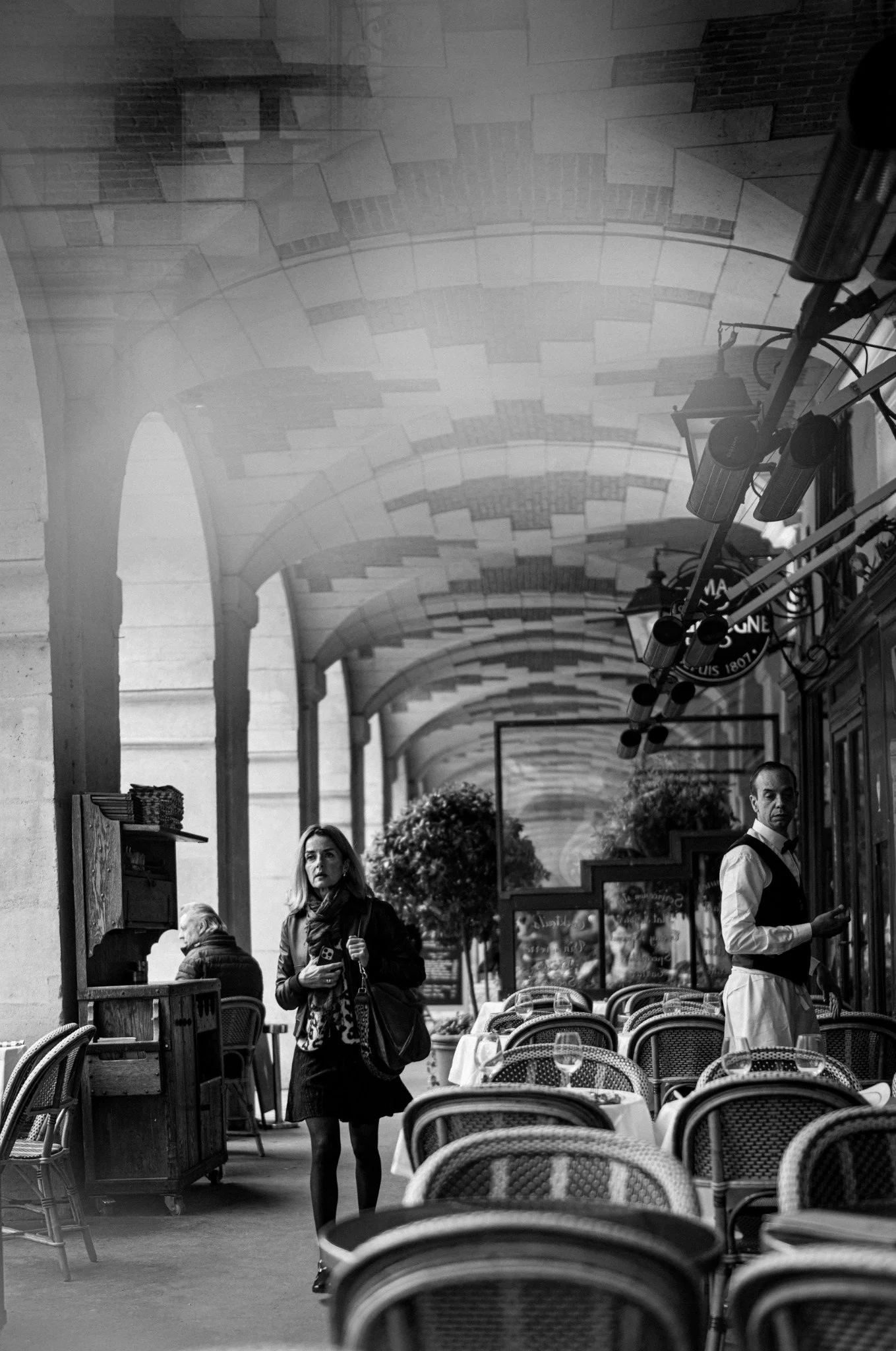
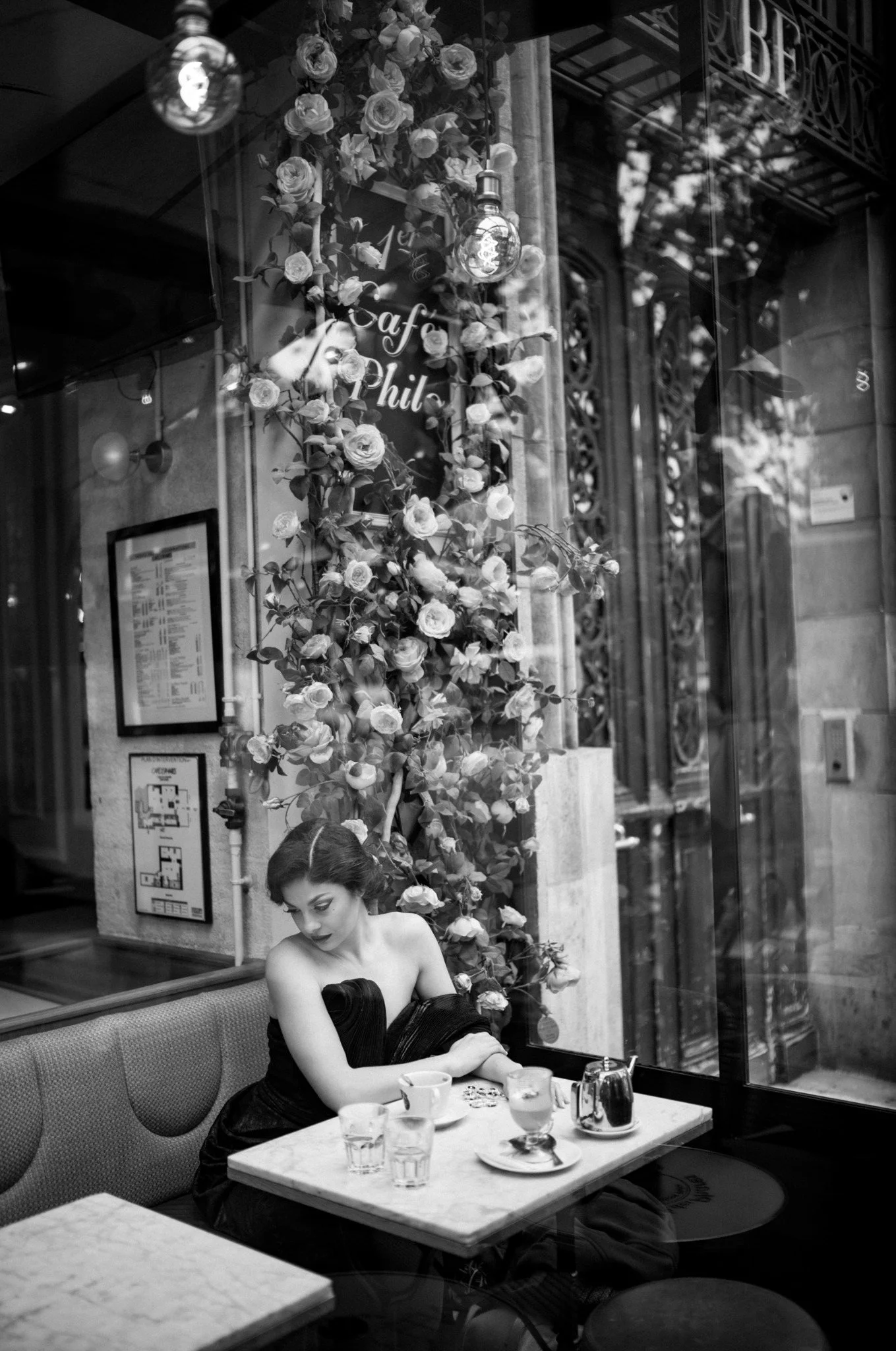
A moment in Paris. An architectural setting, an elegant silhouette and the atmosphere of the city. Photographed with the Leica Noctilux-M 35mm f/1.2 ASPH on the Leica M EV1 by Milan Swolfs.
And then came the 35mm f/1.2.
The arrival of a 35mm Noctilux adds a new dimension to the family. It is not the first Noctilux with a focal length other than 50mm, of course. The 75mm f/1.25 had already taken the family in that direction. But the 35mm brings something quite different: a combination of speed, perspective and close-focusing ability that makes it exceptionally versatile.
Of all the Noctilux lenses, I would argue that this is the most versatile. In fact, if someone asked me which Noctilux I would recommend for general photography, this would be my answer.
It can move comfortably between landscapes, environmental portraits, travel photography and close-up details. You can photograph a person while keeping the room around them, capture architecture and atmosphere, or move closer to explore the smaller details of a scene. It is a lens that encourages you to tell a more complete story rather than concentrating only on the subject.
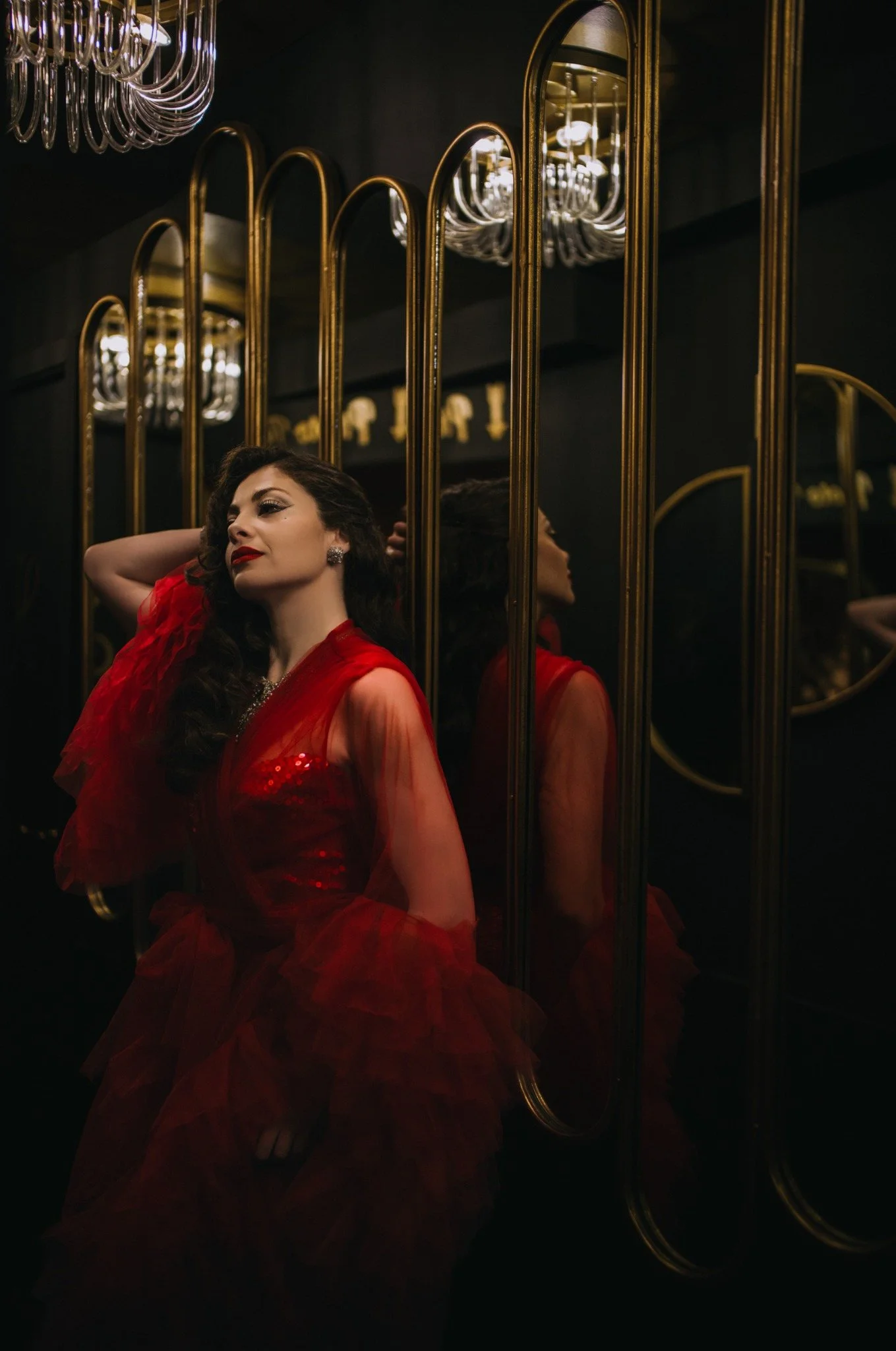
A touch of theatrical glamour with Dann. The rich red of the gown, sculptural details and warm ambient light create an almost Old Hollywood scene. Photographed with the Leica Noctilux-M 35mm f/1.2 ASPH on the Leica M EV1 by Milan Swolfs.
That is particularly appealing to the way I like to photograph. A portrait does not always have to be a tight headshot. The surroundings, the architecture, the objects and the small details can tell us just as much about a person as their expression.
The 35mm also offers a close-focusing distance of just 0.5 metres, beyond the usual 0.7-metre rangefinder limit. With the M EV1, you can focus throughout that entire range using the electronic viewfinder. On traditional rangefinder M cameras, focusing between 0.7 and 0.5 metres requires Live View or an electronic viewfinder. That extra flexibility opens up more possibilities, especially when travelling or working in confined spaces.
Of course, you pay a considerable premium over the Summilux-M 35mm f/1.4. But the difference between f/1.4 and f/1.2 is not simply a number on the aperture ring. That small difference, combined with the optical design, has a visible impact on the way an image is rendered. It creates a particular sense of depth and separation. Some images have an almost medium-format quality, with a beautiful transition from the sharp subject into the surrounding blur.
What I appreciate most is that the 35mm manages to offer this Noctilux character without becoming difficult to use. It is surprisingly compact, easier to focus than the larger 50mm f/0.95 and feels much more at home as an everyday lens.
For me, it is the Noctilux that can do almost everything. If you are looking for one lens to take from landscapes to portraits, from travel to closer details, the 35mm f/1.2 is probably the most compelling choice in the entire family.
It does not replace my 50mm f/1. That lens remains my personal signature. But if I had to recommend one Noctilux to somebody who wants the greatest range of photographic possibilities, it would be the 35mm.
For a closer look at my experience with this lens, read my dedicated Leica Noctilux-M 35mm f/1.2 ASPH review.
Through the Eyes of the Noctilux 35mm f/1.2 ASPH (2026)



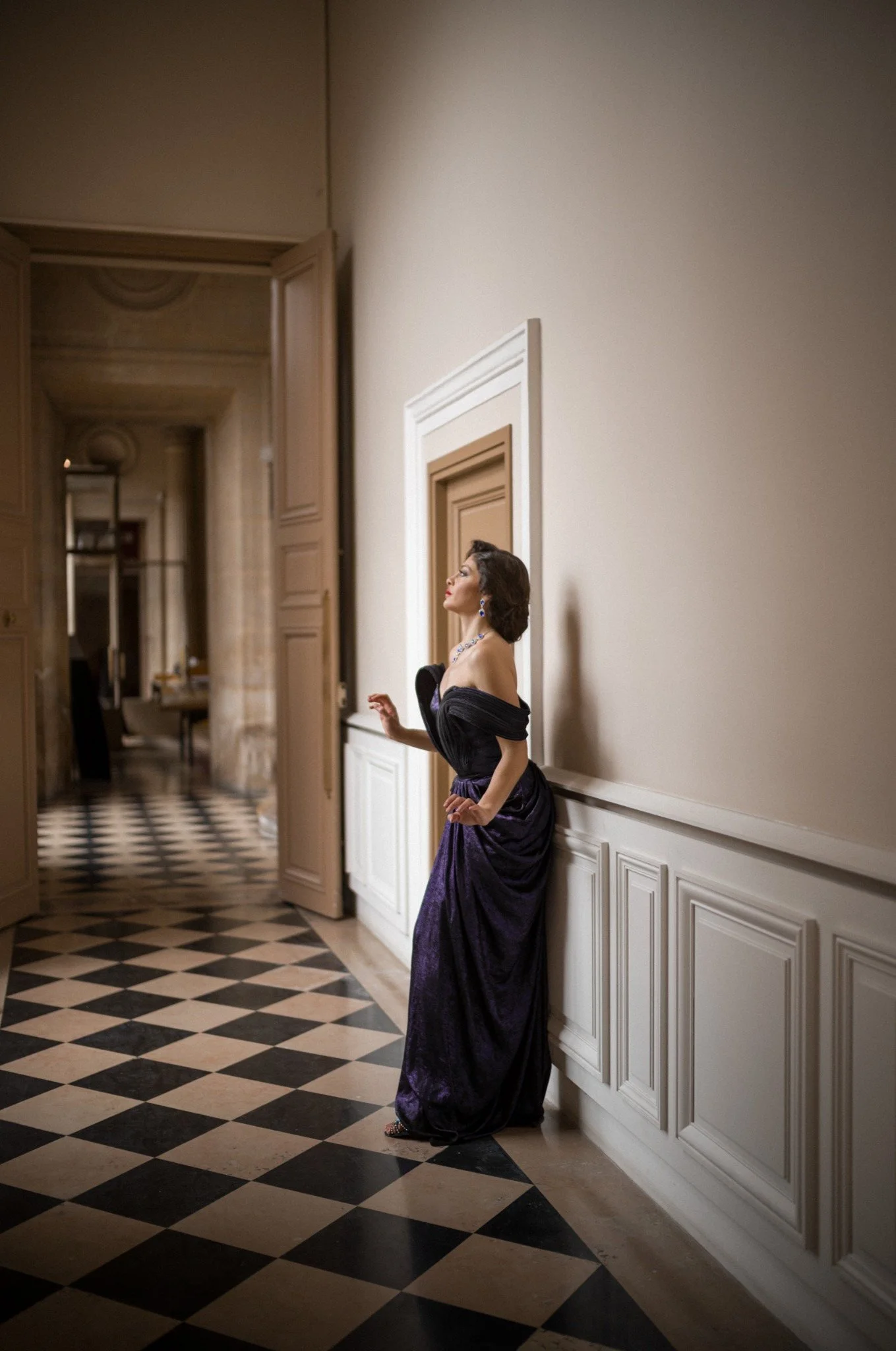
The evolution of Leica Noctilux: Chasing light, finding character
Looking back at sixty years of Noctilux, it is fascinating to see how the philosophy behind these lenses has evolved.
The original 50mm f/1.2 was created in a time when shooting in low light was a genuine technical challenge. The 50mm f/0.95 continued that pursuit, offering even more light and a very distinctive rendering. Later generations introduced a different balance between speed, optical correction and usability.
I remember that the manuals for many of the earlier lenses often recommended stopping down for ultimate sharpness. That reflected the optical priorities of their time. With the newer generations developed under Peter Karbe, including the 50mm f/0.95, the 75mm f/1.25 and the 35mm f/1.2, we see a different level of optical performance, even at maximum aperture.
But this evolution does not mean that the older lenses have become less interesting. Quite the opposite. Their particular rendering is precisely why so many photographers continue to seek them out.
There is also a common misconception among people who are new to Leica. They sometimes assume that the Noctilux must be the best or sharpest lens in the system. That is not necessarily true, and it is certainly not the reason I buy one.
You do not buy a Noctilux simply for sharpness. You buy it for the way it renders an image.
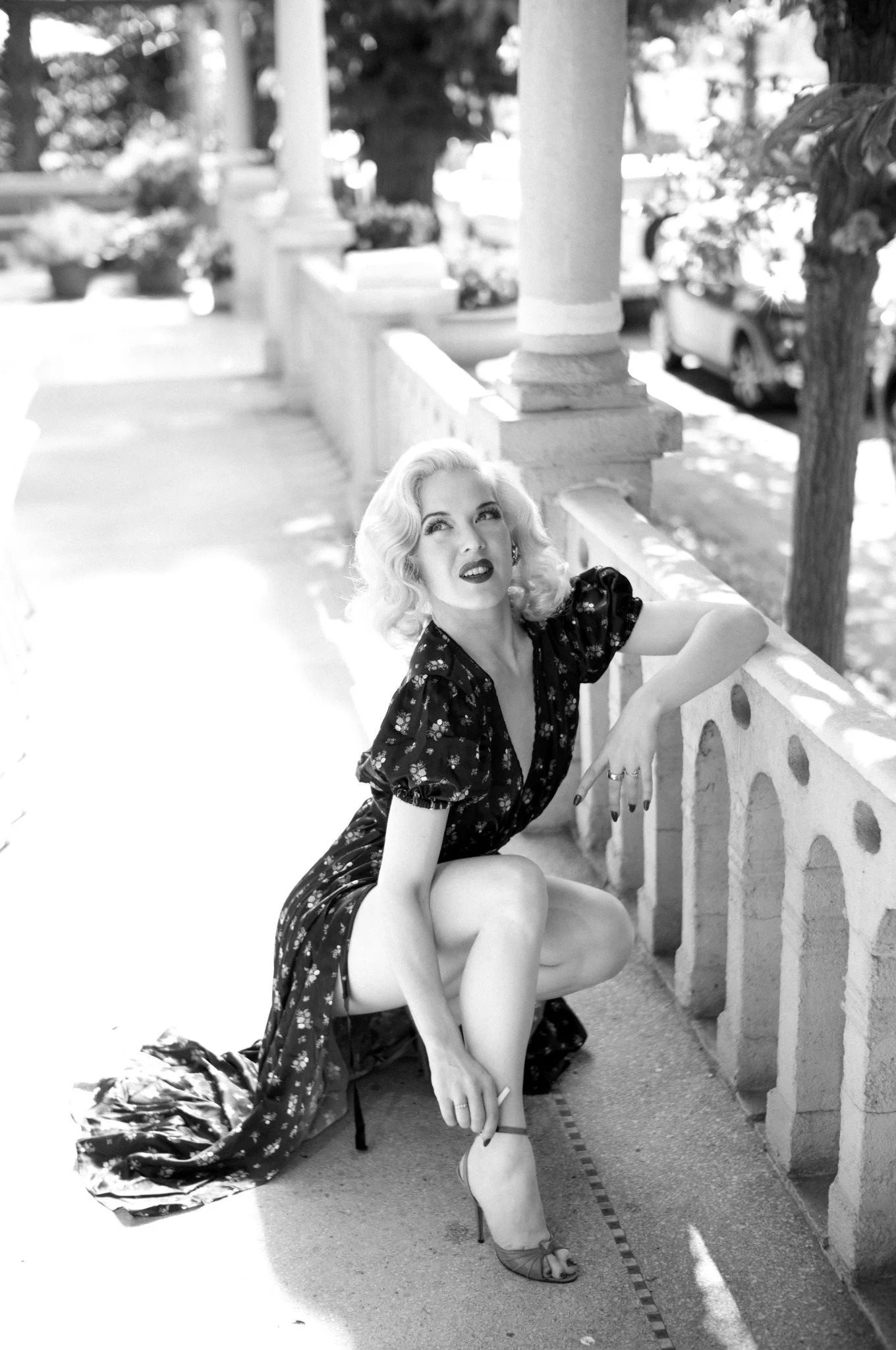
A Poison Ivy-inspired portrait of Chanelle, playing with shadows, perspective and the atmosphere of an old-world interior. Photographed with the Leica M EV1 and Noctilux-M 35mm f/1.2 ASPH. Art direction and photography by Milan Swolfs.
Today, modern cameras offer excellent high ISO performance. We no longer need an f/0.95 lens in quite the same way we did when I started with the M8 and M9. There are plenty of lenses that are faster, sharper, smaller or considerably less expensive. Yet very few inspire me in quite the same way.
There is another side to the Noctilux story, too. These lenses are often dream purchases, but living with them is a different matter. The larger models can be heavy and cumbersome, particularly if you are walking around all day. Even when you love the results, you might find yourself leaving them at home and reaching for something smaller.
That is why I think the 50mm f/1.2 reissue deserves more attention. It offers a balance that some of the other Noctiluxes cannot. And it is also why the 35mm f/1.2 is such an interesting addition: it brings the Noctilux experience into a much more versatile photographic tool.
Stop down for what?
Peter Karbe once posed a question that has stayed with me: Stop down for what?
It is a good question, especially when discussing the Noctilux. You invest in these lenses because of their extraordinary maximum apertures. That is part of the premium you pay, and it is also a big part of what gives them their particular character. So why not use it?
I certainly enjoy shooting wide open. The glow, the separation, the transitions and the way the lens renders light are all part of the experience. But owning a Noctilux does not mean you have to shoot at f/0.95, f/1 or f/1.2 every time. The aperture ring is there for a reason, and sometimes stopping down is simply the right decision for the photograph.
Another frame from the official Leica Noctilux-M 50mm f/1.2 ASPH launch campaign, featuring Ben Debruyn. The reflections and warm interior light give this portrait a distinctly cinematic atmosphere.
I admit that I do it myself, particularly with the 75mm f/1.25. When I move closer to my subject for a tighter portrait, almost a headshot, I sometimes stop down a little to make sure both eyes are in focus. At that distance, the depth of field can become extremely thin. I would rather have the photograph I intended than insist on shooting wide open just because the lens allows me to.
The same applies to other situations. Perhaps you want a little more detail in the scene, more depth across your subject, or simply a different balance between sharpness and character. There is no rule that says a Noctilux must always be used at its maximum aperture.
The important thing is to understand what happens when you open it up, and what you gain or lose when you stop down. Use the aperture that serves the image. And if that happens to be f/0.95, enjoy every bit of it.
How to shoot with a Leica Noctilux wide open
Shooting a Noctilux wide open can be incredibly rewarding, but it also asks a little more from the photographer. At f/0.95 or f/1, the depth of field can be extremely shallow. You will miss focus from time to time. It happens to everyone, and it is part of working with these lenses.
My first advice is simple: do not become too obsessed with getting every frame perfectly sharp. Relax, enjoy the process and take a little time to understand how the lens behaves.
I often shoot a short burst of frames when working wide open, particularly with a moving subject. I also move slightly forward or backward, making a few exposures at different distances to give myself a better chance of getting the focus exactly where I want it. It is a practical habit, especially for portraits.
I have also used the 50mm f/0.95 to photograph events, where things are moving constantly and you rarely get a second chance. Dancing guests, burlesque performers on stage, people moving through changing light. There were moments when I managed to nail focus, or came remarkably close, using nothing but the rangefinder. After years of working with it, you develop a certain instinct for the lens. You begin to anticipate movement and understand where the focus needs to be. It is not something that happens overnight, but it is incredibly satisfying when it comes together.
A higher shutter speed can also help. Remember that at these apertures, even a small movement from either the photographer or the subject can make a difference.
If you are finding rangefinder focusing difficult, try using an electronic viewfinder. Leica itself recommends an EVF for working with the Noctilux, and it can make a considerable difference, particularly when your eyesight is not quite what it used to be. The rear screen is another option, especially when you have time to compose more carefully.
From my event photography days: The Flying Willy in full performance, surrounded by dancers and feathers. Photographed wide open at f/0.95 with the Leica M246 and Noctilux-M 50mm f/0.95 ASPH. A good example of how I used this lens in the unpredictable atmosphere of a live show.
This is also where the Leica SL system and the M EV1 make a lot of sense as companions to the Noctilux family. Having an electronic viewfinder available gives you another way to focus accurately at these very wide apertures. The SL bodies offer a comfortable handling experience, particularly with the larger lenses, while the M EV1 brings that EVF experience directly into the M system. They are both very natural options to consider when working with a Noctilux.
I would also recommend experimenting with ND filters when shooting in bright conditions. At f/0.95 or f/1.2, there will be situations where even the fastest shutter speed is not enough to maintain your preferred aperture. The M11 generation offers a lower base ISO than some earlier M bodies, which gives you a little more flexibility, but an ND filter remains a useful accessory when working in strong daylight.
With the 75mm f/1.25, I would personally recommend considering an SL body if you have one available. Its size and weight make the combination more comfortable to handle, and the EVF is particularly useful for precise focusing. I still enjoy using the 75mm on my M cameras, though. A handgrip can help balance the setup and make it more comfortable during longer sessions.
Above all, do not let the technical challenge take over. The point is not to prove that you can shoot every frame at f/0.95. The point is to create photographs that mean something to you.
Long live the King of the Night
A final touch of Old Hollywood glamour. Kirby Marzelle, photographed with my signature Noctilux-M 50mm f/1 on the Leica M10-P Reporter. A lens I keep coming back to, for its character, atmosphere and unmistakable rendering.
For me, the Noctilux will always be part of my photographic signature. The 50mm f/1 is my brush. It is the lens I instinctively reach for, the one whose rendering feels closest to the way I see and the way I want my photographs to look. It is, in many ways, the ultimate Milan lens.
But that does not mean it has to be yours.
Depending on what you photograph, the 35mm f/1.2 might be the better choice. Perhaps the 75mm f/1.25 is the portrait lens you have always wanted, or the 50mm f/1.2 ASPH is the perfect balance of character and everyday usability. There are now so many Noctilux lenses to choose from, and we are fortunate to have that choice.
Of course, a Noctilux is a considerable investment. It is worth thinking carefully about what you want from it and what you expect it to bring to your photography. Do not buy one simply because it is the most expensive or the fastest lens in the catalogue. Choose the focal length and rendering that suit the way you see the world. And then go out and use it.
When I started with Leica, the 50mm was the only Noctilux available to dream about. Today, there is a whole family of them, each with a different personality and purpose.
And please, do not think of the Noctilux as a portrait lens only. Portraiture is where I use mine most, but these lenses can be wonderful tools for almost any creative work. Landscapes, travel photography, architecture, details and the unexpected moments in between can all benefit from their particular way of rendering light. Sometimes you will miss a shot because the depth of field is too shallow or the subject moves. That is part of the experience. Keep experimenting.
Ultimately, the Noctilux is a lens you dream of owning when you first discover Leica. But the real pleasure begins when you stop dreaming about it and start making photographs with it.
Choose wisely, enjoy the journey and, above all, make it your own.
Long live the King of the Night.
Frequently asked questions about Leica Noctilux lenses
What does Noctilux mean?
The name Noctilux combines the Latin words noctis, meaning night, and lux, meaning light. It reflects the original idea behind the lens family: exceptional light-gathering ability for photography in difficult lighting conditions.
Fay Loren at Stichting TenClub in Amsterdam. A moment of Old Hollywood glamour, photographed with the Leica M11-D and Noctilux-M 50mm f/1.
How many Leica Noctilux lenses are there?
There are six main Noctilux models in the family, beginning with the original 50mm f/1.2 in 1966. The range has since expanded to include the 50mm f/1, 50mm f/0.95 ASPH, 75mm f/1.25 ASPH, the modern 50mm f/1.2 ASPH and the 35mm f/1.2 ASPH introduced in 2026.
Which Leica Noctilux is best for portraits?
It depends on the kind of portrait you enjoy making. The 75mm f/1.25 ASPH is particularly suited to tighter portraits and headshots, with beautiful subject separation. The 50mm f/1 remains my personal favourite for its character and rendering, while the 35mm f/1.2 is excellent for environmental portraits where you want to include more of the surroundings.
Is the Leica Noctilux worth the investment?
A Noctilux is a significant financial investment. Whether it is worth it depends on how much you value its particular rendering, maximum aperture and photographic possibilities. I would not buy one simply because it is the fastest or most expensive lens in the Leica catalogue. Choose the focal length and character that genuinely suit your photography.
Do you always need to shoot a Noctilux wide open?
Absolutely not. The wide maximum aperture is a defining part of the Noctilux experience, but stopping down can be the right choice for a photograph. For example, when making a close headshot with the 75mm f/1.25, I sometimes stop down slightly to keep both eyes in focus. Use the aperture that serves the image.
Can you use Leica Noctilux lenses for landscapes and travel photography?
Yes. Although Noctilux lenses are often associated with portraits and low-light photography, they can be used for many different genres. The 35mm f/1.2 is particularly versatile for landscapes, travel, architecture, environmental portraits and close-up details. The other focal lengths can also be used creatively beyond traditional portraiture.
Which Leica camera works best with a Noctilux?
The Leica M system remains a natural home for the Noctilux family. However, the Leica M EV1 and Leica SL system are also excellent companions, particularly when you want the precision and flexibility of an electronic viewfinder. The SL can be especially comfortable with larger lenses such as the 75mm f/1.25.
A Note of Thanks
A journey like this is never made alone. Over the years, many people have generously shared their knowledge, offered advice, made introductions and opened doors. To everyone who has helped me along the way, and to all the models who have brought my ideas to life, my sincere thanks.
A special thank you to Stefan Daniel, Peter Karbe, Christophe Mueller, Stefan Janssen and Murat Akkas, as well as the many wonderful people at Leica Camera AG. There are simply too many to name individually, but your support and kindness have meant a great deal.
To my Leica friends David Stephens, Patrik Toussaint and Marco Schouten, thank you for the conversations, shared passion and friendship.
And last but certainly not least, my heartfelt thanks to all the models I have had the pleasure of working with throughout this journey. You have brought countless ideas, characters and stories to life, and have been an essential part of what makes this work so rewarding.
About Milan Swolfs
Milan Swolfs is a fine art portrait photographer from Antwerp, Belgium, renowned for his distinctive blend of burlesque and vintage aesthetics. His work channels the timeless Hollywood glamour of the 1920s and 1930s, capturing both men and women in bold yet elegantly refined portraits.
Beginning his career photographing Europe’s largest burlesque events, Milan later transitioned into fine art photography. As an ambassador for Leica Camera and Harlowe Creators, his work has been featured in LFI (Leica Fotografie International), Medium Format Magazine, and Viewfinder. In 2022, he debuted his solo exhibition, Light of Seduction, at the Leica Store in Porto. Most recently, from late 2024 to early 2025, his latest exhibition, Echoes of Elegance: A Timeless Journey, was showcased at the Leica Store Beaumarchais in Paris.
Milan’s portraits celebrate individuality and classic beauty, reviving the charm and allure of a bygone era.
