
The lens that defined my signature by Milan Swolfs

Leica Noctilux 50mm f/1 Review – First Impressions

Leica Noctilux 50mm f/1 v4 coating detail with characteristic front element reflections
The Leica Noctilux 50mm f/1 is one of the most iconic Leica M lenses ever made, known for its unique rendering, shallow depth of field and distinctive character across versions like the E58 and v4.
I have written about the Noctilux many times over the years. I have used it extensively, published images made with it, and referenced it often when describing the look I search for in portrait photography. Yet strangely, I had never created a dedicated review focused entirely on the Noctilux f/1. Despite working with this lens for many years, I had never written a full review of the f/1, and certainly never on my own blog.
Over time, I have had the opportunity to work with most of the major Noctilux lenses, from the original 50mm f/1.2 AA to the 50mm f/1, the 50mm f/0.95 ASPH, the 75mm f/1.25 ASPH, and most recently the 35mm f/1.2 ASPH. Each of these lenses has its own character, its own way of rendering depth and atmosphere, yet all of them share the same underlying philosophy.
Part of the reason this review arrives only now is simple. My own platform only started publishing structured lens reviews relatively recently, beginning with the Classic 50mm Summilux f1.4 Pre ASPH, the Ultimate Leica S review, followed by lenses such as the Noctilux-M 35mm f/1.2 ASPH. The Noctilux f/1 has been present much longer. It is one of the lenses that quietly shaped the visual language now associated with my work.
It is not a lens chosen for perfection, but for feeling. The Noctilux f/1 is not about achieving technical superiority or clinical sharpness. It is about atmosphere, interpretation, and the subtle emotional separation between subject and environment.
For many years, the Noctilux has been more than just a lens to me. It is one of those rare tools that does not simply record an image but influences the way an image is imagined in the first place.
Leica Noctilux 50mm f/1 Review Overview
In this review, I share long-term experience with the Leica Noctilux 50mm f/1, including differences between versions (E58, v2, v3 and v4), rendering characteristics, and how it performs in real portrait work.
Personal History: Ownership and Loss
The Leica M10-R Black Paint with the Summilux-M 35mm f1.4 Steel Rim prototype, which got stolen in Milano (IT)
My relationship with the Noctilux also includes loss.
My first batch Noctilux f/1 E58 was stolen in Italy together with my Leica M10-R Black Paint and a prototype 35mm f1.4 Steel Rim on the way to a shoot near Lago di Como.
The bag was placed between my legs in the train. A conductor passed by. There were almost no people in the wagon. I briefly felt someone sitting behind me, something unusual but easy to ignore in the moment.
Minutes later, the bag was gone.
Suddenly you are standing somewhere unfamiliar, trying to understand what just happened, trying to communicate in a language you speak but not fluently, trying to remain calm while realising that the tools you depend on professionally have disappeared.
Three years later, nothing resurfaced.
Experiences like this inevitably change your relationship with equipment. I now travel lighter and more consciously. I think more carefully about what I bring and why. Expensive gear no longer feels essential for every journey, and increasingly I appreciate lenses that allow character without constant concern.
The attachment to objects fades.
The attachment to photography does not.
Still, the Noctilux remains special.
What Noctilux really means
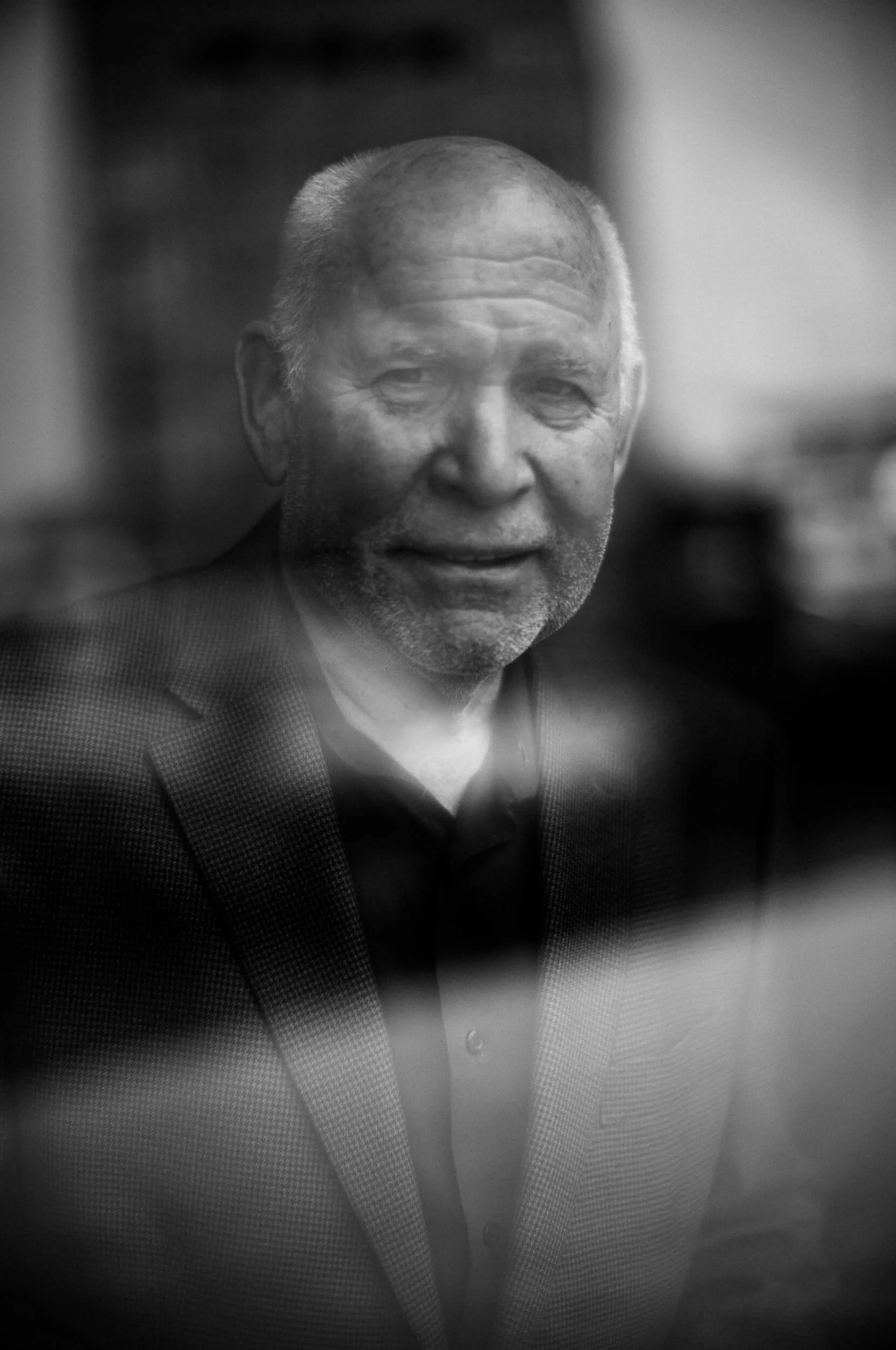
Leica Noctilux 50mm f/1 E58 portrait of tailor in Dublin on Leica M10 Monochrom by Milan Swolfs
At Leica, the name Noctilux has always represented a lens faster than f/1.4. Everything at f/1.4 belongs to the Summilux family. Everything faster than that becomes something else entirely.
It becomes a Noctilux.
The name itself originates from the Latin words noct and lux, meaning night and light. Originally, these lenses existed to make photography possible in extremely low light conditions. When the first Noctilux appeared in 1966 with the 50mm f/1.2, the ability to shoot handheld in near darkness was a remarkable technical achievement.
Today, modern sensors perform exceptionally well in low light. The Noctilux no longer exists because we need more light.
It exists because of the look.
The extremely shallow depth of field creates a distinctive rendering that separates subject from background in a way that feels organic rather than artificial. The Noctilux look is not simply about blur, but about the transition from sharpness into softness and the way the subject is carved out of space.
Leica Noctilux 50mm f/1 Rendering and Character
Leica Noctilux 50mm f/1 v4 with integrated hood
The Noctilux has never been purely about aperture numbers.
Wide open at f/1 the lens produces a rendering that feels alive. Highlights transition gently, contrast remains controlled, and the image often carries a certain softness that feels intentional rather than imperfect.
Black and white photography particularly benefits from this behaviour. Tonal transitions appear smoother and skin retains a natural structure. The lens avoids the overly clinical rendering often associated with modern optics.
In colour, the rendering feels rich but never heavy. There is depth without artificial contrast and separation without harsh transitions.
The Noctilux f/1 has what I often describe as a certain rock n roll character. It is expressive, slightly unpredictable, and never sterile. It does not attempt to remove every optical imperfection, and in doing so it preserves something that many modern lenses have gradually lost.
Personality.
The Noctilux family
Over the decades, the Noctilux evolved from a single lens into a broader philosophy applied across different focal lengths.
Important milestones include:
Original Noctilux 50mm f/1.2 AA compared to the modern f/1.2 ASPH reissue
1966 Noctilux 50mm f/1.2
1976 Noctilux 50mm f/1
2008 Noctilux 50mm f/0.95 ASPH
2018 Noctilux 75mm f/1.25 ASPH
2021 Noctilux 50mm f/1.2 ASPH reissue
2026 Noctilux 35mm f/1.2 ASPH
For decades, when photographers spoke about the Noctilux, they meant one lens: a 50mm.
Even today, 50mm remains the emotional center of the Leica system.
Each generation pushed optical design further, but also gradually shifted rendering philosophy. Earlier lenses embraced imperfection more openly, while modern versions tend to balance character with higher levels of correction.
The 50mm f/1 sits at a particularly interesting point in this evolution.
ELCAN, Made in Canada
Parfum, Kirby Marzelle photographed with the Noctilux 50mm f/1 v4 on the Leica M10-P Reporter
The Noctilux f/1 (11822) was designed and manufactured in Midland, Ontario, at Ernst Leitz Canada, a facility that played a significant role in the development of many character-driven Leica lenses during the 1970s and 1980s.
Most Noctilux 50mm f/1 lenses carry the engraving Made in Canada near the mount, a detail sometimes overlooked by those who associate Leica exclusively with German production.
Among collectors, lenses marked Made in Germany are often perceived as more desirable. In the case of the Noctilux f/1, however, this perception does not reflect any difference in optical or mechanical quality. The Canadian production period is closely associated with the work of Walter Mandler, whose designs are widely appreciated for their distinctive rendering and atmospheric qualities.
While certain components or assembly steps may at times have been shared between facilities as part of Leica’s broader manufacturing structure, the Made in Canada designation remains the standard marking for the classic 50mm f/1.
In practical terms, there is no compromise in quality. The Noctilux f/1 represents one of the most characteristic lenses of this period, combining precision engineering with a rendering style that continues to appeal to photographers looking for a more interpretive image.
The preference for Made in Germany is therefore largely a collector consideration rather than a reflection of performance.
In many ways, the Canadian Noctilux f/1 represents the peak of a design philosophy that allowed a lens to retain personality rather than eliminating every optical imperfection.
The Noctilux f/1 is closely associated with the work of Dr. Walter Mandler, one of Leica’s most influential optical designers. Mandler was responsible for many of Leica’s most character-driven lenses, often balancing technical performance with a strong sensitivity for tonal transition and atmosphere.
Another important lens designed by Dr. Mandler is the Summilux-M 75mm f/1.4, introduced in 1980 and widely regarded as one of his favourite designs. The 75mm Summilux shares part of its optical philosophy with the Noctilux f/1, building on similar high-speed design principles and the pursuit of smooth transitions between focus planes.
Both lenses illustrate a design approach where character and rendering were considered just as important as technical correction. This is one of the reasons why many photographers continue to appreciate lenses from this period, even in a time where modern optics have become increasingly perfect.
Leica Noctilux 50mm f/1 Versions Explained (E58, v2, v3, v4)
E58 Version 1 (pinned hood)
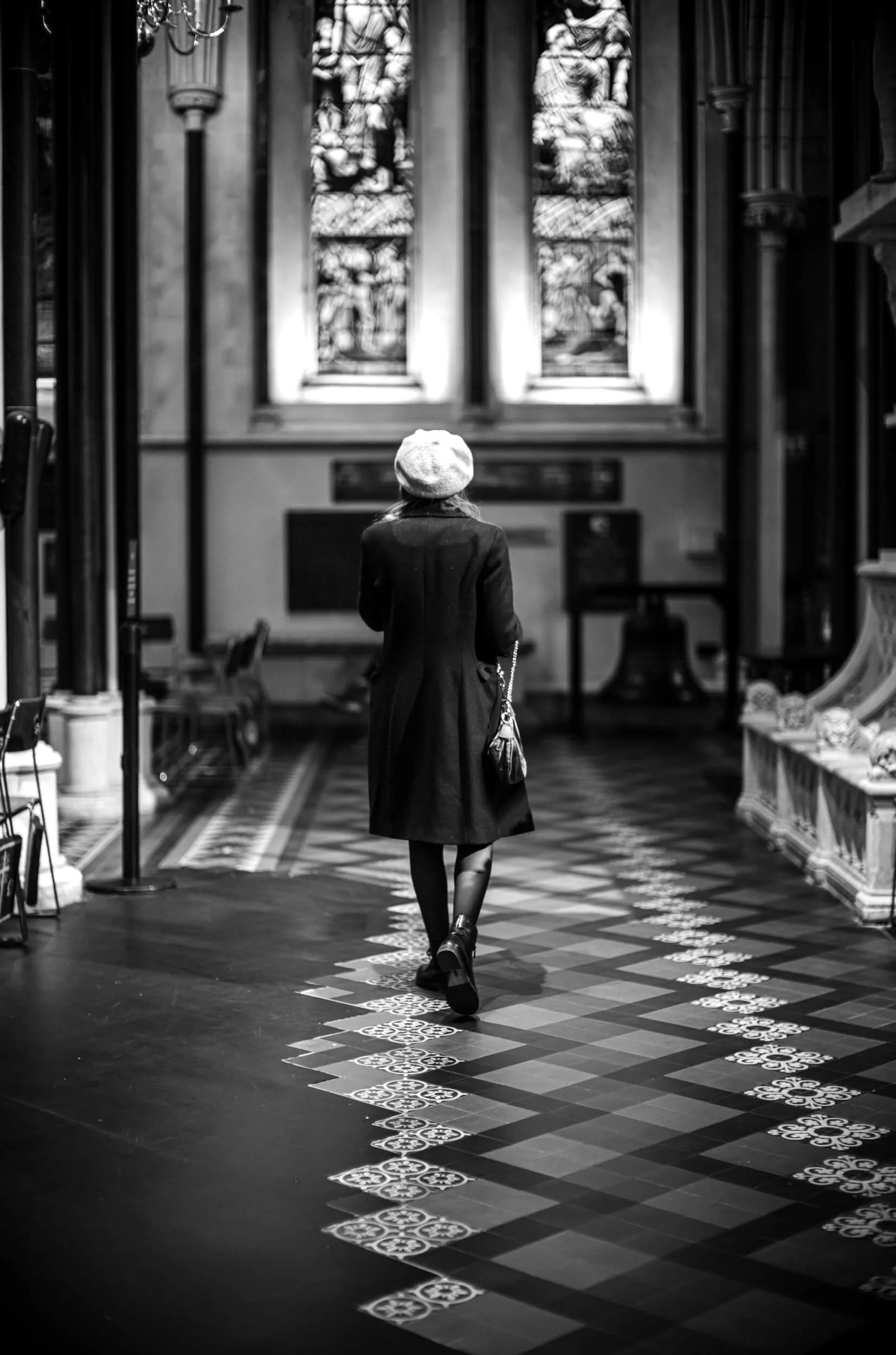
A solitary figure inside a Dublin church, captured with the Noctilux 50mm f/1 E58 on Monochrom
The original E58 version is often considered the most character-driven interpretation of the Noctilux formula. It is the only version with a 58mm filter thread and shows the strongest vignetting when used wide open at f/1. Rather than being a limitation, this natural vignette often enhances the sense of depth and subtly guides attention toward the subject.
Compared to later versions, colour rendering is slightly more muted and contrast is more restrained, which many photographers find particularly appealing for portrait photography. The earlier coating contributes to what is often described as the classic Leica glow, producing very gentle tonal transitions and an almost painterly softness in skin texture.
The out-of-focus rendering is exceptionally smooth, with backgrounds dissolving gradually into soft shapes that sometimes resemble brush strokes on canvas. The bokeh appears fluid and organic, reinforcing the atmospheric qualities that define the Noctilux look.
Because of its rendering and rarity, the E58 has become increasingly sought after. Prices have risen significantly over the years, and it is not uncommon for this version to reach values considerably higher than later versions such as the v4. An often overlooked detail is the original pinned lens hood, which has itself become a collector item and can command prices in the range of 700 to 900 euros depending on condition.
Unfortunately, I no longer own an E58, but it remains firmly on my list. Whenever a clean example appears, the temptation is always there. I would happily use it alongside my v4, as each version ultimately reflects a slightly different interpretation of the same optical design. It may seem slightly excessive, but part of the fascination of these lenses lies precisely in these subtle differences.
For photographers specifically looking for the most expressive interpretation of the Noctilux, the E58 remains particularly appealing.
E60 Version 2 (pinned hood)
The E60 version 2 is generally considered the rarest of the four main versions due to lower production numbers. In terms of rendering, it remains relatively close to the E58, but with slightly reduced vignetting and marginally higher contrast.
The overall character remains clearly within the Noctilux tradition, maintaining smooth transitions and strong subject separation while offering a slightly more balanced performance across the frame.
It represents a subtle refinement of the original concept rather than a dramatic shift in rendering style, and continues to appeal to photographers who appreciate the earlier Noctilux aesthetic.
E60 Version 3 (clip-on hood)
The E60 version 3 represents an interesting middle ground within the evolution of the f/1 design.
Sharpness improves slightly compared to earlier versions, particularly noticeable when working on film, while colour rendering becomes richer and contrast increases. The image feels slightly more defined, yet still maintains the smooth transition between focus planes that defines the Noctilux look.
The bokeh remains creamy, although coatings allow a little more structure to remain visible in the out-of-focus areas. The rendering still feels atmospheric, but with slightly more clarity and definition compared to the earliest versions.
For many photographers, this version offers a very attractive balance between character and control.
E60 Version 4 (built-in hood)
Version 4 introduced the integrated hood design, making the lens more practical in daily use. Later serial numbers benefit from updated coatings that improve contrast and overall sharpness, particularly when used on digital sensors.
Compared to earlier versions, the rendering becomes slightly more modern and more controlled. The out-of-focus areas retain the Noctilux signature, but appear somewhat more structured and less diffused than the earliest E58 examples.
Some photographers appreciate this additional clarity, especially when working digitally. Others prefer the softer rendering of earlier versions, where transitions appear more gradual and the background dissolves more smoothly.
My own copy is a well-used v4, which I appreciate for its balance between usability and character. It remains a very practical Noctilux that performs consistently across different shooting situations.
Each version ultimately reflects a slightly different interpretation of the Noctilux philosophy. Some lean more toward atmosphere, others toward correction. The differences are subtle, but for photographers who enjoy working with rendering as part of their visual language, these nuances matter.
In the end, choosing between versions is less about technical superiority and more about recognising which interpretation resonates most with the way you see.
Leica M11 Monochrom paired with the Noctilux 50mm f/1 v4 and Angelo Pelle ostrich leather case
While the different versions show subtle variations in rendering, there is no clear evidence that the underlying optical formula itself changed throughout production. The differences are more likely related to coatings, production tolerances and sample variation.
Having owned and worked with both early E58 and later E60 versions, I do notice small but visible differences in contrast, colour and the structure of the out-of-focus areas. Whether technical or not, these nuances are part of what makes each version feel slightly different in use.
Optical character
Steve McCurry photographed on Leica M11 Monochrom with the Noctilux 50mm f/1
The reason many photographers continue to search for the f/1 versions lies in their distinctive optical behaviour.
Wide open at f/1 the lens produces gentle spherical aberration, smooth transitions between focus planes, and a painterly quality in the out-of-focus areas. Subject separation feels natural rather than exaggerated, allowing the subject to emerge gradually from the background rather than appearing artificially separated.
Earlier Noctilux designs are often associated with what is sometimes referred to as the Mandler glow. This describes the subtle softness that can give skin texture a more organic appearance, particularly in portrait photography. Whether one considers this optical science or romantic interpretation is less important than the visual result.
Images produced with the Noctilux often feel interpretive rather than descriptive. The lens does not aim to remove every optical imperfection, and in doing so preserves a rendering style that feels less clinical than many modern designs.
Even small variations in coating and optical tuning across different production periods subtly influence contrast, colour response and the structure of the out-of-focus areas. Some versions lean slightly more toward atmosphere, while others appear somewhat more controlled, but all retain the recognisable Noctilux signature.
This balance between character and usability is part of what has allowed the Noctilux f/1 to remain relevant across both film and digital generations.
Technical characteristics
Kirby Marzelle photographed on the Leica M10-P Reporter with the Noctilux 50mm f/1
The Noctilux f/1 is built around a relatively simple optical construction of seven elements, designed to prioritise rendering character rather than absolute correction. With a minimum focusing distance of one meter and a maximum aperture of f/1, the lens was originally conceived as a specialised tool for low light photography and portrait work.
Filter size varies between E58 and E60 depending on the version, with the earlier E58 models being slightly more compact in front diameter. Despite being relatively large for a rangefinder lens, the Noctilux balances well on cameras such as the M10-R. The weight contributes to a feeling of stability rather than inconvenience, encouraging a more deliberate way of working.
When compared to the later Noctilux f/0.95 ASPH, the differences in size and weight become quite noticeable. The f/1 remains relatively compact for such a fast lens, especially considering its vintage origin.
Approximate physical differences:
Noctilux f/1
length around 66 mm
diameter around 61 mm
weight approx. 630 g
filter E58 or E60
Noctilux f/0.95 ASPH
length around 75 mm
diameter 73 mm
weight approx. 700 g
filter E60
While the f/0.95 offers an even more extreme aperture and modern optical correction, it also becomes physically more dominant on the camera body. The increased diameter and weight shift the balance forward, making the camera feel more front-heavy during longer shooting sessions.
In comparison, the f/1 feels slightly more compact and more harmonious on an M body. It remains substantial, but still preserves the balance that makes rangefinder shooting enjoyable.
Both lenses clearly belong to the category of optical statements rather than everyday compact lenses, yet the f/1 retains a certain elegance in proportion that reflects its earlier design era.
The design reflects a period where optical engineers accepted certain compromises in order to achieve extremely wide apertures. Rather than attempting to eliminate every aberration, the lens allows subtle optical characteristics to remain visible, contributing to the distinctive rendering that defines the Noctilux look.
In practical use, the Noctilux f/1 rewards patience. It is not designed for speed, but for intention.
The Noctilux philosophy
The Attagirls photographed on the Leica M10-P Reporter with the Noctilux 50mm f/1
Fast lenses are often misunderstood as technical achievements. In reality, their significance is often emotional rather than technical.
My approach to photography has gradually shifted toward timeless rendering rather than trend-driven aesthetics. Style matters more than trends, emotion matters more than technical perfection, and stillness often creates stronger images than spectacle.
The intention is always to create photographs that remain meaningful beyond the moment they were taken.
Depth is not only optical.
It is psychological.
The Noctilux allows the photographer to simplify a scene and guide the viewer toward expression rather than distraction. In a time where almost every lens is technically perfect, lenses like the Noctilux remind us that perfection is not the point.
Character is.
Noctilux f/1 on Monochrom
The Ride, Lauro captured on the Leica M11 Monochrom with the Noctilux 50mm f/1
One combination I have always loved is the Noctilux f/1 on a Monochrom sensor.
The Monochrom reacts beautifully to lenses that are slightly softer wide open. Where modern APO lenses can sometimes feel almost too perfect, the Noctilux introduces a more organic transition between tones. The result is a rendering that feels more natural, more atmospheric, and often more timeless.
The gentle spherical aberration of the Noctilux f/1 creates smoother tonal gradations, particularly in skin tones. Highlights roll off gradually and midtones feel richer without becoming heavy. Instead of appearing clinical, the image retains a sense of depth that feels almost sculptural.
I have always enjoyed using the Monochrom with lenses that do not try to eliminate every optical imperfection. The combination often produces images that feel less digital and more interpretive.
In many ways this connects directly to what I appreciate about the Noctilux in general. It has a certain rock n roll character. Expressive rather than analytical. Emotional rather than technical.
There is something slightly magical in the way the Monochrom sensor renders light when paired with softer lenses like the Noctilux f/1.
The images feel quieter.
More intimate.
More timeless.
It is not about resolution or technical perfection.
It is about atmosphere and presence.
For my kind of portrait work, this combination continues to be one of the most rewarding ways to shoot.
Noctilux f/1 vs Noctilux f/0.95
A common question is how the Leica Noctilux 50mm f/1 compares to the Noctilux f/0.95 ASPH and the Noctilux f/1.2 ASPH.
The Noctilux f/1 and the later Noctilux f/0.95 ASPH share the same ambition, but they express it in very different ways.
On paper, the f/0.95 is the more advanced lens. It offers higher contrast, improved sharpness wide open, and a more controlled optical design thanks to the use of aspherical elements. The image appears more precise, more corrected, and more consistent across different lighting conditions.
Lady Flo, captured on the Leica SL (Typ 601) with the Noctilux 50mm f/0.95 ASPH
The f/0.95 produces very strong subject separation, often with a slightly more dramatic look. Fine details are rendered with higher clarity, and textures appear more defined. The lens feels technically more ambitious, pushing the boundaries of what is optically possible at such an extreme aperture.
At the same time, the rendering becomes more controlled. The transition between focus and out-of-focus areas is smoother in a technical sense, but sometimes less interpretive. Where the f/1 often feels fluid and slightly unpredictable, the f/0.95 feels more disciplined.
Contrast is higher and colours appear slightly more saturated, especially in digital workflows. This can be an advantage in many situations, particularly when clarity and consistency are required.
The f/0.95 is also physically larger and heavier, giving it a more dominant presence on the camera. It feels more modern, both in optical performance and mechanical construction.
Despite its advanced design, the f/0.95 is not free from optical imperfections. Purple fringing can still appear in high contrast situations, especially around specular highlights and reflective surfaces when shooting wide open. This is part of the reality of designing lenses at such extreme apertures.
The Noctilux f/1, in contrast, feels slightly more intuitive and less clinical. It has what I often describe as a certain rock n roll character. The rendering is less controlled, but often more expressive. Highlights bloom more gently, transitions feel more organic, and the image often carries a softness that contributes to atmosphere rather than reducing quality.
Where the f/0.95 aims for optical performance at the limits of physics, the f/1 feels more interpretive. It embraces small imperfections that can give the image a more timeless quality.
The differences are subtle, but visible.
The f/0.95 feels more modern.
The f/1 feels more emotional.
Both lenses are capable of producing exceptional results, but they appeal to slightly different sensibilities. The f/0.95 is often chosen for its technical achievement and extreme subject separation, while the f/1 is appreciated for its rendering character and distinctive atmosphere.
If I had to choose between the two, I would pick the f/1 over the f/0.95 at any time.
The f/0.95 impresses with precision and optical ambition. The f/1 inspires with atmosphere and interpretation. For my work, that difference matters.
Both lenses represent extraordinary optical achievements, but the Noctilux f/1 remains the lens that resonates most strongly with the way I see.
Neither replaces the other.
They simply interpret the idea of the Noctilux in different ways.
And that is precisely what makes this lens family so fascinating.
Noctilux f/1 vs Noctilux f/1.2 ASPH
Precision versus emotion
The relationship between the Noctilux f/1 and the Noctilux f/1.2 is particularly interesting, as both lenses represent different interpretations of speed and character within the same optical philosophy.
The original Noctilux 50mm f/1.2 AA already had a very distinctive rendering, known for its special colour signature and almost dreamlike atmosphere wide open. Colours appear slightly warmer and less contrasty, with transitions that feel very gentle. The original AA remains unique, but since most photographers today will encounter the modern reissue version of the f/1.2 ASPH, I will not go deeper into the original version here and instead focus on the comparison between the Noctilux f/1 and the current f/1.2 ASPH.
The modern Noctilux-M 50mm f/1.2 ASPH introduces a more contemporary interpretation of the Noctilux idea. Thanks to its aspherical elements, contrast is slightly higher and the image appears more controlled, particularly in midtones. The rendering feels more precise, while still maintaining the recognisable Noctilux signature.
Wide open, the f/1.2 delivers smooth bokeh and strong subject separation, but the image feels slightly more structured and slightly less unpredictable than the f/1. The transitions remain gentle, yet the rendering shows a degree of correction that reflects modern optical expectations.
Image shot for the official launch of the Noctilux 50mm f/1.2 ASPH on the Leica M10-R
At f/1.2 the image is still relatively soft overall, even in the centre of the frame. Sharpness increases progressively when stopping down, with a noticeable increase in clarity around f/2. By f/2.8 the lens behaves more like a modern optical design, with higher contrast and improved sharpness across most of the frame.
At that point, the lens becomes more versatile, but also slightly less expressive. The distinctive wide open character gradually gives way to a more neutral rendering style.
Physically, the f/1.2 is noticeably more compact than the f/1. With a weight of approximately 405 grams and a length of around 52 mm, it feels very balanced on an M body and can easily function as an everyday lens. For travel and longer shooting days, the size and weight of the f/1.2 make it particularly appealing.
The Noctilux f/1, in comparison, retains more of its character even when stopped down slightly. Its rendering remains more interpretive and less analytical, particularly in portrait work where subtle tonal transitions play an important role.
Where the f/1.2 leans slightly toward refinement and usability, the f/1 feels more instinctive and expressive. The rendering appears less controlled, but often more atmospheric. Highlights transition more gradually, and the image can feel slightly more fluid.
Personally, I appreciate the f/1.2 for its size and weight. It is one of the most practical Noctilux lenses ever produced and can easily serve as an everyday lens.
But when shooting wide open, the f/1 continues to offer something slightly more distinctive. It carries more of what I often describe as the rock n roll character that originally drew me to the Noctilux.
The f/1.2 is the more practical lens.
The f/1 is the more emotional lens.
Both lenses complement each other well, but when the intention is to work wide open and embrace the full expressive potential of a Noctilux, the f/1 remains my personal preference.
The f/1.2 may be the more rational choice.
The f/1 is the one that continues to surprise.
Tips for shooting the Noctilux f/1 on Leica M
Fay Loren, captured on the Leica M11-D with the Noctilux 50mm f/1 v4
Using a Noctilux wide open requires a slightly different mindset. The lens rewards intuition more than technical perfection.
Using an EVF can significantly improve focusing accuracy, especially at close distances where depth of field becomes extremely shallow. At the same time, it is important not to overthink the process. Some of the most atmospheric images are not perfectly sharp. A slight softness can often enhance mood rather than reduce it.
Shooting short bursts while gently adjusting focus back and forth increases the probability of obtaining the desired focus plane. Prefocusing and making small adjustments is often more effective than attempting to acquire focus from scratch each time.
Keeping the rangefinder patch clean improves focusing contrast, particularly in low light situations.
Using slightly faster shutter speeds than usual helps compensate for minimal subject movement, which can influence focus accuracy at f/1.
Working with simple lighting setups often produces the most natural results. One continuous light source is often sufficient, allowing the photographer to see exactly how shadows shape the subject.
Shadows are an important part of the image. Not everything needs to be fully visible. Allowing parts of the image to fall into darkness often creates stronger portraits.
Thinking in scenes rather than individual frames can also change the way the lens is used. The Noctilux works particularly well when the image suggests a moment rather than simply documenting a subject.
Foreground elements such as curtains, mirrors, or door frames can enhance depth and reinforce the sense of atmosphere.
The hit rate may be lower than with slower lenses, but the successful frames often carry more character.
Where the Noctilux f/1 excels
The Noctilux is not a universal tool.
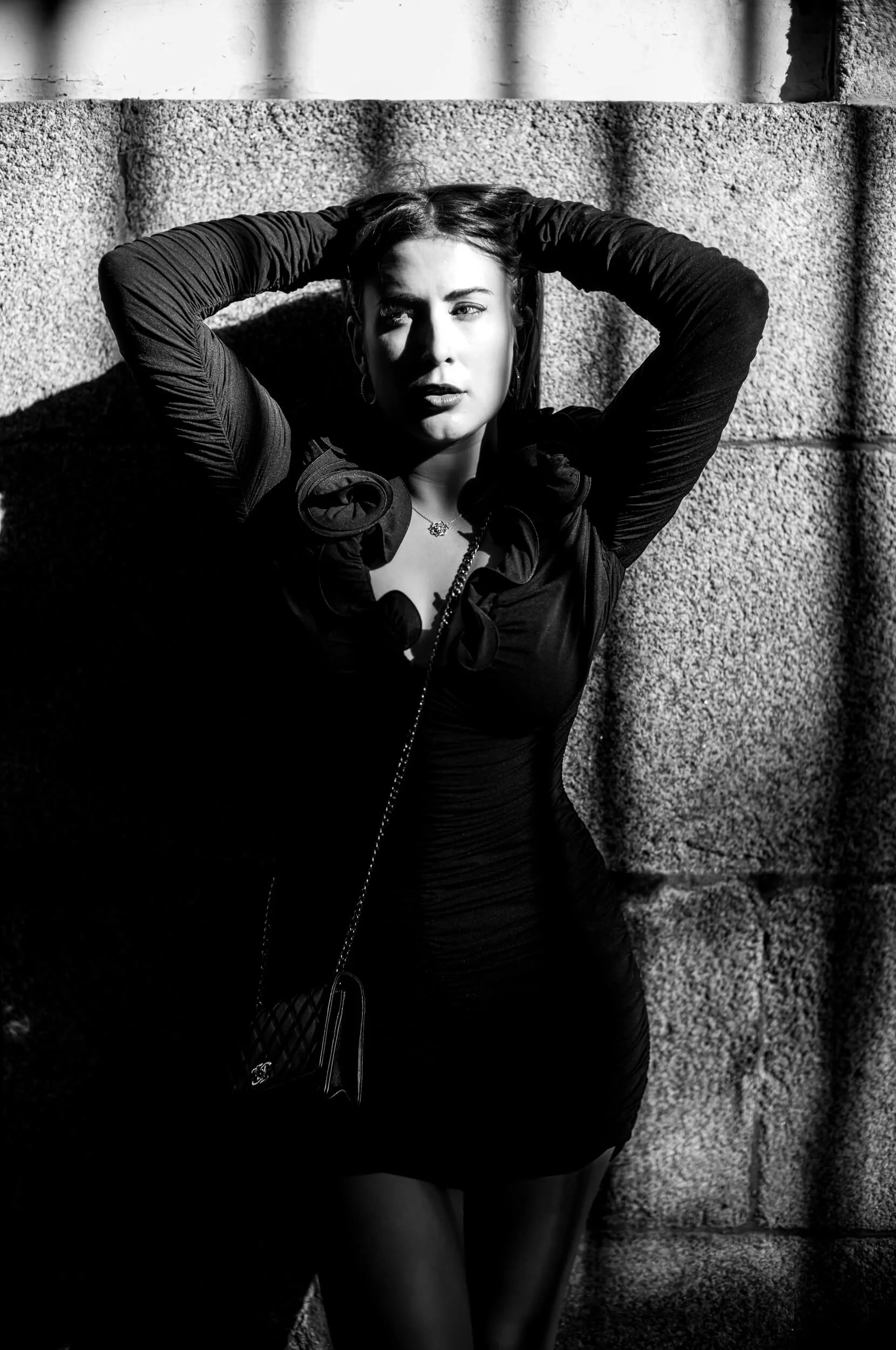
Chanelle De Mai, captured in an Art Deco setting on the Leica M10-P Reporter with the Noctilux 50mm f/1 v4
It is a specialised creative instrument particularly well suited for portrait photography, low light work, cinematic compositions, black and white imagery, and personal projects where atmosphere matters more than technical perfection.
It is less suited for fast reportage, architecture, technical reproduction, or situations requiring extremely high consistency across large numbers of images.
The Noctilux rewards patience more than speed.
Why this lens defined my signature
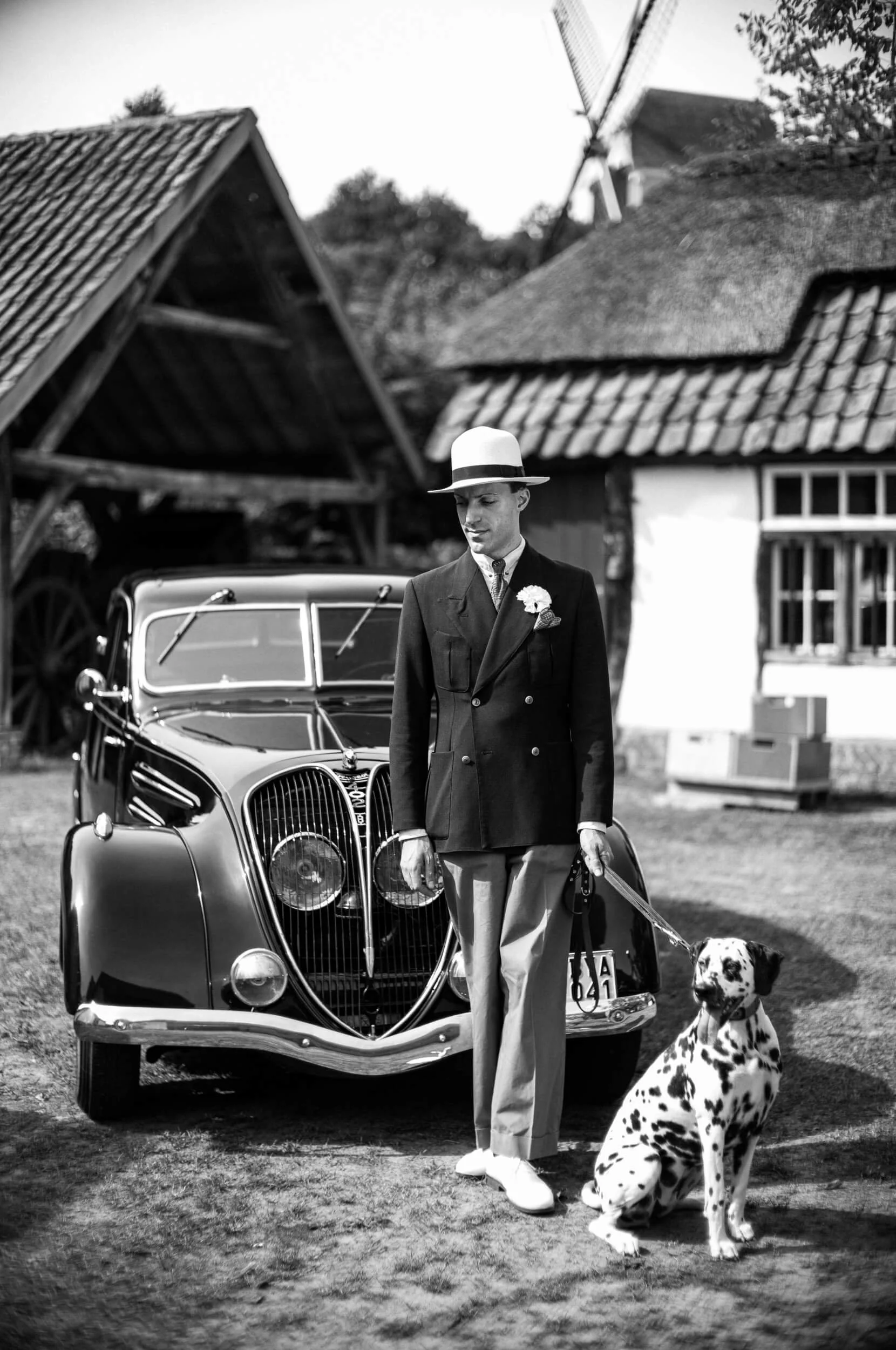
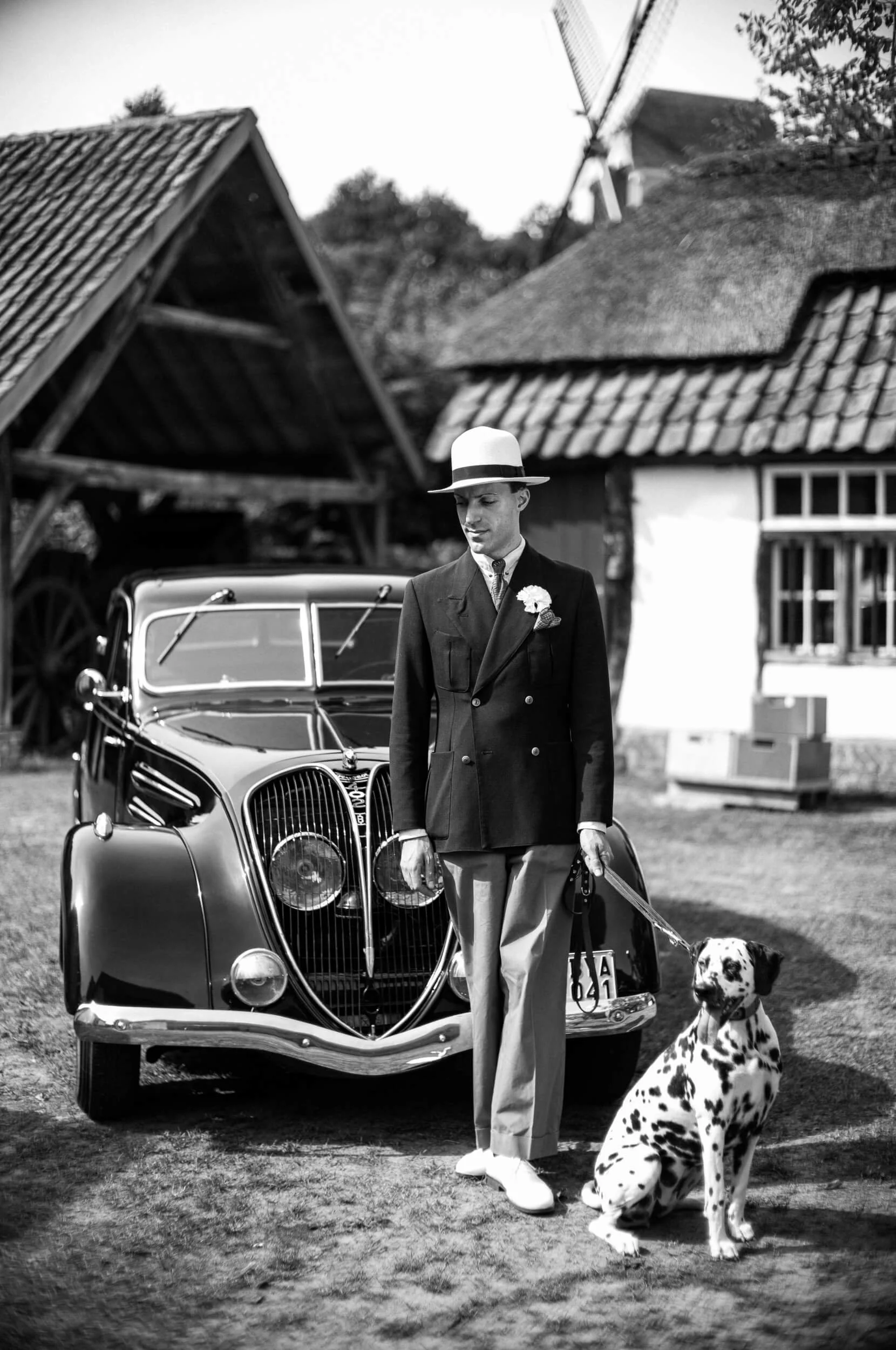
Lauro with his Dalmatian, captured on the Leica M11 Monochrom with the Noctilux 50mm f/1 v4
Over time, certain visual characteristics begin to repeat in one’s work.
Shallow depth of field used not as an effect, but as a way to simplify the frame. Gentle transitions instead of aggressive separation. Subjects emerging from the background rather than being cut out from it.
The Noctilux f/1 played an important role in shaping that direction.
It encourages patience and rewards intuition. It invites experimentation and accepts imperfection as part of the process. Not every image needs to be technically perfect to feel complete. In fact, some of the most memorable images are often the ones that feel slightly fragile.
There is something very human in that.
The Noctilux f/1 sits in a unique place between technical ambition and artistic interpretation. It belongs to a time when optical design still allowed room for unpredictability, and when lenses were not only evaluated by resolution charts but by the emotions they could evoke.
Even today, surrounded by technically flawless lenses, the Noctilux continues to offer something different. Something quieter. Something less obvious.
It does not try to impress immediately.
It reveals itself slowly.
Some lenses deliver certainty. Others invite curiosity.
The Noctilux f/1 belongs to the second category.
It is not the most rational choice, but it is one that continues to reward attention.
And perhaps that is why, after all these years, it still feels familiar every time I mount it on a camera.
Not because it is perfect.
But because it reminds me that perfection was never really the point.
Atmosphere was.
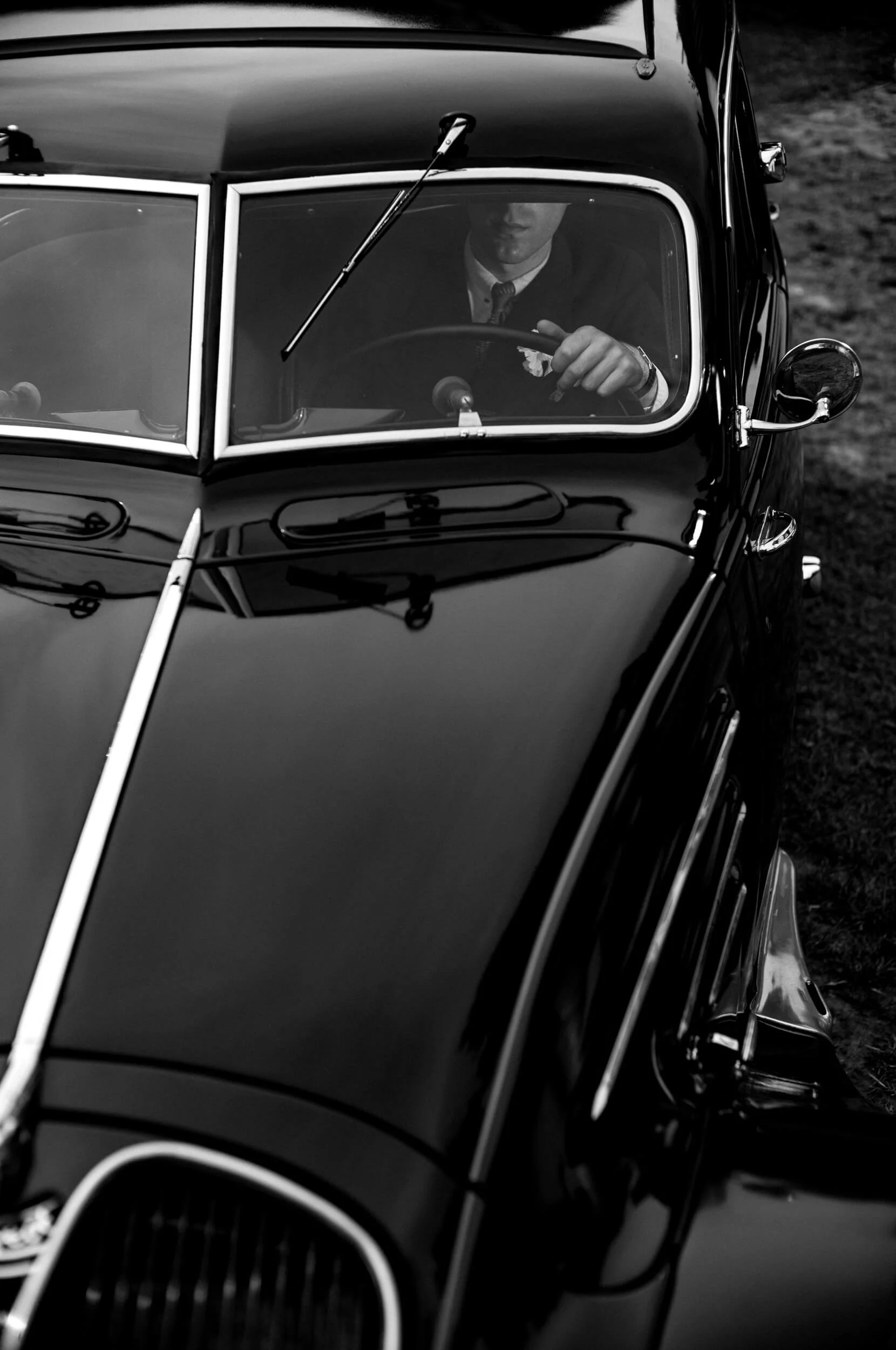
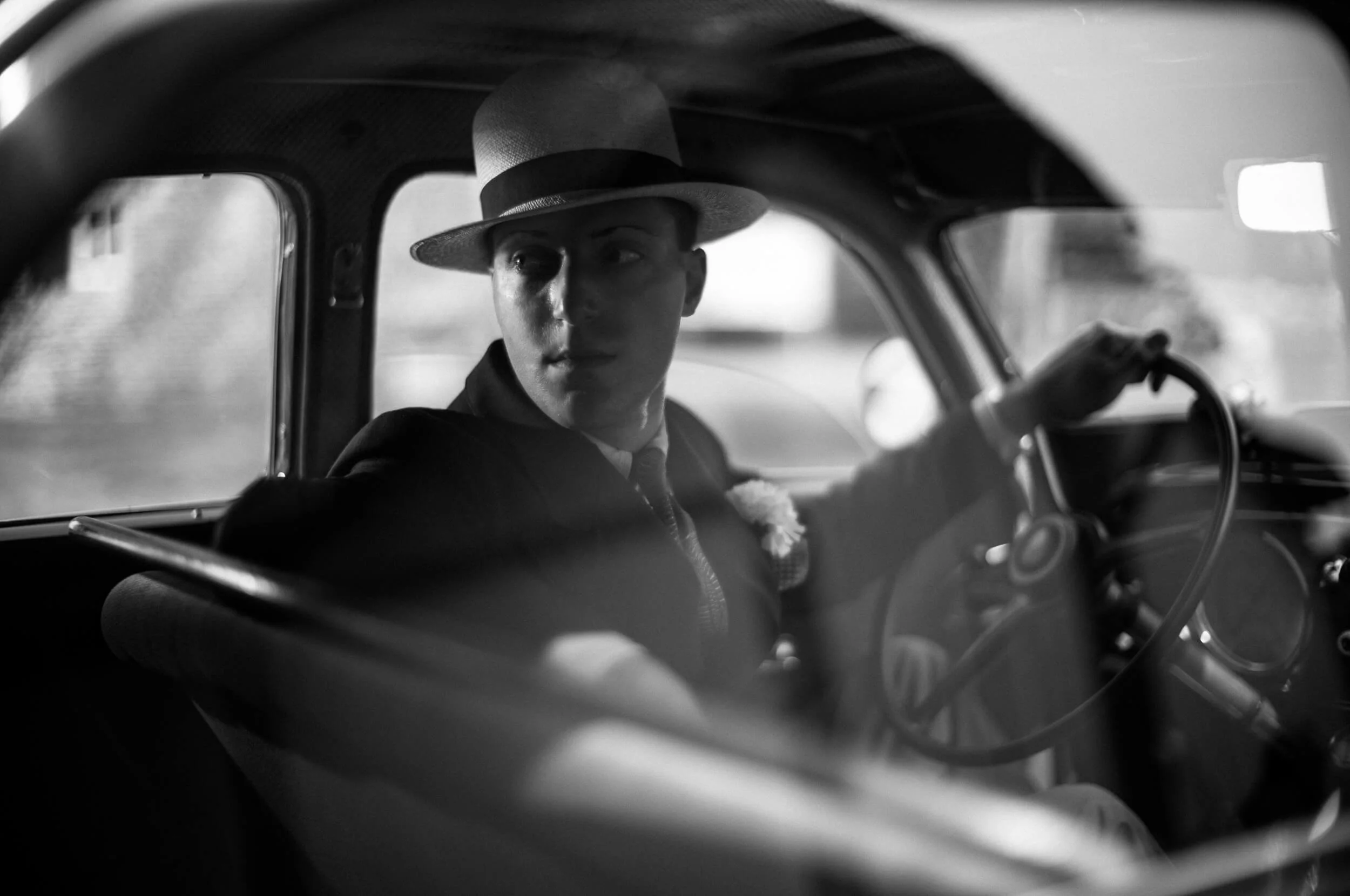
Lauro backing up a vintage Peugeot, captured on the Leica M11 Monochrom with the Noctilux 50mm f/1 v4
Stolen equipment still missing
Leica M10-R Black Paint 05652742
Leica Noctilux 50mm f/1.0 E58 2750105
Leica 35mm f/1.4 Steel Rim prototype 0000006
If any of these items appear for sale please reach out.
Gallery images of Noctilux f/1







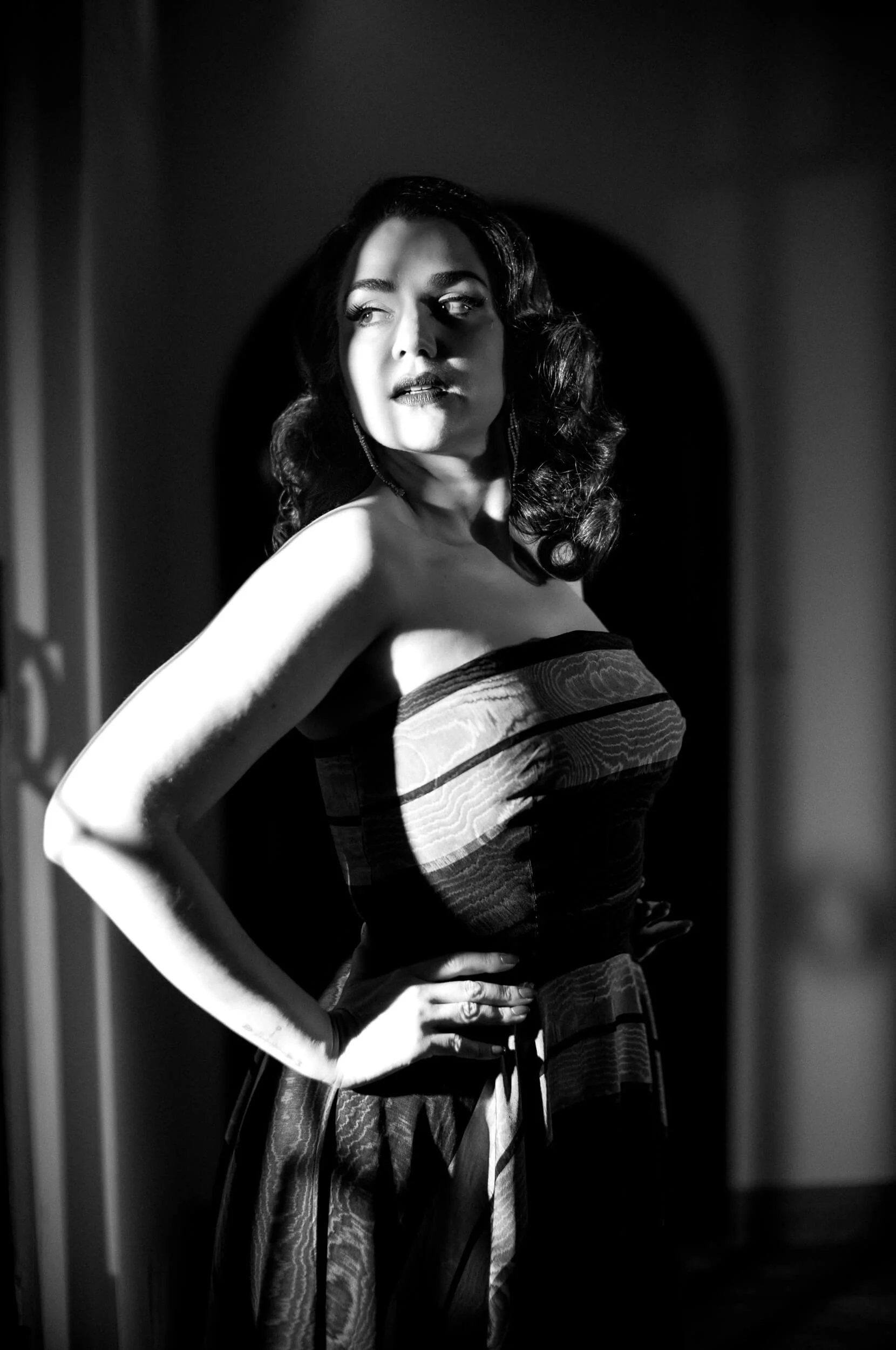

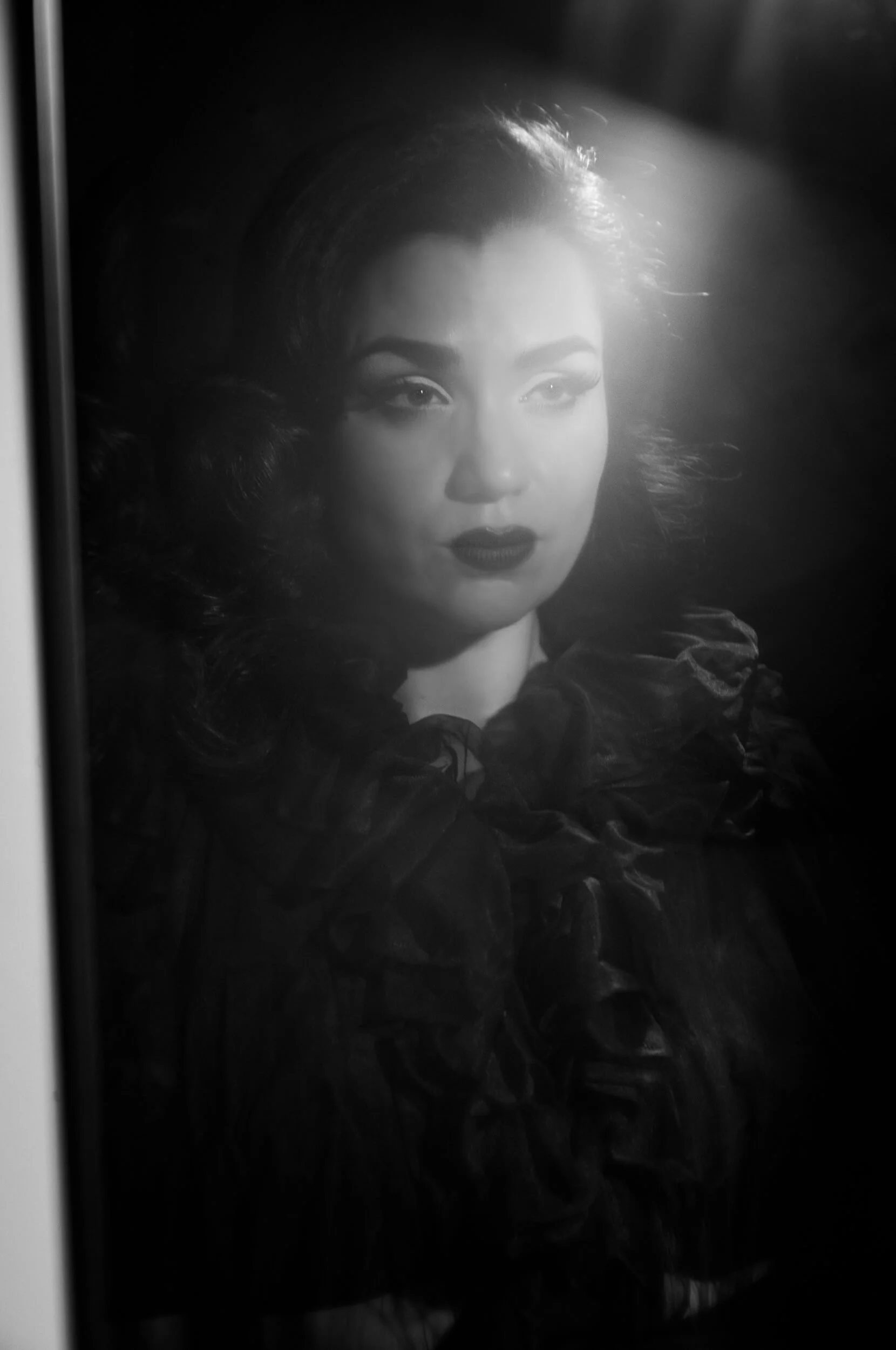
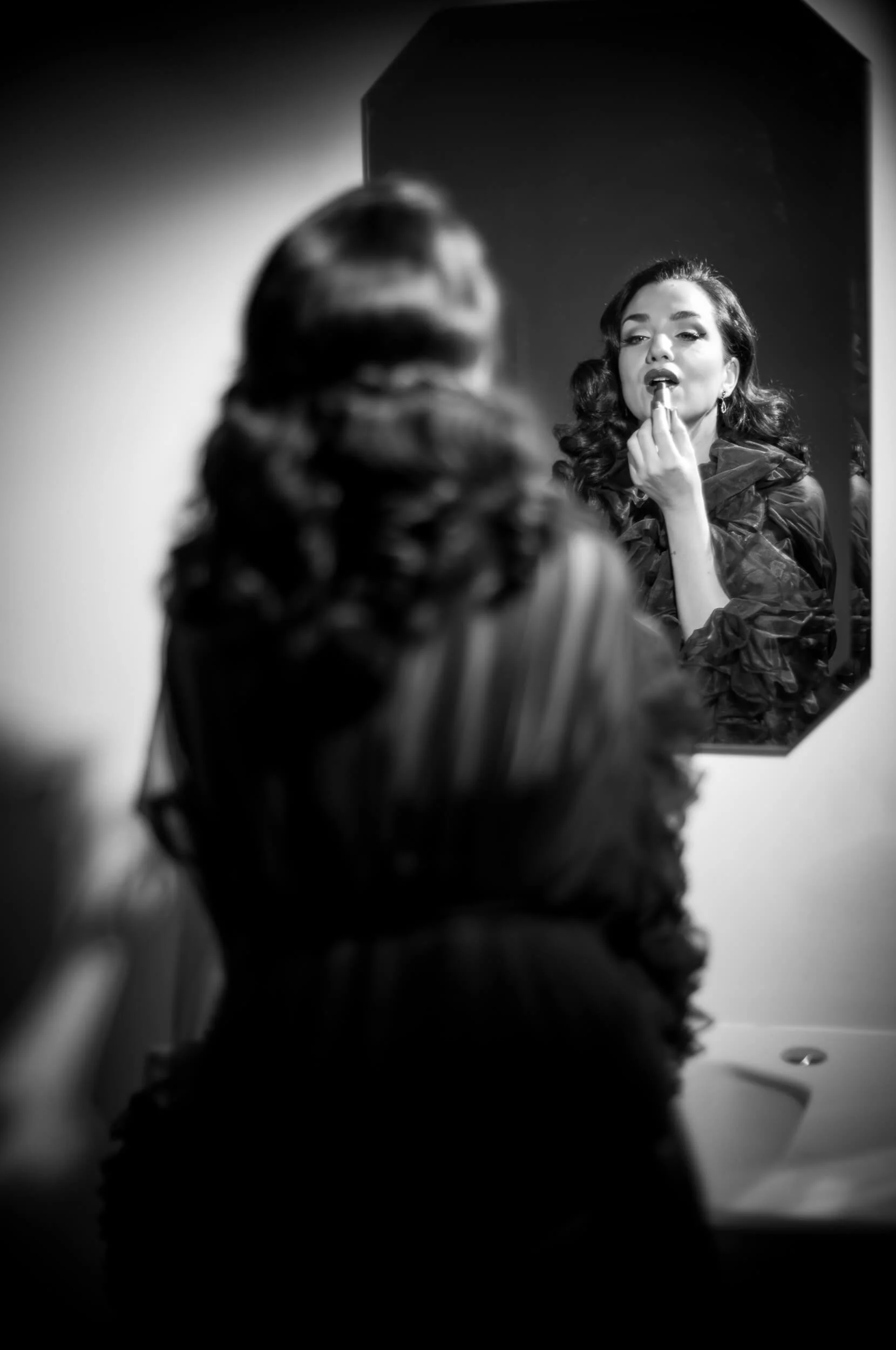
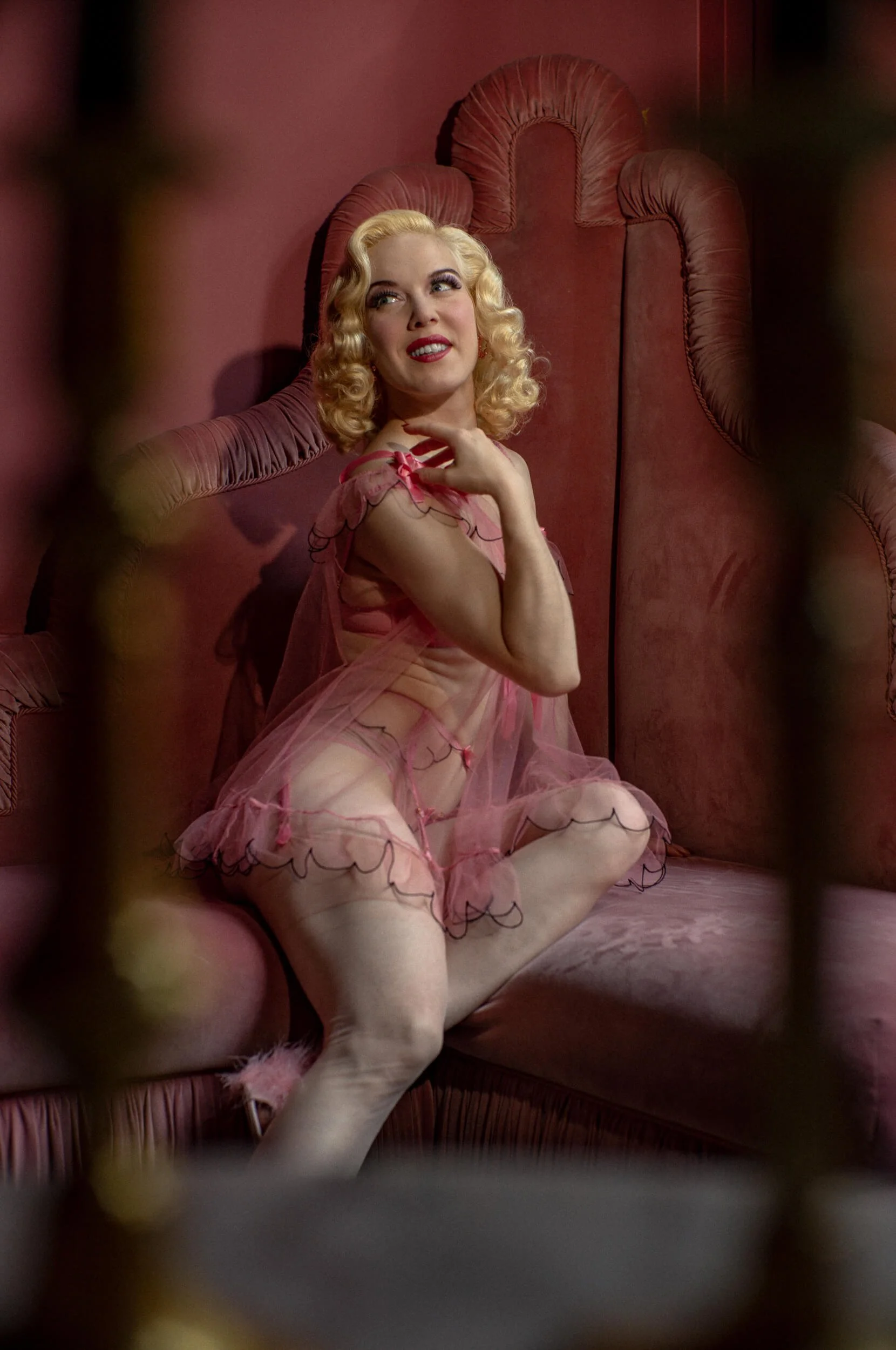

Final Thoughts on the Noctilux 50mm f/1
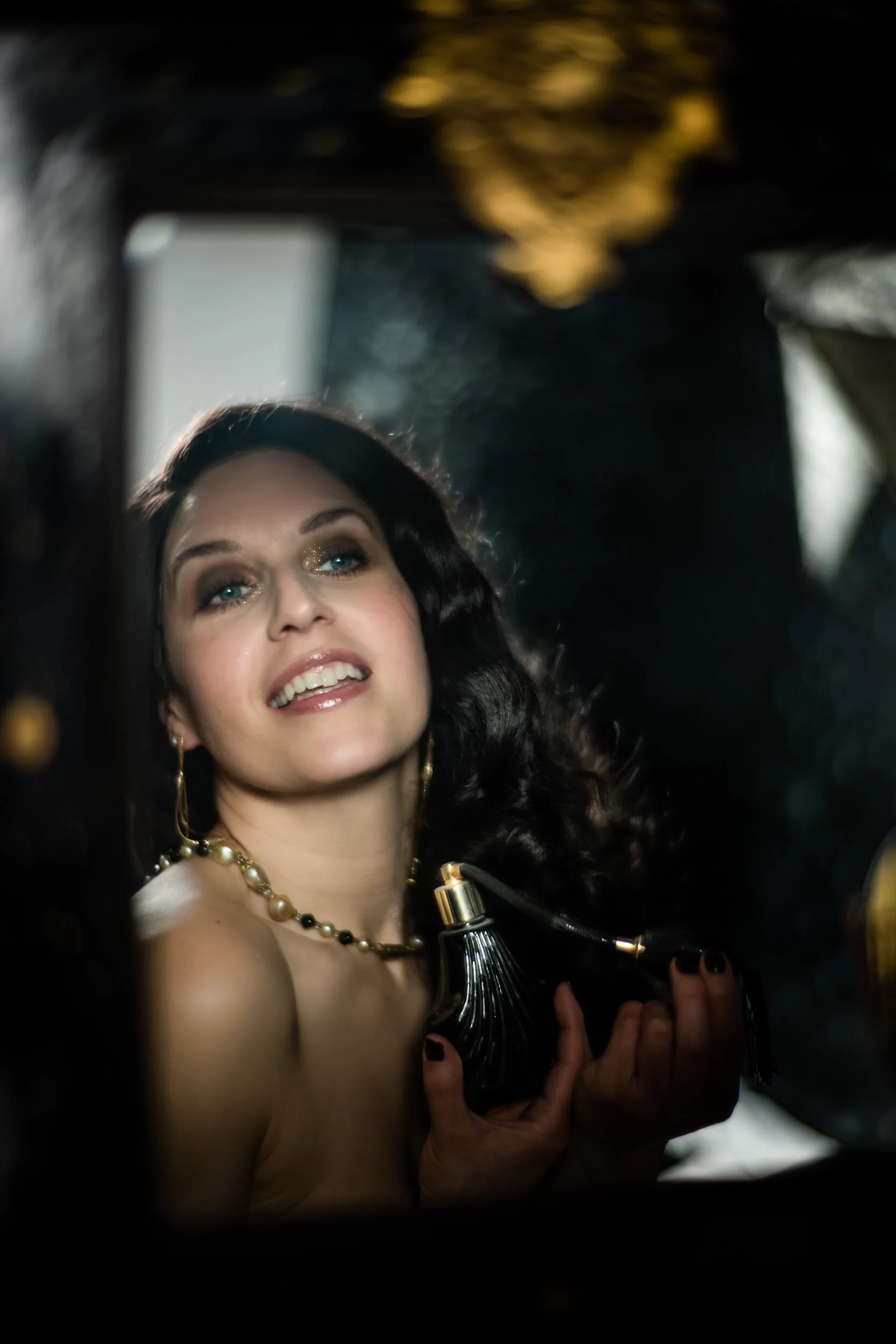
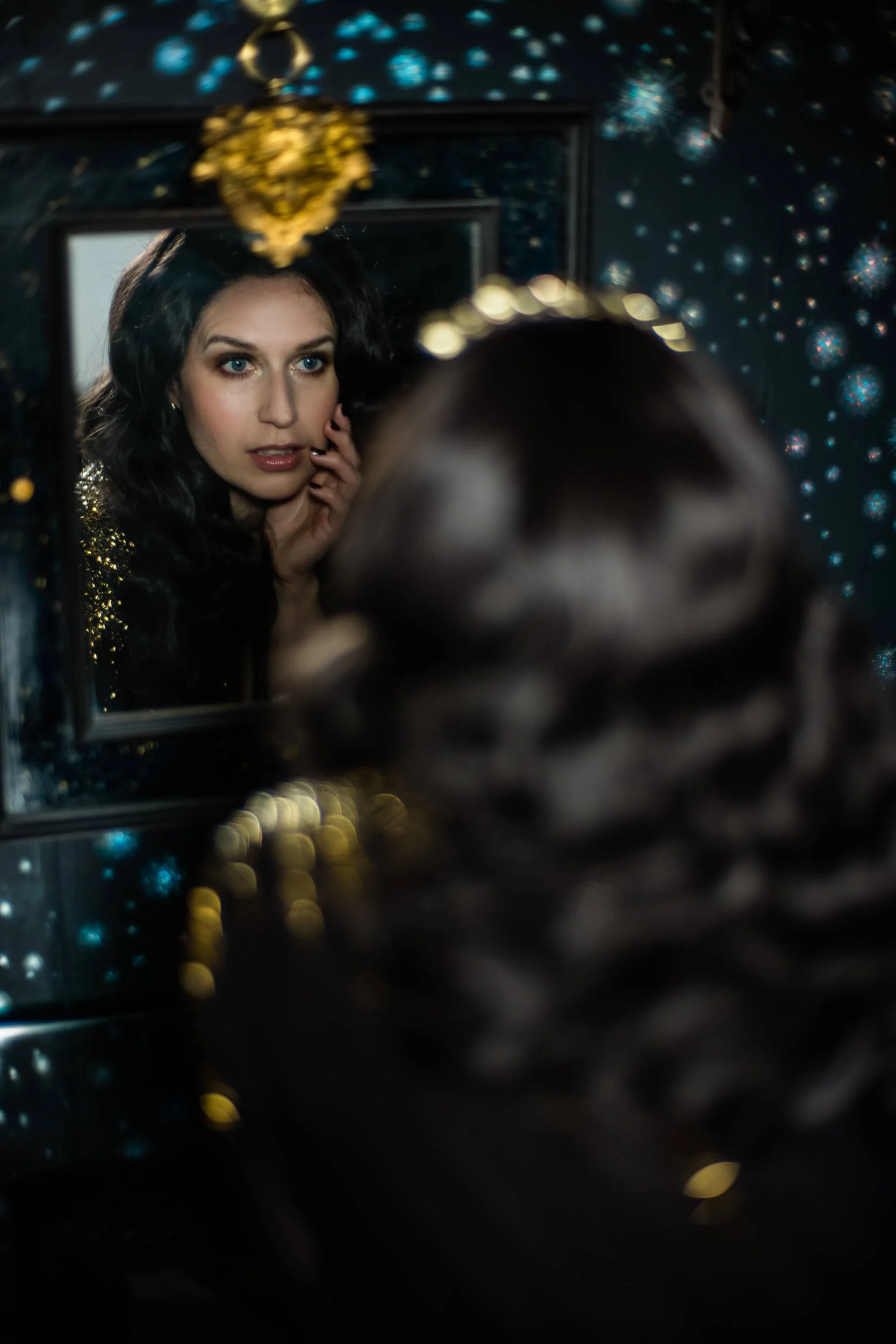
Kirby Marzelle, captured in a mirror on the Leica M10-P Reporter with the Noctilux 50mm f/1
The Noctilux 50mm f/1 is not a lens for everyone.
It is not the most technically perfect 50mm lens available for the Leica M system, and it does not try to be.
Modern lenses offer higher contrast, higher resolution and more predictable behaviour. The Noctilux offers something else.
Wide open, the rendering feels expressive and sometimes unpredictable, but often very rewarding.
The combination of gentle spherical aberration, smooth transitions and subtle glow creates a visual signature that feels more emotional than technical.
For photographers looking for consistency and technical precision, there are better options.
For photographers interested in atmosphere, interpretation and character, the Noctilux remains one of the most compelling lenses ever produced for the Leica M system.
It encourages patience and rewards intuition.
It invites imperfection and transforms it into atmosphere.
The Noctilux f/1 may not be the most logical lens in the system, but it is one of the most distinctive.
It does not try to impress immediately.
It reveals itself slowly.
And perhaps that is precisely why it continues to define the visual language of my work.
The Leica Noctilux 50mm f/1 remains one of the most characterful Leica M lenses ever produced, and one of the most unique portrait lenses in photography.
Acknowledgements
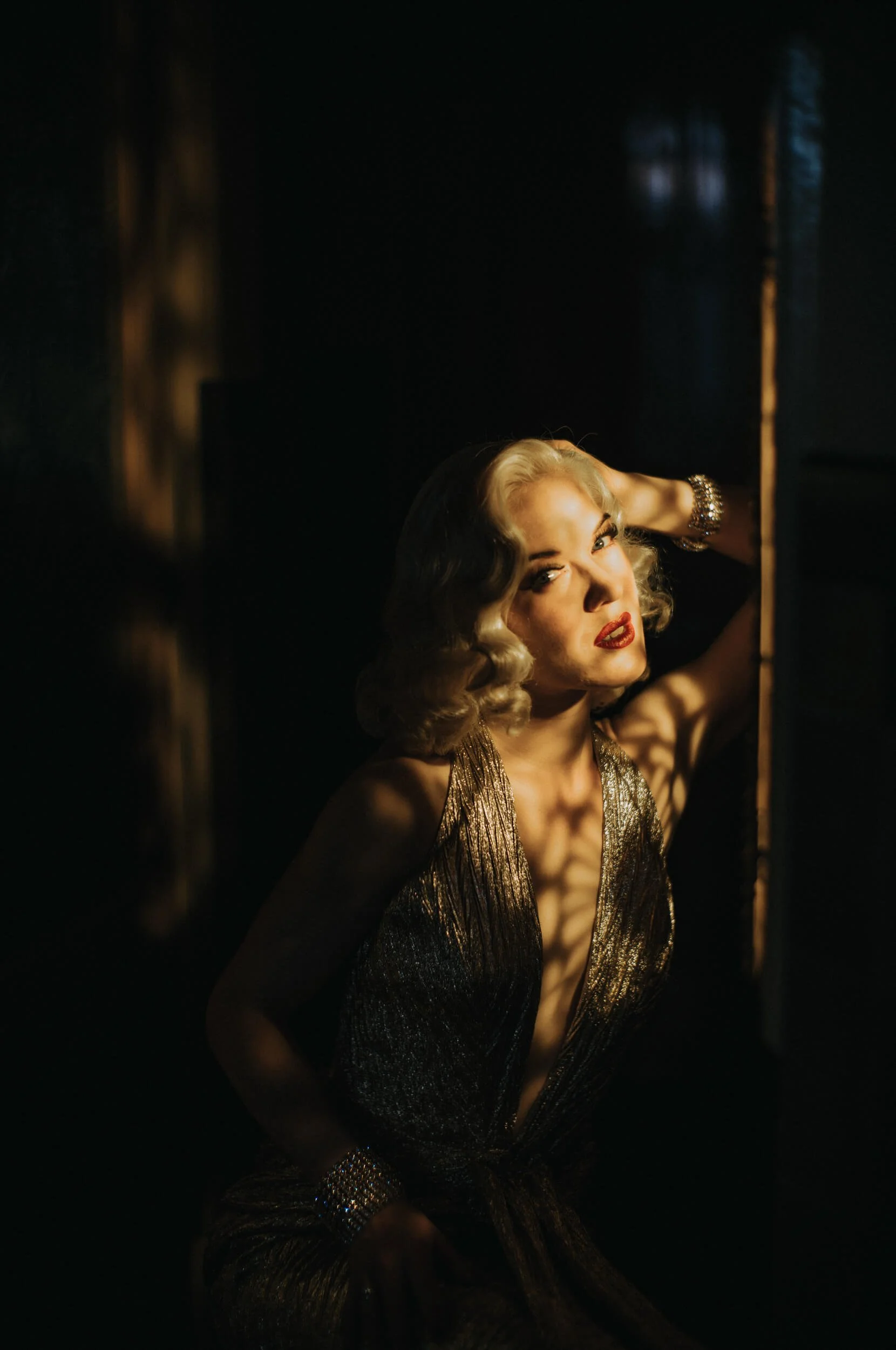
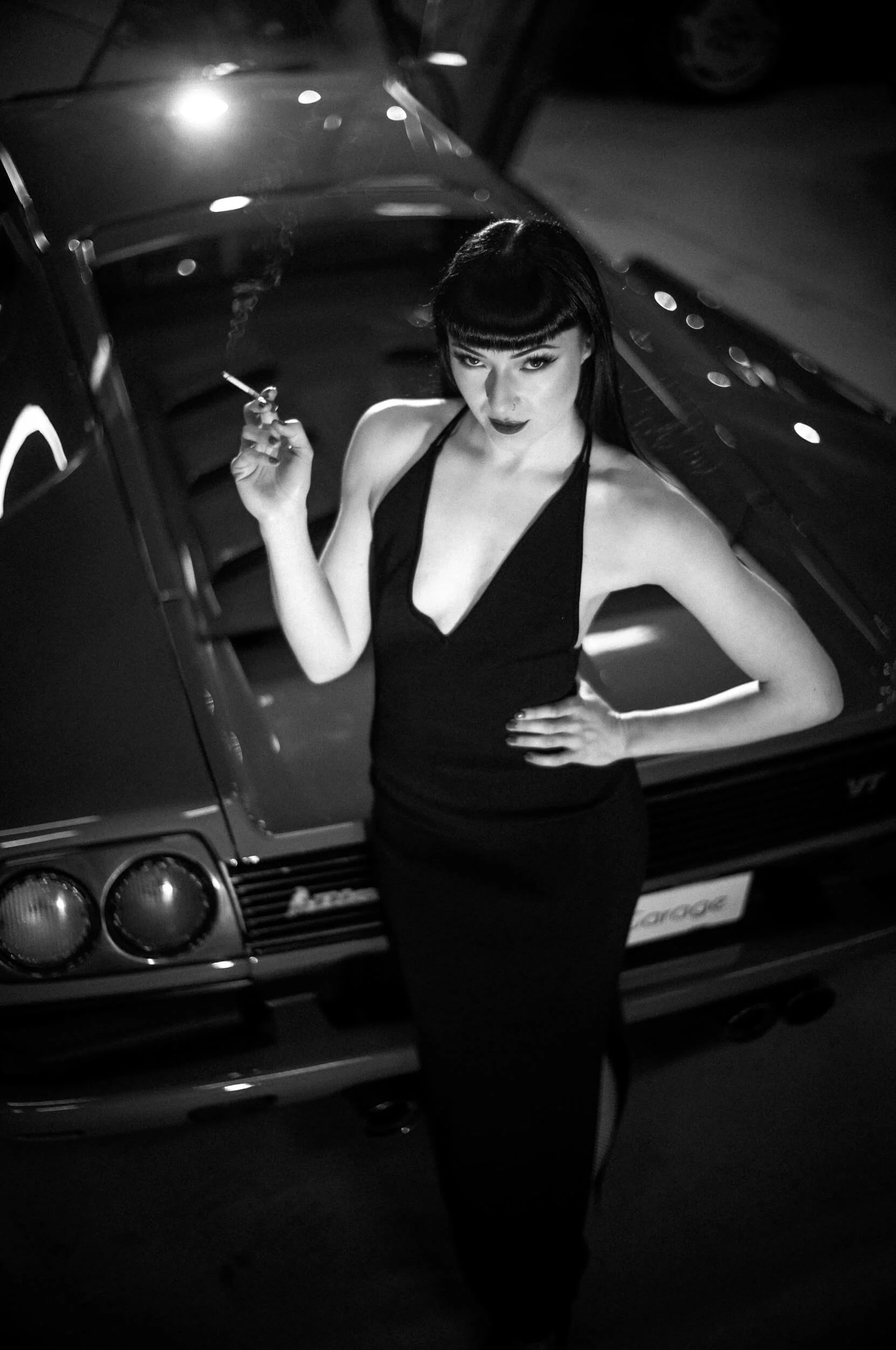
Thanks to Fay, Flo, Kirby, Lauro, Laura and Sarah for posing and contributing to the visual exploration of this project.
Milan Swolfs
About Milan Swolfs
Milan Swolfs is a fine art portrait photographer from Antwerp, Belgium, renowned for his distinctive blend of burlesque and vintage aesthetics. His work channels the timeless Hollywood glamour of the 1920s and 1930s, capturing both men and women in bold yet elegantly refined portraits.
Beginning his career photographing Europe’s largest burlesque events, Milan later transitioned into fine art photography. As an ambassador for Leica Camera and Harlowe Creators, his work has been featured in LFI (Leica Fotografie International), Medium Format Magazine, and Viewfinder. In 2022, he debuted his solo exhibition, Light of Seduction, at the Leica Store in Porto. Most recently, from late 2024 to early 2025, his latest exhibition, Echoes of Elegance: A Timeless Journey, was showcased at the Leica Store Beaumarchais in Paris.
Milan’s portraits celebrate individuality and classic beauty, reviving the charm and allure of a bygone era.
