
Zenitar 35mm f/1 review
The most cinematic 35mm M-mount lens in my playbook by Milan Swolfs
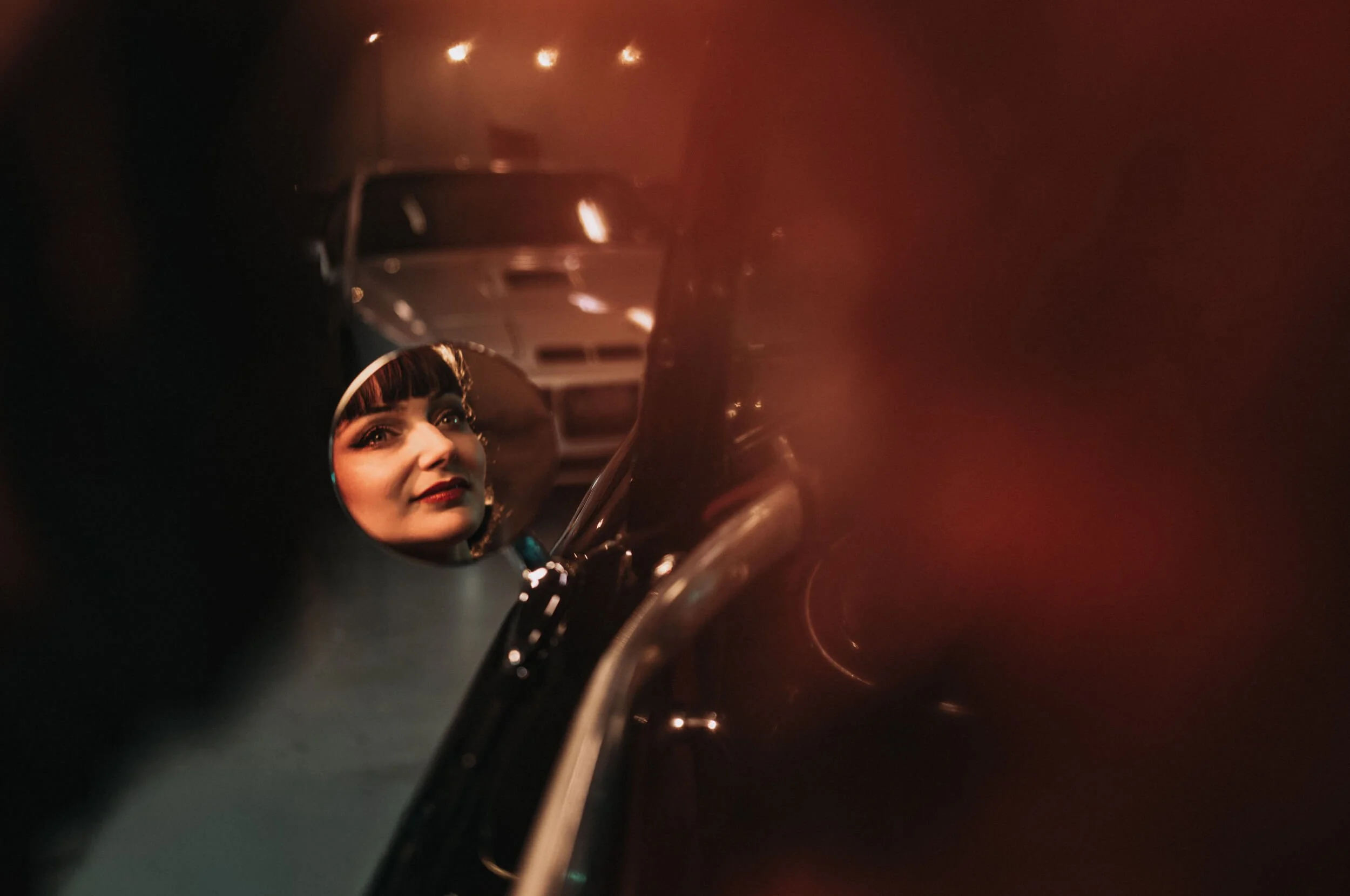
Introduction on the Zenit Zenitar 35mm f/1 in Leica M-Mount
Over the years I have come across many rare lenses, from black paint Leica classics to unusual cine optics adapted for rangefinder cameras. Some lenses are rare because of their price, others because of their limited production, and some simply because very few photographers ever had the opportunity to use them extensively in real situations.
One lens that always remained more myth than reality for me was the Zenitar 35mm f/1.
When the lens was released in 2019 together with the Zenit M digital rangefinder camera, it immediately caught my attention. Since its release, the Zenitar remained on my radar as one of the very few true 35mm f/1 lenses ever produced. A lens with this aperture naturally sits in the same conversation as the Leica Noctilux-M 35mm f/1.2 ASPH, yet it comes from a very different optical tradition.
Fast 35mm lenses occupy a unique space. They provide enough context to tell a story while still allowing subject separation that feels cinematic rather than purely documentary.
For several years the Zenitar remained difficult to find. Produced in limited quantities and mainly sold as part of the Zenit M kit, it became one of those lenses that was often discussed but rarely seen in practical use.
The original camera and lens kit should technically still be available via the Zenit website, although actually placing an order may require some persistence.
Eventually I found a copy through PT Collectibles and had the opportunity to borrow it before deciding to purchase it.
Some lenses impress immediately. Others need time to reveal their character. The Zenitar belongs in the second category.
Very few 35mm f/1 lenses exist, placing the Zenitar within a very small category of lenses pushing optical boundaries.
The Zenit M collaboration
From Krasnogorsk to Wetzlar
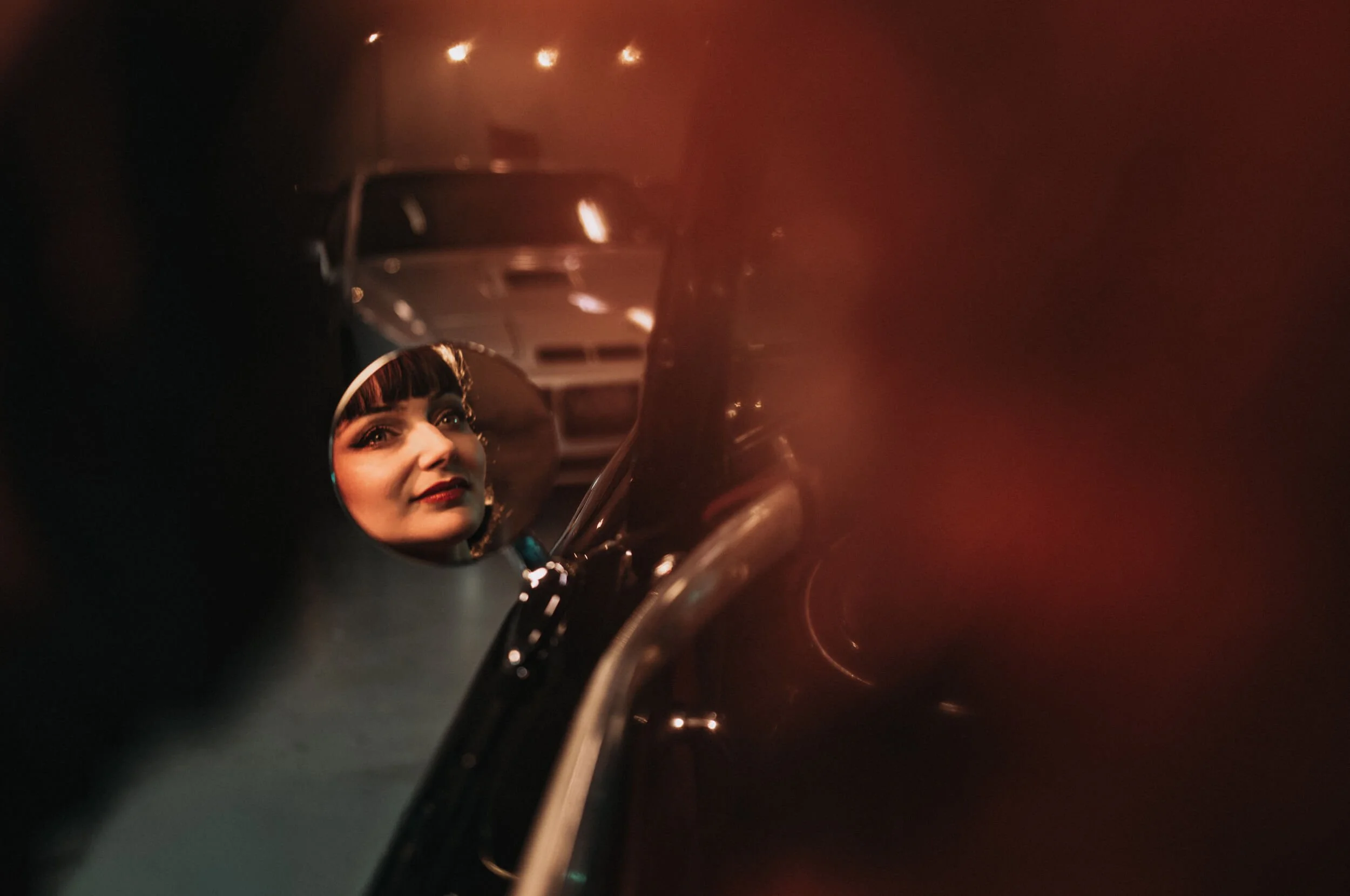
Mara de Nudée in a Mercedes -Benz 300 SE shot with Zenitar 35mm f1 on Leica M11-D review by Milan Swolfs
The Zenitar 35mm f/1 was introduced as part of the Zenit M project, a collaboration between Russian optical engineering and Leica camera manufacturing.
Leica produced the camera body, largely based on the M Typ 240 platform, while the lens itself was designed and manufactured in Russia.
The collaboration feels historically appropriate. Early Soviet rangefinder cameras such as the Zorki were originally influenced by Leica designs, and decades later the connection appears again in a modern interpretation.
The Zenitar reflects a slightly different philosophy from most modern Leica lenses. Instead of focusing purely on correction and technical perfection, the design allows optical character and atmosphere to remain part of the image.
Perhaps the intention was never to compete directly with the Summilux. Perhaps the idea was to explore what happens when the Noctilux philosophy is applied to a wider focal length.
A 35mm pushing optical boundaries
Madame Romanova Zenitar 35mm f1 on Leica M11-D by Milan Swolfs
Zenit has a long tradition in photographic optics through lenses such as the Helios and Jupiter series produced at KMZ (Krasnogorsk Mechanical Plant) near Moscow. The Zenitar 35mm f/1 continues this tradition in a modern context.
The optical formula consists of 9 elements in 8 groups and covers full frame. With an aperture range from f/1 to f/16 and a weight of approximately 740g, the lens sits firmly in Noctilux territory in terms of size and ambition.
Designing a 35mm f/1 lens requires balancing spherical aberration, contrast and field curvature. High-speed lenses often intentionally retain certain optical characteristics in order to preserve smooth transitions between focus and defocus.
Wide open, the Zenitar shows visible spherical aberration, which contributes to the glow and the characteristic structure of out-of-focus highlights. Some bokeh highlights show a slightly brighter edge structure, giving the rendering a sense of depth and movement.
Stopping down gradually reduces these aberrations, increasing contrast and sharpness while still maintaining the visual identity of the lens.
The relatively long focus throw reflects the intended use of the lens. At f/1 precise focusing becomes critical due to the extremely shallow depth of field, and the longer focus rotation allows for more controlled adjustments.
The optical design clearly prioritises rendering character alongside technical performance.
Technical specifications
Focal length: 35mm
Maximum aperture: f/1
Minimum aperture: f/16
Optical design: 9 elements in 8 groups
Aperture blades: 10
Minimum focus distance: 0.8m
Filter thread: 72mm
Weight: approx. 740g
Length: approx. 82–88mm
Mount: Leica M mount
Rangefinder coupled
Release year: 2019
Manufactured in Russia
Brut by design
Zenit Zenitar 35mm f1 M-mount lens review by Milan Swolfs
The first thing you notice is the size. The Zenitar 35mm f/1 is large, dominated by glass and metal, and feels closer to a Noctilux than a traditional 35mm lens.
The aperture ring has no click stops and rotates in the opposite direction compared to most Leica M lenses. The focus ring is smooth but feels lighter than expected for a lens of this size.
My copy did not include a lens hood and, as far as I know, none was officially supplied.
The mechanical character feels somewhat different from modern Leica lenses or recent high-end Chinese offerings. The construction is fully metal, yet the tactile impression is slightly less dense than one might expect from a lens in this category.
There is something slightly raw about the construction. In Russian design culture there is a word often used for this type of aesthetic: brut. A certain honesty in the material and finish, where the object does not try to appear more refined than it actually is.
It does not feel cheap, but it also does not try to impress through mechanical perfection alone.
When I first borrowed the lens, I did not immediately fall in love with the handling. Over time, however, the rendering became the defining factor, and the mechanical character started to feel consistent with the overall identity of the lens.
Noctilux territory
Size comparison from left to right: Light Lens Lab 35mm f/1.4 AA Titanium, Zenit Zenitar 35mm f/1, Leica Noctilux-M 75mm f/1.25 ASPH.
At approximately 740g, the Zenitar sits closer to a Noctilux than to a traditional 35mm Summilux in terms of physical presence. Mounted on an M body, the lens feels substantial but still manageable for deliberate shooting. The large 72mm filter thread already indicates the ambition and complexity of the optical design.
Conceptually, the Zenitar feels closer to a Leica Noctilux-M 50mm f/1 than to a classic reportage lens. On an M camera the lens creates noticeable viewfinder blockage, similar to working with other Noctilux lenses.
The size difference becomes clearer when comparing the Zenitar to other fast primes. Next to the very compact Light Lens Lab 35mm f/1.4 AA Titanium, the Zenitar appears significantly larger, reflecting a very different design philosophy. The Light Lens Lab lens follows a more traditional approach focused on portability and compactness, closer to the classic Summilux form factor. I have previously reviewed the Light Lens Lab 35mm f/1.4 AA Titanium, which remains one of the smallest modern interpretations of a fast 35mm lens.
Placed beside the Leica Noctilux-M 75mm f/1.25 ASPH, however, the Zenitar feels more balanced. The 75mm Noctilux is considerably larger and heavier, illustrating how far optical engineering is pushed when combining extremely fast apertures with high correction levels.
In practical use, the Zenitar occupies an interesting middle ground. It is clearly larger than traditional 35mm lenses, yet still more manageable than Leica’s most extreme Noctilux designs.
A small adventure in Kazakhstan
Serviced somewhere unexpected
Astana in Kazakhstan Zenit Zenitar 35mm f1 review by Milan Swolfs
Shortly after purchasing the lens, my copy developed a loose front barrel while travelling in Kazakhstan.
Fortunately my girlfriend found a small local repair shop. It was not a specialised camera store, simply a skilled technician willing to take a look.
A few days later the lens came back perfectly adjusted, freshly lubricated and working like new.
The repair cost approximately 30 euros.
The service culture in Kazakhstan is refreshingly practical and efficient.
Since then the lens has become part of my regular setup, particularly for portrait work where reflections, mixed light sources and controlled highlights benefit from its rendering.
Sonnar soul, Soviet heritage
The Zenitar 35mm f/1 is not designed to impress on test charts. It is designed to create atmosphere.
At f/1 the lens produces softness, yet the image retains enough structure for portrait work. Highlights seem to travel gently through the frame rather than remaining isolated, which contributes to the cinematic impression.
The bokeh often shows subtle pastel tones, particularly when working with mixed light sources or reflective surfaces.
The rendering feels like a balance between the emotional depth of the Leica Noctilux-M 50mm f/1 E58 and the environmental character of the original Leica Summilux 35mm f/1.4 Steel Rim.
Tonal transitions feel strongly Sonnar inspired, with highlights rolling gently into defocus areas rather than breaking sharply.
Skin tones appear softer but still maintain structure. The glow remains visible until approximately f/2.8, gradually becoming more controlled while retaining the identity of the lens.
Painting with light
Mara & Viviane Austin Healey 3000 shot with Zenitar 35mm f1 On Leica M11-D by Milan Swolfs
I enjoy combining this lens with LED lights from Harlowe, using subtle fill light or colour gels to shape the scene.
The Zenitar responds particularly well to layered lighting environments where reflections and colour contrast contribute to the atmosphere of the image.
Point light sources bloom gently at f/1, while still maintaining enough structure to preserve depth.
Scenes with reflective materials or mixed colour temperatures allow the lens to show its character more clearly.
Softness with intention
Image quality is often the first question asked about a lens like this. However, the Zenitar is not easily evaluated using test charts alone.
At f/1 sharpness is not the primary goal. The lens produces softness that feels intentional rather than problematic.
The rendering reminds me of the Sonnar-like tonal transitions of the Leica Noctilux-M 50mm f/1 E58.
Mara De Nudée Zenitar 35mm f1 by Milan Swolfs
Skin tones appear smoother and more forgiving, reducing the appearance of imperfections without losing structure.
The lens renders slightly cooler compared to modern Leica optics, something often associated with Soviet optical heritage.
At f/1.4 the centre becomes noticeably sharper, offering a strong balance between character and usability.
At f/2 contrast improves further while the glow gradually decreases.
Point light sources near the edges of the frame can show visible coma wide open, which contributes to the cinematic rendering in night scenes.
Comparison with the Noctilux 35mm f/1.2
Dann shot in Paris with the Leica Noctilux-M 35mm f1.2 ASPH by Milan Swolfs
Precision versus emotion
It is impossible to discuss the Zenitar 35mm f/1 without mentioning the Leica Noctilux-M 35mm f/1.2 ASPH.
The Noctilux is the more complete and refined lens. It offers higher sharpness, stronger contrast and more consistent performance across the frame. The focusing distance is shorter and the optical design feels highly corrected.
The Noctilux delivers shallow depth of field with a high degree of control. Compared to earlier Noctilux lenses, the modern 35mm f/1.2 feels more predictable and more neutral.
The Zenitar takes a different approach. It feels less corrected, less controlled and slightly more rock ’n roll in its rendering behaviour. The bokeh can appear more expressive and sometimes slightly unpredictable depending on the background structure.
Both lenses can produce cinematic images, but the creative process feels different.
Between coma and chrome
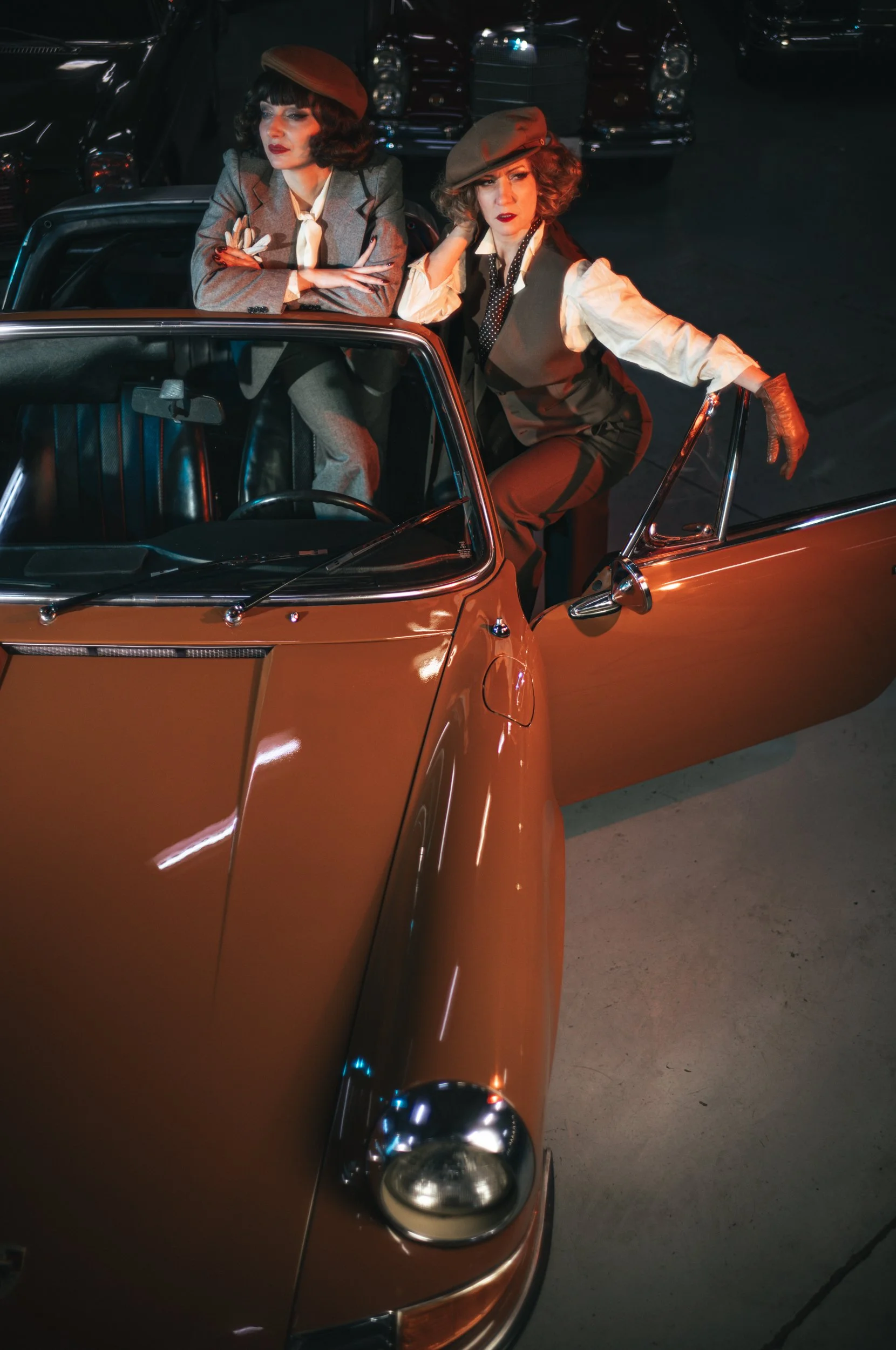
A duo vintage car shoot
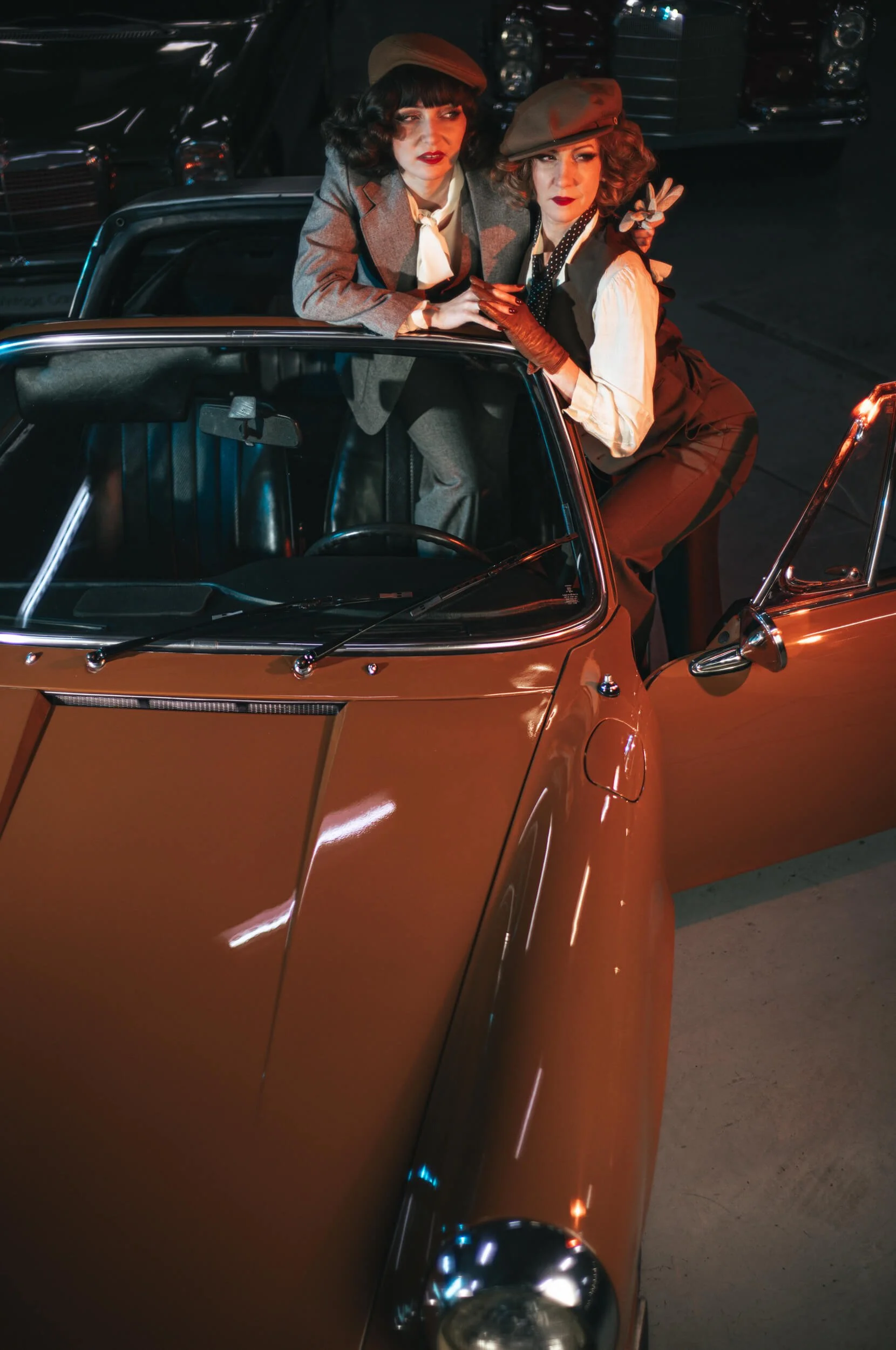
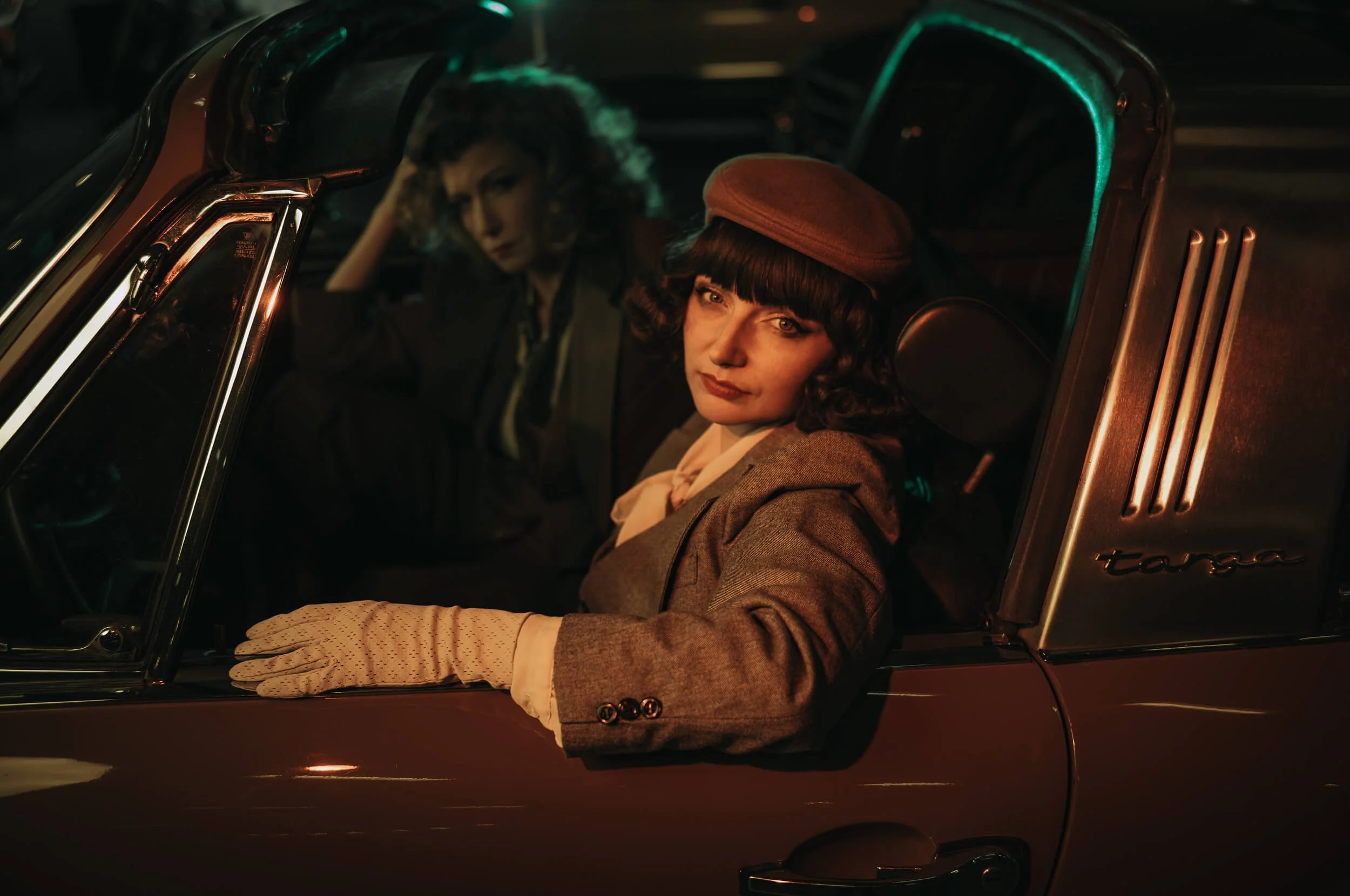
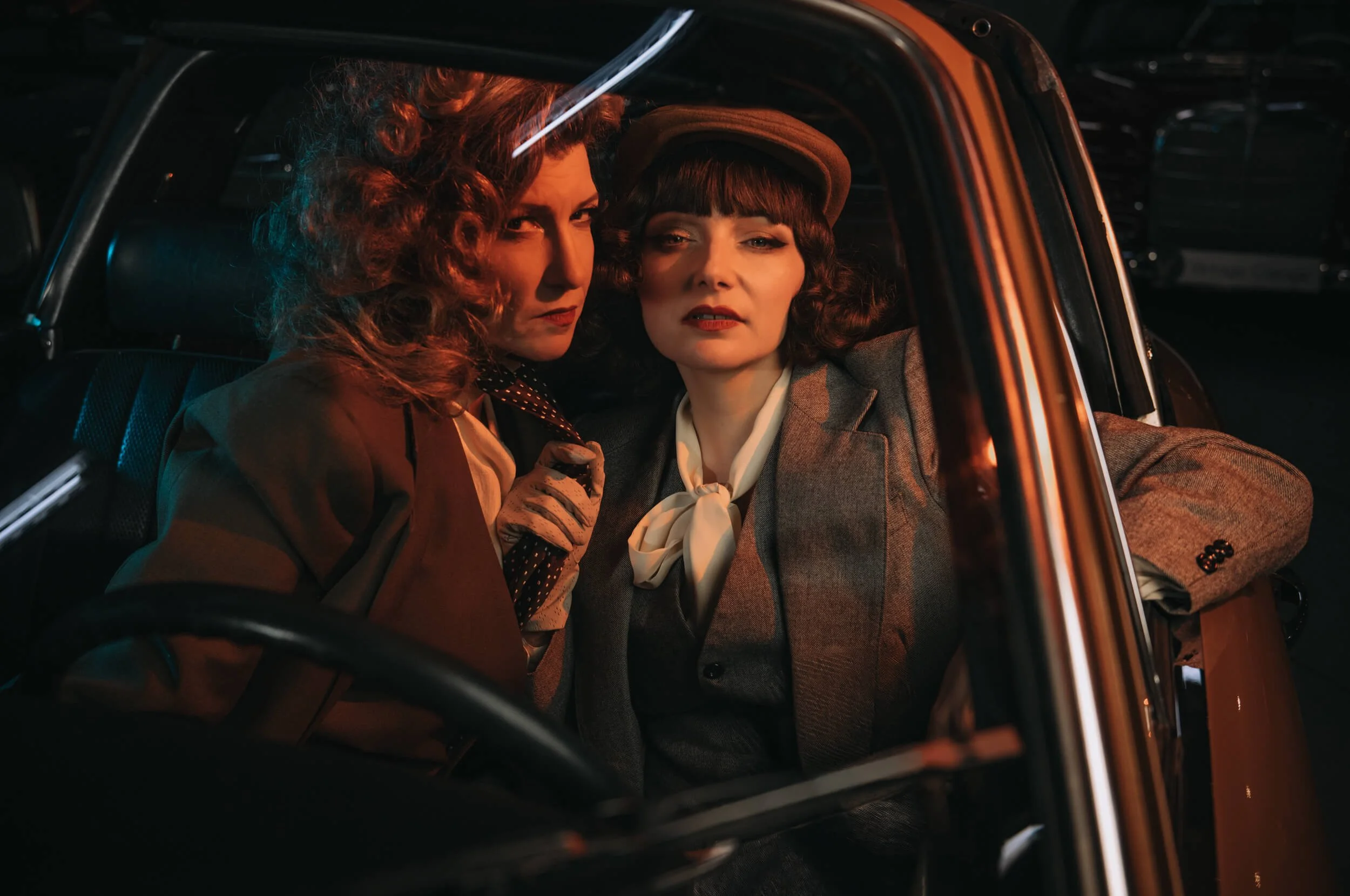
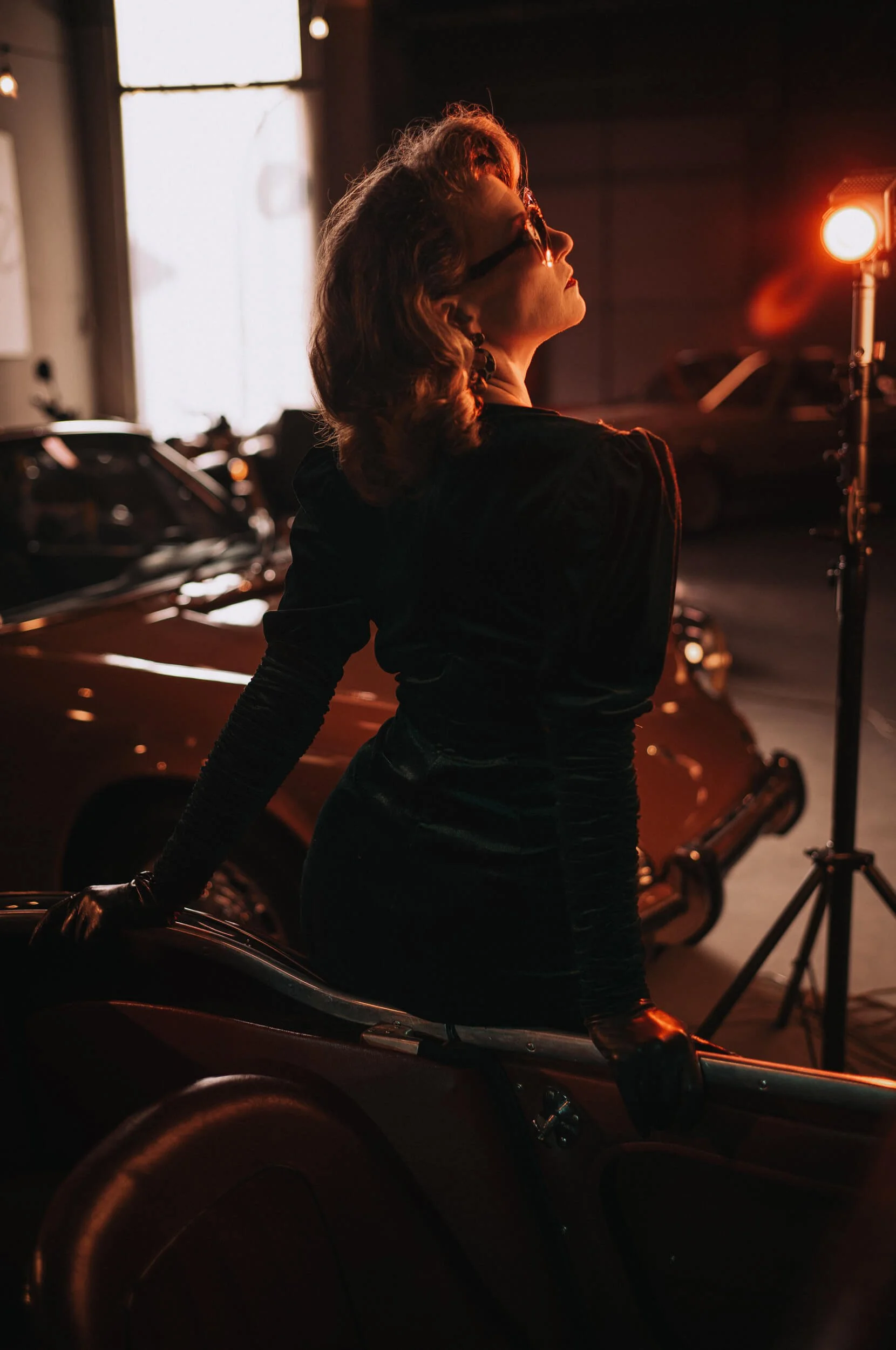
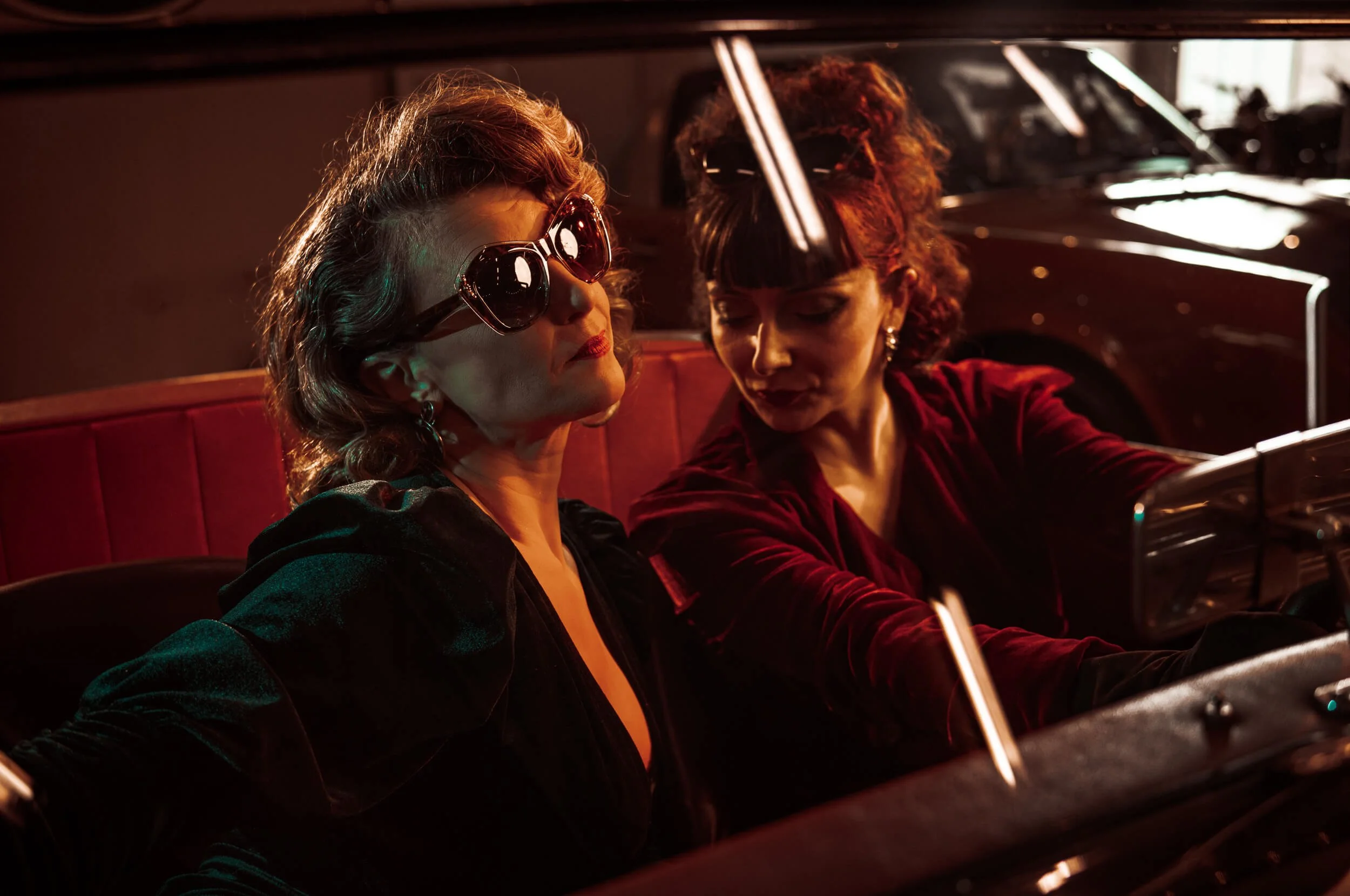
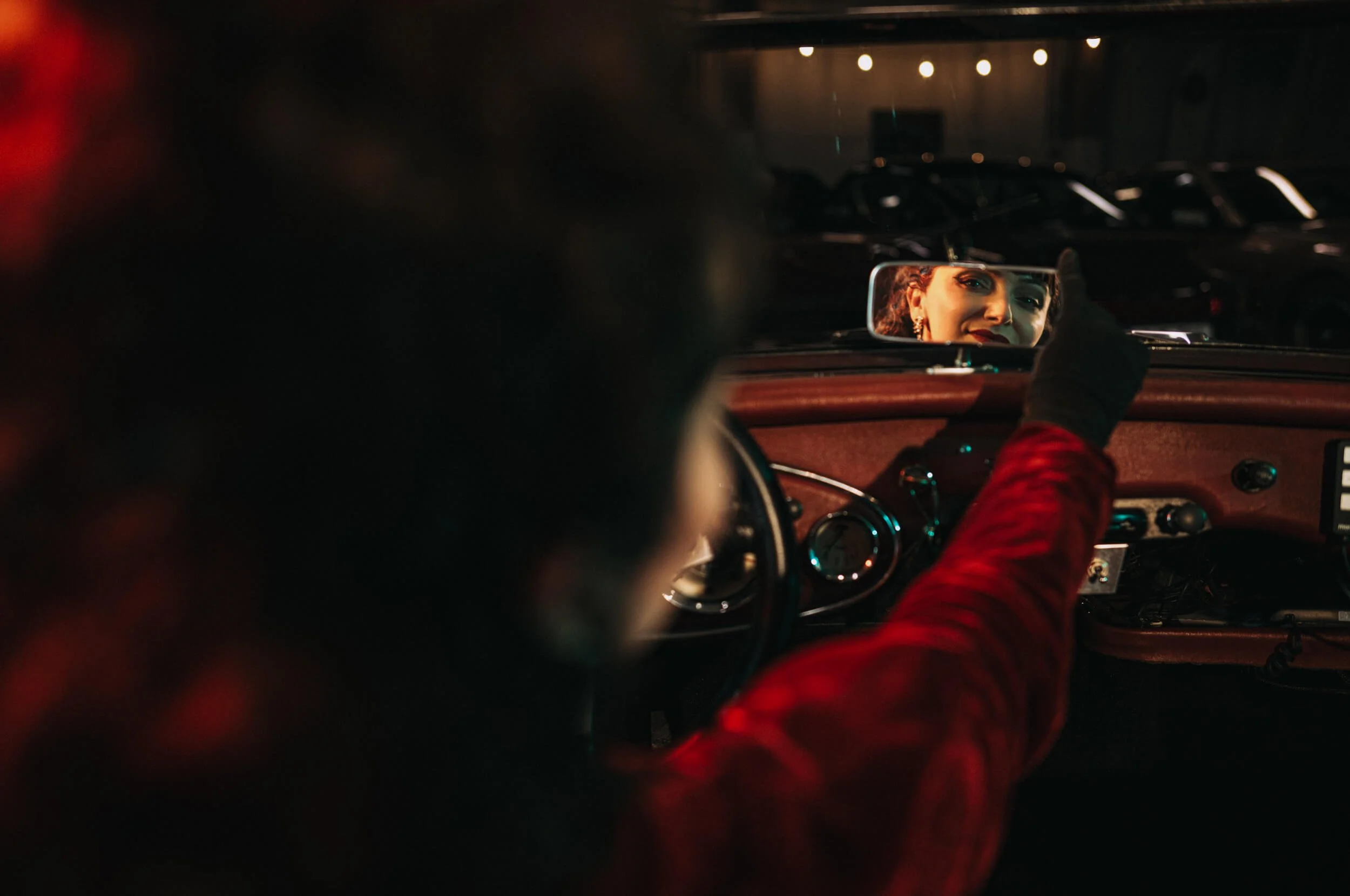
Mara & Viviane Porsche 911 T Targa Zenitar portrait 35mm f1 On Leica M11-D by Milan Swolfs
Mara & Viviane Porsche 911 T Targa Zenitar 35mm f1 On Leica M11-D by Milan Swolfs
For this shoot I wanted an environment where the character of the lens could fully express itself.
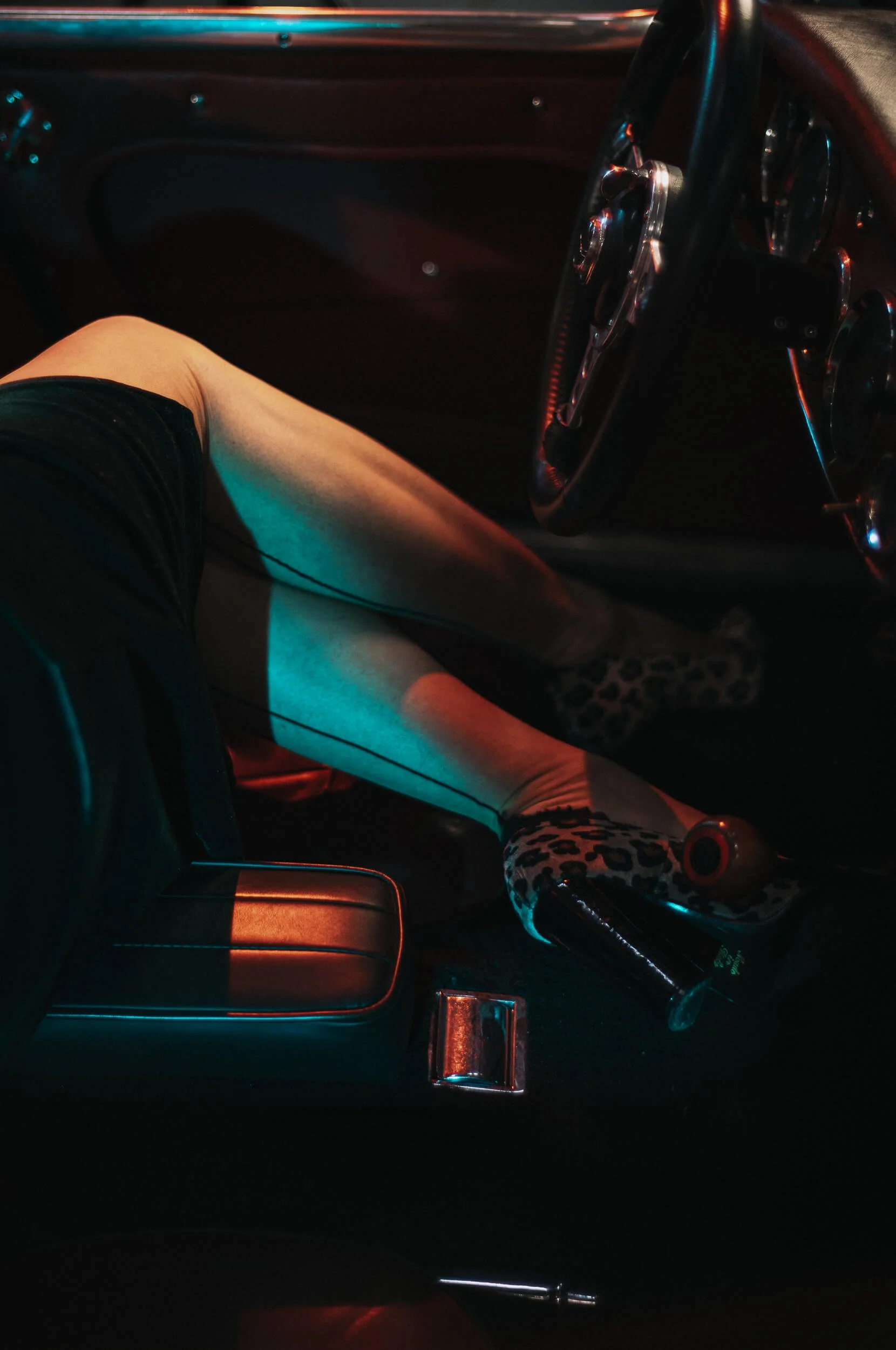
Reflective surfaces, curved chrome details, glass and layered depth create situations where fast lenses reveal their rendering qualities more clearly.
Among the cars were an Austin Healey 3000 (1965), a Mercedes-Benz 300SE (1966) and a Porsche 911 T Targa (1969).
For this concept I worked with Mara De Nudee and Viviane from Paris, creating a duo series where interaction between both models remained part of the visual narrative.
The Zenitar proved to be well suited for this assignment. The focal length is wide enough to capture both models inside the cars while still providing sufficient subject separation for individual portraits and detail images.
Although I brought the Leica S3 as a backup, I ended up shooting exclusively with the Zenitar 35mm f/1 mounted on the Leica M11-D.
Lighting was kept compact. Four LED lights from Harlowe were used. Two lights shaped the faces and body, while two additional lights with colour gels introduced subtle tonal contrast.
Stopping down to f/2.8 provided sufficient depth of field to keep both models in focus while maintaining separation from the background.
The way the lens renders chrome surfaces is particularly interesting. Highlights stretch gently, reflections retain texture and the background maintains atmosphere without becoming distracting.
Macabre and Monochrom
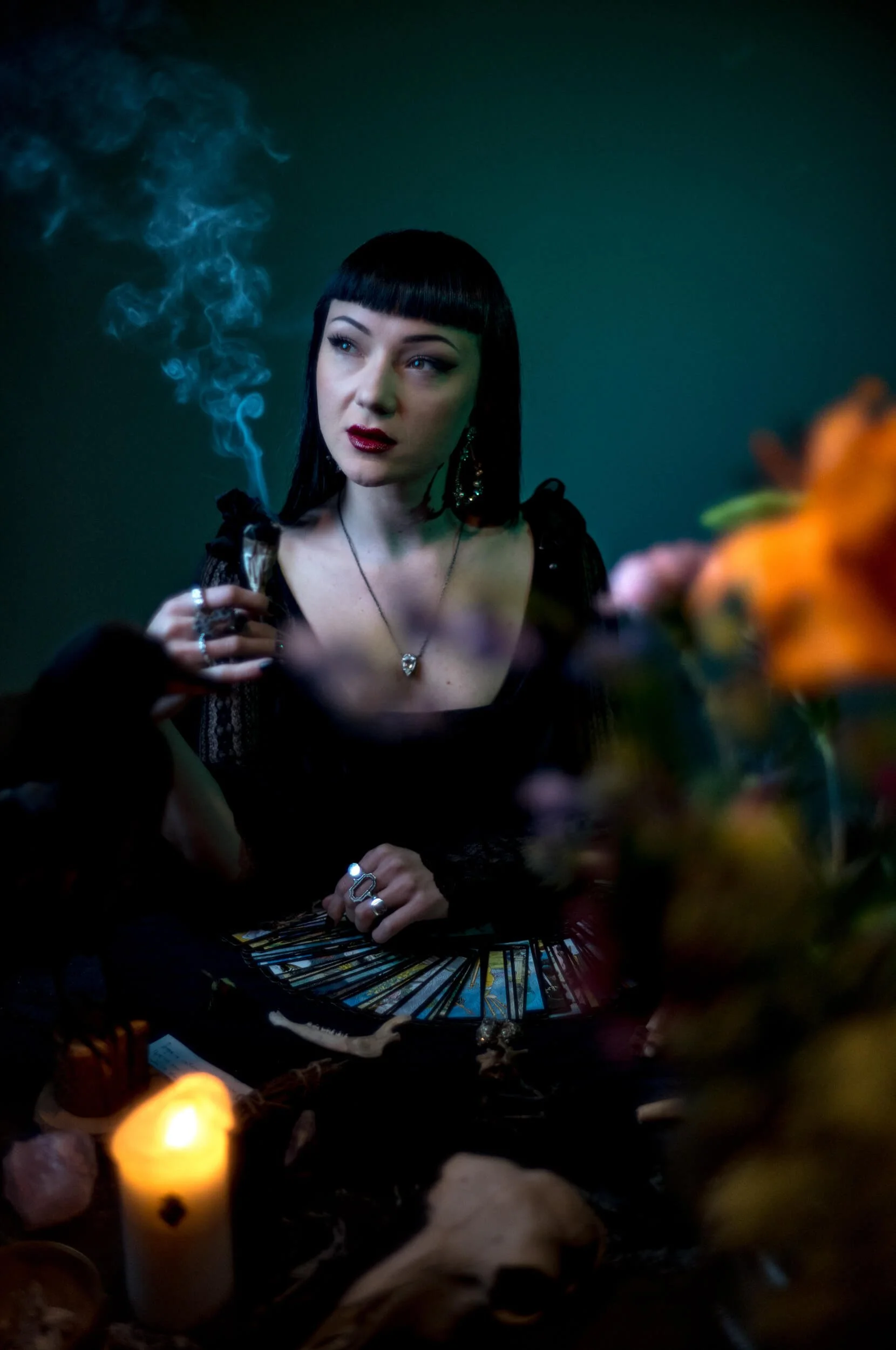
Fortune telling with Laura
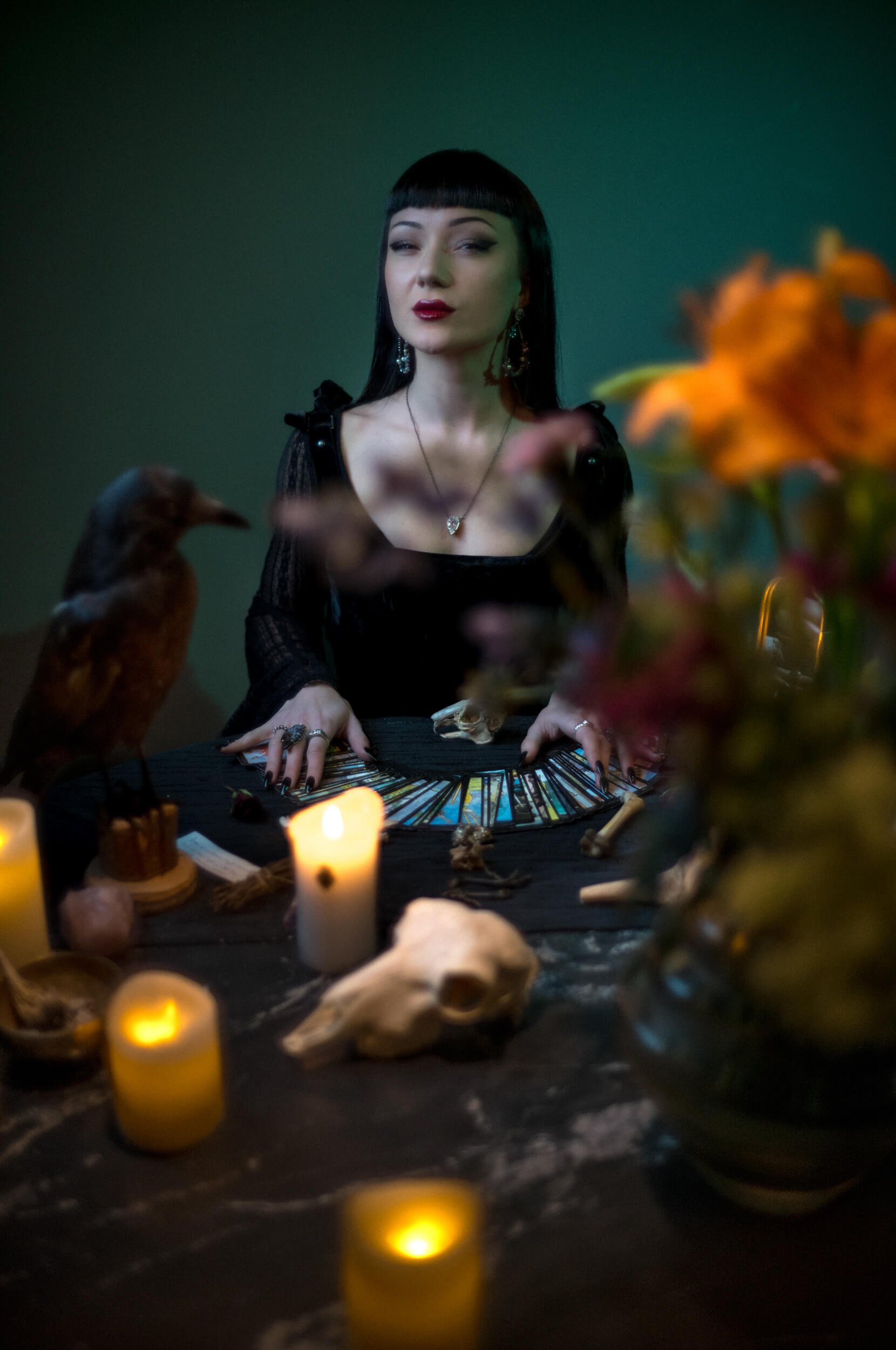
Fortune teller Laura Zenitar 35mm f1 on Leica M11-D by Milan Swolfs
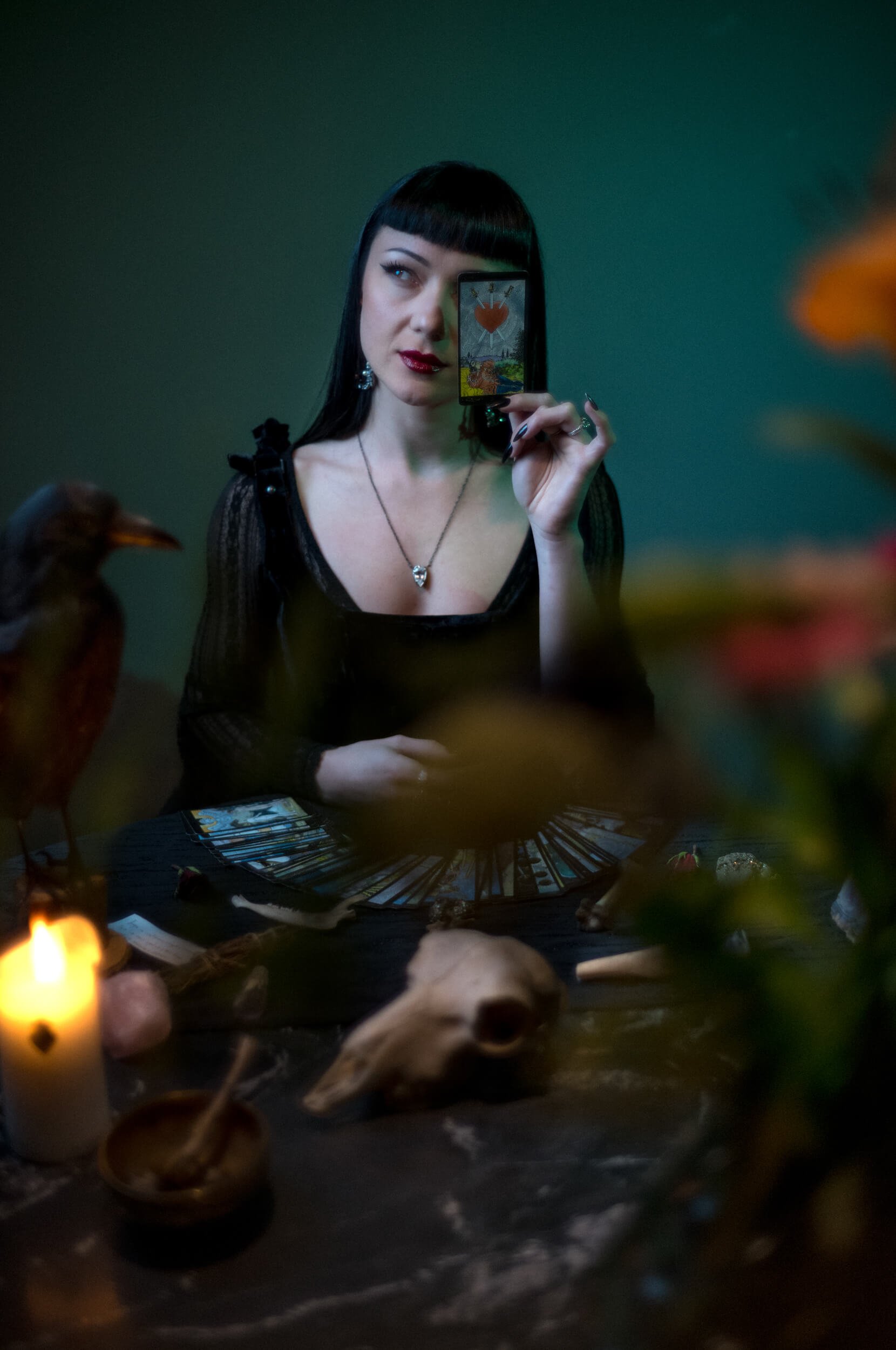
I also used the Zenitar for a shoot with Laura, exploring a slightly darker visual direction inspired by classic Hollywood portrait aesthetics, interpreted in a more macabre and mysterious way.
We developed two concepts. The first was centred around a fortune teller scene, using tarot cards, candles, smoke and small symbolic objects to build atmosphere. Elements such as aged textures, reflective jewellery and layered foreground details allowed the lens to show how it handles depth and subtle light transitions. Colour gels in combination with LED lighting from Harlowe helped shape the mood and introduced gentle tonal separation without losing the softness of the rendering.
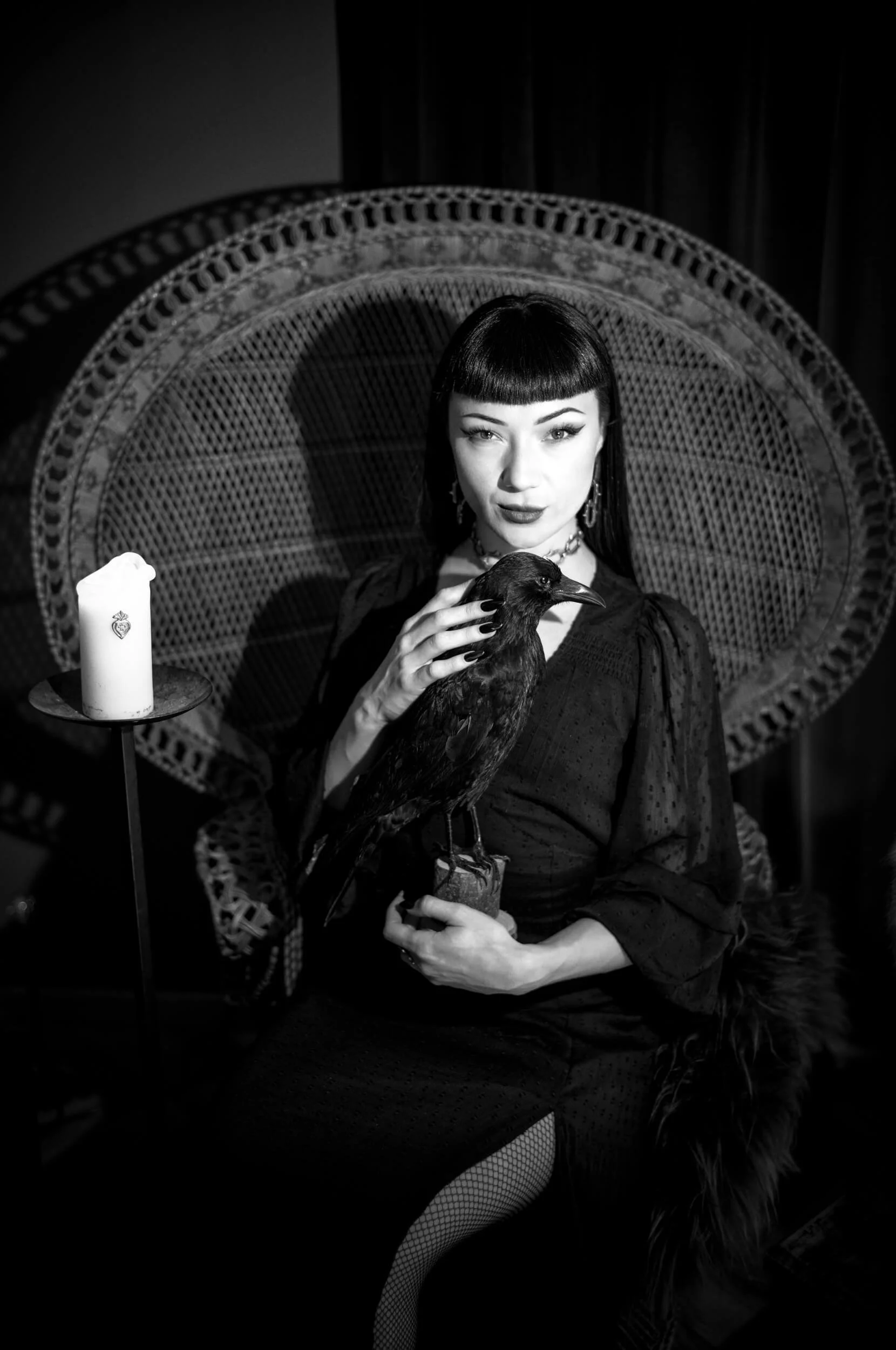
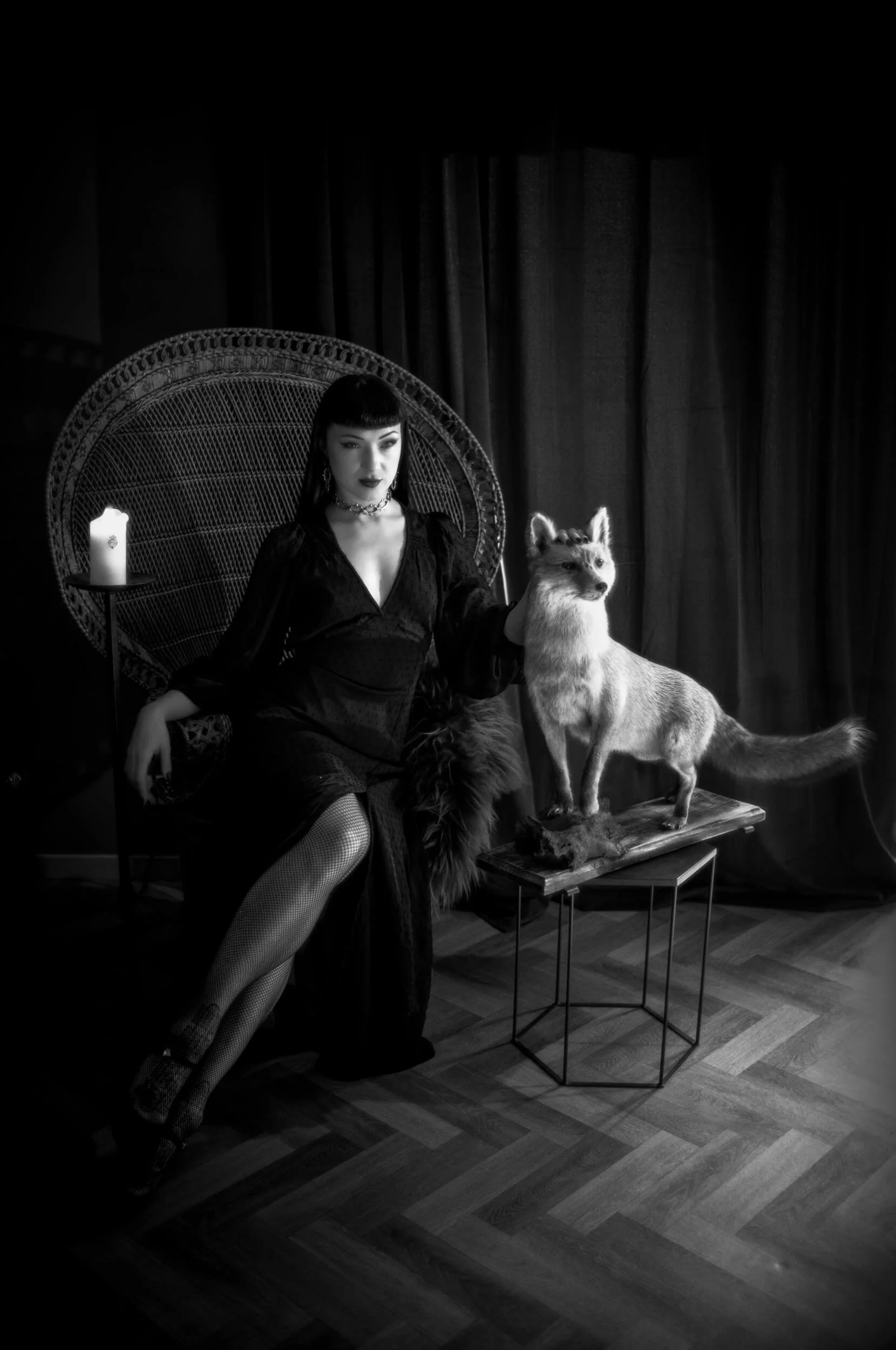
The second concept was photographed in black and white using the Leica M11 Monochrom. I have always appreciated the Monochrom sensor when combined with vintage inspired lenses, as the absence of colour emphasises tonal transitions and texture. The Zenitar performs particularly well in black and white, where the glow and smooth falloff contribute to a classic cinematic look. Skin tones appear balanced, highlights remain soft and shadow transitions feel natural rather than overly contrast driven.
The combination of the Monochrom sensor and the Zenitar rendering reinforces the impression that this lens is not only interesting for colour work, but also highly capable in monochrome photography where character often becomes even more visible.
The Fox never lies, Laura Zenitar 35mm f1 on Leica M11 Monochrom by Milan Swolfs
Café atmospheres
Mirrors, tungsten and mood
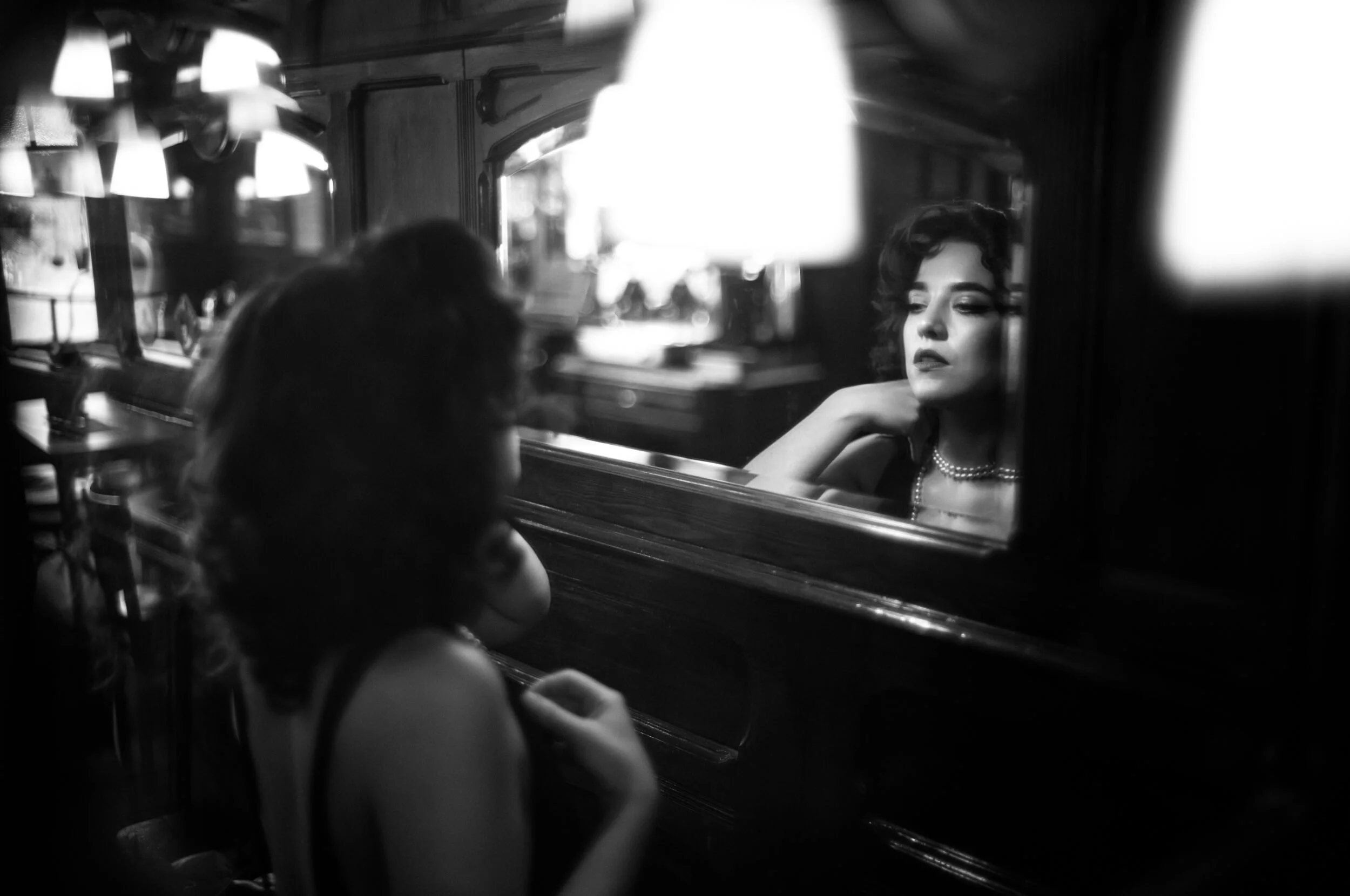
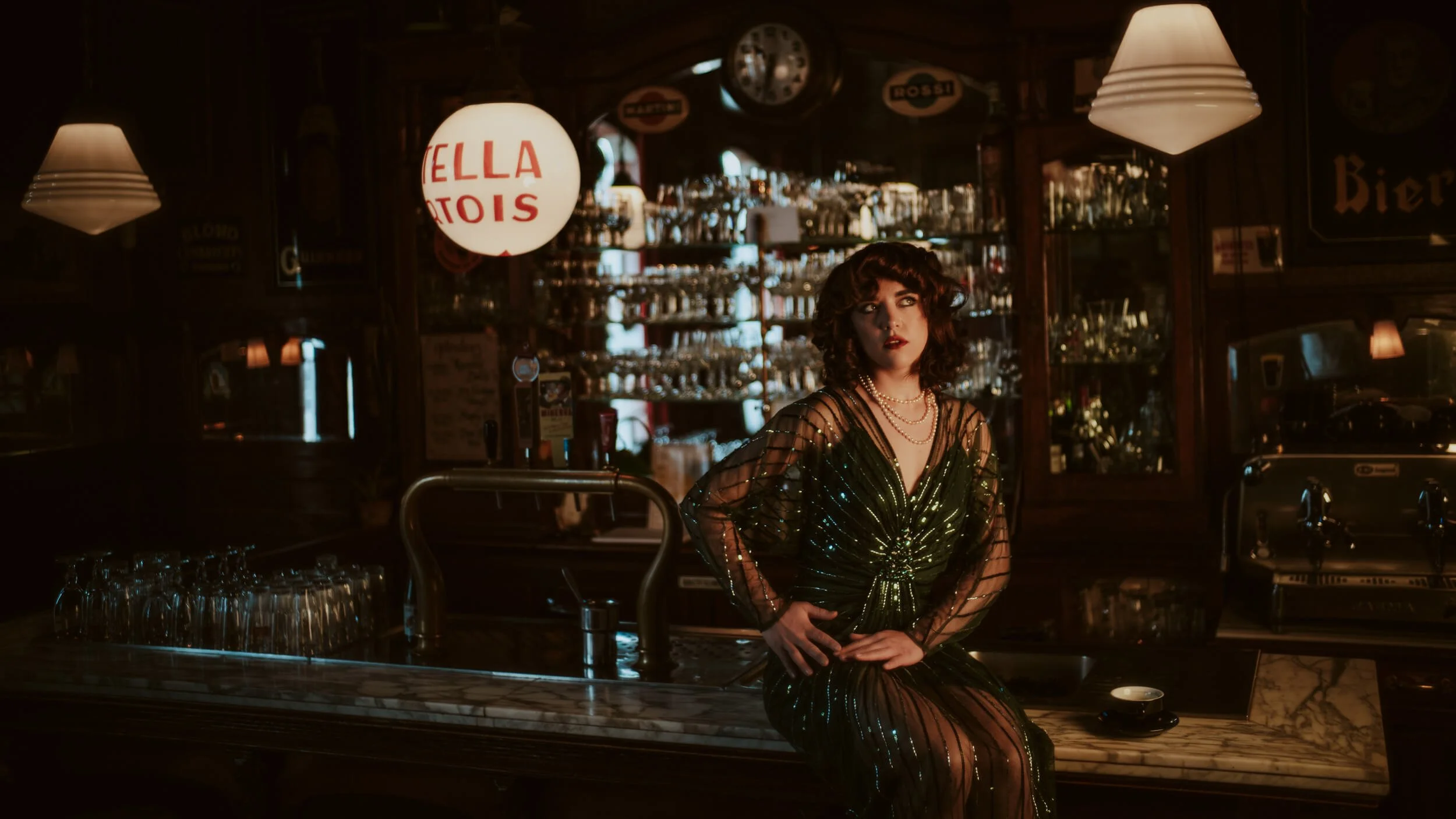
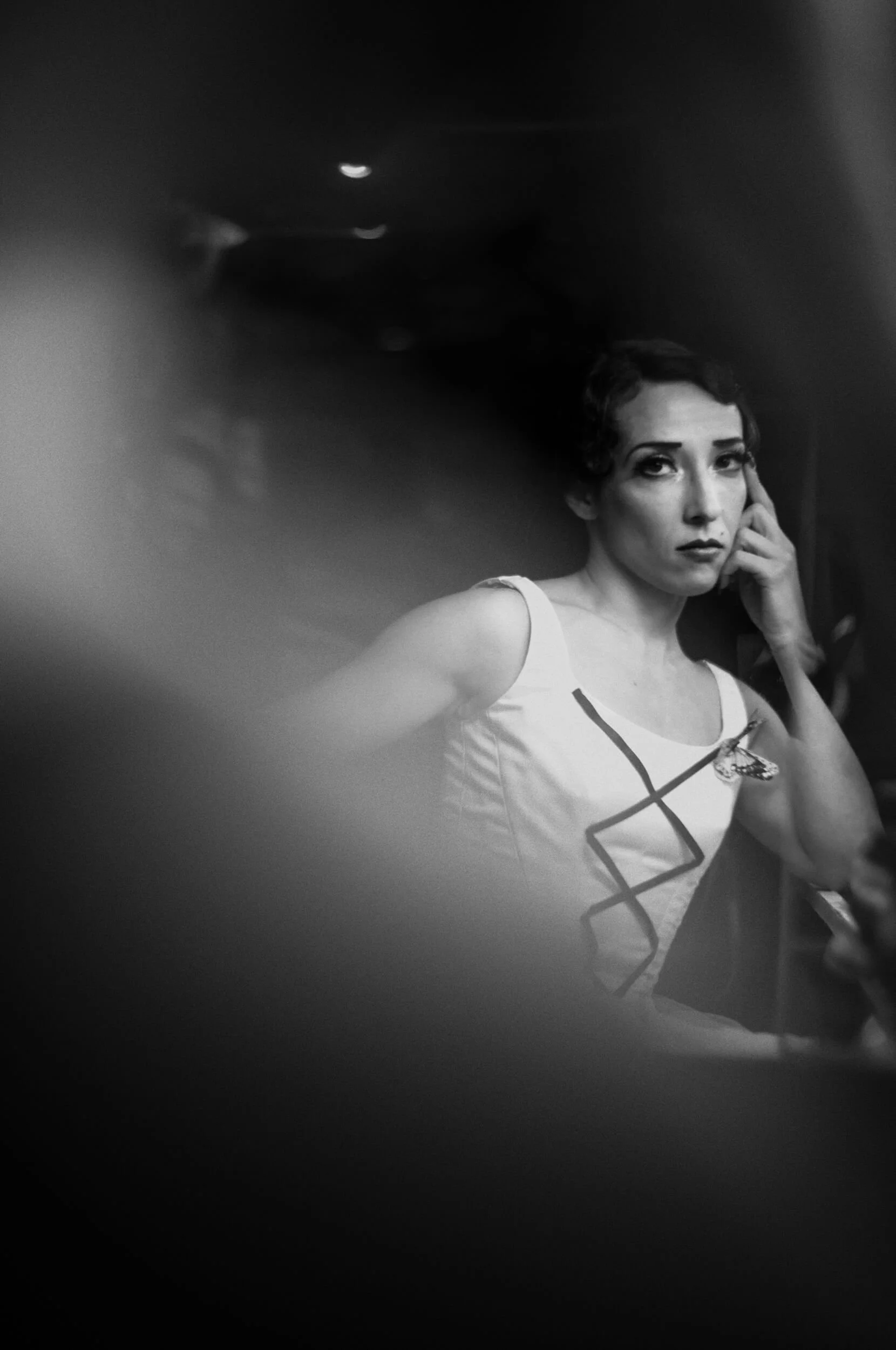
Jennifer Tramstatie Zenitar 35mm f1 and Leica M11 Monochrom by Milan Swolfs
Jennifer Tramstatie Zenitar 35mm f1 and Leica M11-D by Milan Swolfs
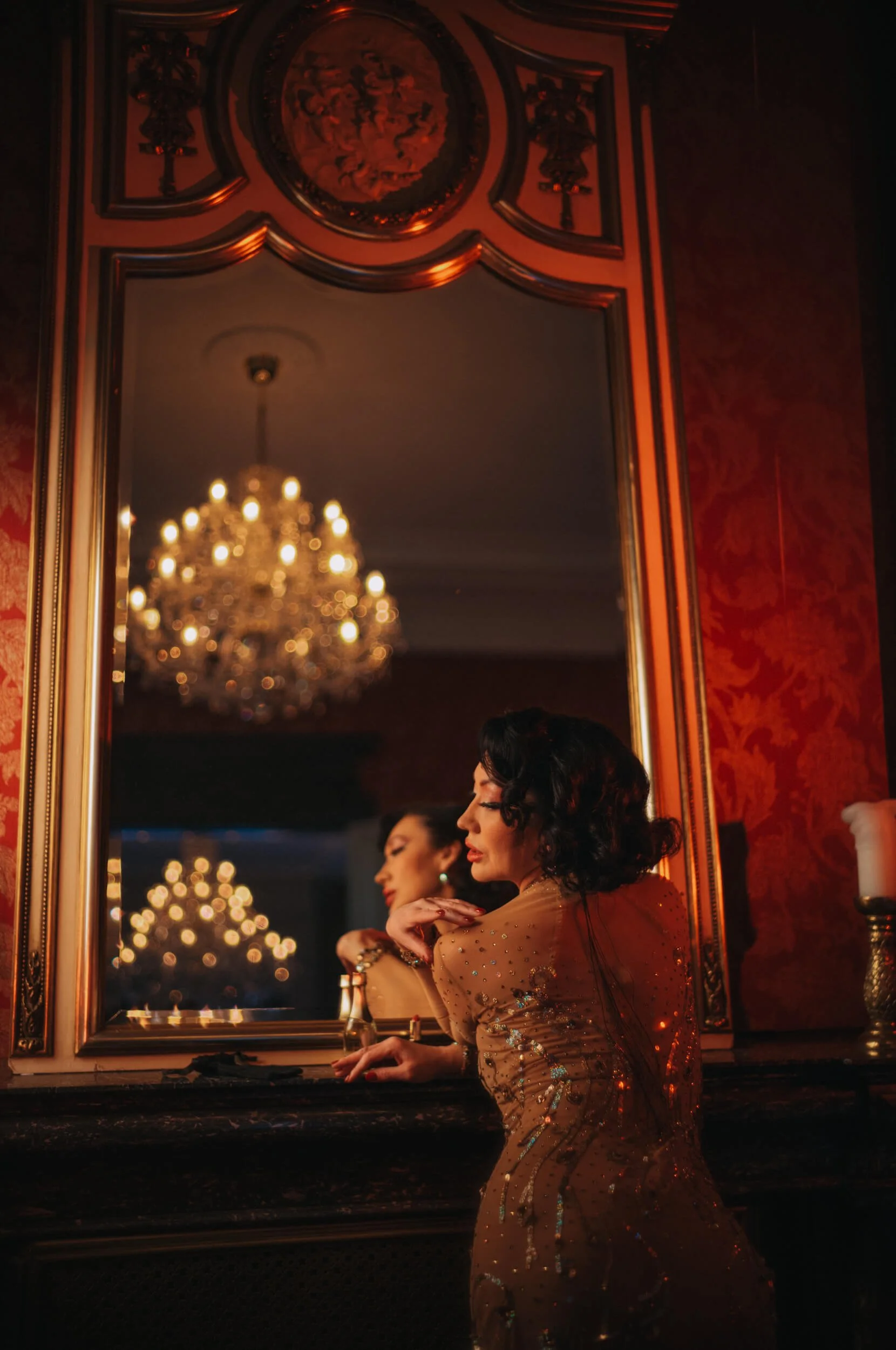
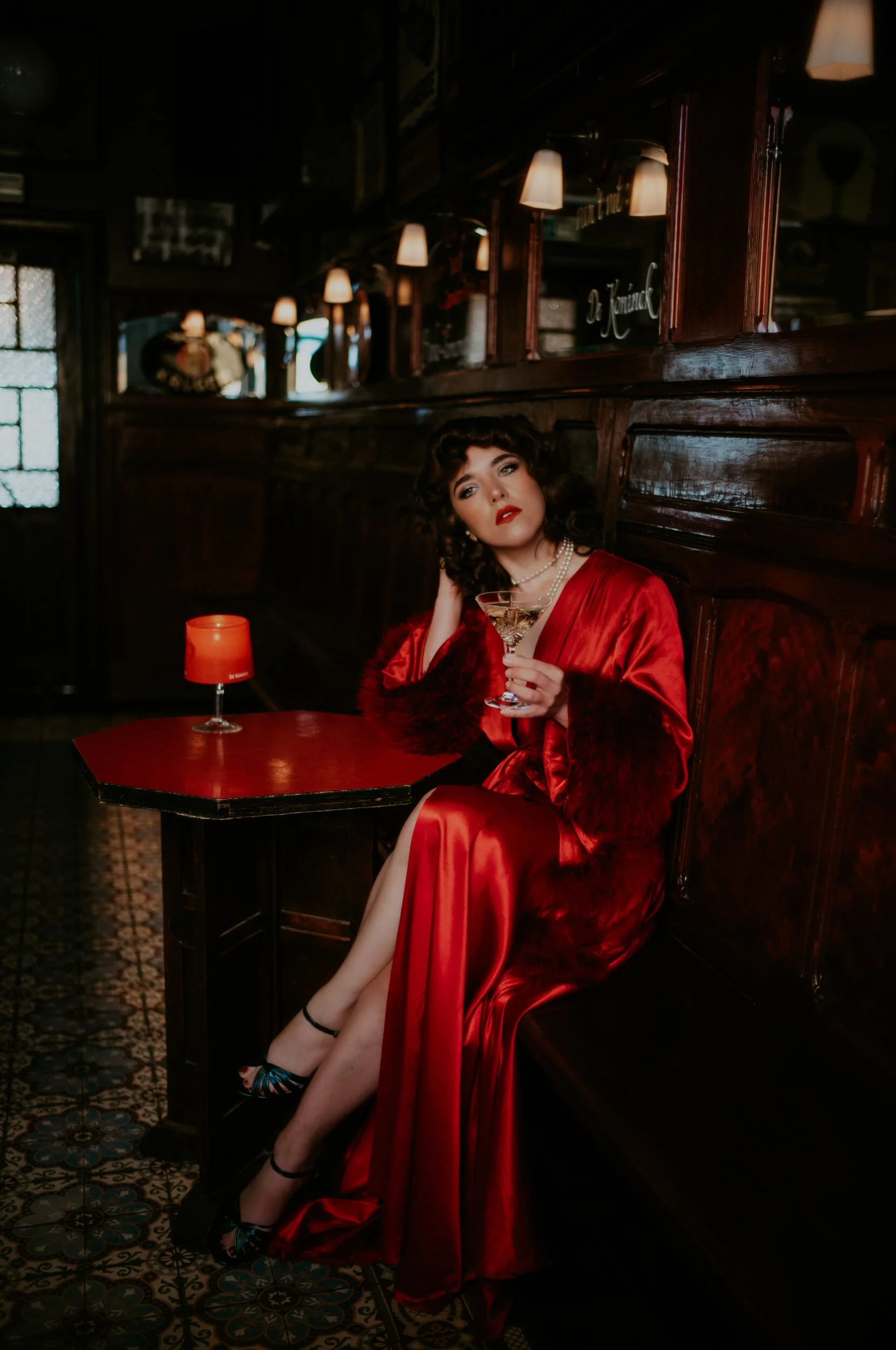
Another shoot where the Zenitar showed its strengths was a session with Jennifer at Café Tramstatie, a very traditional Belgian café with a strong sense of history. The interior reflects a classic atmosphere with dark wood, mirrors and warm tungsten lighting that gives the location a timeless character. Details such as the corridor leading to the garden and even a traditional smoking room and the layered interior spaces all contribute to an environment where reflections and practical light sources become part of the visual narrative.
For this shoot I used the existing light of the café as a base and complemented it with subtle LED lighting to shape the face and clothing. The goal was not to overpower the ambient atmosphere but to gently guide the viewer’s attention. This balance allows the Zenitar to show how it reacts when practical light sources remain visible within the frame.
Highlights spread gently, reflections gain depth and textures retain a natural softness. Small light sources appear slightly diffused, which contributes to the cinematic impression the lens is capable of producing.
Mirrors were intentionally used as compositional elements to create additional layers within the frame. Reflections allow the lens to demonstrate how it handles contrast transitions and highlight behaviour in more complex lighting environments.
Colour images were captured on the Leica M11-D, while black and white images were photographed on the Leica M11 Monochrom. I enjoy working this way, switching between cameras in a rhythm similar to working with film, where one camera is dedicated to colour and another to monochrome.
The Zenitar performs consistently in both situations. In colour, the lens preserves atmosphere and subtle tonal variation. In black and white, the rendering emphasises texture and tonal transitions without becoming overly clinical.
This combination reinforces the impression that the Zenitar benefits from environments where light sources, reflections and depth interact naturally.
Working this way feels very natural to me. One camera dedicated to colour, another to monochrome, similar to working with two film stocks in parallel.
The Zenitar adapts well to both approaches, allowing visual continuity across different moods while maintaining its characteristic visual signature. This flexibility makes the lens particularly interesting for photographers who prefer to develop projects rather than isolated images.
Backstage & Ballerina
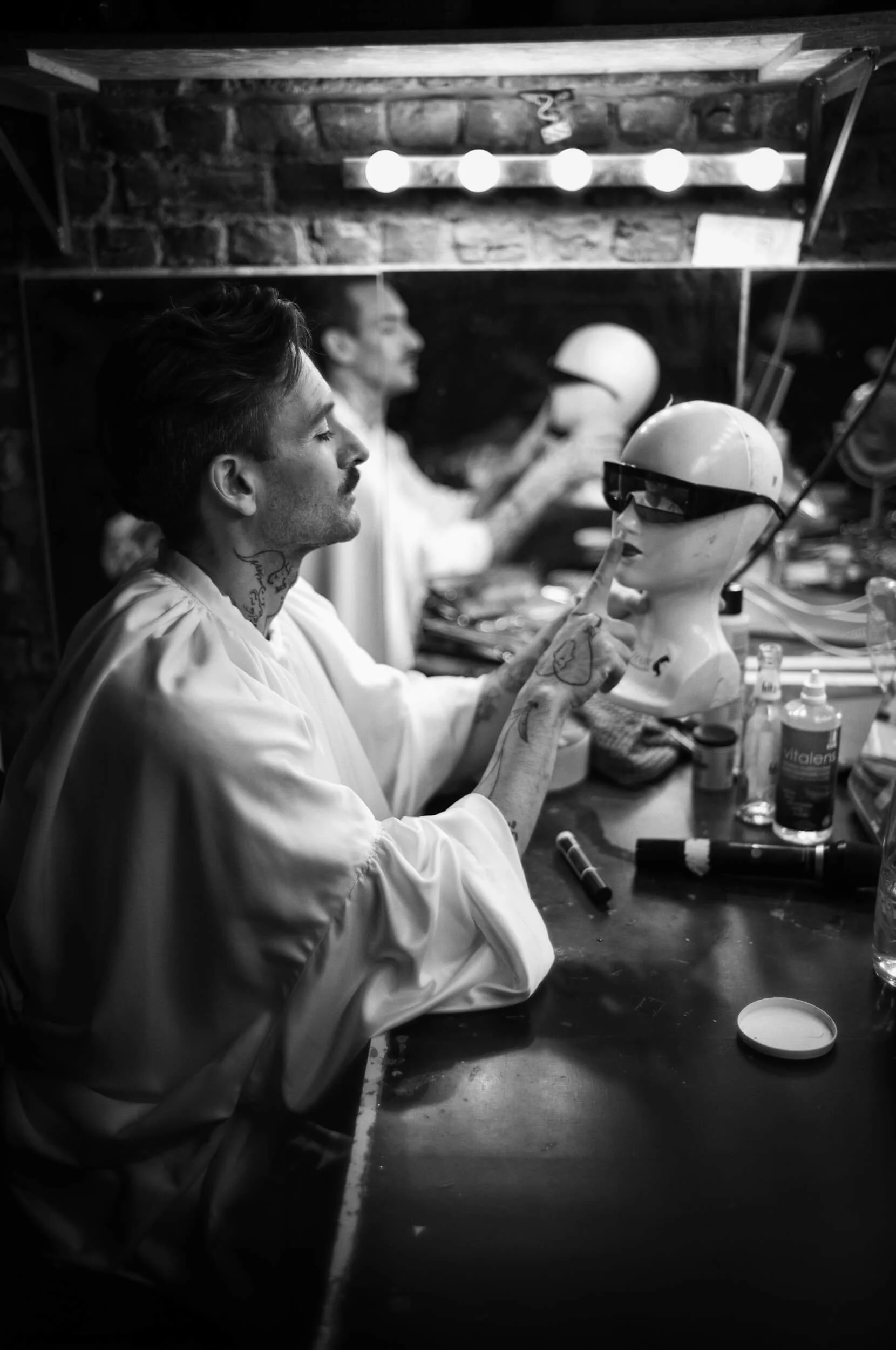
Chanelle & Vicomte
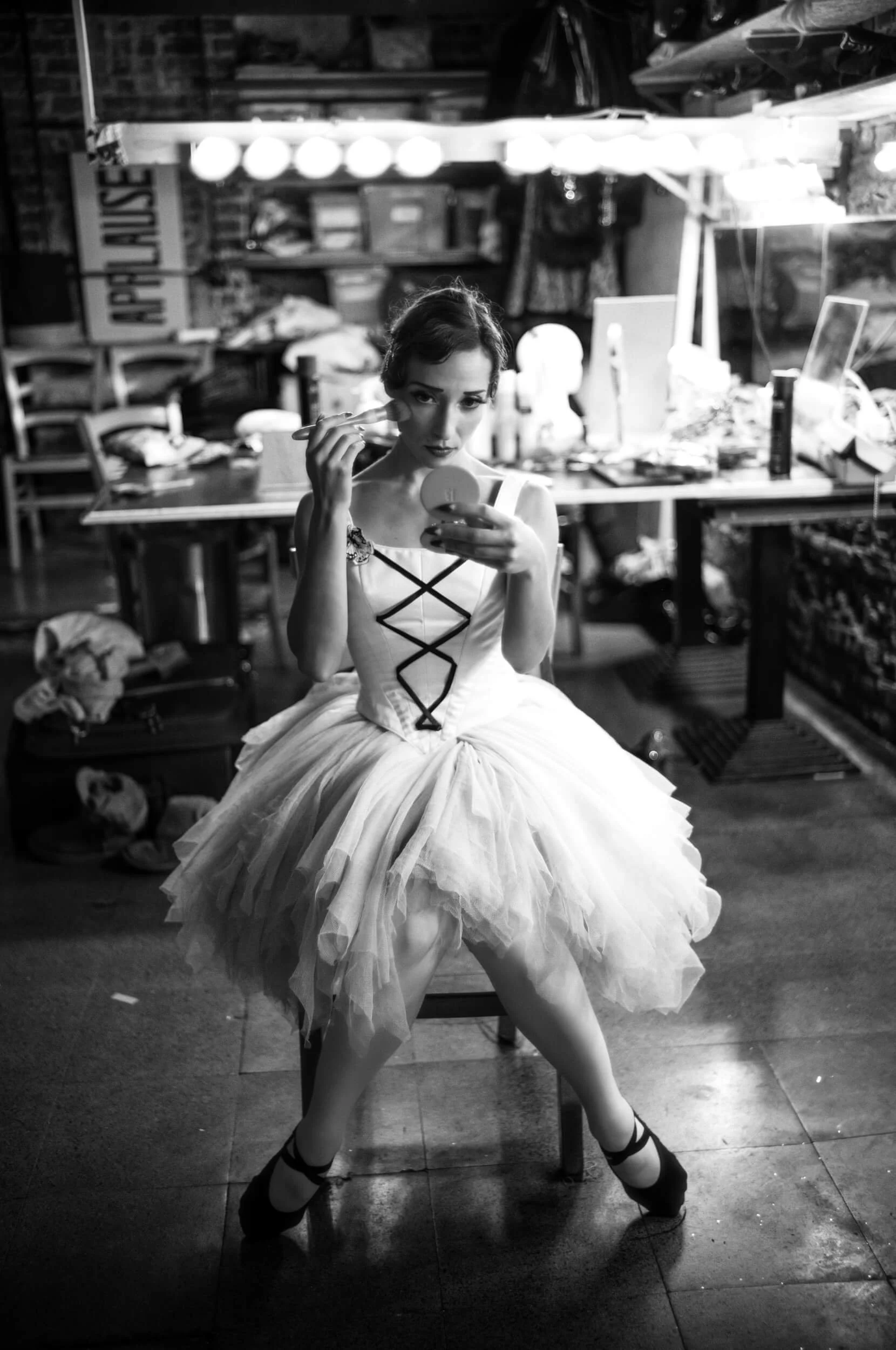
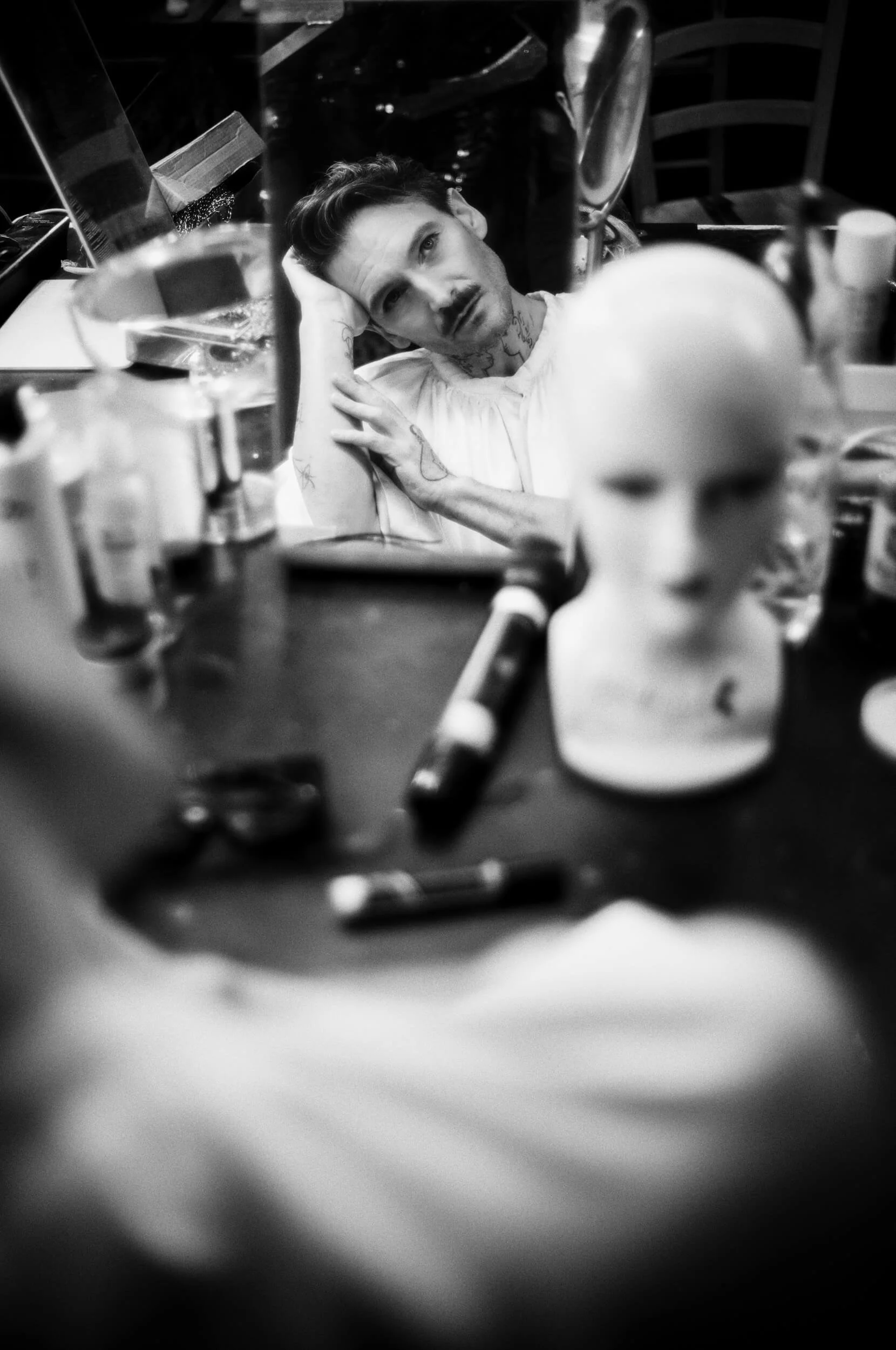
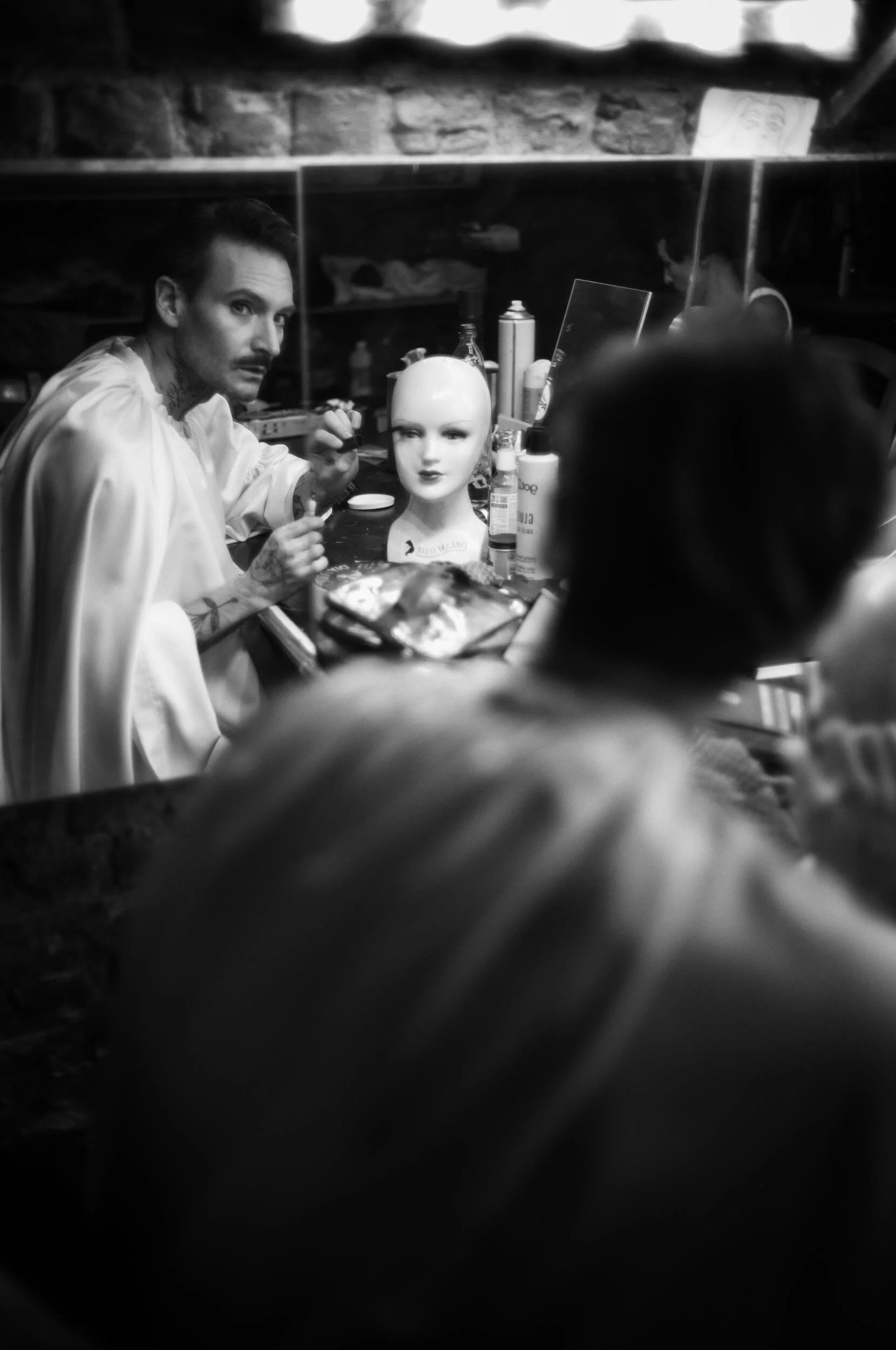
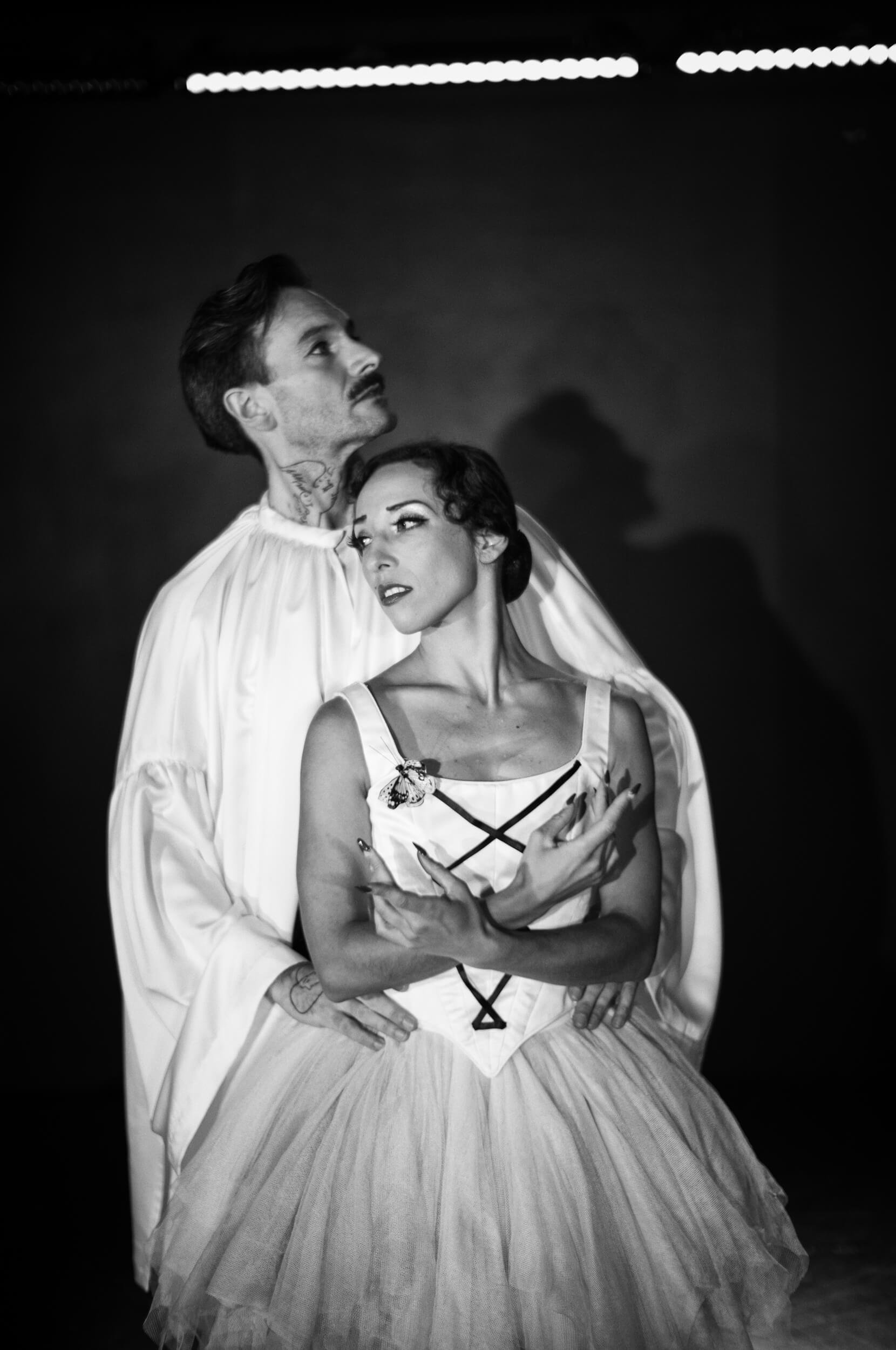
Another moment where the Zenitar revealed its strengths was during a backstage session with Chanelle and Vicomte, who invited me to photograph the preparation of their latest act. The setting immediately suggested a visual direction inspired by classic cabaret and theatre environments. Backstage spaces often contain many visual elements, mirrors, fabrics, makeup tables, costumes and scattered props that form part of the narrative but should not dominate the image.
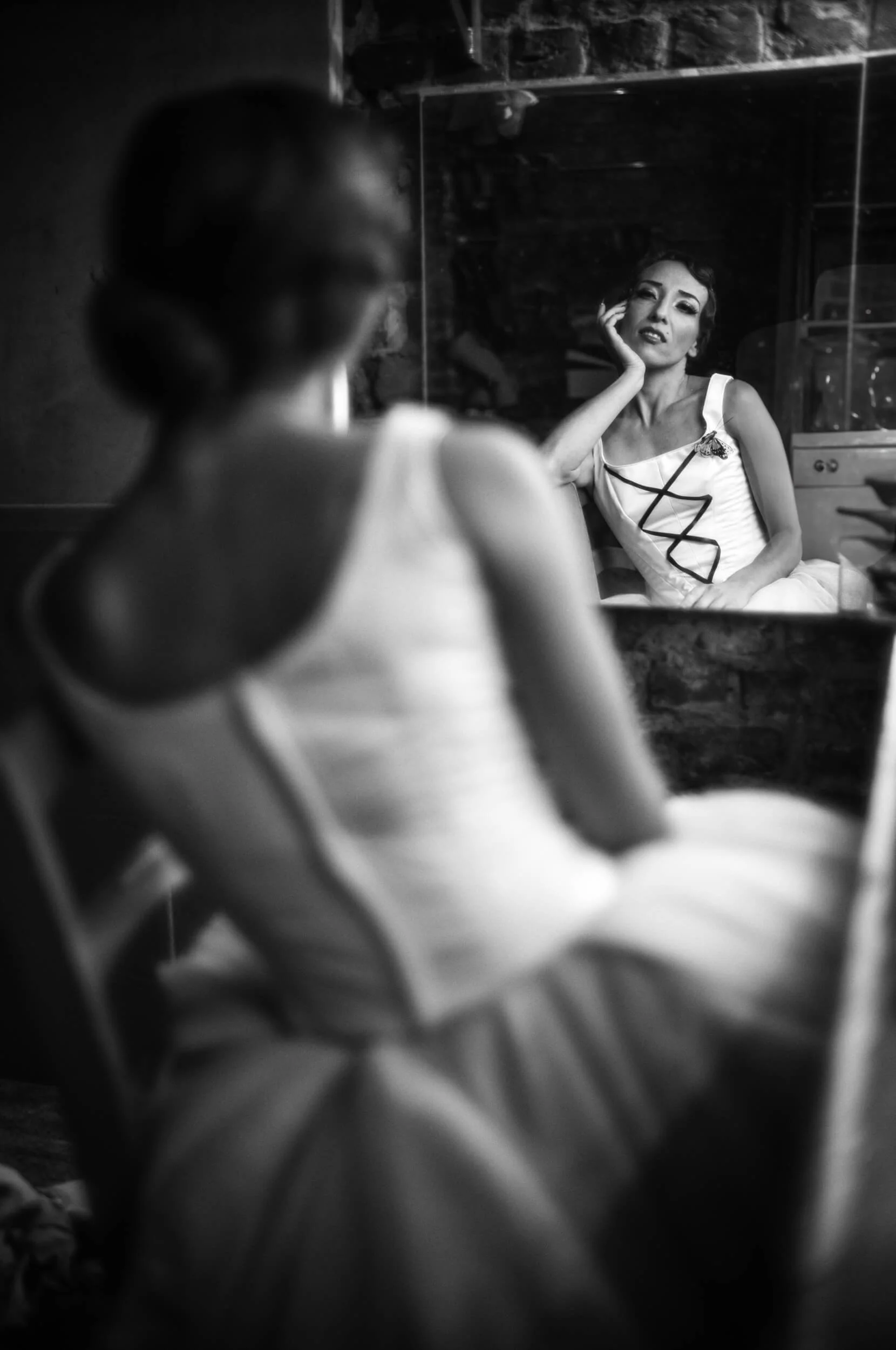
Chanelle Zenitar 35mm f1 on Leica M11 Monochrom
Using the Zenitar wide open allowed me to separate the performers from the surrounding environment while still preserving the atmosphere of the space. The lens naturally isolates what needs attention, the character, the preparation and the subtle gestures before stepping on stage. Essential elements such as gloves, fabrics, jewellery and makeup tools remain recognisable, while the surrounding environment dissolves gently into the background.
The images were captured on the Leica M11 Monochrom, where the tonal transitions of the Zenitar create a very organic rendering. Highlights remain soft and transitions between focus and defocus feel gradual rather than abrupt. The lens helps guide the viewer’s attention without removing the context of the environment.
The visual result feels slightly reminiscent of Parisian cabaret, opera backstage moments and theatre photography where atmosphere plays an essential role in storytelling. The Zenitar emphasises character while allowing the environment to remain present but secondary.
This balance between subject and atmosphere is one of the reasons why the lens works particularly well for portrait-oriented storytelling.
Vicomte Harbourg Zenitar 35mm f1 on Leica M11 Monochrom by Milan Swolfs
For those who prefer character
The Zenitar is particularly interesting for photographers who want their images to stand out and feel different from modern technically perfect lenses.
When there is a practical light source somewhere in the frame, the lens reacts strongly. Light spreads subtly through the scene and creates a natural glow that enhances atmosphere.
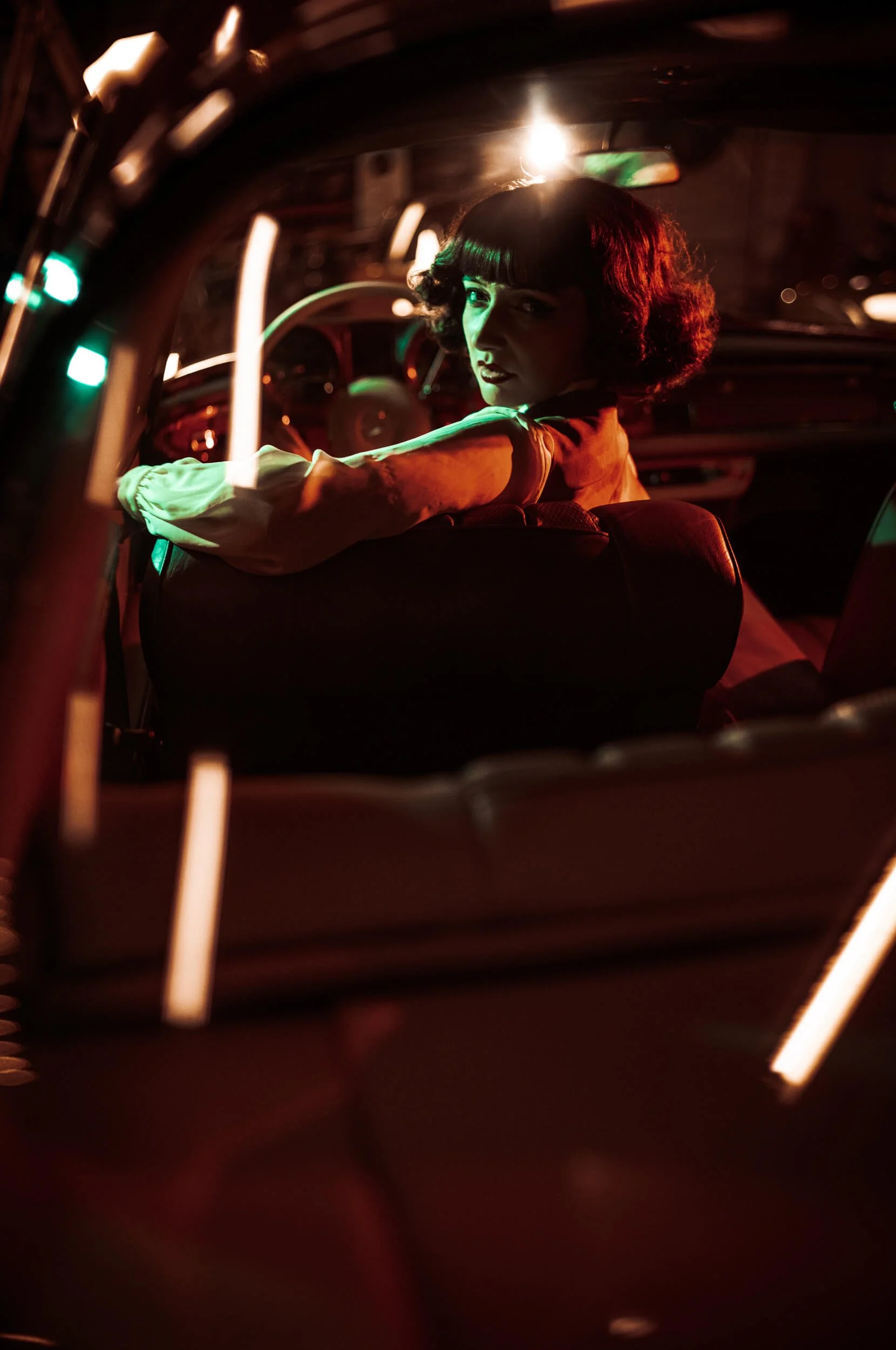
Mara & Viviane Porsche 911 T Targa Zenitar 35mm f1 on Leica M11-D by Milan Swolfs
Earrings appear to glow slightly, skin becomes softer and reflections in the eyes create depth. Textures in clothing pick up small highlights that can resemble fine reflections.
This behaviour gives images a distinctive visual signature.
It performs especially well for portrait photography, but also for jazz clubs, concerts or atmospheric low light environments where practical light sources are part of the composition.
It can also produce interesting results in atmospheric landscapes where light interacts with mist, reflections and layered depth.
For photographers looking for perfect correction and consistency, other lenses may be more suitable.
For photographers interested in character, mood and visual experimentation, the Zenitar offers something distinctive.
For me, this lens is a keeper. The build quality may not be the highest in its category, but the images more than compensate for this.
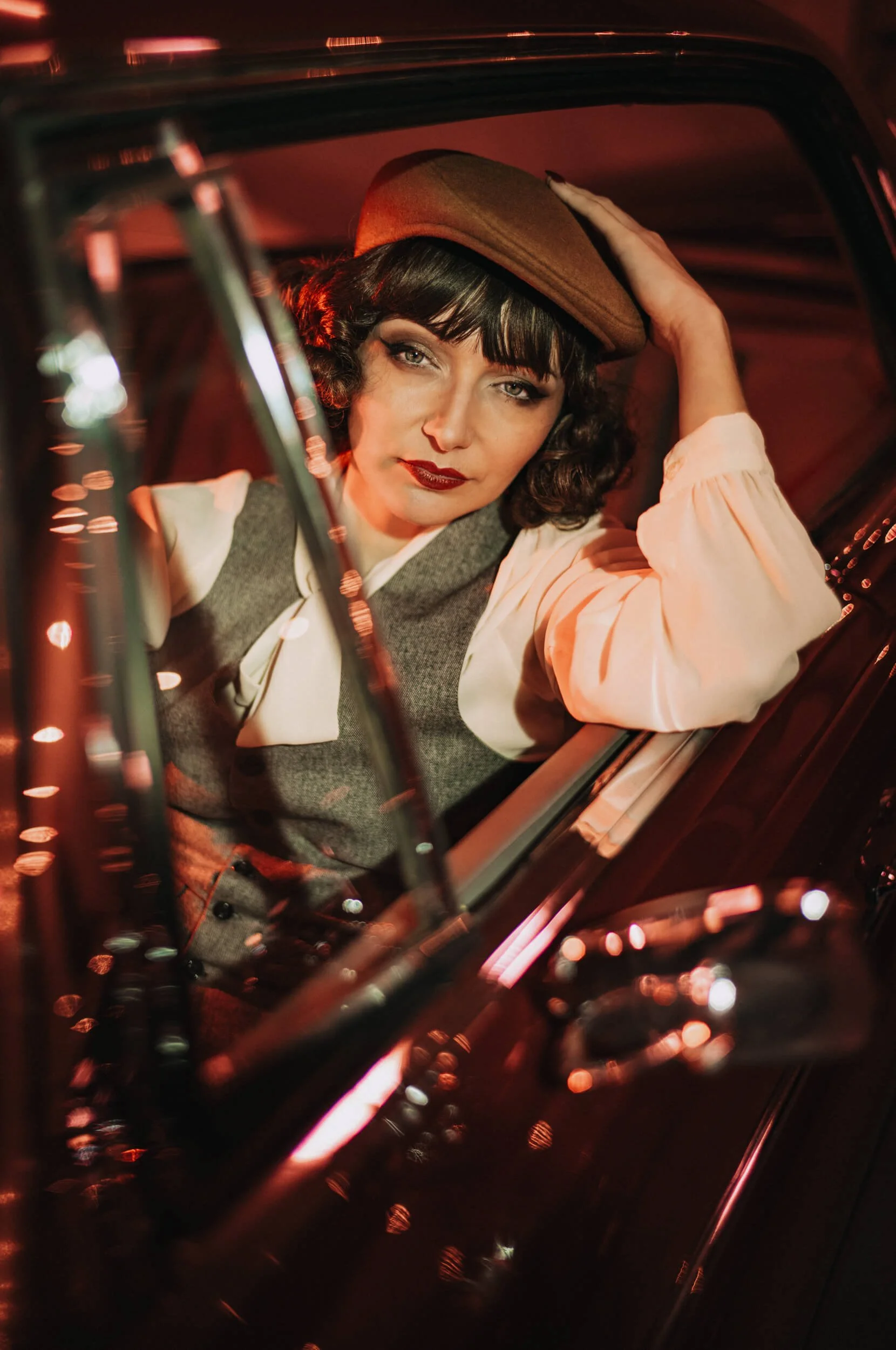
Gallery images of Zenit Zenitar 35mm f/1


Final Thoughts on the Zenitar 35mm f/1
Chanelle at Cabaret Mademoiselle Zenitar 35mm f1 on Leica M11 Monochrom by Milan Swolfs
The Zenitar 35mm f/1 is not a lens for everyone.
It is not the most technically perfect 35mm lens available for M mount, and it does not try to be.
The Leica Noctilux-M 35mm f/1.2 ASPH remains the more refined and more versatile lens in many measurable ways.
Yet the Zenitar offers something different. It produces images with a recognisable visual identity.
Wide open, the rendering feels expressive and sometimes unpredictable, but often very rewarding.
The combination of Sonnar-like transitions, gentle glow and slightly wild bokeh creates a visual signature that feels more emotional than technical.
For photographers looking for consistency and technical precision, there are better options.
For photographers interested in atmosphere, imperfections and cinematic rendering, the Zenitar remains a compelling choice.
It encourages experimentation and rewards creative risk.
In my own work, it has earned a place as a specialised tool for portrait photography where atmosphere and character matter more than technical precision.
The Zenitar 35mm f/1 may not be the most logical lens in the system, but it is certainly one of the most interesting lenses currently available for M mount.
Acknowledgements
Special thanks to Patrik from PT Collectibles for sourcing this lens.
Thanks to my girlfriend, as always, for supporting my journey and helping arrange the repair of the lens.
And thanks to Chanelle, Jennifer, Laura, Mara, Vicomte, Victoria and Viviane for posing and contributing to the visual exploration of this project.
Thank you.
Milan Swolfs
About Milan Swolfs
Milan Swolfs is a fine art portrait photographer from Antwerp, Belgium, renowned for his distinctive blend of burlesque and vintage aesthetics. His work channels the timeless Hollywood glamour of the 1920s and 1930s, capturing both men and women in bold yet elegantly refined portraits.
Beginning his career photographing Europe’s largest burlesque events, Milan later transitioned into fine art photography. As an ambassador for Leica Camera and Harlowe Creators, his work has been featured in LFI (Leica Fotografie International), Medium Format Magazine, and Viewfinder. In 2022, he debuted his solo exhibition, Light of Seduction, at the Leica Store in Porto. Most recently, from late 2024 to early 2025, his latest exhibition, Echoes of Elegance: A Timeless Journey, was showcased at the Leica Store Beaumarchais in Paris.
Milan’s portraits celebrate individuality and classic beauty, reviving the charm and allure of a bygone era.
