
Thypoch Ksana 35mm f/2 review
A compact Leica M travel lens balancing vintage character and modern rendering by Milan Swolfs
Introduction
There is something special about a compact 35mm lens.
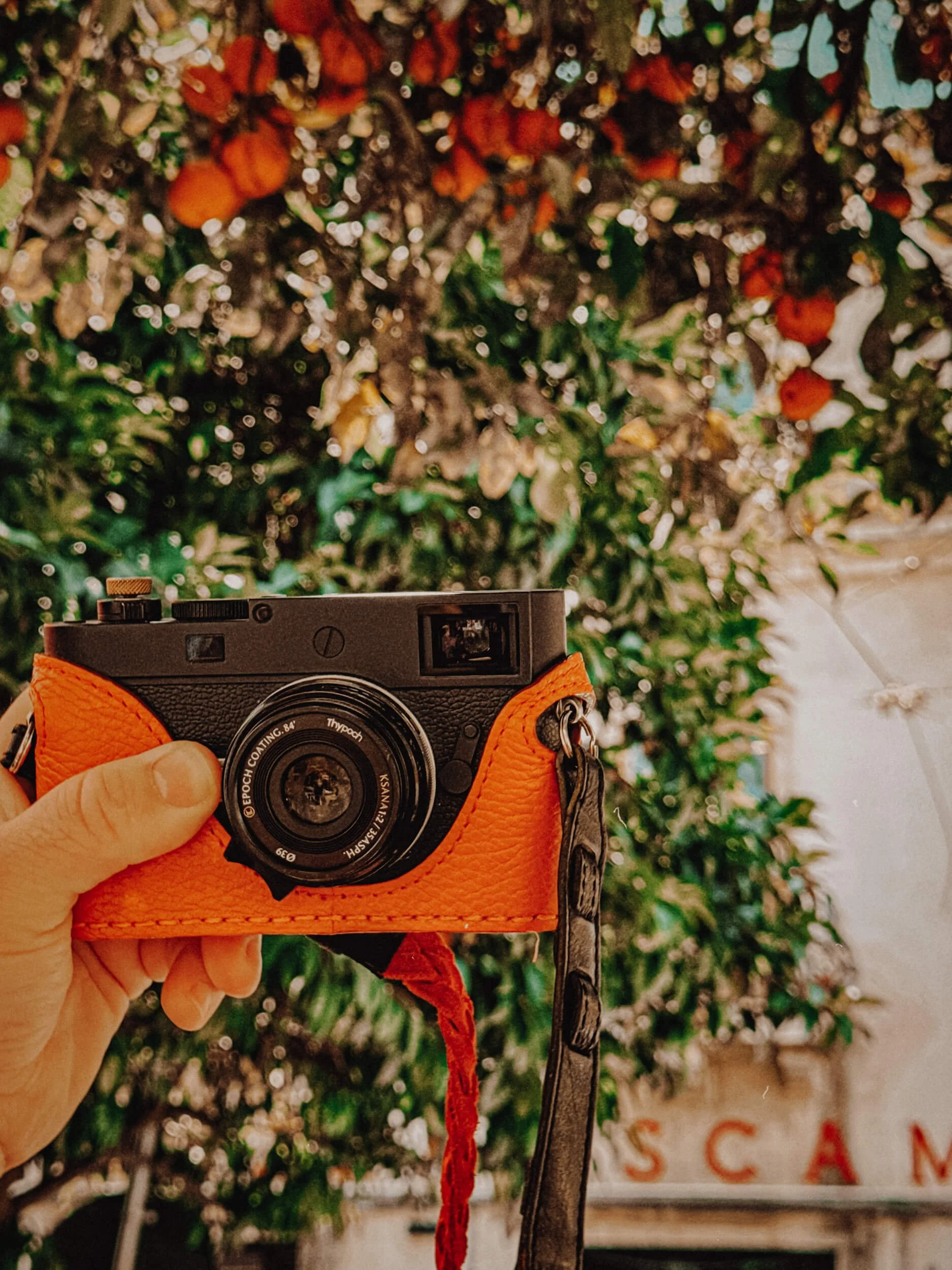
The Thypoch Ksana 35mm f/2 on my Leica M11-D during a week of shooting across Sicily
Not because it is technically perfect, but because it changes the way you move through the world. Small 35mm lenses tend to disappear in the hand. They invite spontaneity. They encourage walking a little further, staying a little longer and paying closer attention to light, atmosphere and human presence.
For decades the 35mm focal length occupied a unique position in photography. Wide enough to include context, yet intimate enough for portraiture and storytelling. It became the natural language of reportage, cinema-inspired photography and travel photography.
In recent years, however, many modern 35mm lenses have moved increasingly towards technical perfection. Sharper corners, cleaner rendering and highly corrected optics. Impressive from an engineering perspective, but sometimes at the expense of mood and emotional rendering.
The new Thypoch Ksana 35mm f/2 appears to follow a different philosophy.
Rather than creating another purely technical Leica M-mount lens, Thypoch positions the Ksana series as a reinterpretation of classic compact rangefinder primes. Not replication, but reinterpretation. A modern optical design combined with rendering characteristics inspired by lenses from another era.
After previously reviewing the Thypoch Ksana 21mm f/3.5, I became curious to see how this philosophy would translate into a more universal focal length. The 21mm already showed that Thypoch was not simply interested in reproducing vintage optics, but rather in creating lenses that combine modern usability with a more atmospheric visual signature.
Yet despite appreciating the 21mm, I immediately felt more connected to this 35mm f/2 version.
Part of that connection simply comes from familiarity. The 35mm focal length sits much closer to the way I naturally photograph and move through environments. While 21mm lenses can create fascinating cinematic perspectives, they also demand a very deliberate way of seeing.
The 35mm feels more instinctive.
Traditionally, however, my true “home” focal length has always been 50mm. It remains the focal length closest to the way I naturally observe the world. With a 50mm lens I rarely need to think much. Framing happens intuitively. It feels almost like a natural extension of my eye.
The 35mm has always challenged me slightly more.
It forces me to include more of the surrounding environment and think differently about composition. Sometimes this can create a certain emotional distance compared to the intimacy of a 50mm portrait lens.
Yet over the past years, and especially through reviewing different 35mm lenses, I slowly started appreciating the focal length in a different way.
I began understanding that the additional space inside the frame could actually strengthen storytelling rather than weaken intimacy. Architecture, reflections, styling, accessories and environmental details suddenly become active parts of the image itself rather than background information.
This was also where the close-focusing capability of the Ksana became genuinely useful for my own style of photography.
The ability to move closer while preserving environmental context encouraged me to photograph differently. Instead of relying purely on shallow depth of field separation, I found myself incorporating more editorial elements into the frame:
mirrors, jewellery, textures, cafés, fruit markets, architecture and small details that help construct mood around the subject.
In many ways, the Ksana reminded me that 35mm photography is not only about the subject itself.
It is about the relationship between subject and world.
And perhaps that is exactly where the Ksana 35mm becomes interesting.
Not as an extreme optical statement.
But as a compact Leica M travel lens designed around everyday photography and visual storytelling.
A Different Approach to Lens Reviews
Photography is not about reproducing reality. It is about revealing a personal way of seeing it.
Before continuing, it is perhaps worth explaining the philosophy behind these reviews.
Many lens reviews focus heavily on technical measurements, MTF charts, brick walls, laboratory tests and unedited files. While these approaches certainly have their value, they have never been the primary reason why I choose a lens.
Photography, at least for me, has always been about atmosphere, emotion and storytelling.
Every image shown throughout this review has been edited and colour graded according to my personal visual style. That is entirely intentional. I am not trying to present a scientific evaluation of a lens. Instead, I am trying to show how a lens performs within a real creative workflow.
After years of photographing with Leica M lenses, medium format systems and vintage cinema optics, I have become increasingly interested in how a lens contributes to mood rather than simply resolution. Technical perfection alone rarely inspires me. Character often does.
These reviews are therefore not designed as laboratory reports. They are observations from the perspective of a working photographer who uses lenses as creative tools.
What you will find here is not a collection of test charts or backyard comparison images. Instead, I invite you into my world. A world shaped by cinematic influences, vintage aesthetics, colour grading and personal interpretation.
The goal is simple: to explore how a lens feels in practice, how it responds to light, how it renders atmosphere and whether it inspires me to keep pho
The Thypoch Ksana philosophy
Looking backwards without becoming nostalgic
Not every photograph reveals itself immediately. Sometimes atmosphere lives in the shadows between light and memory.
The Ksana series occupies an interesting position within the current lens market.
The Ksana encourages a style of photography where atmosphere, place and human presence coexist naturally within the frame.
Many manufacturers today either pursue absolute technical perfection or attempt to directly recreate famous vintage optics from the past. Thypoch seems to take a slightly different approach. Rather than producing exact reproductions, the company describes the Ksana line as a stylistic reinterpretation of classic compact Leica M lenses.
That distinction matters.
Vintage lenses are often loved not because they are technically superior, but because of the way they interpret light. Small imperfections, flare behaviour, tonal transitions and lower correction levels frequently contribute to a stronger emotional atmosphere within the image.
The danger with many modern reinterpretations is that they either become overly clinical or too nostalgic.
The Ksana 35mm f/2 instead appears designed to sit somewhere between both worlds.
The optical formula itself is entirely modern, consisting of eight elements in five groups with ED, HRI and aspherical elements. The intention is clearly not to recreate the softness or technical limitations of vintage optics directly.
Instead, the rendering philosophy appears focused on preserving mood while maintaining modern usability.
This becomes especially visible in the way Thypoch describes the “Epoch Coating ’84”, specifically tuned to recreate some of the flare behaviour and highlight bloom associated with optics from the 1980s. Rather than eliminating flare entirely, the coating seems designed to allow light itself to become part of the rendering process.
In many modern lenses flare is treated almost like an optical flaw that needs to disappear completely. Here it seems intentionally embraced as part of the visual language of the lens.
The philosophy reminds me somewhat of the difference between modern digital recordings and older analogue recordings. Modern systems may technically reproduce everything with higher precision, yet older recordings sometimes preserve emotion in a way that feels more human.
The Ksana concept appears built around that same idea.
Not technical nostalgia.
But emotional rendering.
Black paint brass build quality and design
Black paint dreams
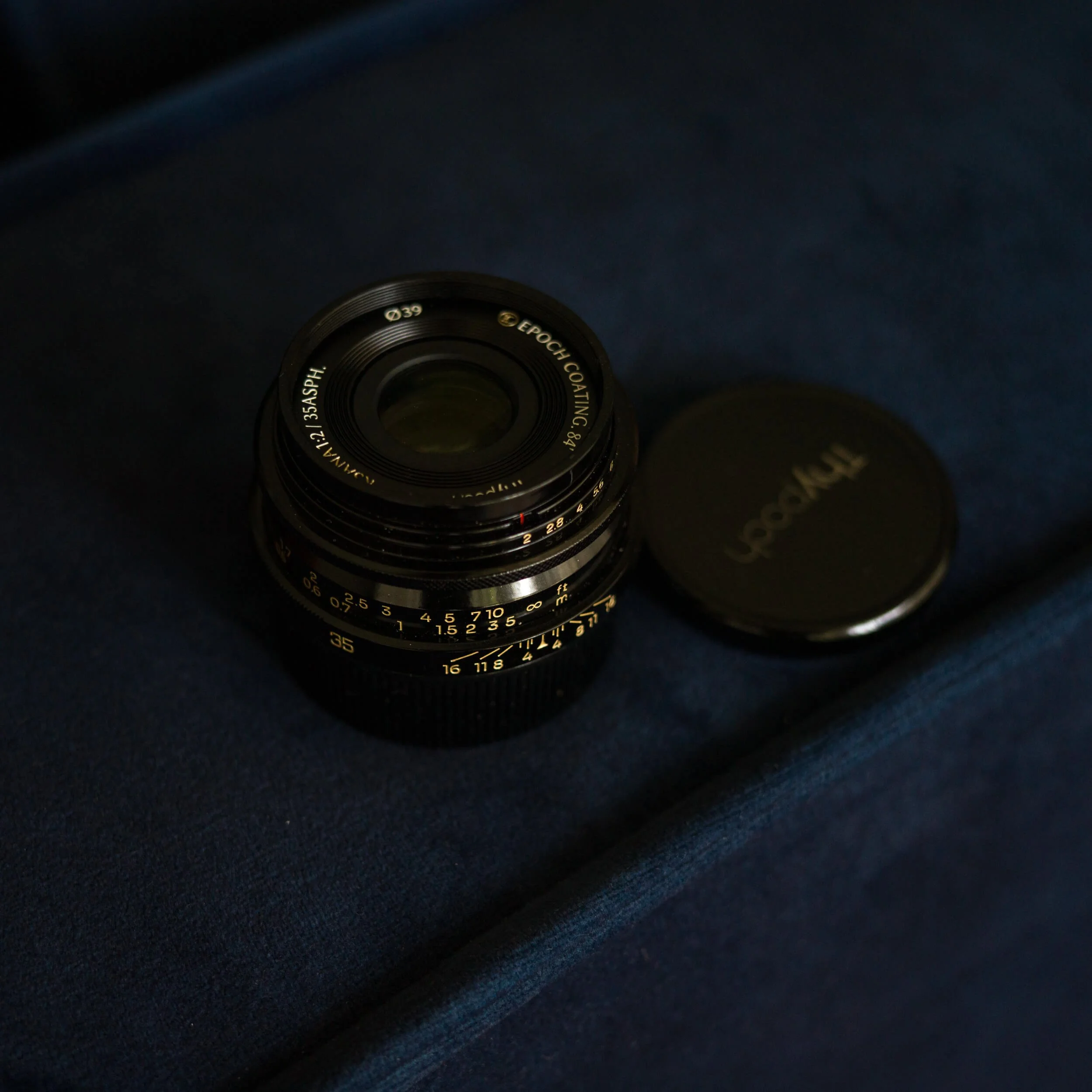
My review sample arrived in the glossy black paint finish and immediately reminded me why certain Leica lenses become more than photographic tools.
The Ksana does not feel inspired by modern industrial minimalism. Instead, it belongs to a tradition where lenses were designed almost like personal objects, meant to travel, wear and slowly develop character over time.
The full brass construction gives the lens a reassuring density despite its compact dimensions. In hand it feels beautifully solid without becoming heavy. The glossy black paint finish, or “schwarz lackiert” as Leica collectors often describe it, reflects light beautifully and gives the lens a distinctly classic appearance without directly copying historical Leica designs.
Mounted on the Leica M11-D, the proportions feel particularly successful. The camera remains elegant, discreet and balanced in a way many modern M lenses no longer achieve.
Over time I suspect the black paint version will age beautifully. Small traces of wear, subtle brass exposure and surface patina often become part of the emotional relationship photographers develop with their equipment.
The Ksana already feels like one of those lenses destined to become even more beautiful after years of use.
For photographers searching for a compact brass Leica M lens with genuine tactile charm, the Ksana easily becomes one of the more attractive recent alternatives on the market.
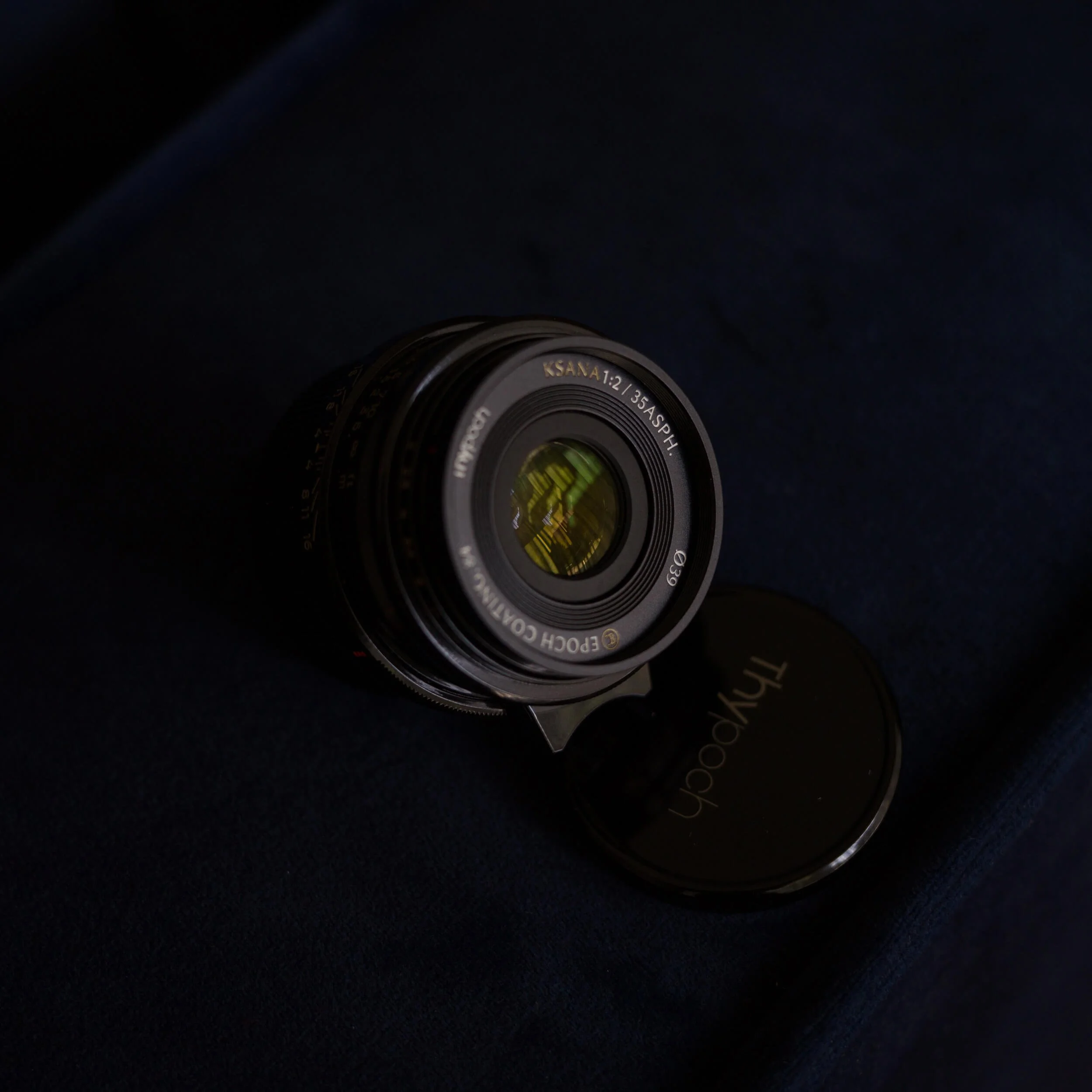
Thypoch Ksana 35mm f/2 Technical specifications
Focal length: 35mm
Maximum aperture: f/2
Minimum aperture: f/16
Optical design: 8 elements in 5 groups
Special elements: 1 ED, 2 HRI, 1 aspherical
Aperture blades: 10
Mount: Leica M mount
Minimum focusing distance: 0.5m
Focus rotation: 90°
Aperture rotation: 66°
Filter thread: M39
Length: 27mm
Weight: approximately 199g
Construction material: Brass
Available finishes: Black paint / silver chrome finish
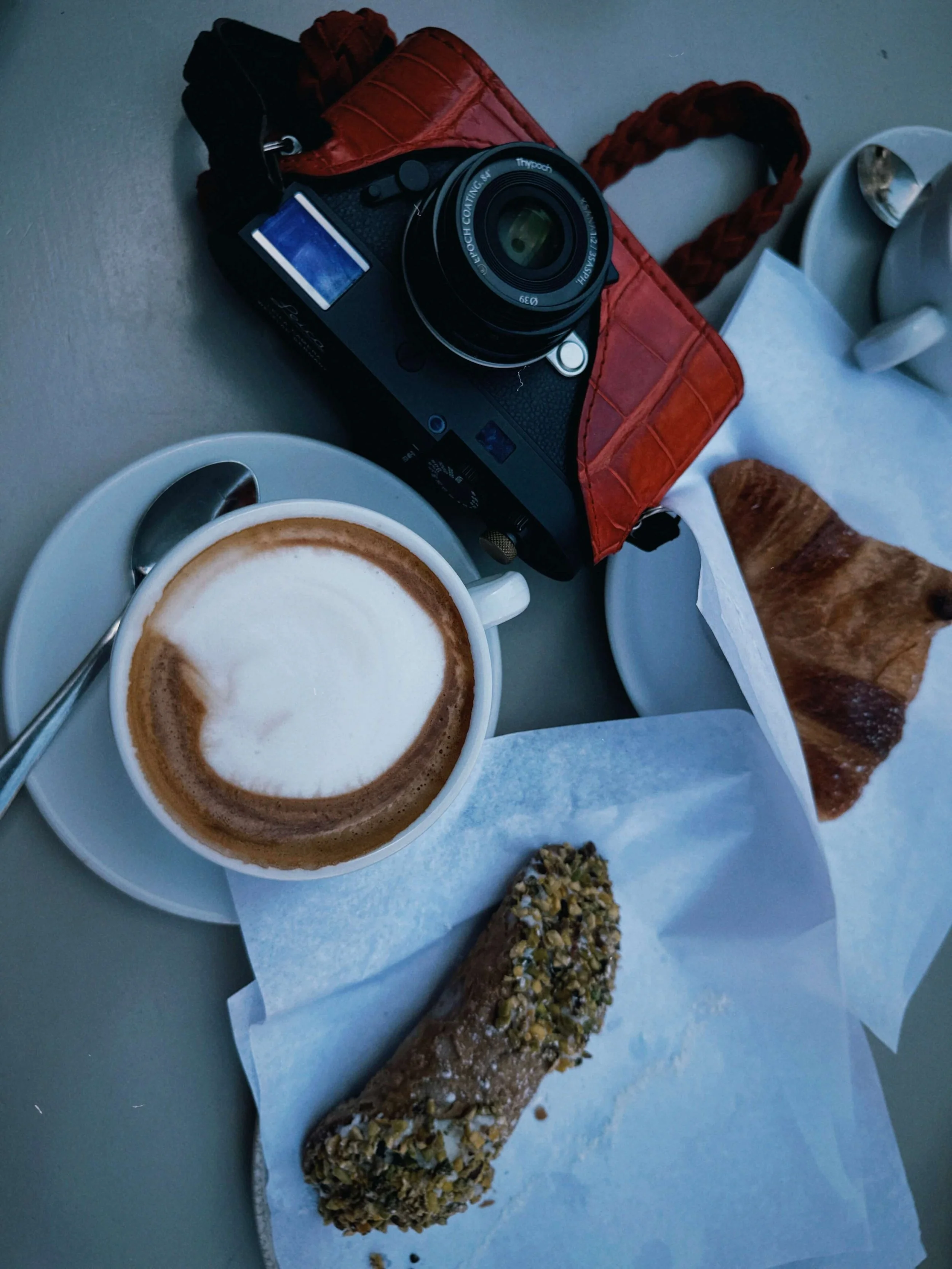
The best camera setup is often the one you forget you're carrying. The compact Ksana 35mm f/2 spent most of Sicily mounted permanently on my Leica M11-D.
Handling and ergonomics
Compact enough to disappear
What stands out immediately is how compact the lens remains despite the relatively ambitious optical design.
At only 27mm in length, the Ksana belongs to a category of lenses that almost disappear on the camera body. In practical use this changes the entire shooting experience. The camera remains balanced, discreet and easy to carry for long periods.
Large lenses tend to encourage deliberate outings.
Small lenses encourage daily observation.
The relatively short dimensions also mean minimal viewfinder blockage on Leica M bodies, something that becomes increasingly important during longer shooting sessions and travel photography.
Another welcome surprise is the close-focusing distance of 0.5m. While traditional Leica rangefinder coupling stops around 0.7m, the additional close-focus capability opens creative possibilities for tighter environmental portraits and detail work.
Mechanically, the Ksana also feels like a step forward compared to some earlier Thypoch lenses I previously tested. The aperture clicks feel firm and confident in use, while the brass construction gives the lens a noticeably more premium tactile impression compared to the aluminium Simera 28mm and Ksana 21mm.
The focusing ring itself feels smooth and precise without becoming overly damped. Combined with the compact size and low weight, the lens feels very natural on the Leica M11-D, especially during long walks or travel photography where heavier lenses can become tiring.
Zone focusing also feels intuitive on the Ksana. Throughout Sicily I often worked one-handed while walking through markets and narrow streets, something I would personally be less inclined to do with larger 35mm lenses.
For photographers searching for a compact Leica M travel lens with close focusing capabilities, this combination of portability and usability becomes one of the Ksana’s strongest selling points.
Why compact f/2 lenses still matter
In recent years lens design has increasingly moved towards ever-faster apertures.
f/1.4 became normal.
Then f/1.2.
And in some cases even f/0.95.
While these lenses are technically impressive, they often become extremely large, heavy and highly specialised. Shallow depth of field itself sometimes becomes the primary visual statement rather than part of a broader photographic language.
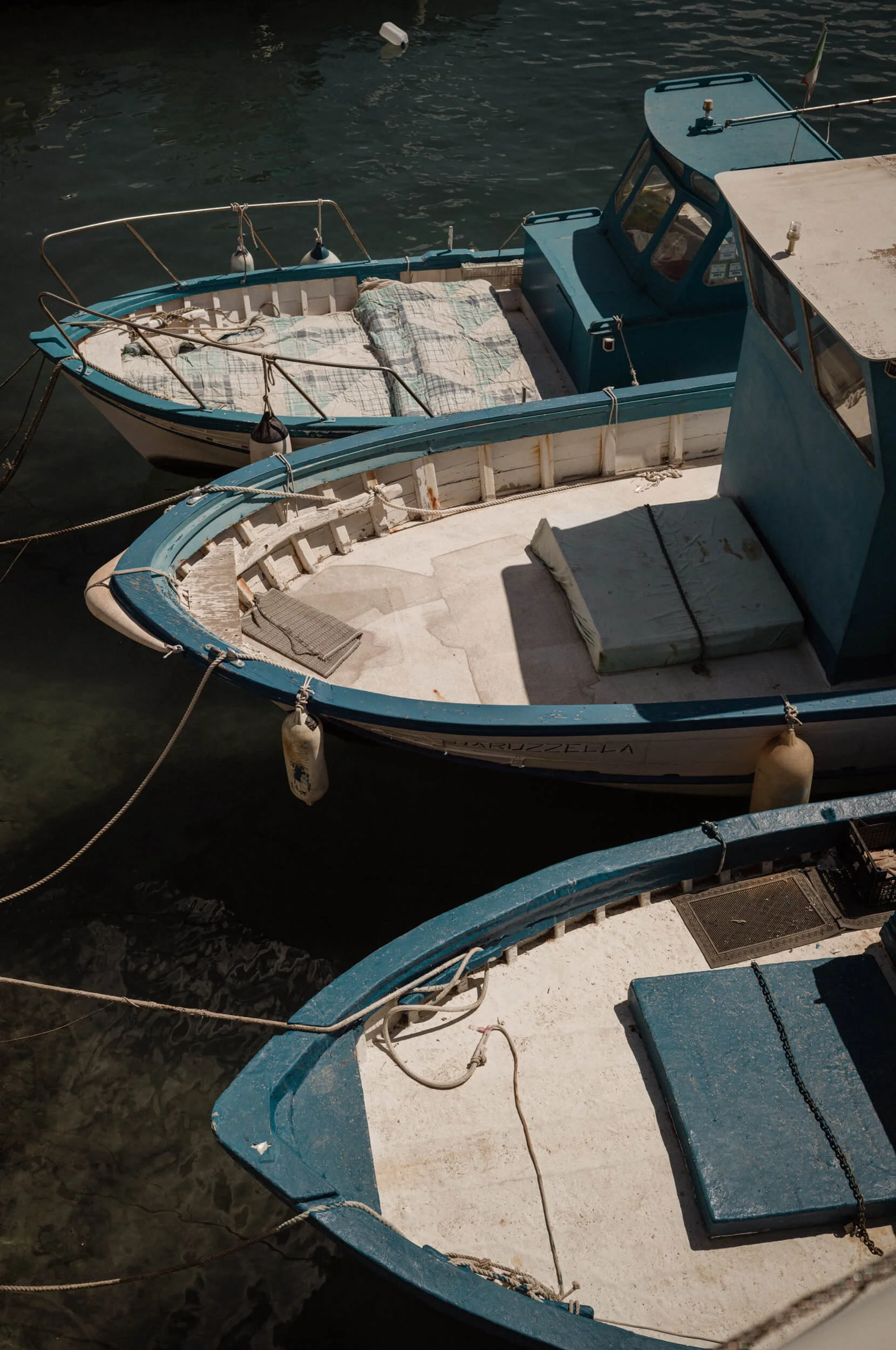
Compact lenses encourage observation. A quiet Sicilian shoreline, small fishing boats and midday light were enough to stop and make a photograph.
The Ksana 35mm f/2 feels almost rebellious in comparison.
Instead of chasing maximum aperture at all costs, Thypoch appears to prioritise balance:
compactness
portability
rendering character
everyday usability
Historically, many legendary reportage and documentary photographs were created with lenses around f/2 rather than extreme ultra-fast optics.
The advantage of f/2 on a 35mm lens is that it still allows meaningful subject separation while preserving enough environmental context to maintain storytelling depth.
A 35mm lens traditionally thrives precisely because of that relationship between person and place.
The Ksana therefore occupies a particularly interesting middle ground:
cinematic without becoming overwhelming.
And because the optical formula does not need to support an extreme aperture, the lens can remain remarkably small while still preserving expressive rendering behaviour.
Photography ultimately rewards the camera that is actually with you.
And lenses like this are far more likely to remain mounted on the camera every day.
Rendering and image quality
Between neutrality and atmosphere
Photographed wide open at f/2, the Ksana maintains a convincing sense of separation while preserving the surrounding environment as an active part of the composition. Foreground flowers, background details and atmosphere remain integral parts of the image.
One of the more interesting aspects of the Ksana 35mm f/2 is that it does not try too hard to imitate vintage rendering in an exaggerated way. Instead, the lens seems to balance modern correction with a gentler and more atmospheric visual signature.
I have not yet had the opportunity to directly compare the Ksana against the Light Lens Lab 35mm f/2 8-element reproduction, but conceptually both lenses occupy an interesting space. The Ksana however introduces several practical advantages for modern shooting, most notably the improved close-focusing distance and a more contemporary optical design.
The original Leica 35mm 8-element remains famous for its romantic rendering and pastel-like colour palette. It produces a softer and dreamier interpretation of reality with a very particular vintage charm.
The original Leica 35mm f/2 8-element also remains one of the true collector’s pieces within the Leica M system and, in my opinion, one of the most beautiful 35mm lenses ever made.
Its rendering is famous for soft pastel-like colours, gentle tonal transitions and a dreamlike atmosphere that still feels remarkably special today.
At the same time, many surviving copies are now more than half a century old and often suffer from haze, cleaning marks or internal ageing, all of which can noticeably influence contrast and rendering. Depending on condition, accessories and originality, prices today often reach around 4,000 euros or considerably more for exceptional examples.
For photographers attracted to this classic visual language but looking for more practical modern alternatives, both the Light Lens Lab 35mm f/2 8-element and the Thypoch Ksana 35mm f/2 become very interesting contenders.
The Light Lens Lab stays closer emotionally to the romantic rendering of the original Leica design, while the Ksana takes a more modern and controlled approach. The Ksana offers noticeably closer focusing, stronger correction overall and a rendering style that remains atmospheric without becoming overly nostalgic or unpredictable.
Colours appear more neutral and realistic overall, with slightly higher contrast and cleaner separation. Yet despite this more modern rendering style, the lens still preserves mood surprisingly well.
One thing I noticed repeatedly throughout Sicily was the way the lens handled blues and Mediterranean light. Especially on the Leica M11-D sensor the blues often became particularly rich and elegant without appearing artificial.
Interestingly, I sometimes found myself slightly overexposing files to preserve the softer luminous quality of the Sicilian light. Whether this was purely the result of the Mediterranean environment or partially influenced by the rendering of the Ksana itself is difficult to say, but the combination worked beautifully throughout the trip.
Thypoch describes the Epoch Coating ’84 as producing warmer gold-purple flare behaviour inspired by certain vintage optics. In practice, however, I occasionally experienced the rendering as slightly cooler than expected, particularly in harsher daylight situations. This may partly be influenced by the Leica M11-D sensor itself or simply the specific light conditions encountered in Sicily.
Flare behaviour also appears more restrained than some of Thypoch’s marketing material initially suggested. The lens certainly allows flare to exist and I was able to provoke some interesting blooming and atmospheric veiling in backlit portrait situations, but overall the flare remains relatively controlled in most practical scenarios.
Personally I do not mind this balance at all.
The original Leica 35mm 8-element is significantly more flare-prone and dreamier overall. The Leica Steel Rim remains almost legendary for its flare behaviour and exaggerated vintage softness. Both lenses can create stunningly emotional rendering, but they are also far less corrected and more unpredictable than the Ksana.
The Ksana instead occupies a more balanced middle ground.
Many of the portraits throughout this review, including the image of Roberta, were photographed wide open at f/2. What impressed me most was the lens's ability to maintain strong subject separation while still preserving the surrounding environment as an active part of the composition. Rather than isolating subjects aggressively, the Ksana allows foreground elements, background details and atmosphere to remain part of the visual narrative.
Sharpness at f/2 is good, though photographers expecting APO-like clinical precision may need to adjust expectations slightly. The lens is certainly sharp enough for professional portrait and documentary work, but it does not pursue the biting microcontrast or extreme correction of lenses such as the Leica APO-Summicron-M 35mm ASPH.
At portrait distances the centre performance remains very satisfying already wide open, while the rendering gradually softens towards the edges in a gentler and more organic way. Contrast improves noticeably by f/2.8 and from approximately f/4 onwards the lens becomes very clean and controlled overall.
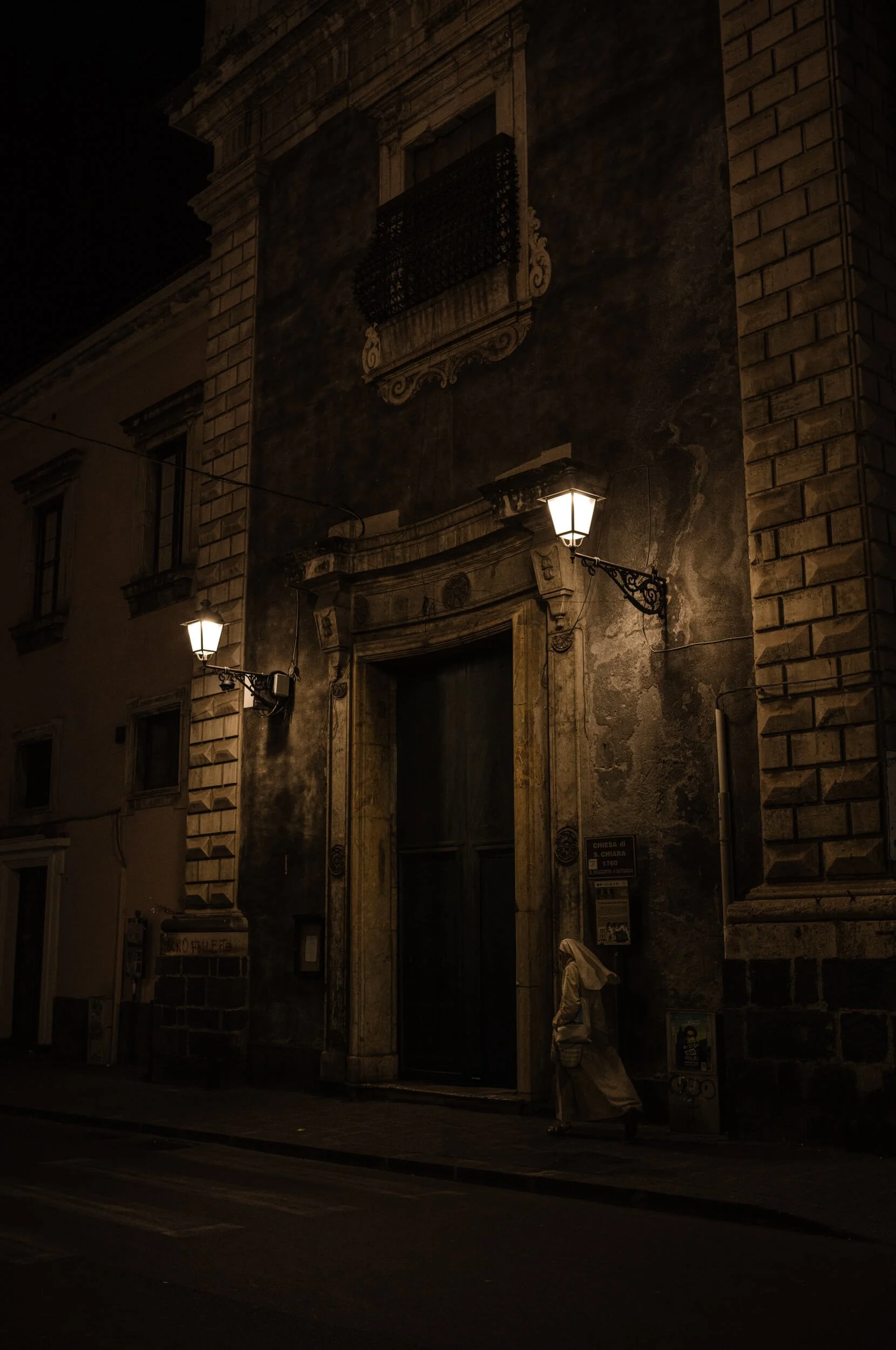
Night performance overall was also surprisingly strong. Walking through Catania during the evenings, the Ksana handled mixed light sources, street lamps and reflective surfaces with confidence. Some coma remains visible in harsher point light sources near the edges of the frame, but never in a distracting way.
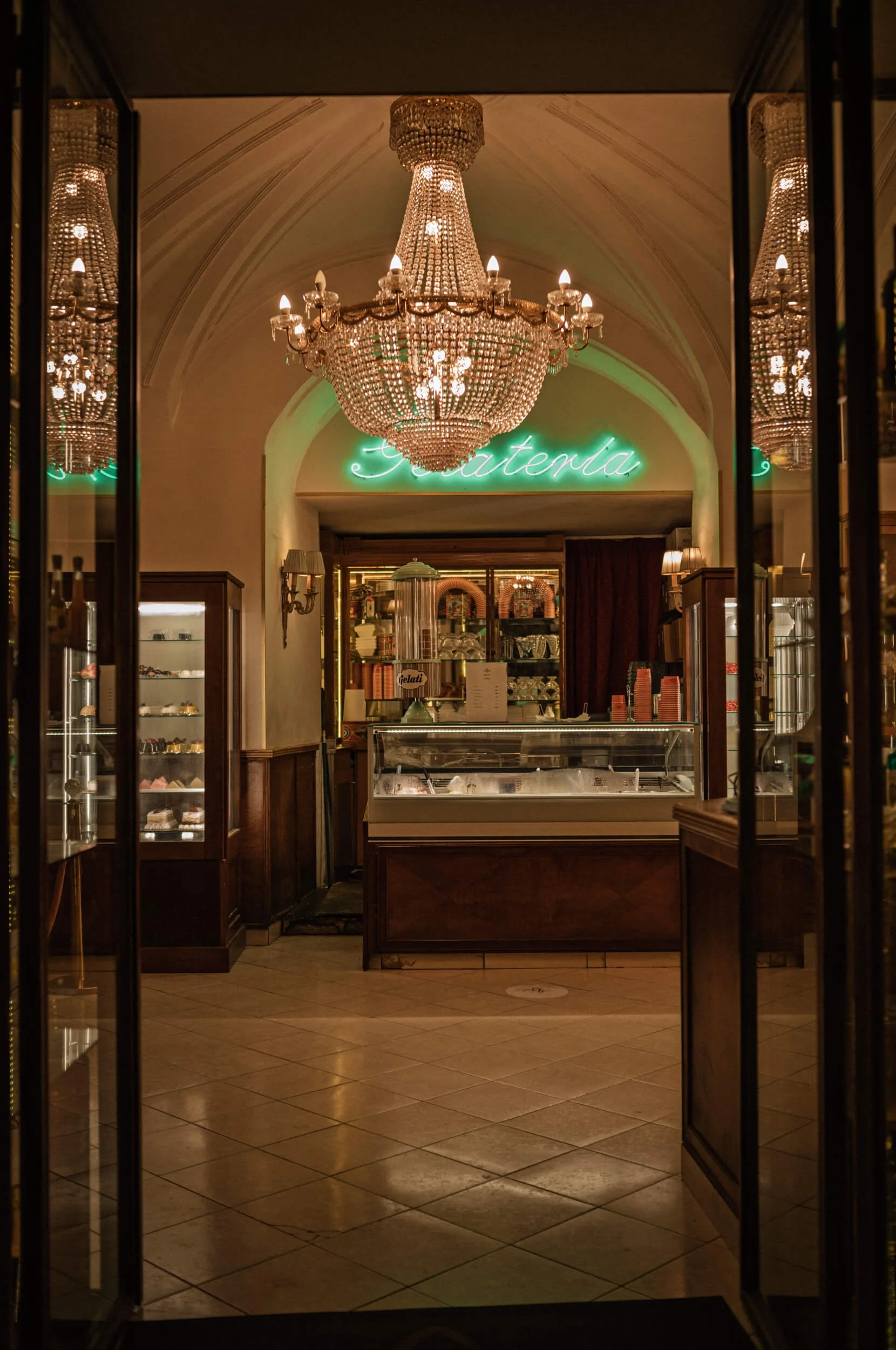
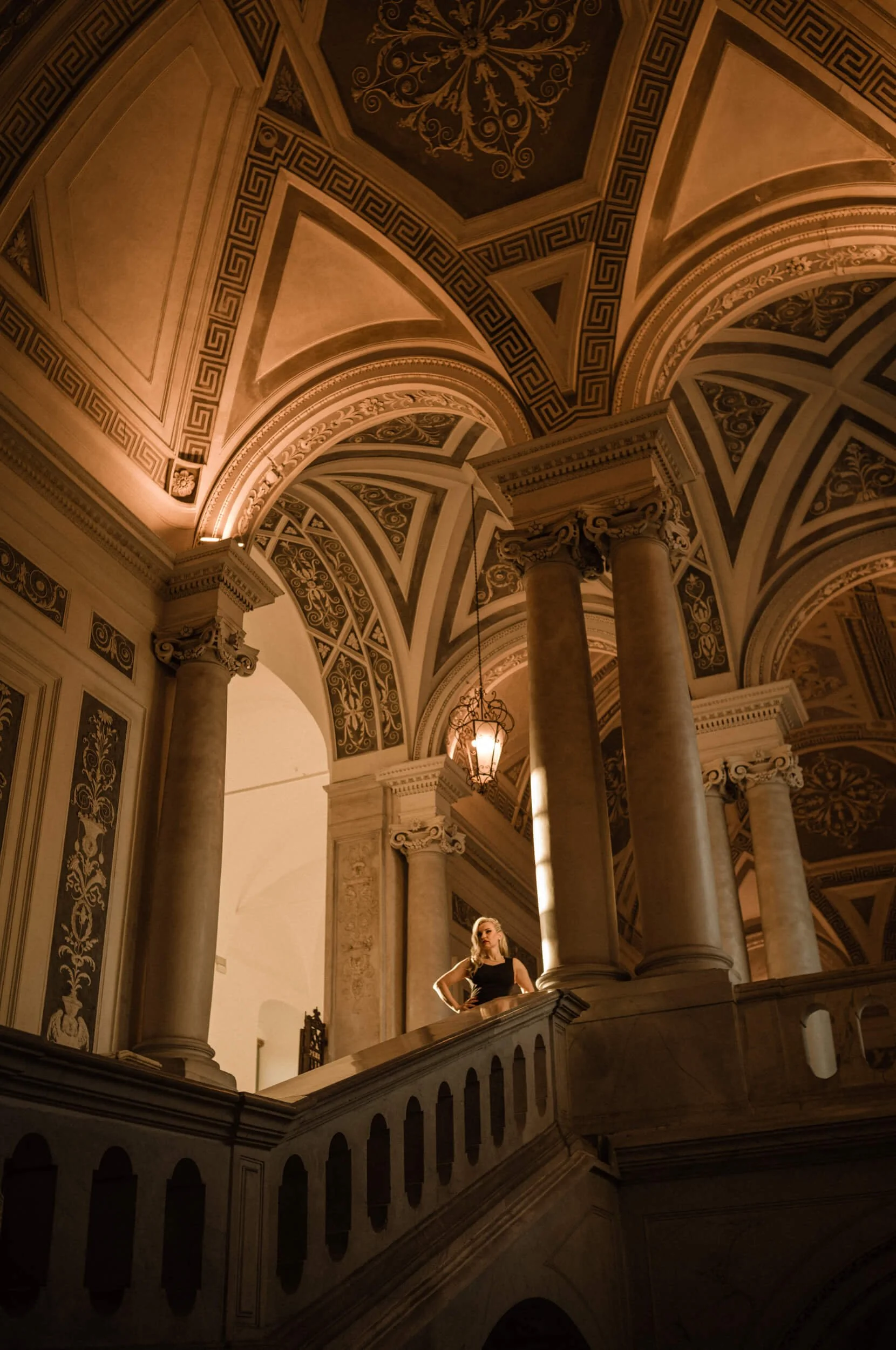
Available-light interior scene photographed in Sicily. Warm highlights, rich colours and gentle tonal transitions reveal the atmospheric rendering that characterises the Ksana 35mm f/2.
Vignetting wide open is present but aesthetically pleasing, gently drawing attention towards the centre of the frame without becoming excessive. Distortion also remained very well controlled during practical use, even while photographing architecture throughout Sicily and Antwerp.
Chromatic aberration is generally kept under control for a compact lens of this size, though small traces can occasionally appear in more extreme high contrast situations.
The close-focusing capability down to 0.5m also becomes genuinely useful in daily photography. Many older 35mm M-mount lenses remain limited to 0.7m focusing distances, while the Ksana allows tighter environmental portraits and detail shots without sacrificing the natural perspective of the focal length.
Bokeh rendering itself feels relatively neutral and well-behaved compared to more extreme vintage-inspired optics. At closer distances, even with more complex backgrounds, the out-of-focus rendering remains smooth and visually calm without becoming distracting.
The 10 rounded aperture blades also produce attractive sunstars between approximately f/8 and f/16, especially in evening street scenes and Sicilian night photography.
What I personally appreciated most was that the Ksana rarely felt sterile. Even stopped down, the rendering still preserves enough tonal softness to avoid becoming overly clinical.
Sicilian Nights with the Ksana 35mm f/2
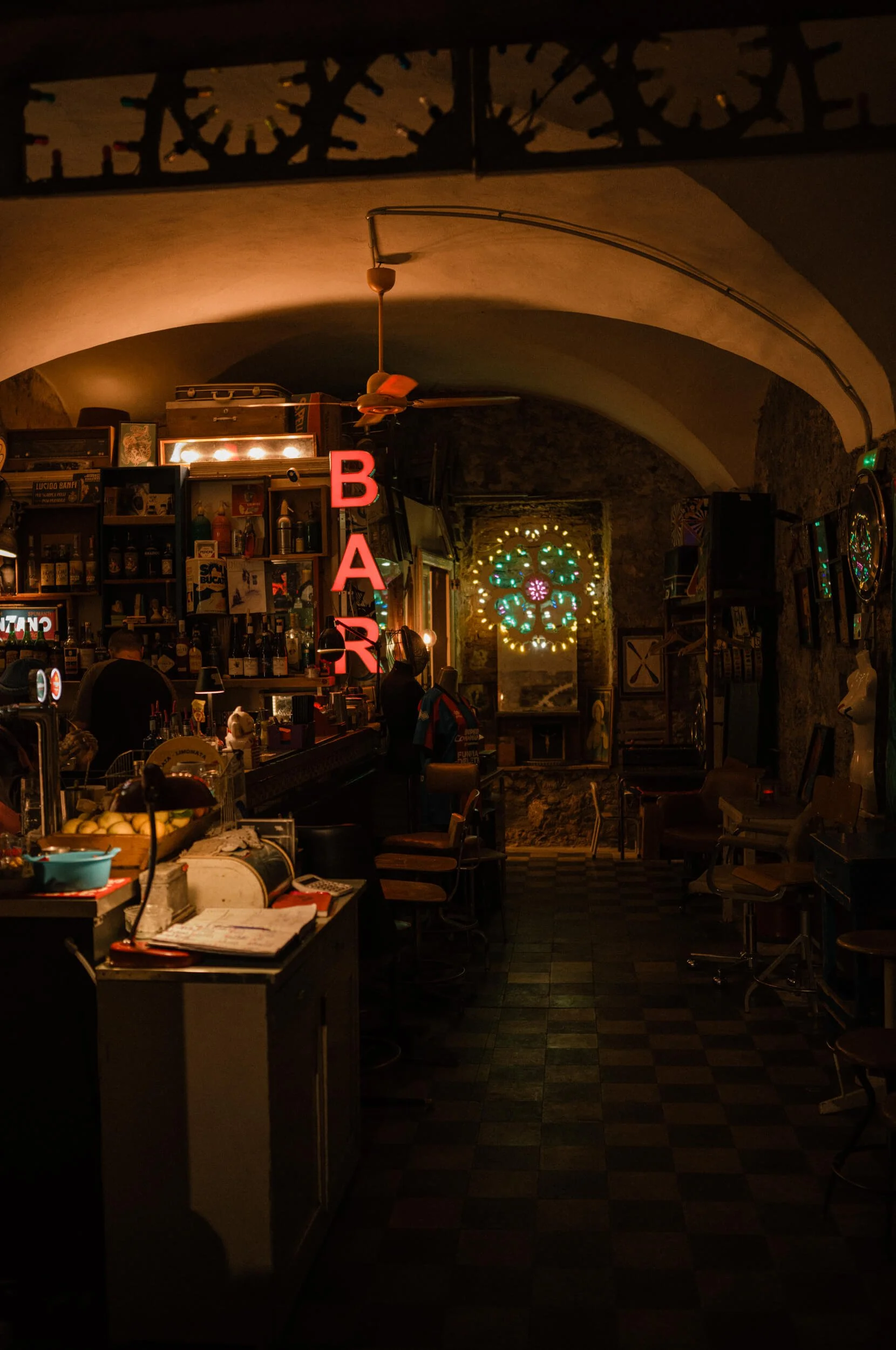
During my time in Sicily, many of my evening photographs were made wide open at f/2. These scenes were captured handheld in available light and perhaps reveal another side of the Ksana's character. Rather than chasing clinical perfection, the lens produces images with a strong sense of atmosphere, allowing light, shadow and colour to contribute naturally to the mood of the frame.
Lens comparisons
Leica Steel Rim, Light Lens Lab and Zenitar
Architectural interior photographed in Sicily. Images like this reveal where the Ksana differs from many vintage-inspired lenses, combining modern correction with a rendering style that still retains warmth and atmosphere.
For photographers specifically searching for dramatic vintage separation and exaggerated cinematic rendering, I would still personally point towards the Zenitar 35mm f/1 as one of the most characterful 35mm M-mount lenses currently available.
The Zenitar remains the king of wild bokeh, emotional rendering and vintage-inspired separation in my own collection, though mechanically it feels significantly less refined than the Ksana and the overall build quality is nowhere near as premium.
For pure portrait work, the Light Lens Lab 35mm f/1.4 Double Aspherical still remains one of my personal favourites. Especially the titanium version I own feels almost like a collector’s piece, combining gorgeous rendering with a very elegant tactile experience.
The Leica Steel Rim occupies yet another category entirely. It produces softer, more exaggerated vintage rendering with much stronger flare behaviour and a more dreamlike interpretation of light.
The Ksana approaches the 35mm focal length differently.
It is less specialised and perhaps less extreme emotionally, but far more versatile as an everyday companion.
For travel photography, street photography, environmental portraiture and photographers searching for a compact Leica M all-rounder with close-focusing capabilities and balanced rendering, the Ksana becomes extremely compelling.
The fact that Thypoch manages to offer a full brass black paint 35mm lens with close focusing, strong mechanical construction and this level of optical refinement at its current price point honestly remains quite impressive.
Velvet dreams in Antwerp
Portrait photography with the Ksana 35mm f/2
I brought the Ksana 35mm f/2 to a portrait shoot and workshop with Chanelle at the historic Handelsbeurs in Antwerp.
Normally for this kind of work I would instinctively choose a faster 35mm lens, often something closer to f/1.4 or even f/1.2. Yet during this shoot the compactness and balance of the Ksana quickly started to make sense.
The Handelsbeurs remains one of the most beautiful locations in Antwerp and fits naturally within my visual universe. Originally constructed in the sixteenth century as the world’s first purpose-built commodity exchange, the building later became the blueprint for many future stock exchanges throughout Europe, including London.
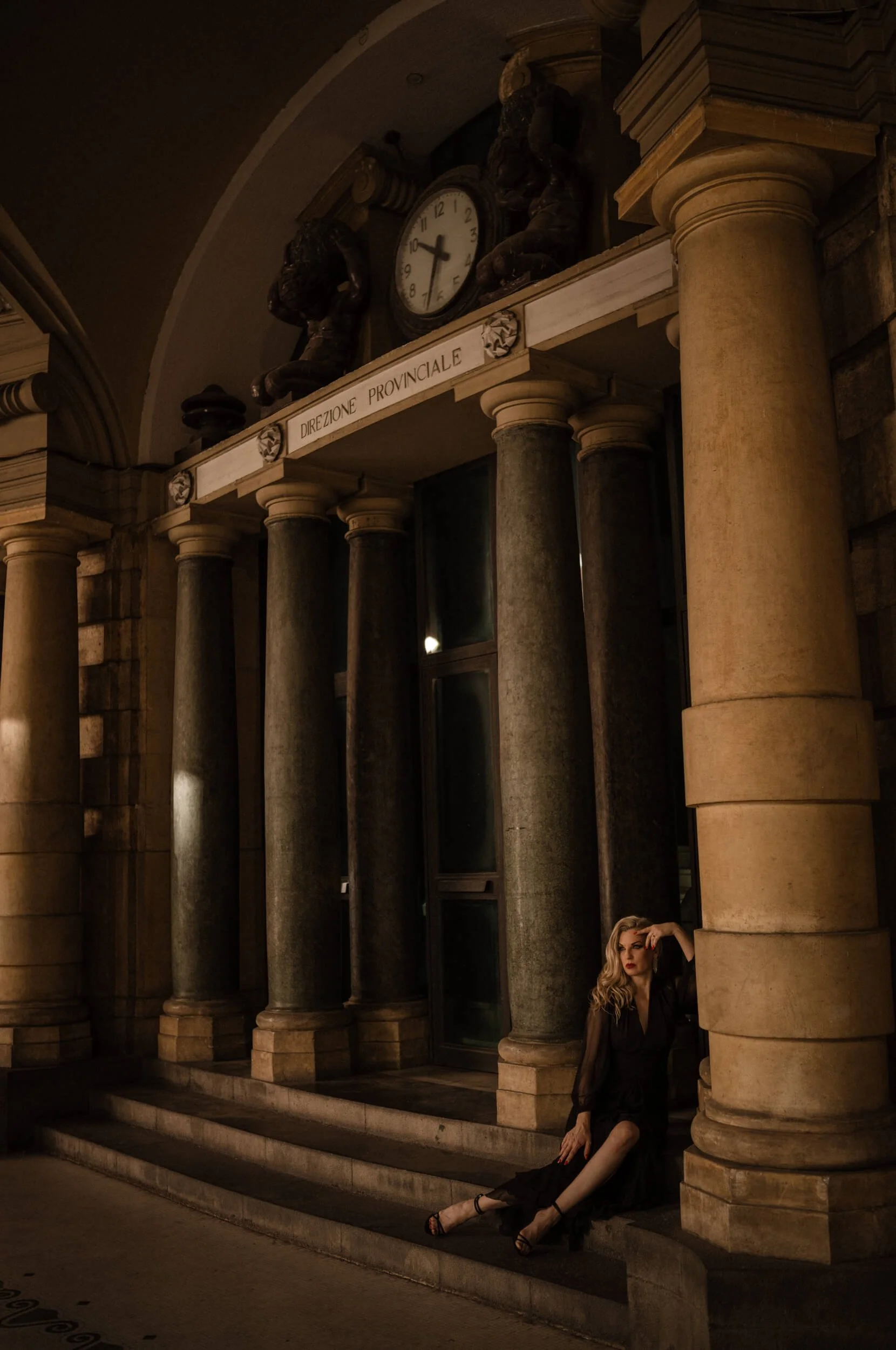
Chanelle photographed inside the Handelsbeurs, one of Antwerp's most beautiful historic venues. The combination of architecture, light and atmosphere perfectly suited the visual character of the Ksana 35mm f/2.
Chanelle photographed inside the historic Handelsbeurs. Shot wide open at f/2, the Ksana creates gentle subject separation while preserving the atmosphere and architectural character of the space.
Even today the architecture still carries a timeless grandeur. Light enters through the large dome above while also flowing softly through the side corridors, creating layered illumination that already feels cinematic without adding artificial light.
For this series I deliberately kept the setup simple. Normally I often work with LED lighting from Harlowe, but here I relied almost entirely on the natural light of the building itself.
The light already carried the mood of the scene.
Chanelle immediately understood the rhythm of the environment. She moved naturally between the pillars, reflections and shadows, interacting beautifully with the architecture.
The velvet green dress, jewellery and tiara reflected the light in subtle ways while complementing the neutral stone colours of the old stock exchange.
At one point she introduced a broken mirror as an additional prop. Rather than symbolising bad luck, it created fragmented reflections and slightly surreal compositions that suited the mood perfectly.
This was also where the close-focusing capabilities of the Ksana became surprisingly useful. The lens allowed me to move closer while still maintaining a natural perspective and enough environmental context around the subject.
After sharing some preview images online, someone asked me whether highly stylised portrait work really represents a lens review.
It is a fair question.
But I have always approached reviews slightly differently. I am less interested in photographing brick walls or technical charts and more interested in whether a lens inspires me creatively. I want to show how a lens behaves inside a complete visual world:
architecture, styling, light and human presence.
The images themselves were also edited far less heavily than some people might assume. Beyond subtle colour grading and masking, the files remained relatively close to the original Leica M11-D output.
The rendering of the Ksana itself already contributed significantly to the final result.
The bokeh feels neutral and gentle to the eye, while the tonal transitions remind me slightly of certain classic Leica optics such as the 8-element Summicron, though with slightly more contrast and more natural colour reproduction.
What interested me most throughout this shoot was not maximum sharpness, but the way the lens preserved mood while still remaining clean and controlled enough for modern digital sensors.
The Ksana seems less interested in technical spectacle and more interested in visual continuity.
La Dolce Vita in Sicily
Travel photography with the Ksana 35mm f/2
If there is one focal length that feels naturally connected to Sicily, it is probably the 35mm.
During this trip we stayed mainly in Catania while also making smaller excursions towards Siracusa and Taormina. Throughout the journey the Ksana 35mm f/2 remained mounted on my Leica M11-D almost permanently.
One of the immediate strengths of the lens while travelling is its discretion. The Ksana does not attract attention. It remains compact, quiet and visually understated. People react differently to smaller lenses. The camera feels less intrusive, which naturally changes the rhythm of photographing in public spaces.
Normally my photography revolves heavily around portraits shot wide open. Yet in Sicily I found myself working very differently. For many street scenes and everyday moments I often photographed around f/8 using zone focus rather than precise focusing.
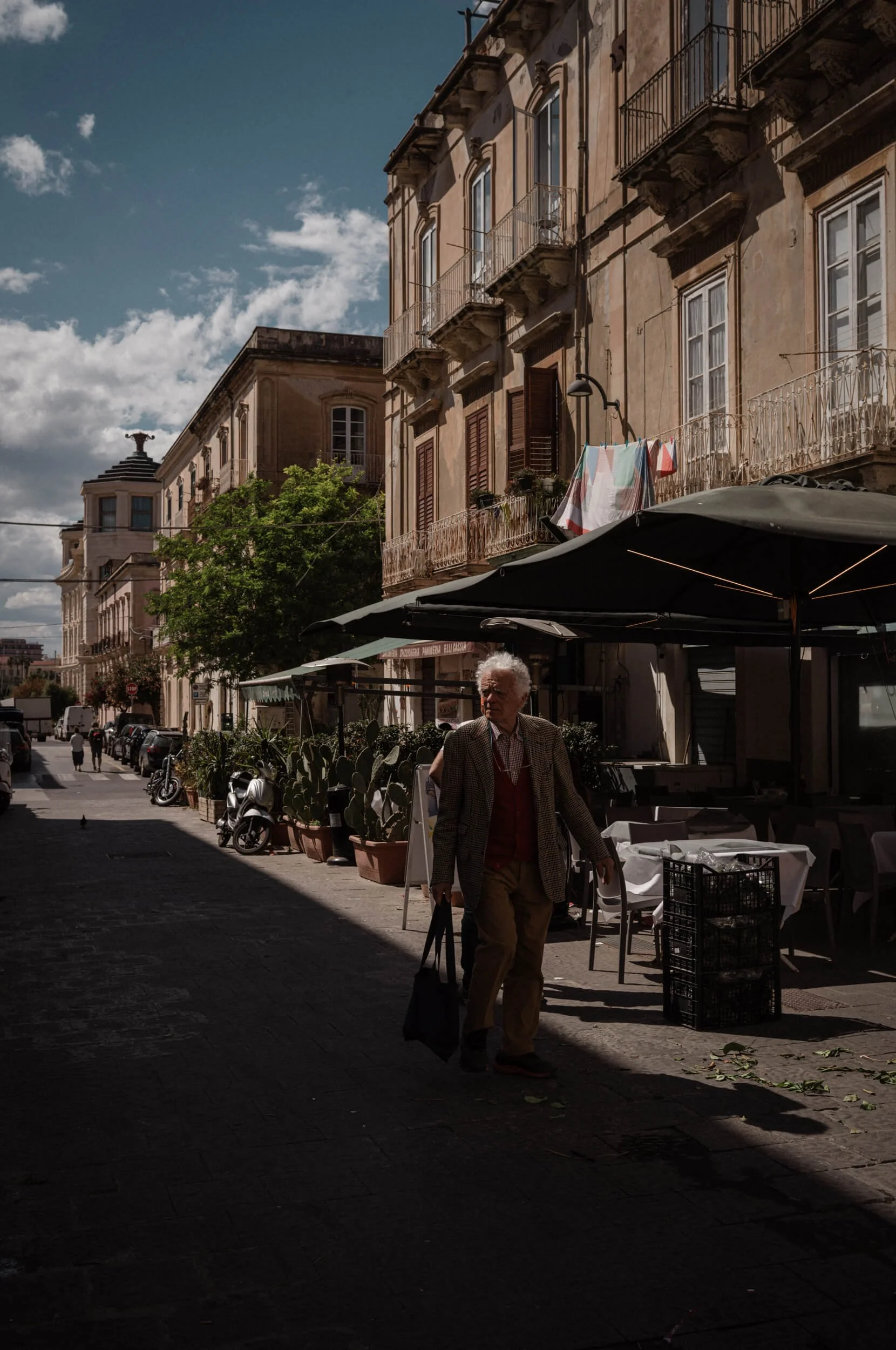
A fleeting moment in Catania. The 35mm focal length allowed me to combine architecture, atmosphere and movement within a single frame by uzing zone focusing .
I am not a traditional street photographer. My work remains deeply connected to portraiture and mood. The challenge therefore became:
how do I merge my own visual identity with Sicily while using a compact 35mm lens like the Ksana?
The answer was not to chase modern Sicily, but rather the timeless one.
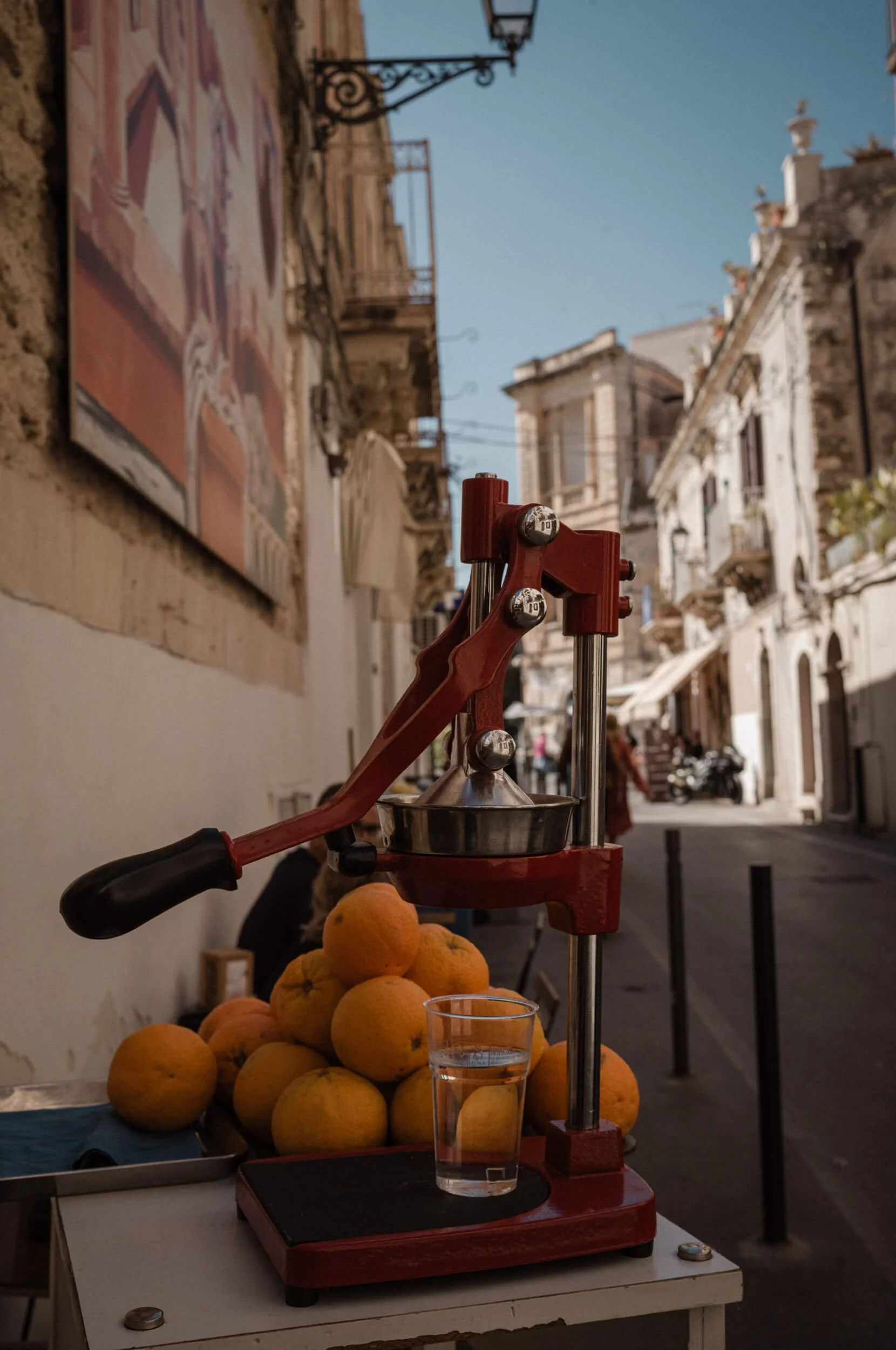
I became interested in weathered facades, market vendors, blood oranges, scooters, fishing boats, espresso bars and scenes that could almost belong to another decade. At times the experience reminded me of the old postcards my grandmother used to collect from southern Europe.
The Ksana proved wonderfully suited for this approach. Small enough to carry all day without fatigue, discreet enough to disappear into daily life and flexible enough to handle almost everything I encountered throughout the trip.
From slow coffee mornings and fish markets to evening street scenes and spontaneous portraits, the lens adapted naturally without ever making me miss my usual fifty millimetre setup.
In fact, this became one of the rare trips where I genuinely used a single lens almost exclusively.
What impressed me most throughout Sicily was not maximum sharpness, but the feeling of continuity the lens provided.
The Ksana never interrupted the experience of travelling.
It simply became part of the journey itself.
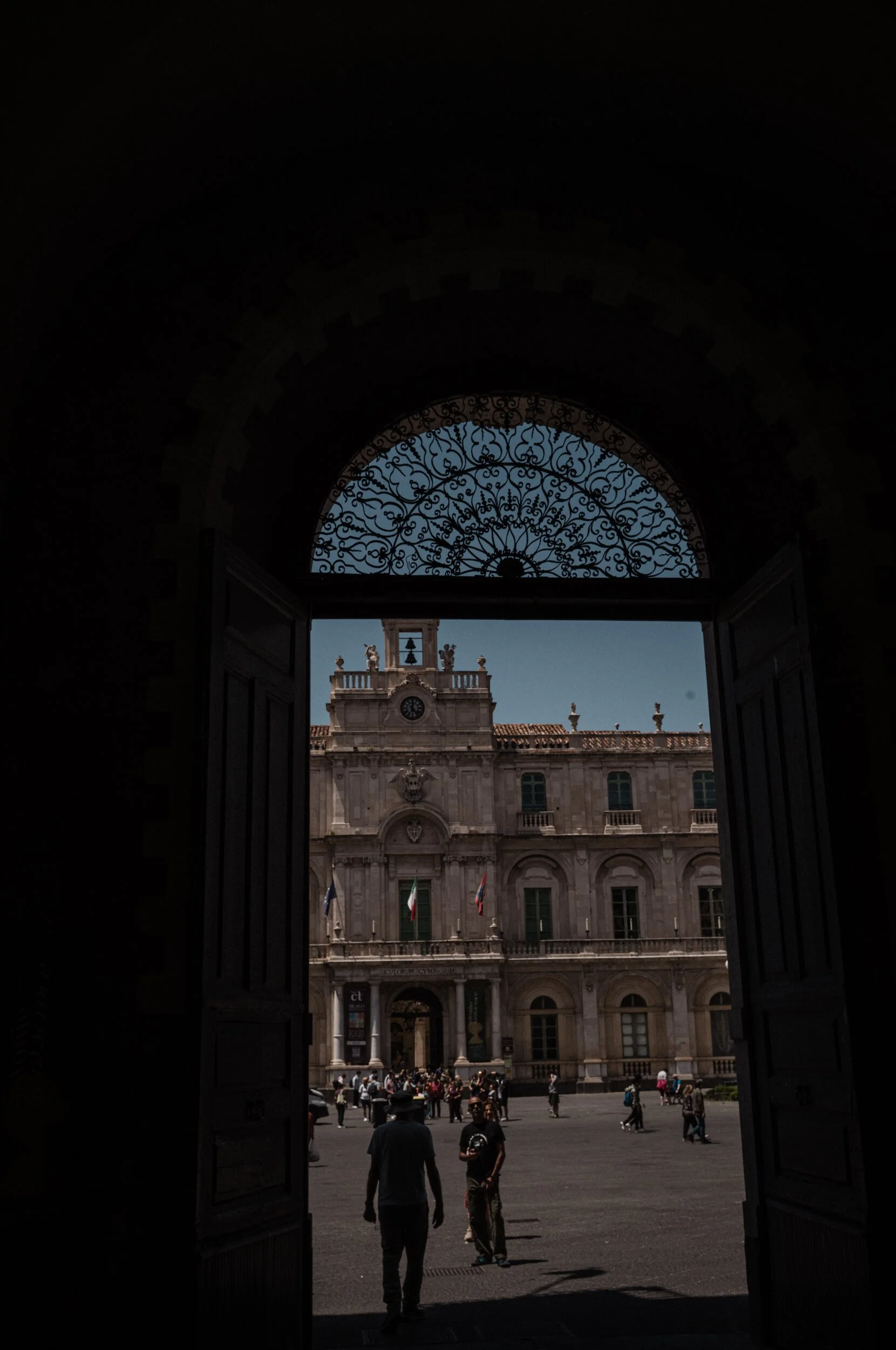
The Sicily Between the Postcards
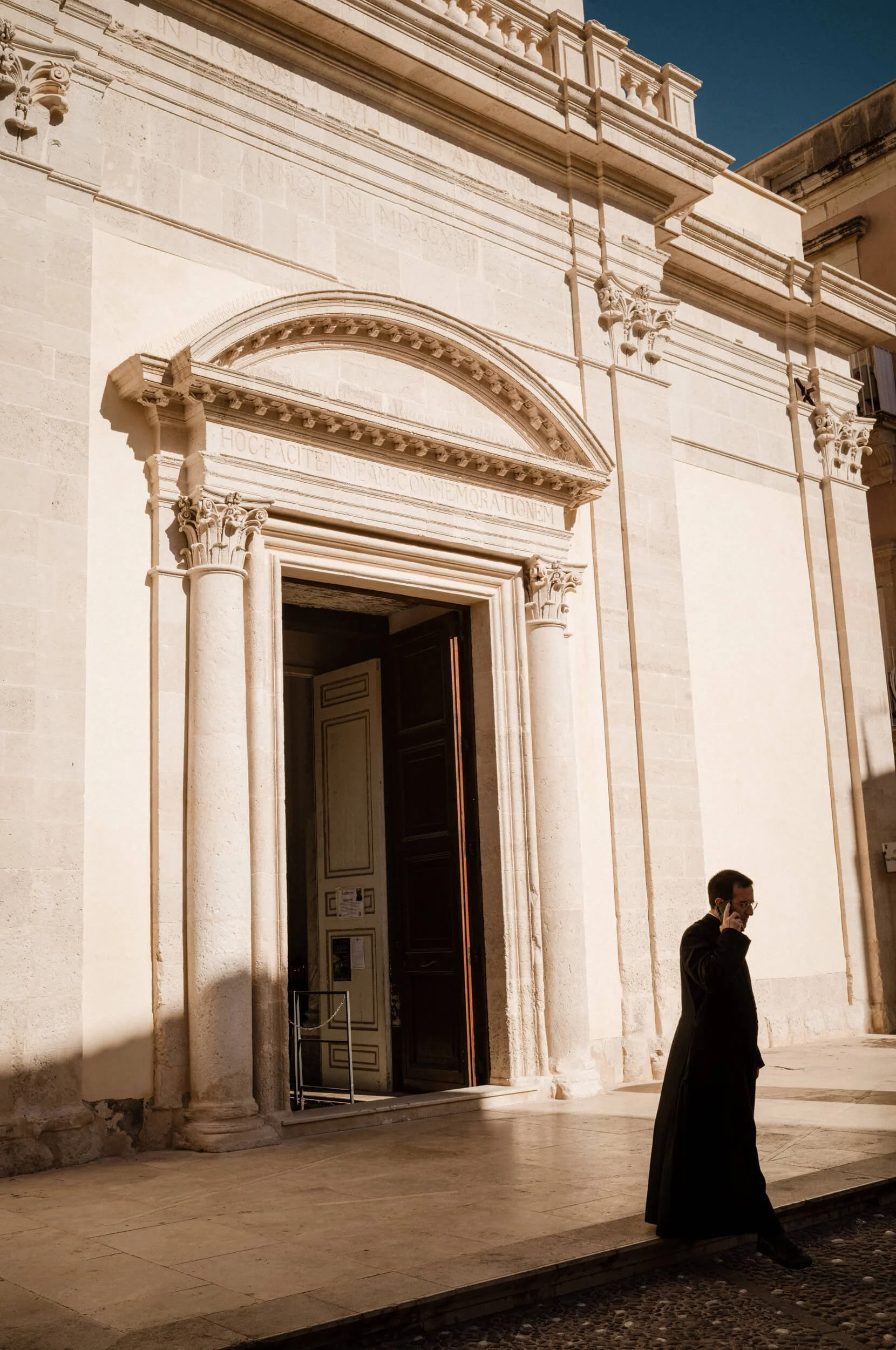

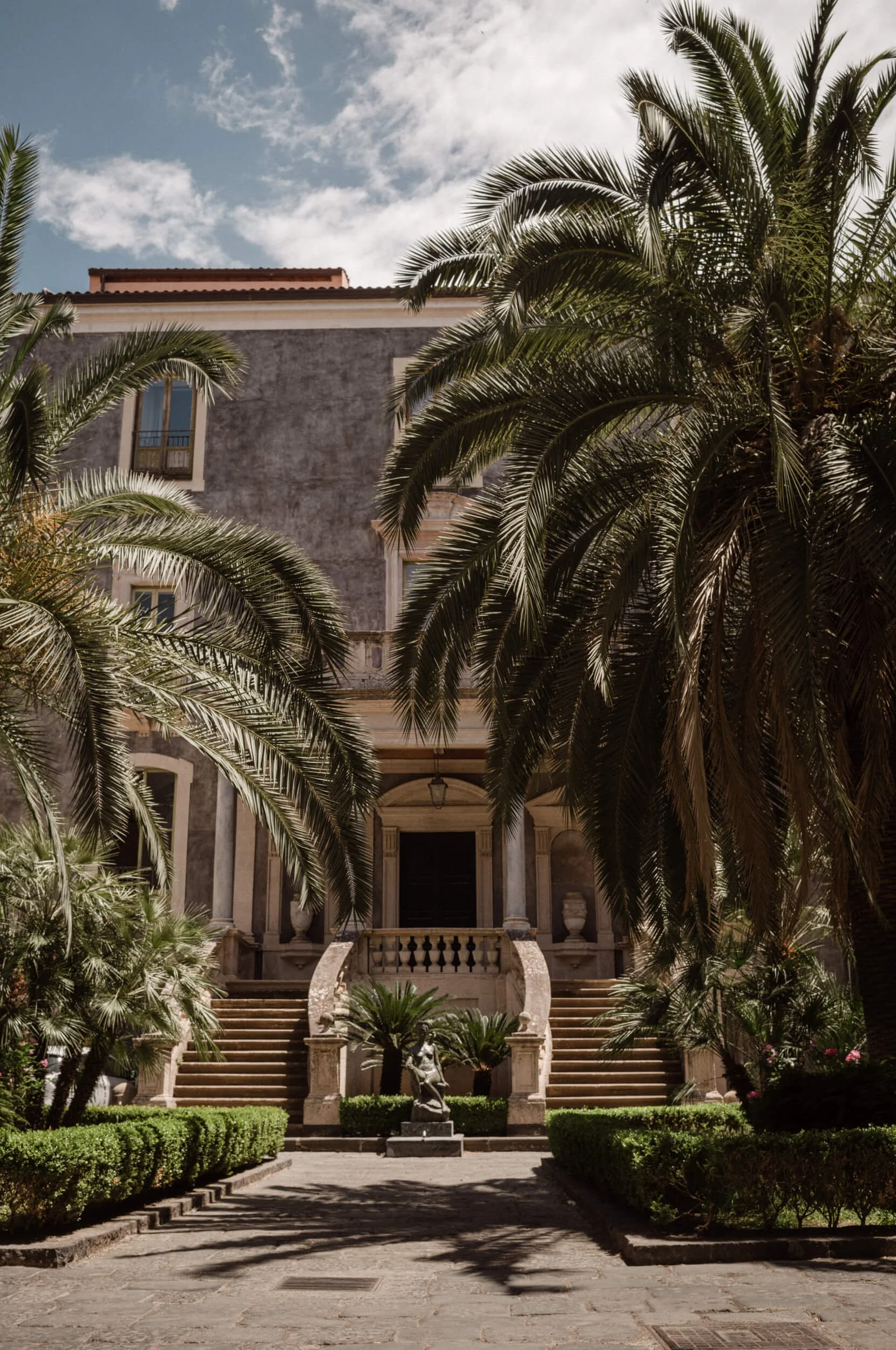
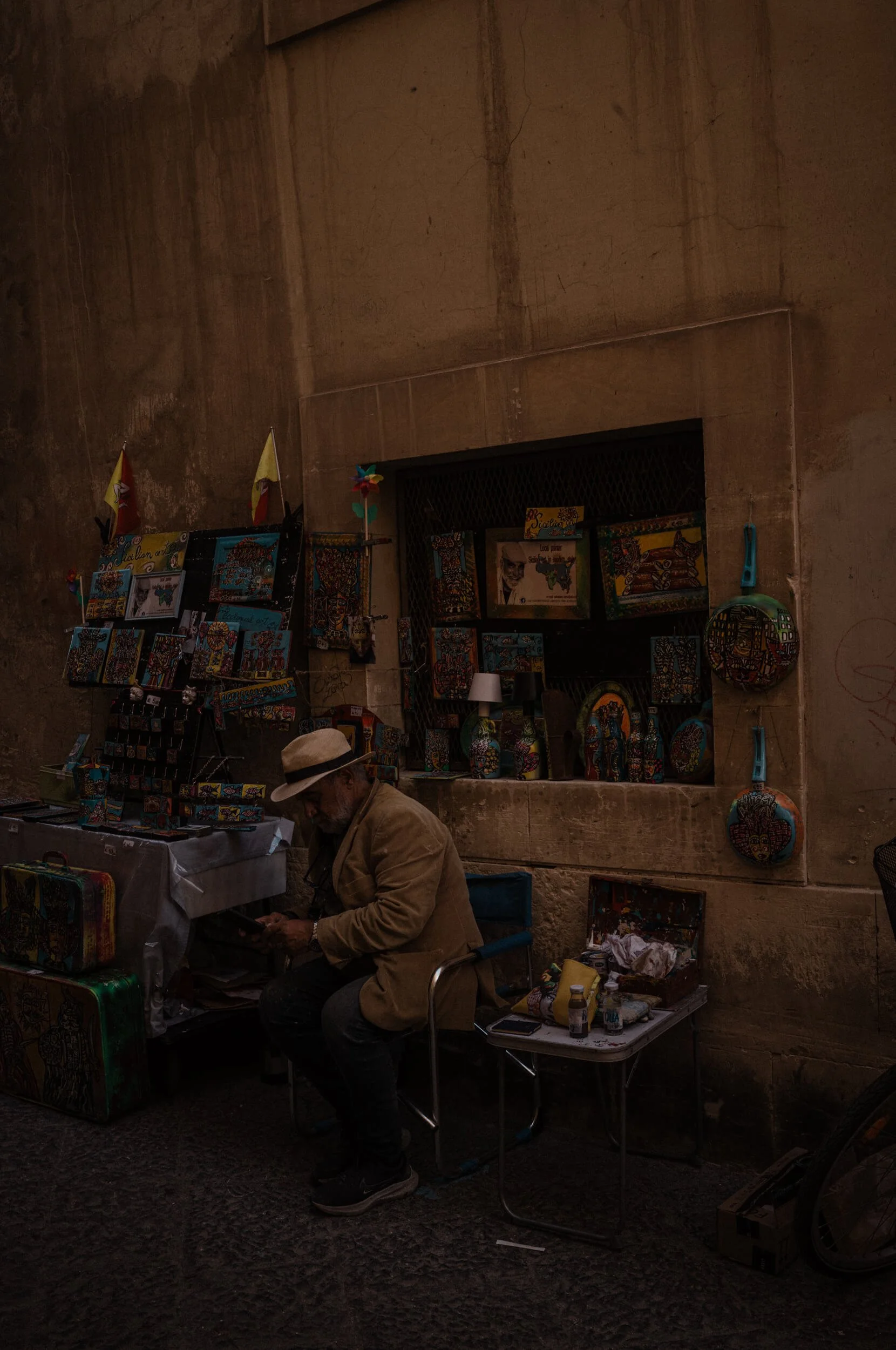
Sicilian afternoons with Roberta
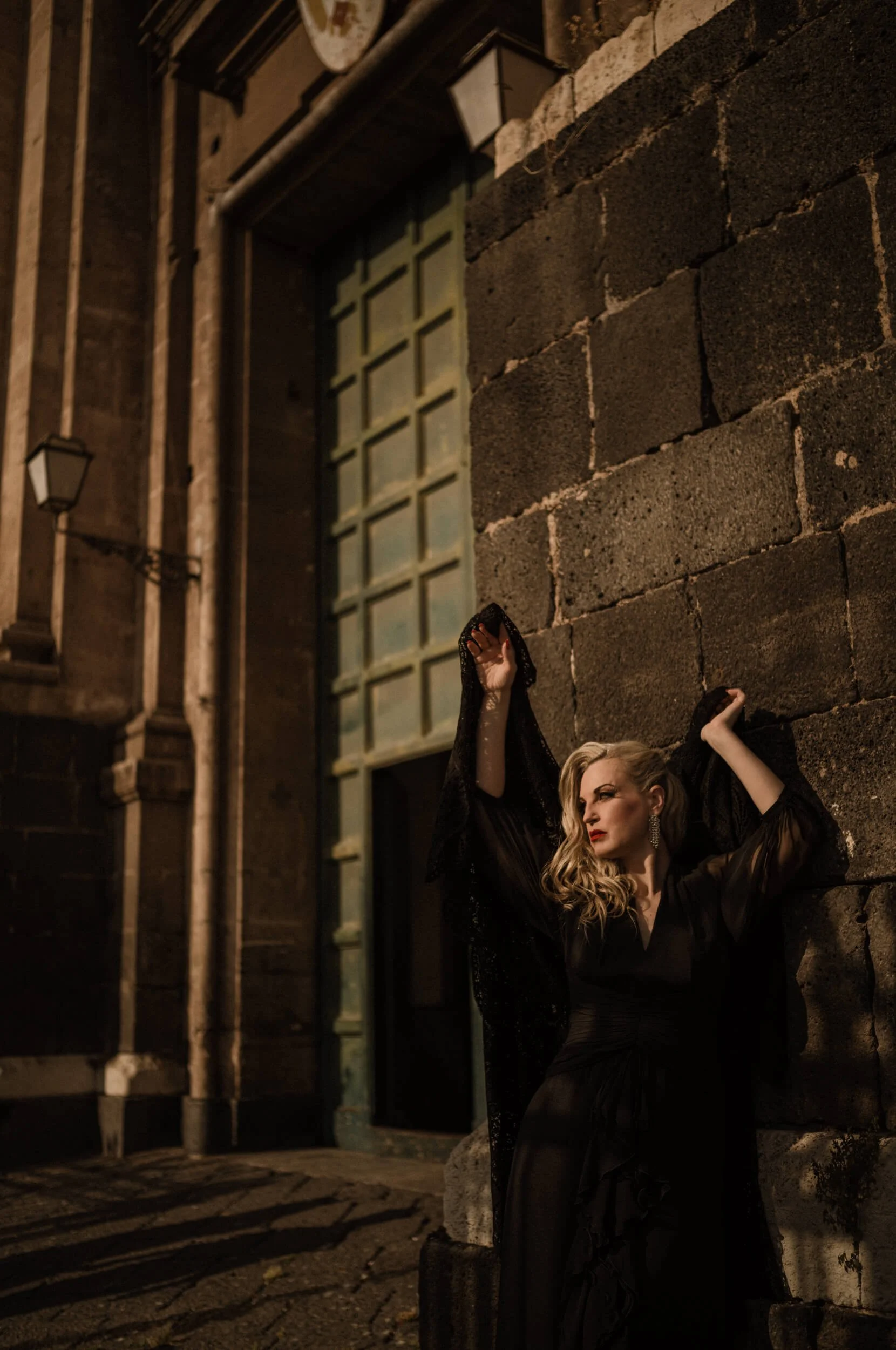
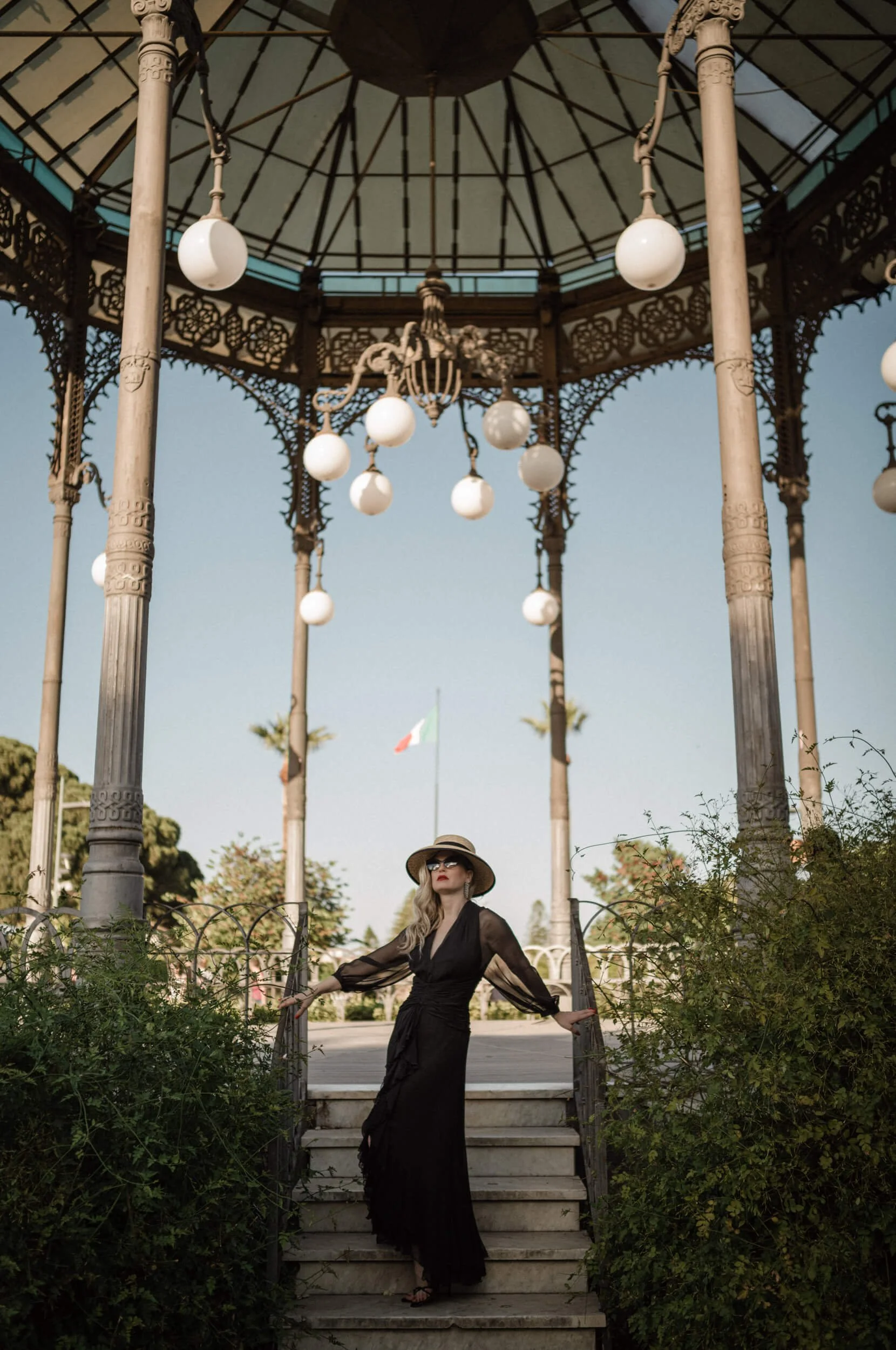
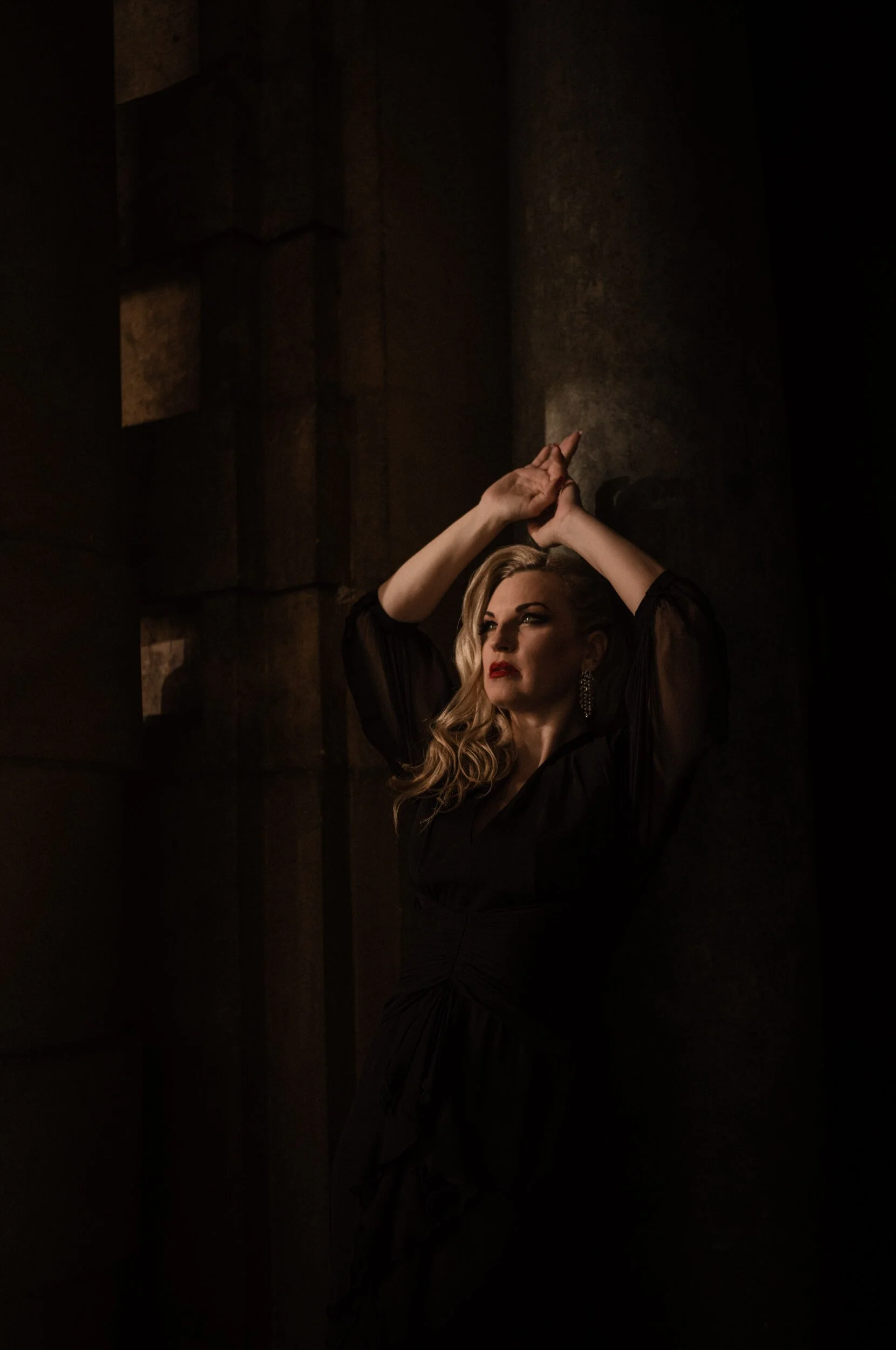
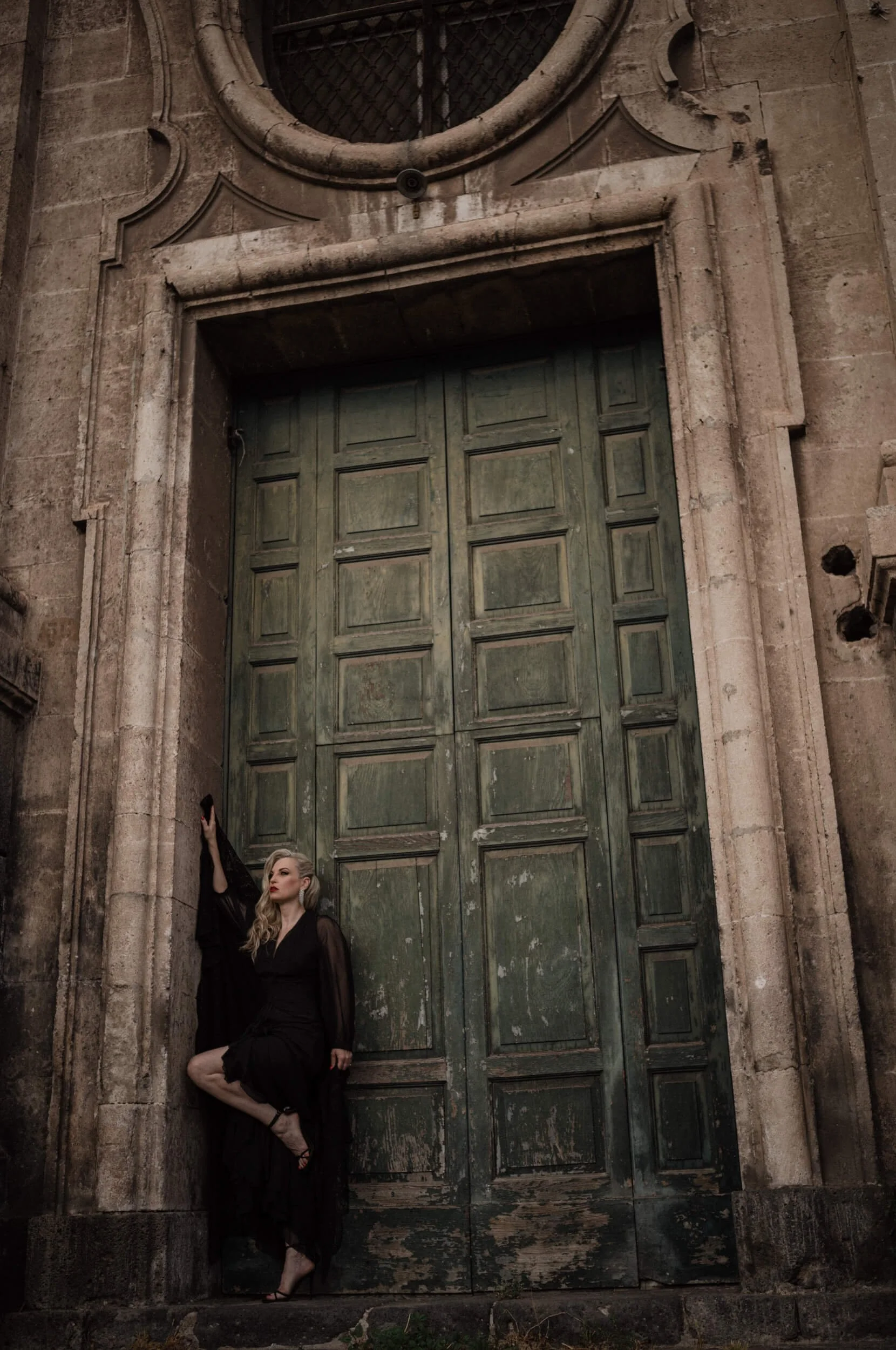
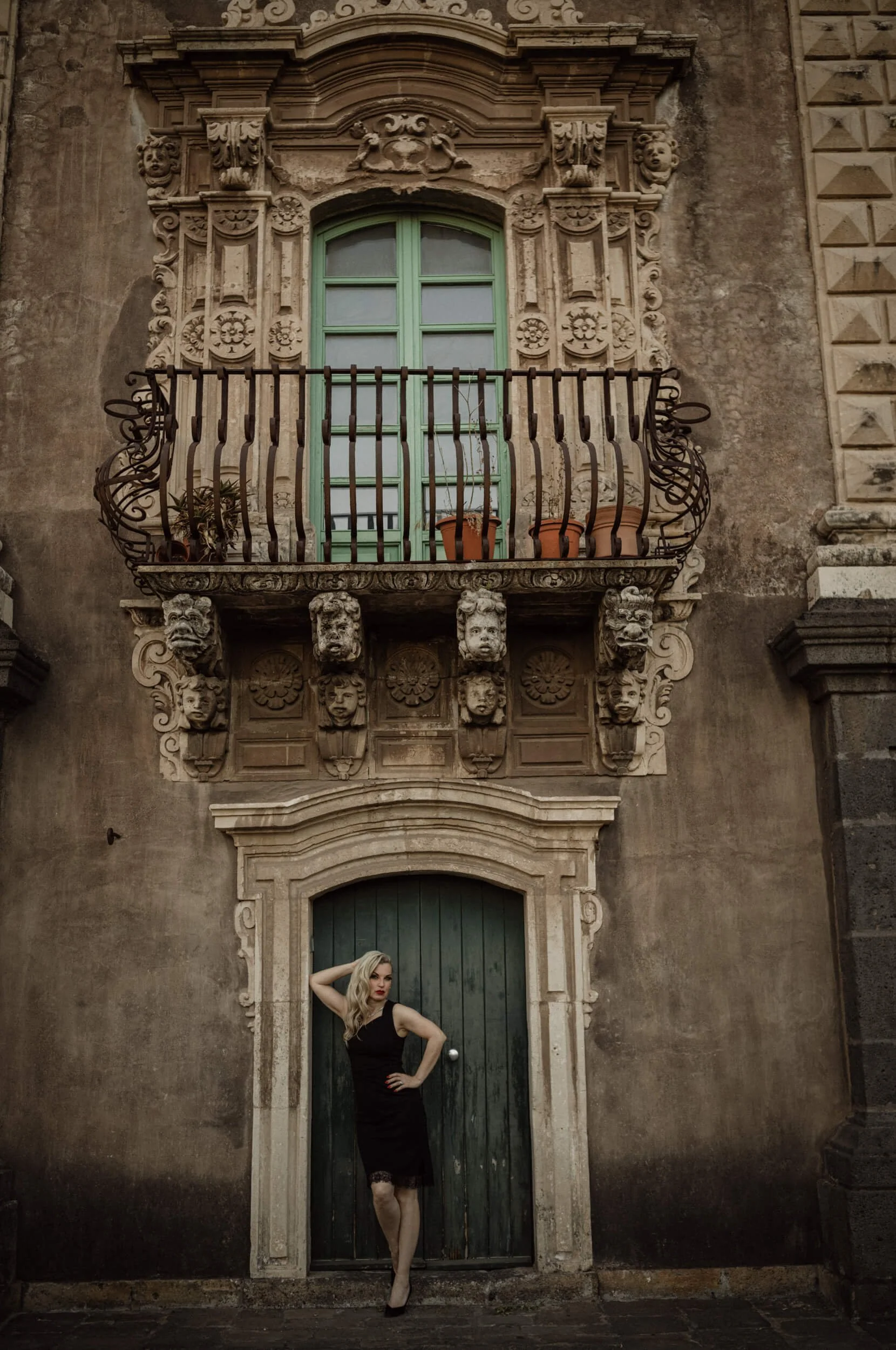
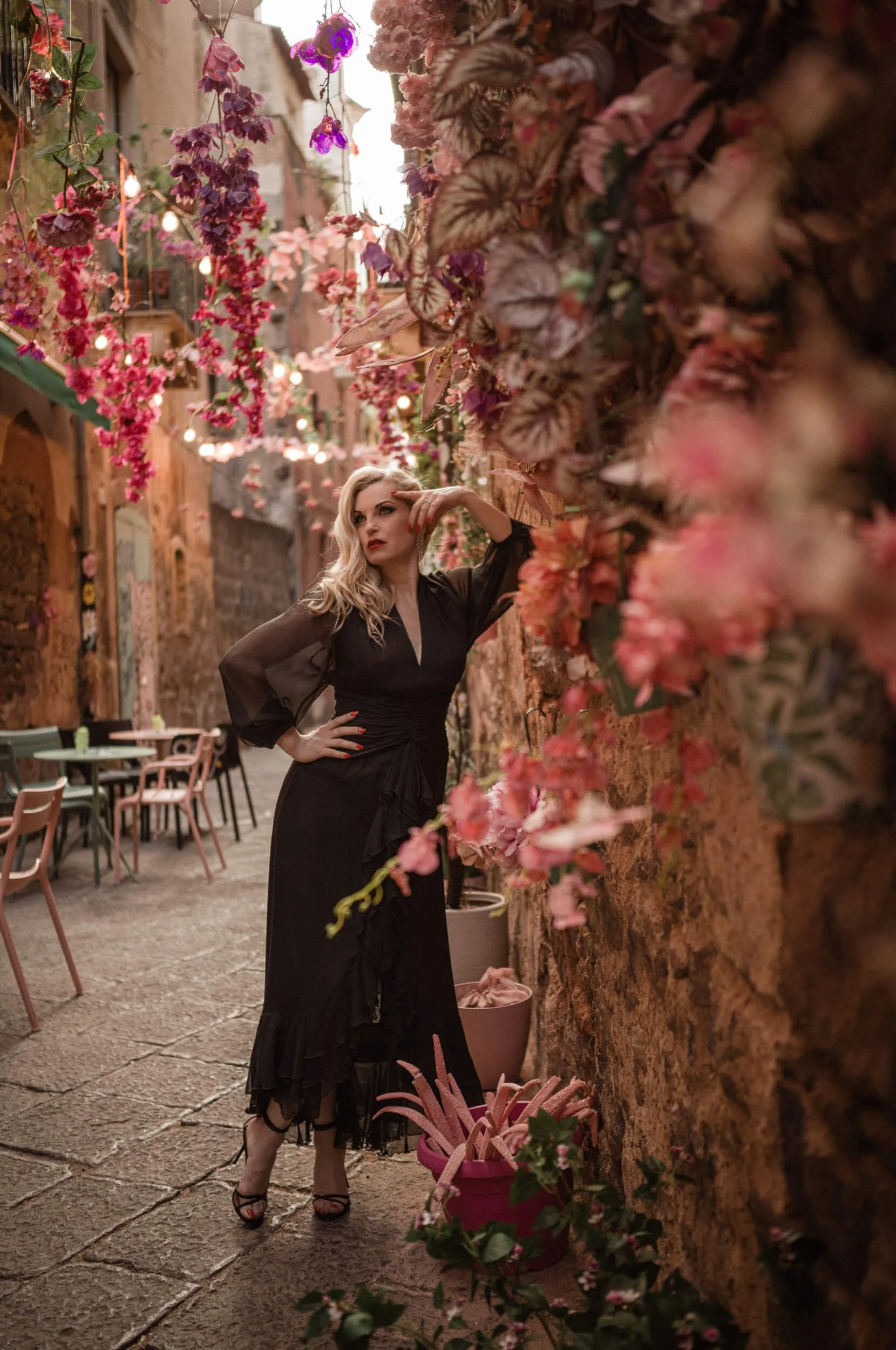
Roberta crossing Piazza Bellini as the late afternoon light transformed Catania into a cinematic stage.
Dolce & Gabbana meets Malèna
A touch of Sicilian noir. Warm stone, long shadows and a timeless elegance that felt perfectly at home in Catania.
Although this trip was primarily intended as a holiday, I quickly realised once again that photography remains inseparable from the way I experience the world.
That is how I eventually met Roberta in Catania.
I already had a visual direction in mind before the shoot:
something between Dolce & Gabbana and Malèna. Not overly polished or staged, but deeply connected to Sicilian identity, sensuality and atmosphere.
I deliberately avoided renting a studio or hotel room. Instead, I wanted to photograph Roberta inside the streets and environments where she naturally belongs.
The day before our session I walked through Catania scouting locations around the fish market, Piazza Carlo Alberto, Villa Bellini and eventually the Monastero dei Benedettini.
Rather than building a strict production, the idea was to allow the city itself to guide the rhythm of the shoot.
Between locations we simply stopped whenever the light felt right. Some images became almost accidental in their simplicity. Less constructed than many of my usual productions, but perhaps also more honest because of it.
Roberta herself carries a fascinating mix of influences. Although deeply Sicilian in temperament, there is also a subtle Balkan energy visible in her charisma and features. She moves through the streets with natural confidence and warmth that translated beautifully on camera.
Her personal story also reflects this layered identity. Born in Croatia before eventually settling in Sicily, Roberta grew up surrounded by creativity, performance and artistic expression. Coming from a family connected to the circus world, she later explored disciplines ranging from dance and burlesque to costume design, choreography and performance art.
What fascinated me most was how naturally all these influences seemed to merge together. There is something both theatrical and authentic about her presence. She understands how to move through public space without looking staged, something that worked perfectly for the direction I had in mind for this Sicilian series.
What I appreciated most during the session was how relaxed everything remained.
No pressure.
No elaborate production design.
No excessive equipment.
Just Sicily, available light, conversation and a compact 35mm lens quietly documenting moments as they unfolded.
Some of my favourite frames were not even the planned portraits themselves, but the moments in between. Walking through the streets, stopping near fruit stands, cafés or old stone facades while the city simply continued around us.
The compact size of the Ksana became especially valuable here. Larger lenses often change the energy of a scene immediately. People notice them. The Ksana instead remained discreet enough to let moments unfold naturally.
In many ways this section of the review perhaps says more about the lens than sharpness charts ever could. The Ksana encouraged me to photograph more, carry the camera longer and remain visually curious throughout the journey.
And maybe that is ultimately what makes a good travel lens memorable.
Not technical perfection alone.
But the ability to quietly become part of the experience itself.
What could be improved
Between reflection and reality. Beneath the historic arcades of Antwerp's Handelsbeurs, Chanelle seemed suspended in another era.
No lens is perfect, and the Ksana also has a few limitations depending on what kind of photographer you are.
Photographers searching for the strongest possible vintage rendering may still prefer lenses such as the Leica Steel Rim or Zenitar 35mm f/1, both of which produce more exaggerated flare behaviour and stronger visual character wide open.
Likewise, photographers expecting APO-level sharpness and biting microcontrast may find the Ksana slightly too gentle at f/2, especially towards the edges of the frame.
The flare behaviour is also more restrained than some of the marketing material initially suggested. While atmospheric flare certainly exists, the lens overall behaves more controlled and neutral than certain classic vintage optics.
In some lighting situations I also experienced the rendering as slightly cooler than expected, particularly compared to older Leica lenses with warmer and more pastel-like colour signatures.
None of these observations are necessarily flaws, but they do help position the Ksana more clearly.
This is not an extreme character lens.
Nor is it a sterile technical instrument.
The Ksana instead occupies a carefully balanced middle ground.
Final thoughts
A balanced everyday 35mm for Leica M photographers
A passing moment in Siracusa, where history, beauty and everyday life seem to share the same stage.
The more time I spent with the Ksana 35mm f/2, the more I realised that its greatest strength may actually be its balance.
For pure portrait work I would probably still personally gravitate towards faster 35mm lenses such as a f/1.4 or even f/1.2 design. Lenses like the Zenitar 35mm f/1 or certain vintage-inspired optics simply create more exaggerated separation and stronger visual character wide open.
At the same time, photographers searching for ultimate APO-level sharpness and technical perfection may still prefer lenses such as the Leica APO-Summicron-M 35mm ASPH.
The Ksana sits somewhere between those two worlds.
It is neither an extreme vintage lens nor a clinically perfect modern optic.
And perhaps that is precisely why it works so well as an everyday companion.
The Ksana feels designed for photographers who want a lens capable of doing almost everything well:
travel photography
street photography
environmental portraiture
documentary work
daily observation
All while remaining compact, discreet and genuinely enjoyable to carry for long periods.
The close-focusing capabilities, full brass construction and balanced rendering make it particularly appealing as a true all-round 35mm lens rather than a specialised artistic tool.
What also deserves mention is how rare this combination actually is. A full brass 35mm f/2 with close focusing, compact dimensions and reliable optical performance at around €529 remains surprisingly uncommon in the Leica M ecosystem.
It may not produce the wildest bokeh or the sharpest files ever made for M mount.
But it also never feels limiting.
And in practical photography, that balance often matters far more than extremes.
During my time with the Ksana, whether photographing Chanelle inside the historic Handelsbeurs in Antwerp or wandering through the streets and markets of Sicily, the lens quietly adapted itself to different situations without ever demanding attention.
Perhaps that is ultimately the greatest compliment I can give it.
The Ksana never interrupted the experience of photographing.
It simply became part of the journey itself.
Before wrapping up this review, one final frame from Sicily. A reminder that some lenses are at their best when they quietly observe rather than dominate the scene.
FAQ
Is the Thypoch Ksana 35mm f/2 worth it?
For photographers searching for a compact Leica M-mount lens balancing modern usability with atmospheric rendering, the Ksana 35mm f/2 offers excellent value. The brass construction, close-focusing capability and balanced rendering make it one of the more interesting recent 35mm M-mount releases.
Is the Ksana 35mm f/2 good for travel photography?
Yes. In my experience this is one of the strongest aspects of the lens. The compact dimensions, low weight and discreet appearance make it particularly enjoyable for travel photography and daily carry.
Does the Ksana 35mm flare?
Yes, but in a relatively controlled way. The flare behaviour is more restrained than certain vintage Leica lenses while still preserving atmospheric bloom in backlit situations.
Is the Ksana 35mm f/2 good on the Leica M11?
Very much so. Throughout this review I used the lens almost exclusively on the Leica M11-D, where the combination proved particularly enjoyable for travel photography, portraiture and layered evening light. The colours, contrast and overall rendering paired beautifully with the sensor.
I have not yet had the opportunity to use the Ksana extensively on my Leica M11 Monochrom, as most of my recent work has been focused on colour photography. However, based on my experience so far, I suspect the lens will translate very well to black and white thanks to its gentle tonal transitions and balanced rendering.
Likewise, I have not shot enough film with the Ksana to draw meaningful conclusions. Film comparisons between different Leica M lenses remain something I would like to explore in a future article, particularly as certain lenses often reveal different characteristics on film than they do on modern digital sensors.
Special deal for my readers
For those interested in the Thypoch Ksana 35mm f/2, Thypoch kindly offered readers of this review an exclusive 5% discount together with free worldwide shipping using the code MILANSWOLFS via the official Thypoch store.
At its current price point, it honestly feels quite impressive that Thypoch is able to offer a compact full brass Leica M-mount lens with close focusing, strong mechanical quality and such balanced rendering characteristics.
A lens that quietly grows on you the more you travel and photograph with it.
A final thank you
A special thank you to Mag and the team at Thypoch for the opportunity to test the Ksana 35mm f/2 before its official release.
Over the past years I have reviewed many lenses, but it is always a privilege when manufacturers trust photographers to use their equipment in their own way and within their own visual language.
I would also like to thank Chanelle and Roberta for their time, creativity and trust in front of the camera. The images in this review would not exist without their collaboration and willingness to bring these visual ideas to life.
For that trust and creative freedom, I am sincerely grateful.
About Milan Swolfs
Milan Swolfs is a fine art portrait photographer from Antwerp, Belgium, renowned for his distinctive blend of burlesque and vintage aesthetics. His work channels the timeless Hollywood glamour of the 1920s and 1930s, capturing both men and women in bold yet elegantly refined portraits.
Beginning his career photographing Europe’s largest burlesque events, Milan later transitioned into fine art photography. As an ambassador for Leica Camera and Harlowe Creators, his work has been featured in LFI (Leica Fotografie International), Medium Format Magazine, and Viewfinder. In 2022, he debuted his solo exhibition, Light of Seduction, at the Leica Store in Porto. Most recently, from late 2024 to early 2025, his latest exhibition, Echoes of Elegance: A Timeless Journey, was showcased at the Leica Store Beaumarchais in Paris.
Milan’s portraits celebrate individuality and classic beauty, reviving the charm and allure of a bygone era.
