
A MOMENT SUSPENDED IN TIME
Camera and Gear Fatigue, and Why I Still Believe in Character
In a time where new cameras and lenses are released almost weekly, promising sharper corners, more contrast, and ever more perfect optical corrections, I have to admit I feel a certain fatigue. Perfection rarely excites me anymore. What keeps me curious are lenses with character, lenses that render light in a way that feels emotional rather than clinical.
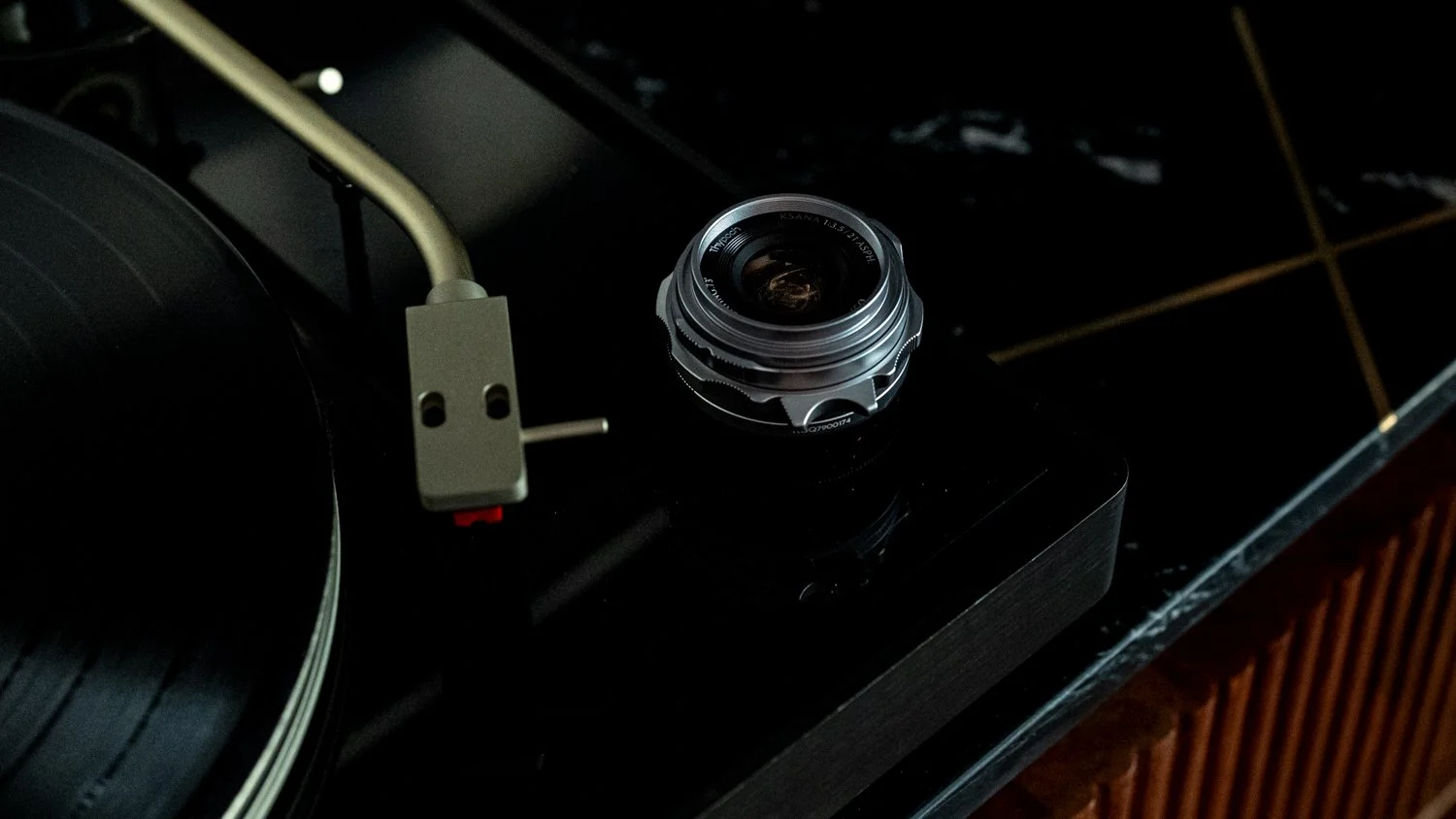
Thypoch Ksana 21mm f3.5 shot on Leica SL2-S with APO-Summicron-SL 50mm f2 by Milan Swolfs
Most of my work lives in the realm of fine art portraiture, often inspired by old Hollywood, film noir, and a certain sense of timeless elegance. My lens collection reflects that. Many of the lenses I use are fast, f1.4 or even faster, because they allow me to sculpt light, isolate a subject, and create atmosphere. Yet one of the slowest lenses in my collection is also one of my most beloved: the Leica Summaron 28mm f5.6 LTM.
It is not the bokeh that makes that lens special. It is the way it renders light. The way highlights transition, the way contrast feels gentle yet defined. It is full brass, beautifully built, and unmistakably vintage. Its limitations are obvious: f5.6 and a minimum focus distance of 1 meter, even on the M version. But within those limits, it has a very distinctive voice. That lens also says something important about me: 28mm is, and has always been, the widest focal length I normally use for photographing people.
The Widest I Ever Go, Until I Did Not
Twenty eight millimeters has long been my personal boundary. Wide enough to include environment, narrow enough to keep faces elegant and proportions intact. Anything wider felt risky, especially for portraits where distortion can quickly become distracting or unflattering.
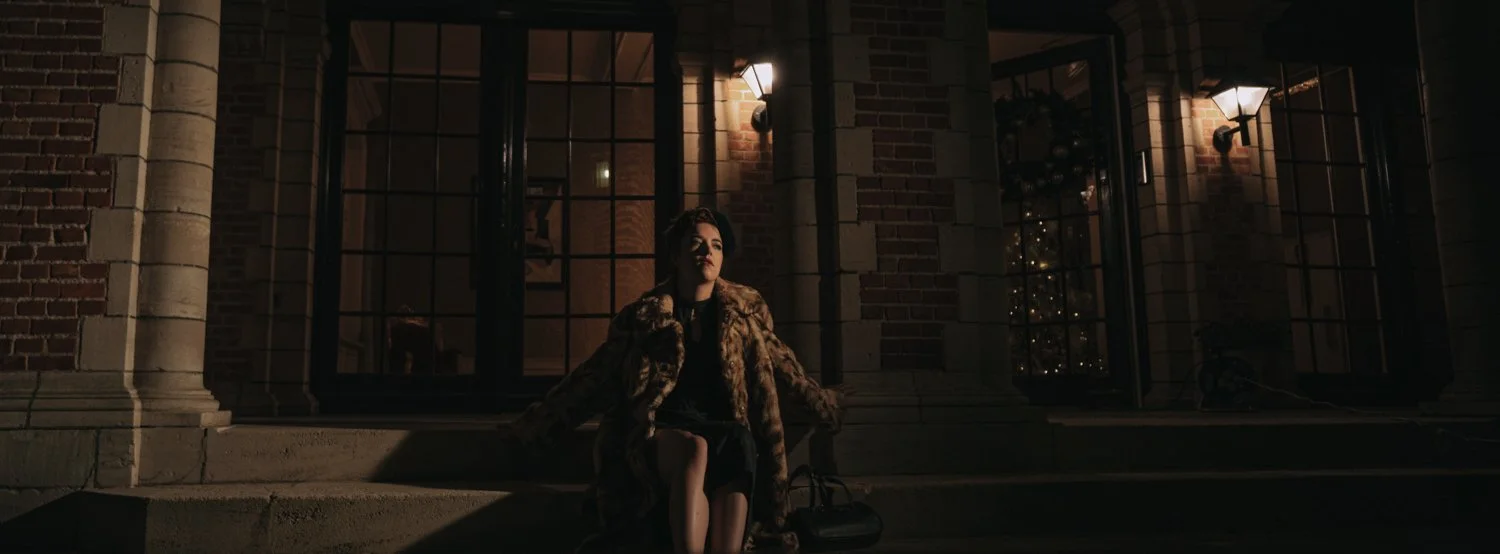
The wait, Thypoch Ksana 21mm f3.5 shot on Leica M11-D by Milan Swolfs. Model Jennifer Loos
This is exactly why the 21mm focal length always felt too wide for my style.
And yet, sometimes stepping outside your comfort zone is the best decision you can make creatively.
How I Got Introduced to Thypoch
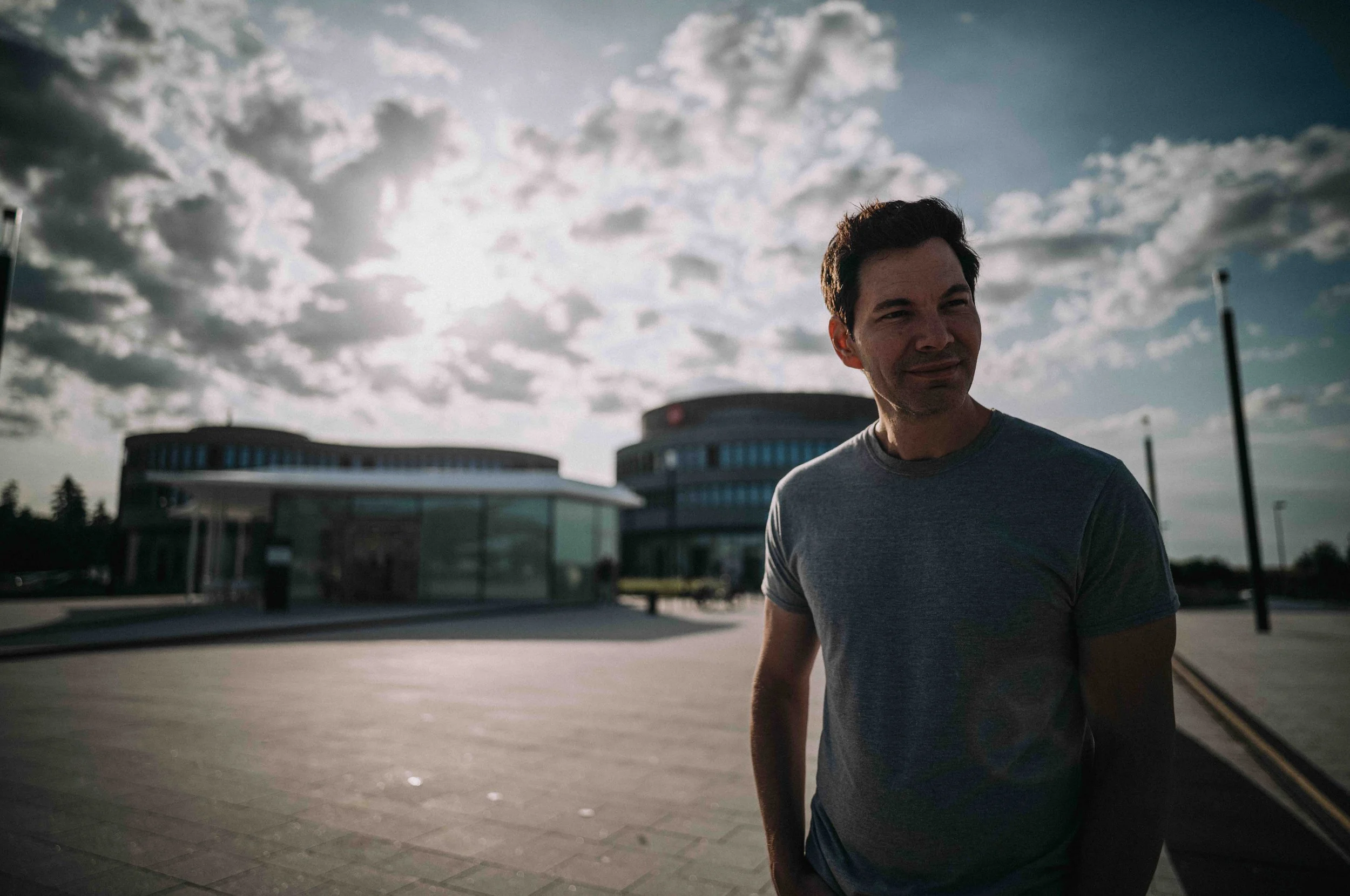
The Mothership, Thypoch Simera 21mm f1.4 shot on Leica M-EV1 by Milan Swolfs. Model Bobby Tonelli
My first contact with Thypoch came thanks to Bobby Tonelli. He introduced me to the Simera 21mm f1.4. We both agreed immediately that it was wide, maybe even too wide, but after spending time with it, something became clear. The 21mm focal length had a rendering that I could not quite describe. It was different. It stayed with me.
So when Thypoch later asked me to capture images with the Ksana 21mm f3.5, I was sceptical at first. Not only was it 21mm, it was also slower than what I normally work with. But I enjoy being challenged, and I only write about gear when it genuinely excites me. Thypoch did not ask for this review. I am writing this because this lens made me curious in a way very few recent releases have.
Thypoch approaches lens design differently. They do not copy existing classics. They reinterpret ideas and build their own language. Their M-mount lenses are divided into two lines. The Eureka line is their more classic approach, consisting of the 28mm, 50mm, and now the Ksana 21mm f3.5. The Simera line focuses on faster lenses, all at f1.4, currently covering 21mm, 28mm, 35mm, 50mm, and 75mm.
First Impressions of the Ksana 21mm
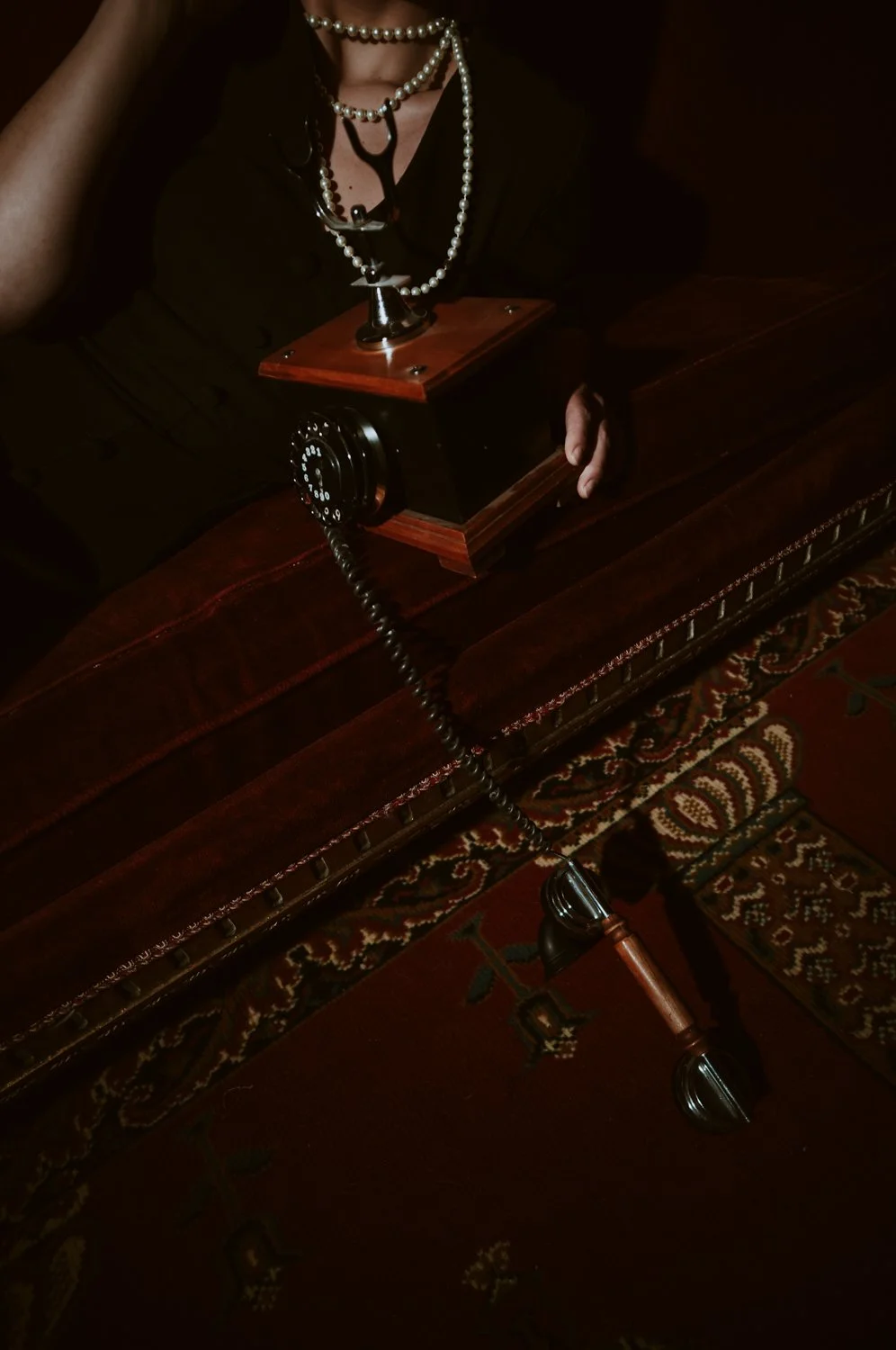
Hello? Ksana 21mm f3.5 on Leica M11-D by Milan Swolfs, Model Jennifer Loos
The Ksana 21mm immediately stands out for its compactness and light weight. At just over 130 grams, it feels almost invisible on an M body. Focusing is smooth and precise. Mounting the lens can be slightly tricky, as the red alignment dot is not very prominent, but that is a minor detail.
The lens is built from aluminum alloy. Personally, I would have loved to see it in brass, but that is my romantic side speaking. It comes in black or silver, and I strongly prefer the silver version for its classic, timeless look. The front lens cap is metal, the rear cap plastic. The lens uses 39mm filters, which fits nicely with the rest of my kit. There is no lens hood included, but in practice I did not miss one.
The widest aperture is f3.5, with a minimum aperture of f22. Slower than what I usually shoot, which meant working differently with light. I often used the lens wide open, embracing what it offers rather than what it is not.
Translating Ksana Into My Own Language
Ksana is derived from an ancient Sanskrit word meaning moment. A fleeting instance in time that disappears as quickly as it arrives. For this series, I wanted to translate that idea into something that felt true to my work.
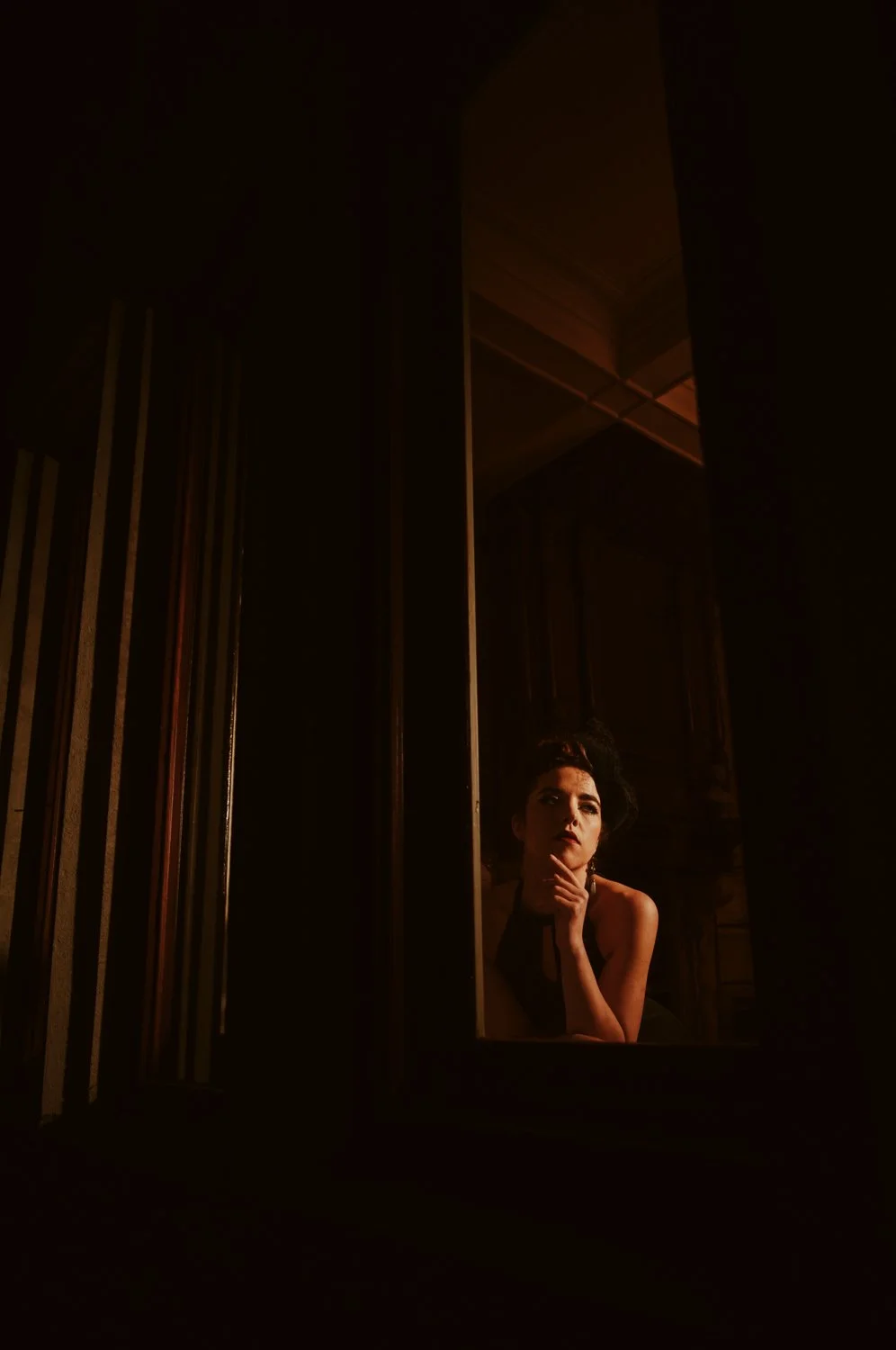
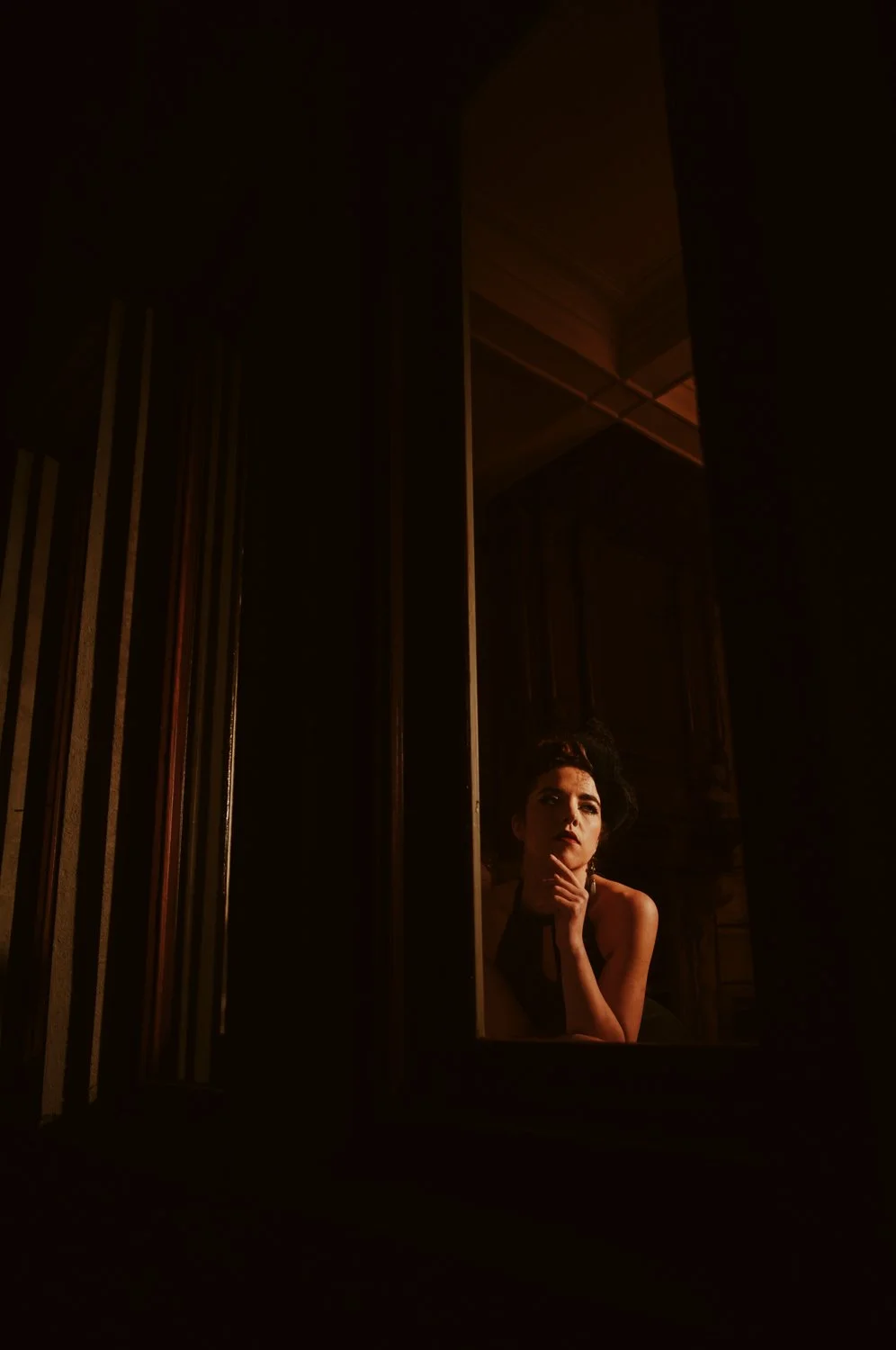
Read Window, Thypoch Ksana 21mm f3.5 shot on Leica M11-D by Milan Swolfs. Model Jennifer Loos
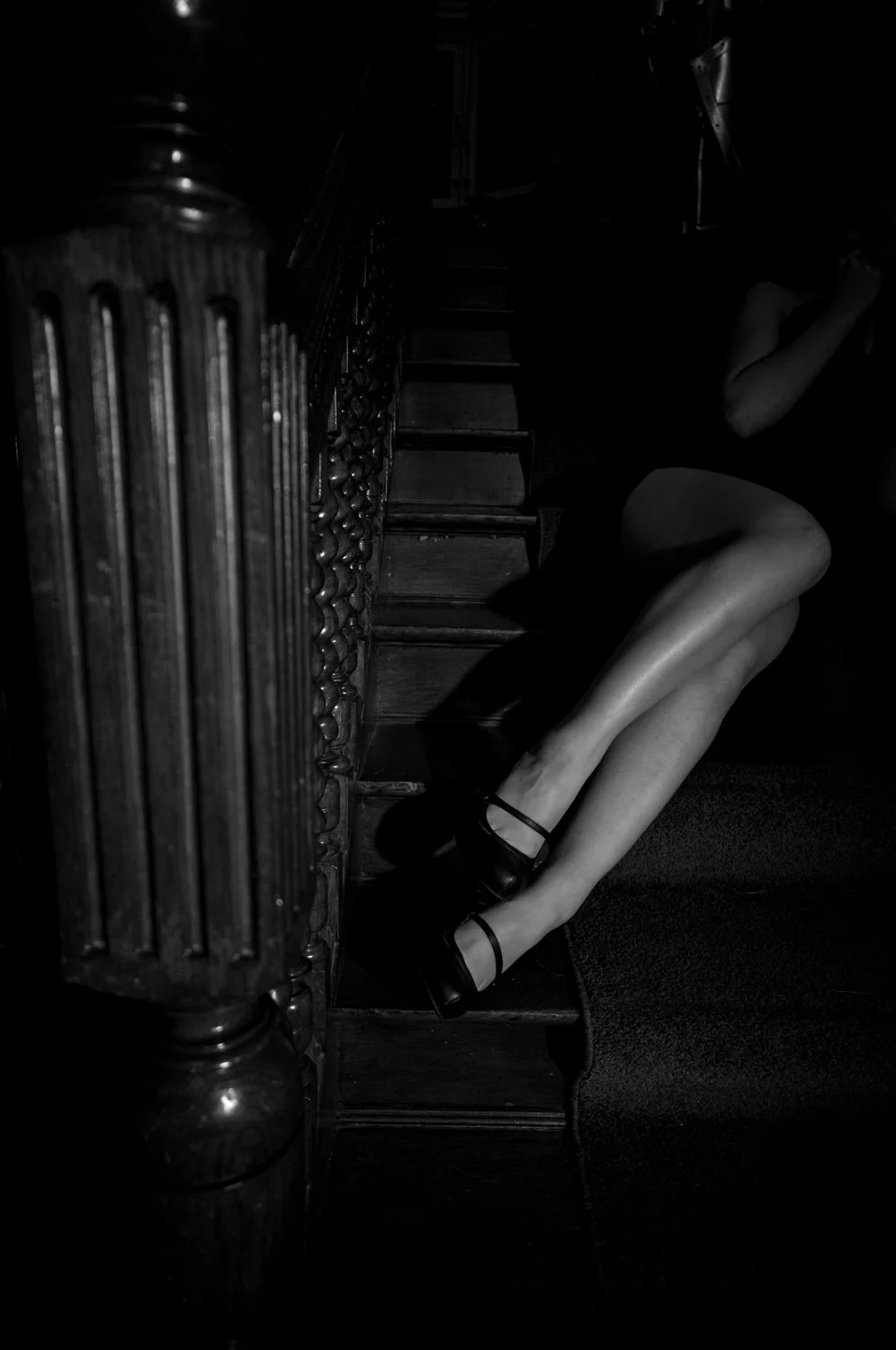
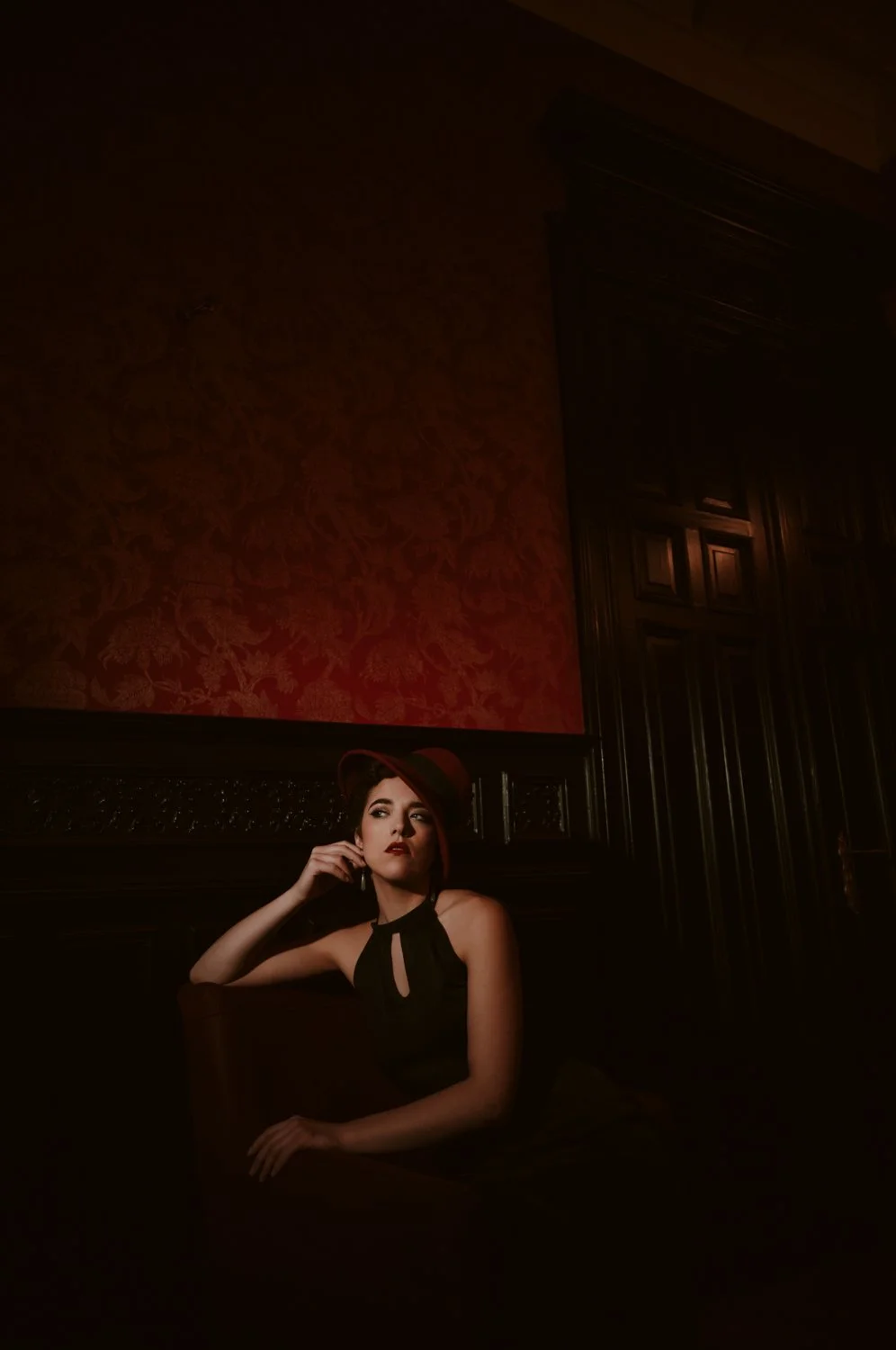
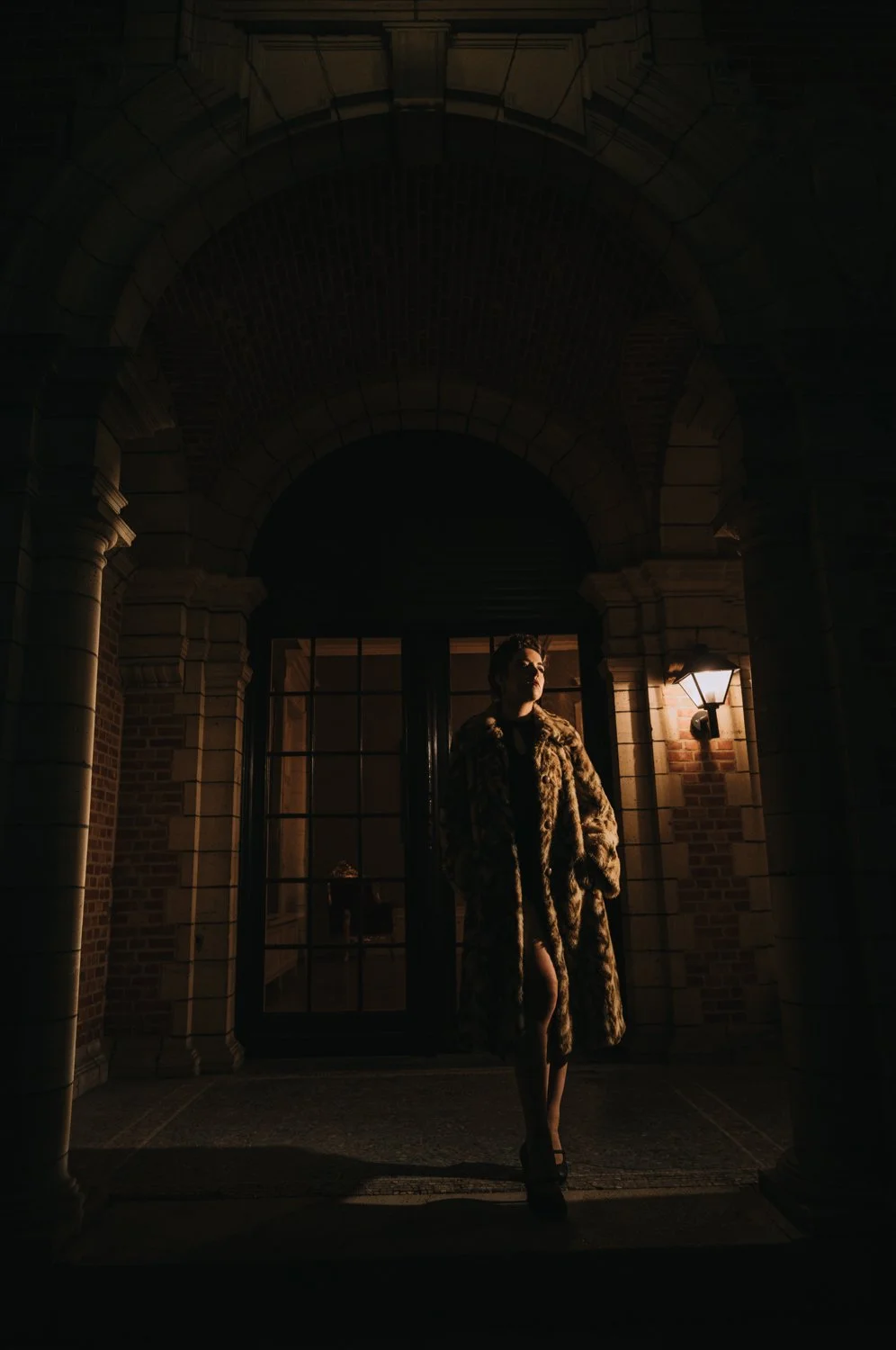
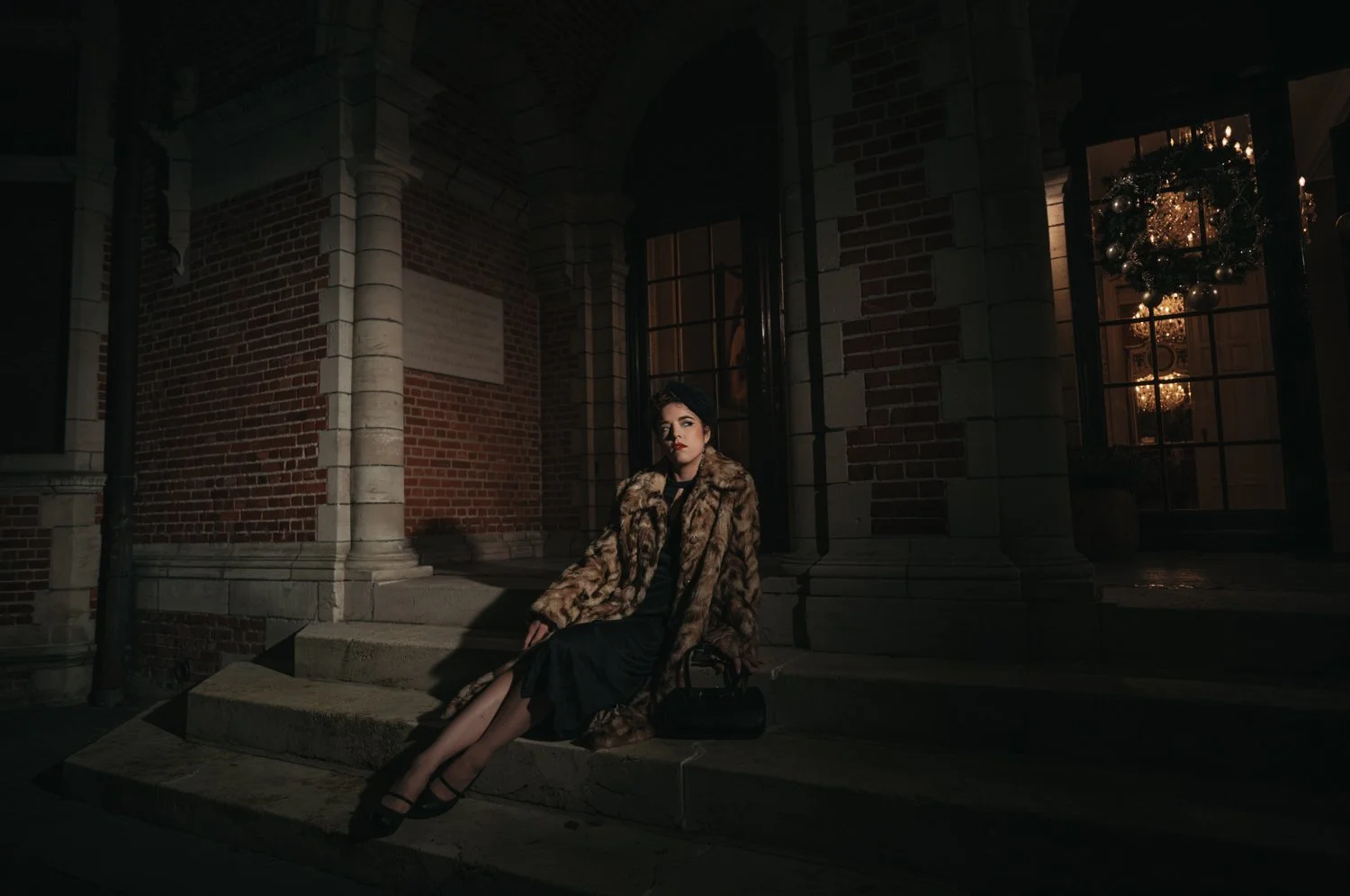
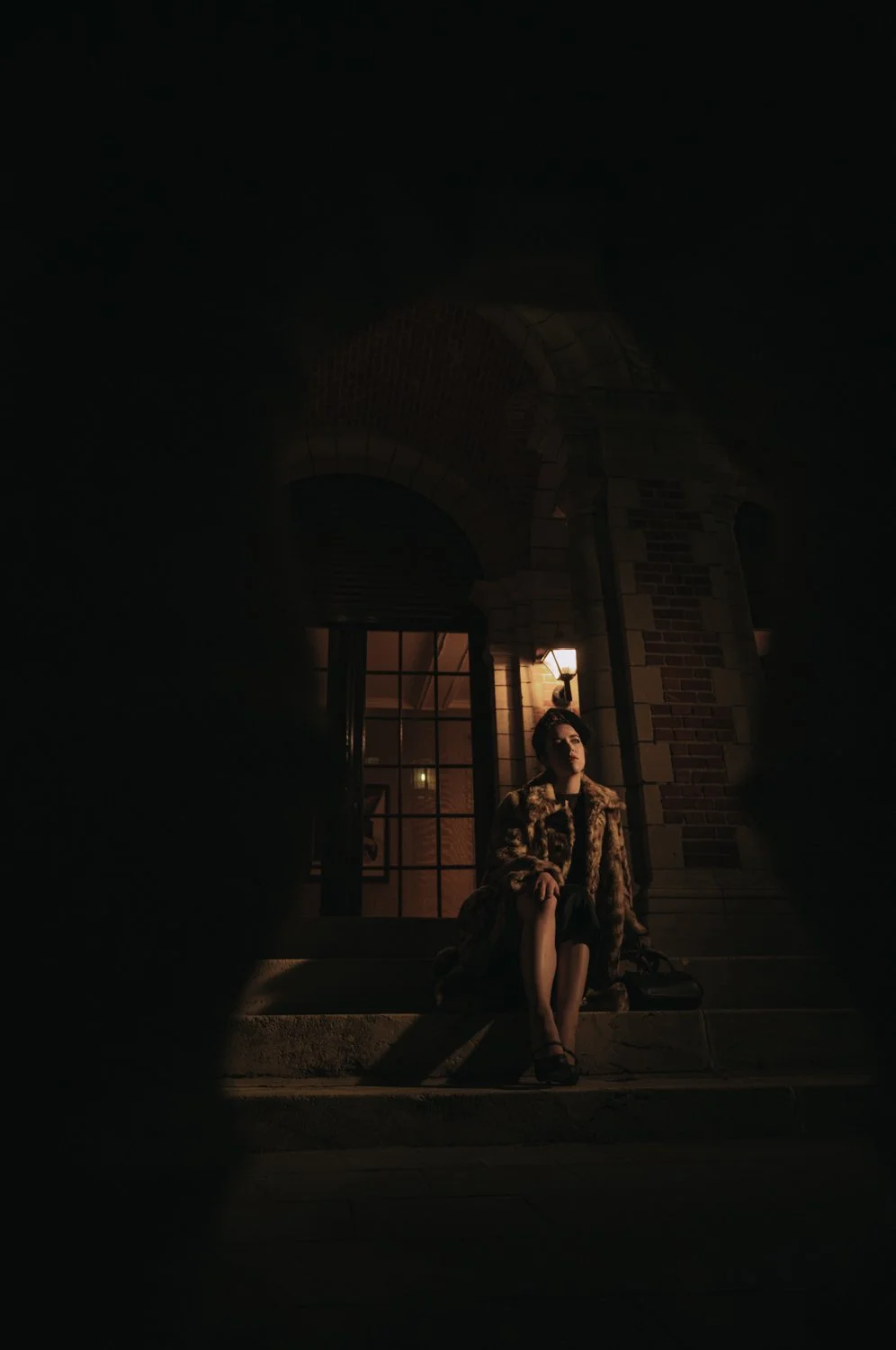
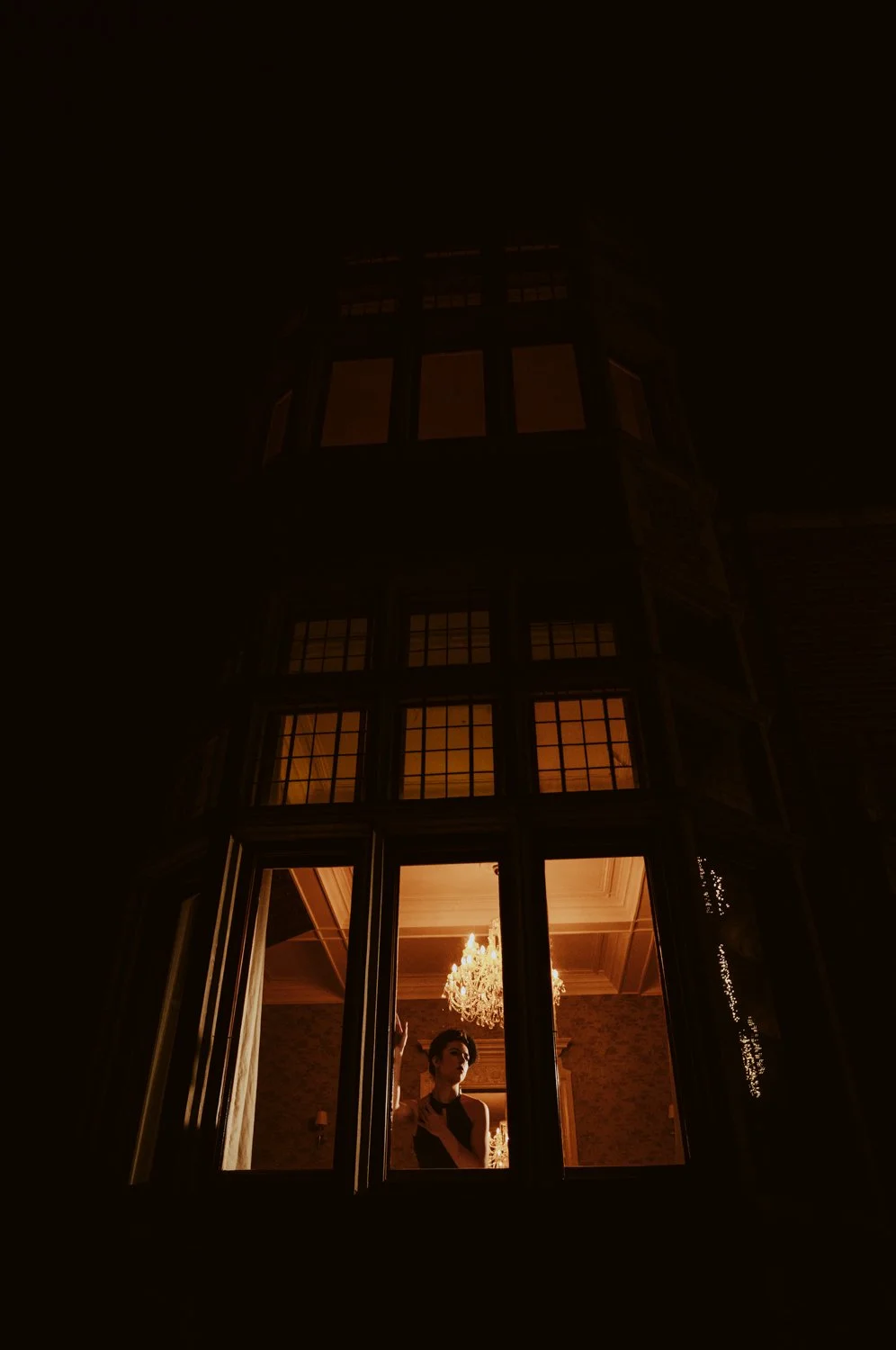
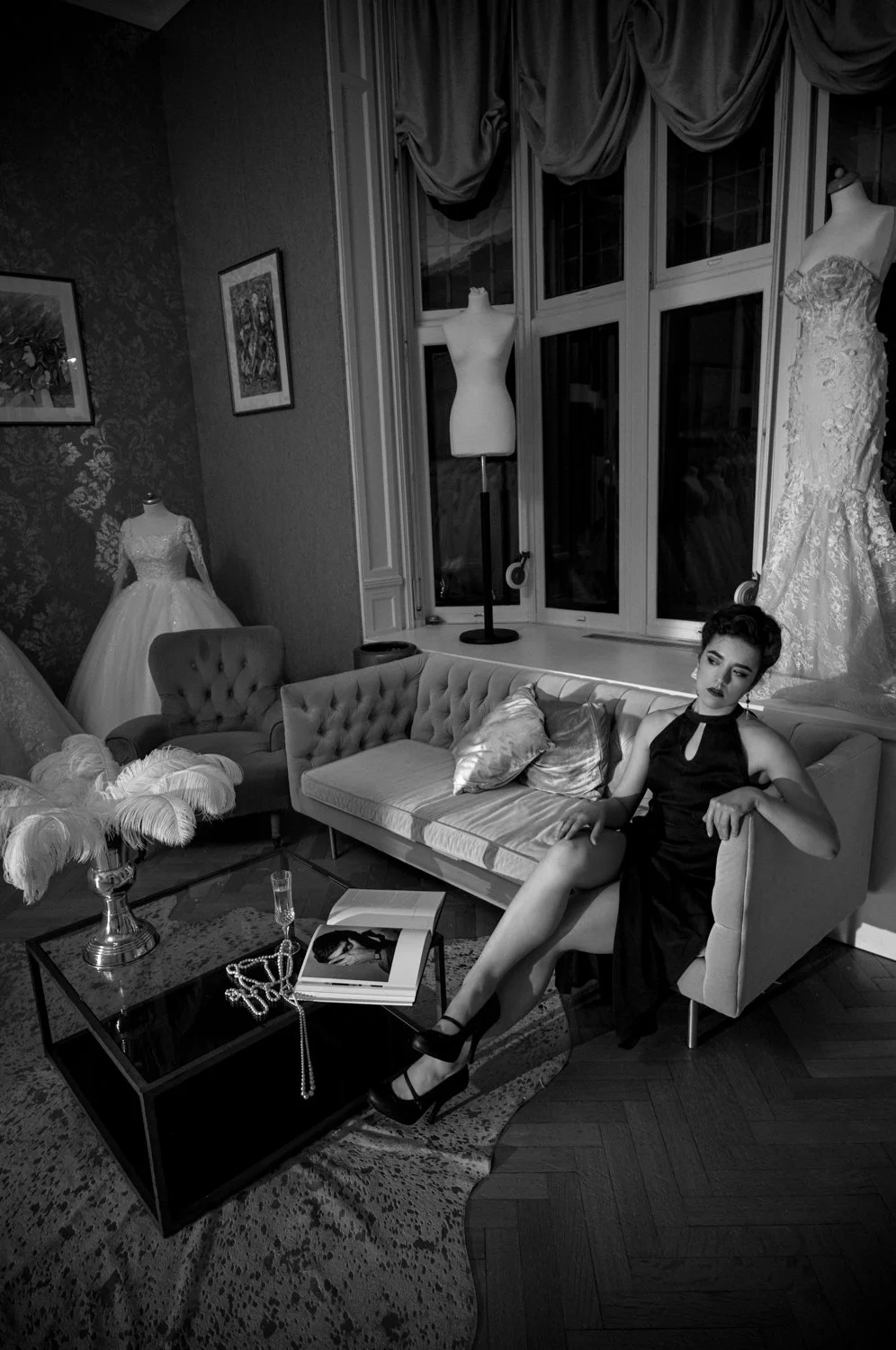
I chose a castle as the main backdrop. A place filled with atmosphere, quiet tension, and history. The 21mm allowed me to create mood shots where space becomes part of the narrative. I worked consciously with negative space, staircases, corridors, and architectural elements to create a subtle film noir feeling. Hitchcock was never far away.
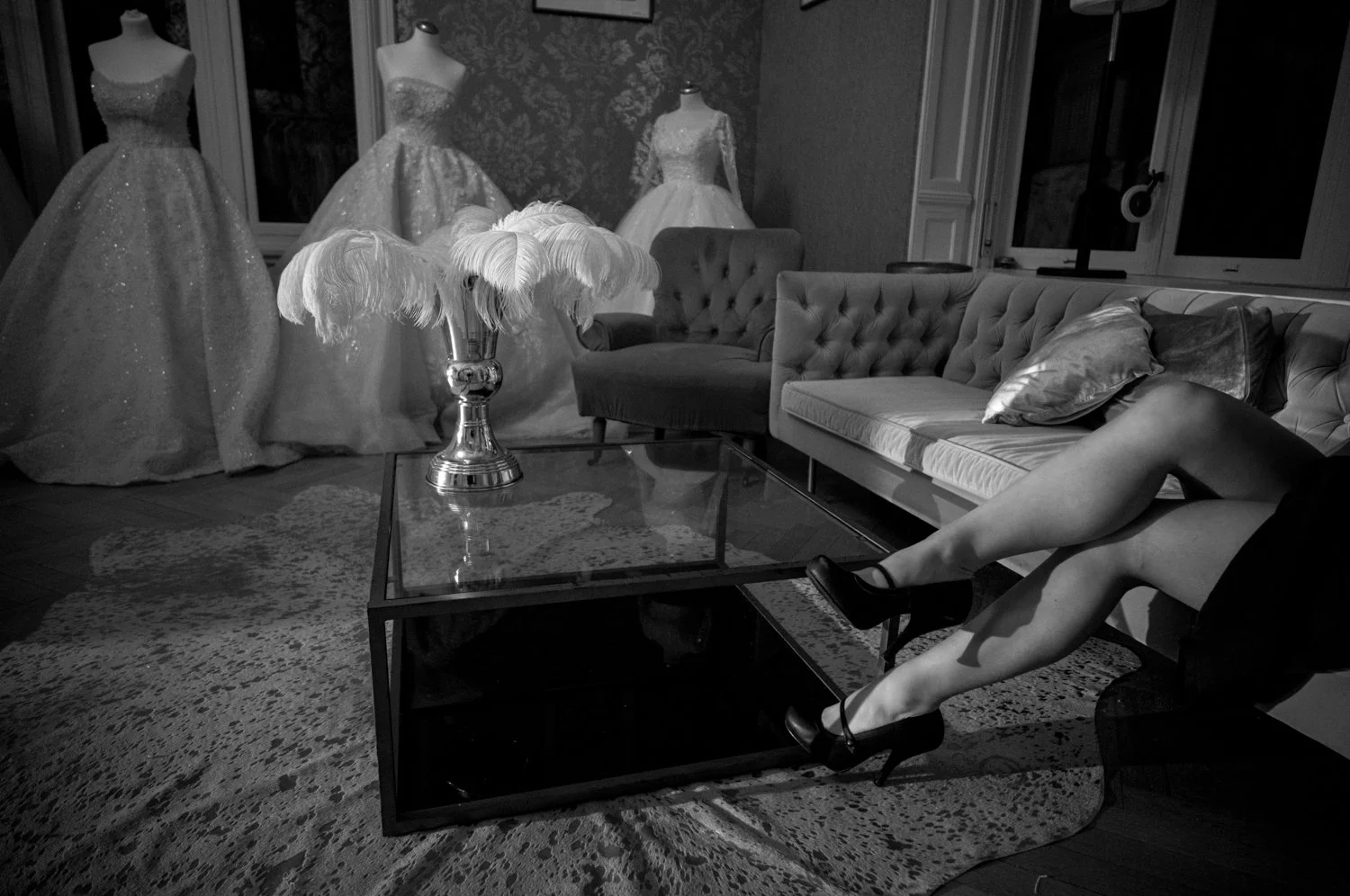
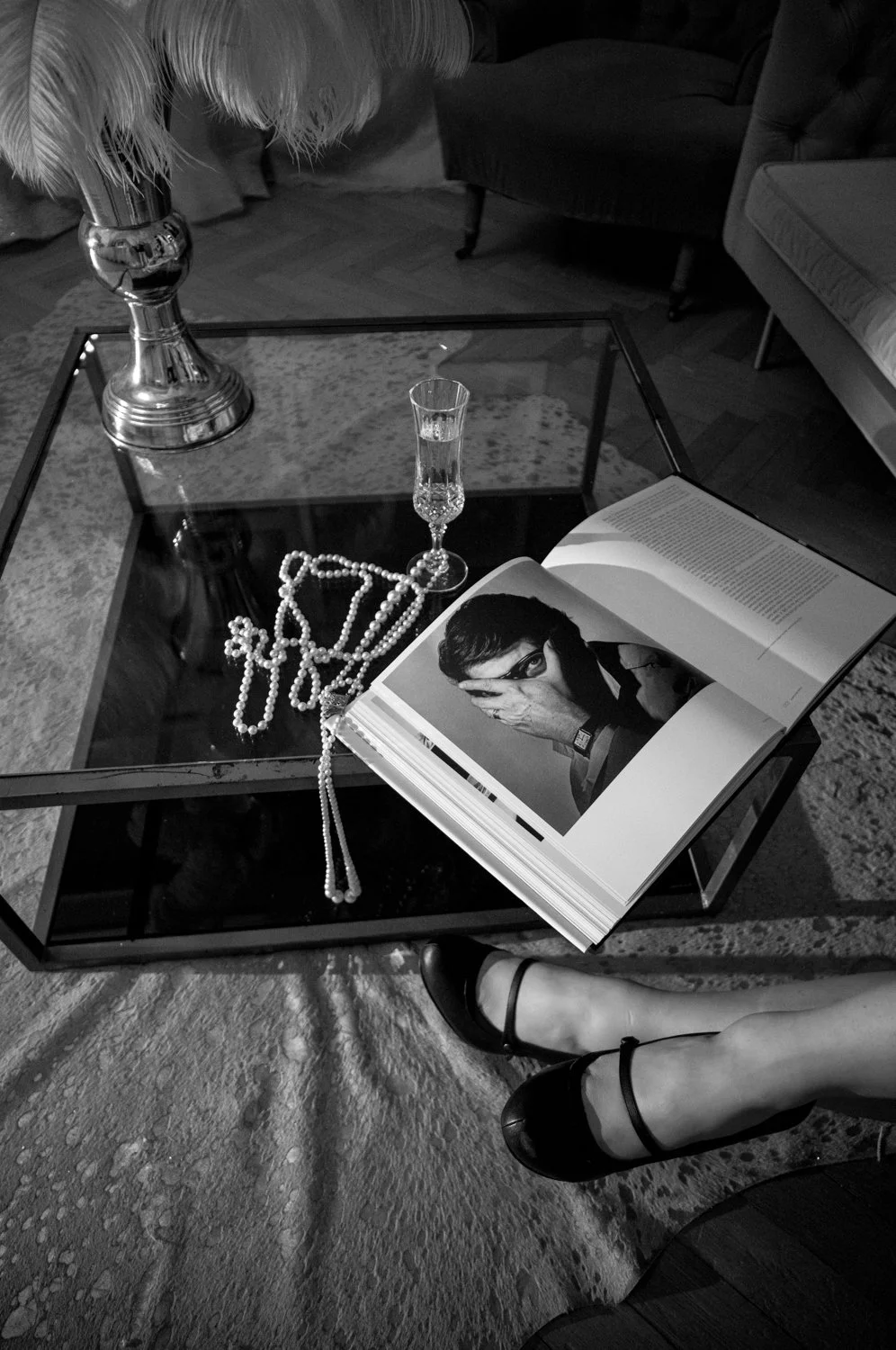
When photographing people with a 21mm, you must be careful. Come too close and distortion takes over. But the Ksana’s minimum focus distance of 0.5 meters makes it possible to approach the subject more closely than expected, opening interesting possibilities for still lifes and intimate details. Between outfit changes, I used those moments to capture small in-between images, which added an editorial rhythm to the shoot.
Throughout the shoot, the model remained the main subject. The environment supports the story, but never overpowers it.
Black and White or Magical Color
Initially, I assumed this lens would shine mostly in black and white. I shot the Ksana 21mm on both the Leica M11 Monochrom and the M11-D. Reviewing the monochrome files confirmed my expectations. The lens produces beautiful black and white tones, rich midtones, and elegant contrast. With the high ISO performance of the M11 Monochrom, the slower f3.5 aperture is no longer a limitation. Even at ISO 3200, tonality remains gorgeous. I often work with LED lighting from Harlowe, which further removes any concern about speed.
What surprised me was the color.
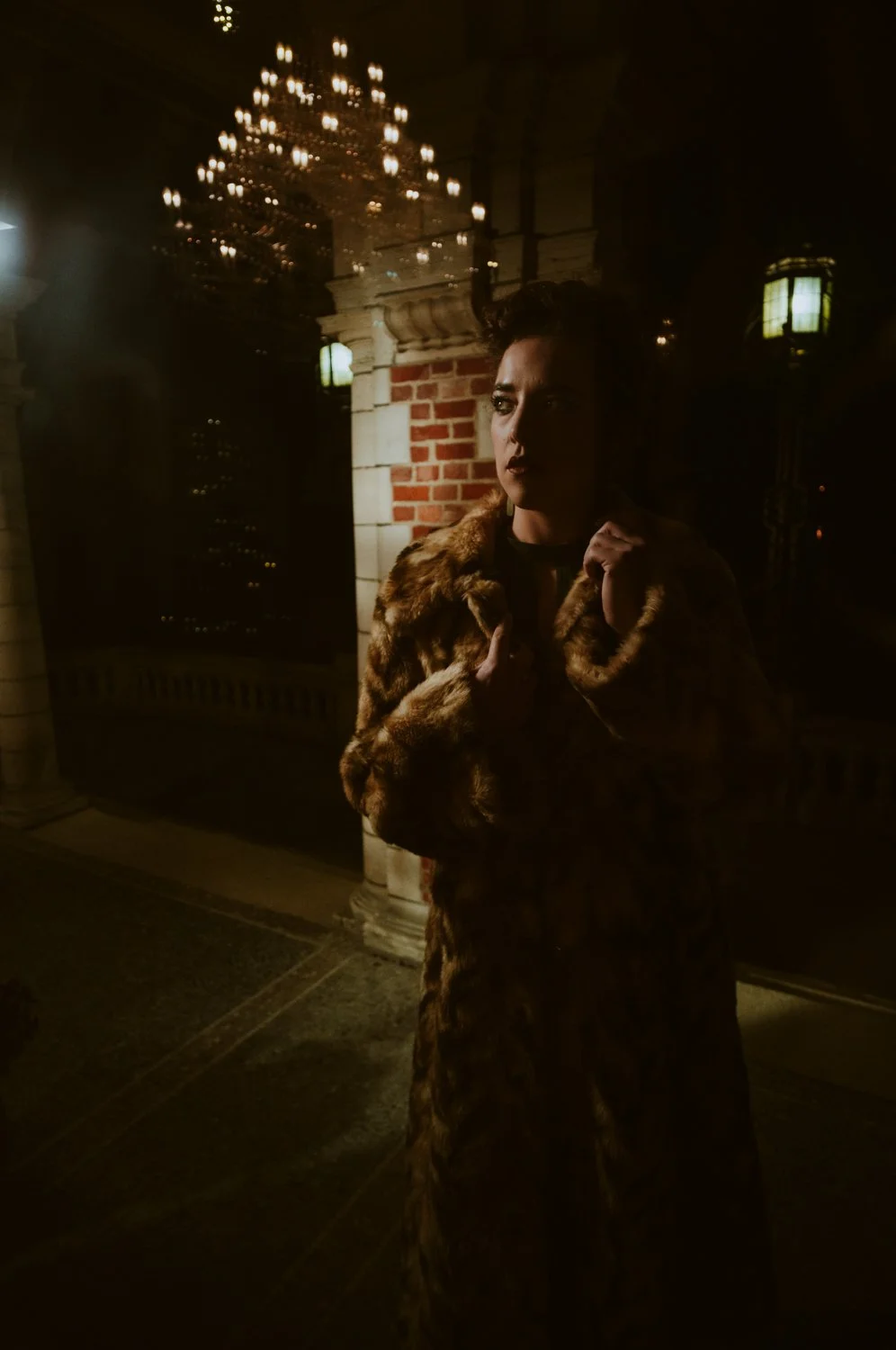
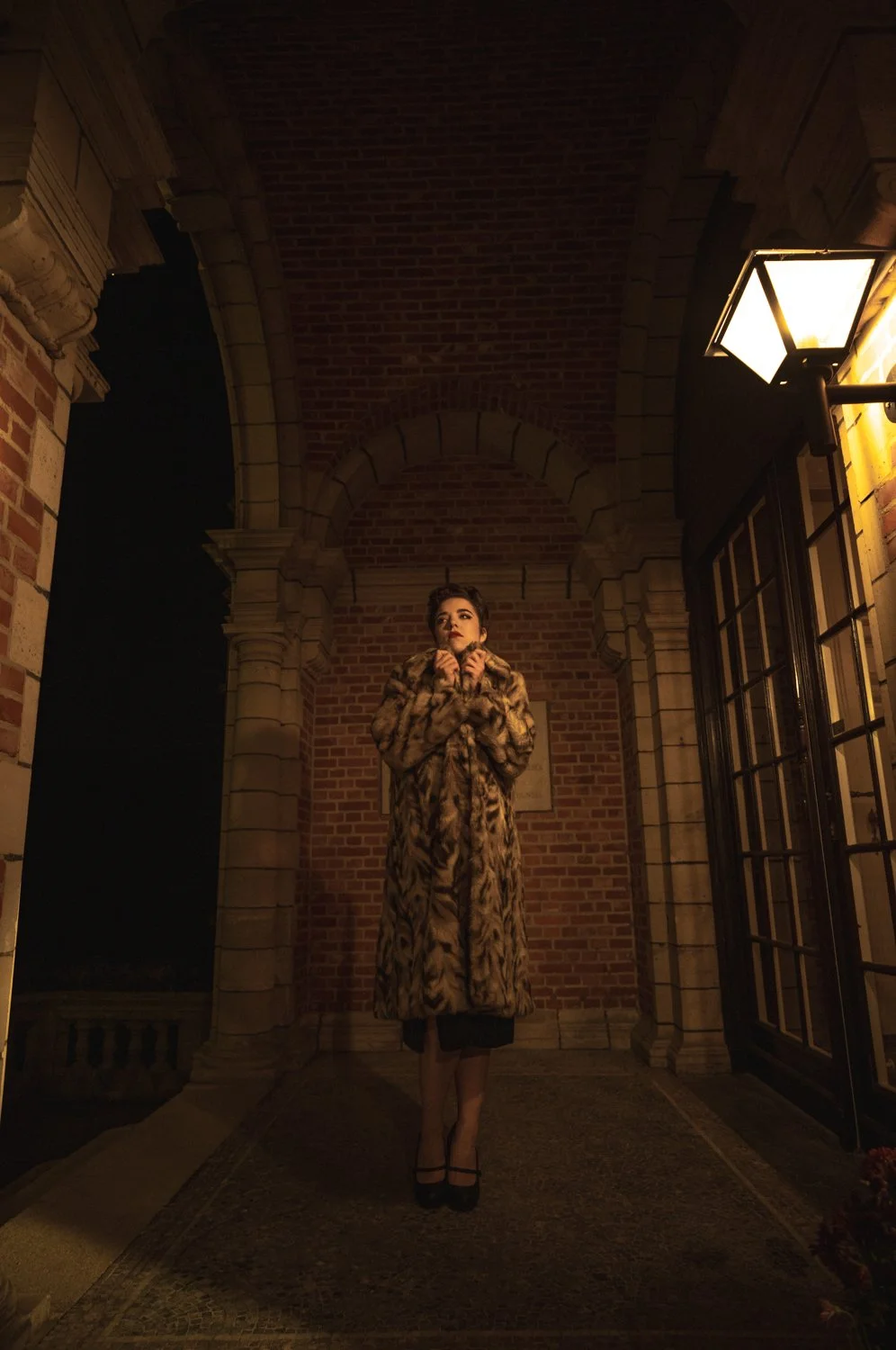
Once I opened the color files from the M11-D, I realized how special they are. The transitions in light feel natural and refined. Skin tones are rendered with subtlety. Not too harsh, not too soft, just right. Thypoch explained that the Ksana uses a special coating with an orange-inspired character, and it shows. Colors feel cinematic, with gentle flare and a warmth that never becomes excessive.
Bokeh is possible. It is not pronounced like an f1.4 lens, but when you move closer to your subject, you can create separation. That said, this lens has other talents. It is about atmosphere, space, and storytelling rather than shallow depth of field.
Optical Philosophy: Ksana Versus Simera
According to Thypoch, the Ksana 21mm and Simera 21mm are fundamentally different lenses.
The Simera 21mm uses two aspherical elements, three ED elements, and three high-refractive-index elements. It delivers stronger optical performance and focuses as close as 0.23 meters.
The Ksana 21mm keeps things simpler and lighter, with one aspherical element, one low-dispersion element, and three high-refractive-index elements. Its optical performance is intentionally less clinical. The coating is inspired by vintage lenses, prioritizing character over perfection.
That philosophy aligns closely with my own approach to photography.
Technical Specifications: Thypoch Ksana 21mm
• Mount: Leica M • Focal Length: 21mm • Aperture Range: f3.5 to f22 • Optical Construction: 8 elements in 6 groups • Special Elements: 1 aspherical, 1 low-dispersion, 3 high-refractive-index elements • Angle of View: 90.6° diagonal, 80.2° horizontal, 58.5° vertical • Minimum Focus Distance: 0.5 m • Filter Size: 39 mm • Front Diameter: 42 mm • Length: 27.29 mm • Weight: 131.3 g • Iris Blades: 9 • Material: Aluminum alloy • Available Colors: Black or Silver
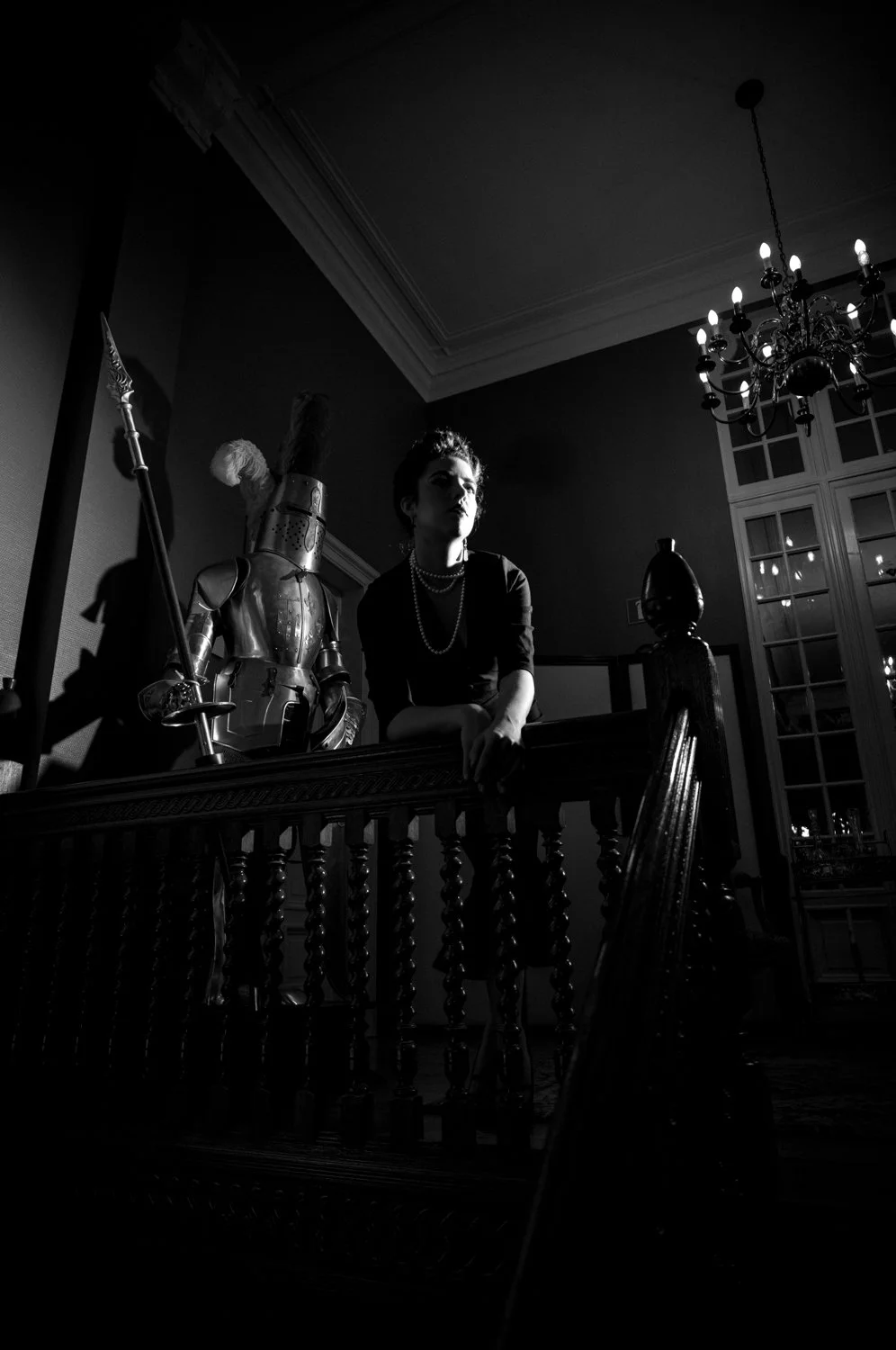
Black Widow, Thypoch Ksana 21mm f3.5 shot on Leica M11 Monochrom by Milan Swolfs. Model Jennifer Loos
A few words from Thypoch
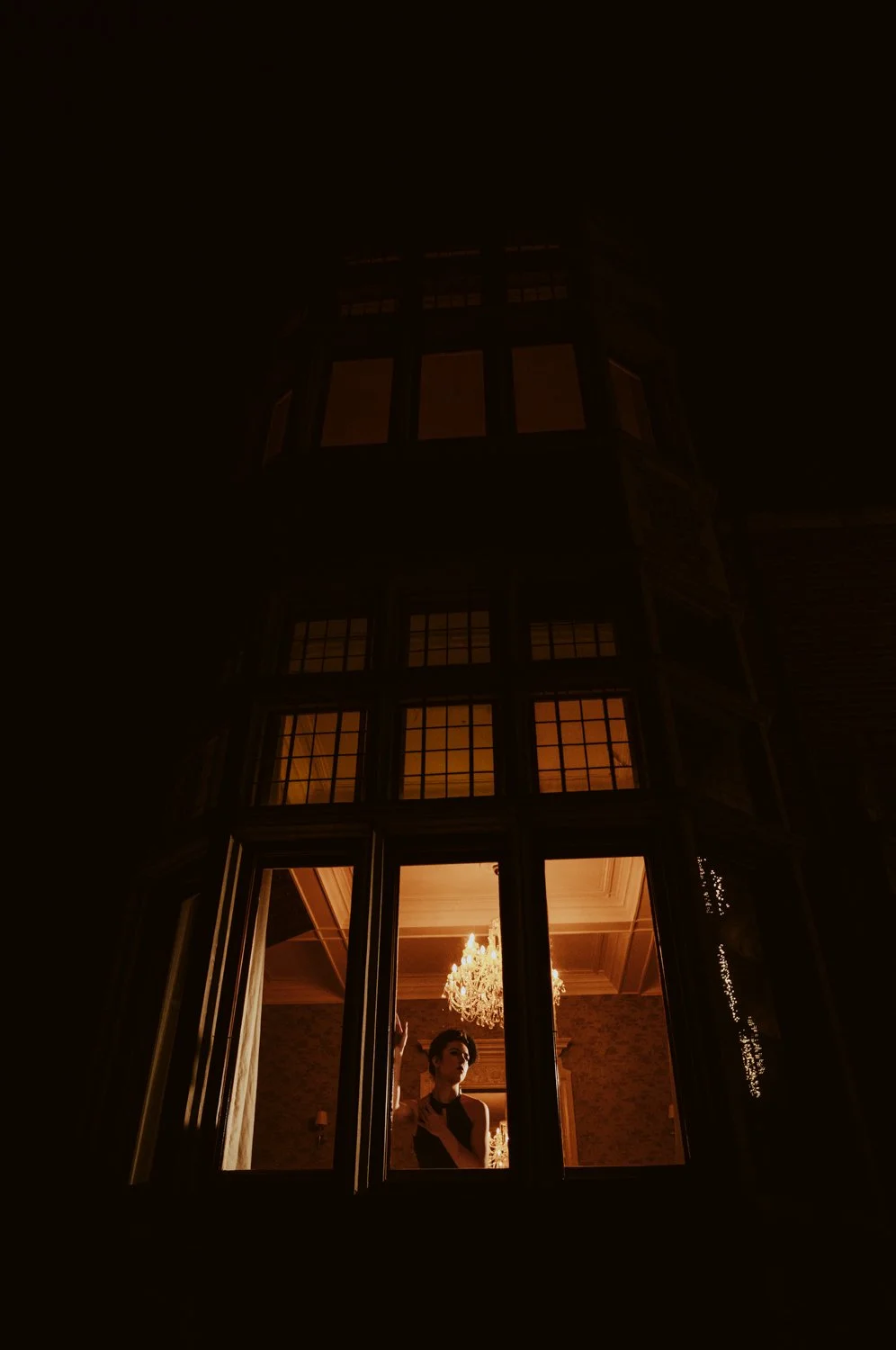
Read Window, Thypoch Ksana 21mm f3.5 shot on Leica M11-D by Milan Swolfs. Model Jennifer Loos
While working on this series, I asked Thypoch a couple of questions. Not from a marketing point of view, but simply to better understand where Ksana sits in their universe and who this lens is really made for.
Ksana is a brand-new series within Thypoch. It is conceived as a line of compact lenses, designed for what they describe as fleeting moments on the street. Lenses that are light, intuitive and expressive, meant to be used without overthinking. What interested me most is that Ksana is not positioned as a purely technical tool. Each lens carries a distinct optical character, achieved through specially tuned coatings inspired by classic and legendary rendering and flare behaviour. The goal is not perfection, but emotion.
Thypoch’s positioning as a manufacturer feels very clear. They aim to create lenses for professionals and serious enthusiasts who care about how a lens feels and renders, not only about specifications on paper. Optical performance and industrial design matter, but always in service of image character. And importantly, they try to keep this at a more accessible price point.
In the current market, Thypoch sees Voigtländer as a natural comparison, though their ambition is to remain more competitive in pricing while developing a strong and recognizable visual identity of their own.
What stood out to me most in our conversation is their philosophy of standing on the user’s side. They take feedback seriously, even when it comes at a cost. Thypoch shared how they completely redesigned the Eureka 28mm after identifying small issues, discarding existing materials and accepting financial loss to ensure long-term satisfaction. The same mindset existed before Thypoch, during their work with DZOFILM, where optical designs were reworked and materials scrapped to improve real-world results.
If there is one thing that defines Thypoch for me after these conversations, it is this:
they are not chasing short-term perfection or marketing trends. They are building lenses meant to be lived with, questioned, and rediscovered over time. And that philosophy aligns very naturally with the way I work and the way I see photography evolving.
A Lens That Earned Its Place
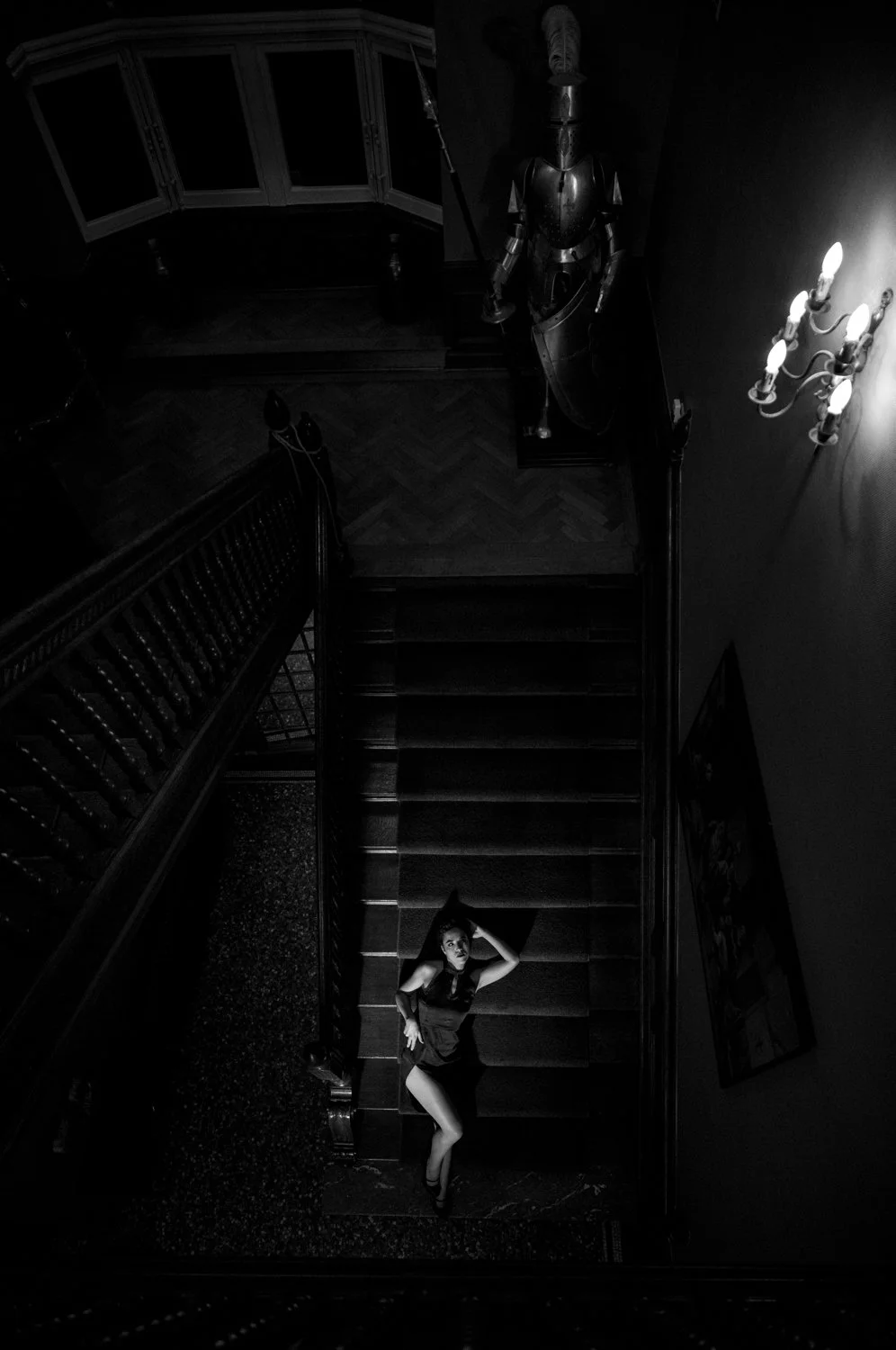
Starway Obscura, Thypoch Ksana 21mm f3.5 shot on Leica M11 Monochrom by Milan Swolfs. Model Jennifer Loos
I translated the concept of Ksana into something that works within my visual language. Small moments suspended in time. A glance, a pause, a sense of solitude in a grand space. The Ksana 21mm allowed me to keep a wide cinematic frame while maintaining intimacy. Its vintage rendering softens perspective so the wide angle feels intentional, elegant, and atmospheric.
This project showed me that the Ksana 21mm is not just a technical tool. It becomes part of the storytelling. Against my own expectations, this 21mm has earned a place in my toolkit, and I will continue using it to shape narratives in future fine art portraits.
Interested in the Thypoch Ksana 21mm?
If you are curious to try the Thypoch Ksana 21mm yourself, Thypoch offers two ways to get a small discount and at the same time support my work:
You can use my referral link to get 10% off your purchase:
👉 https://store.thypoch.com/?ref=MILANSWOLFS
Or, if you prefer, you can use this coupon code at checkout to get 5% off:
MILANSWOLFS
Using either helps support my projects and future reviews. Thank you.
Thank You
Thank you Mag Chen from Thypoch for the inspiring conversations about photography, lenses, and creative interpretation. Thank you Jennifer for modeling. Thank you Vesela for the location. Thank you to my loved one for the creative ideas, vision, and light assistance. And thank you Bobby Tonelli for introducing me to Thypoch.
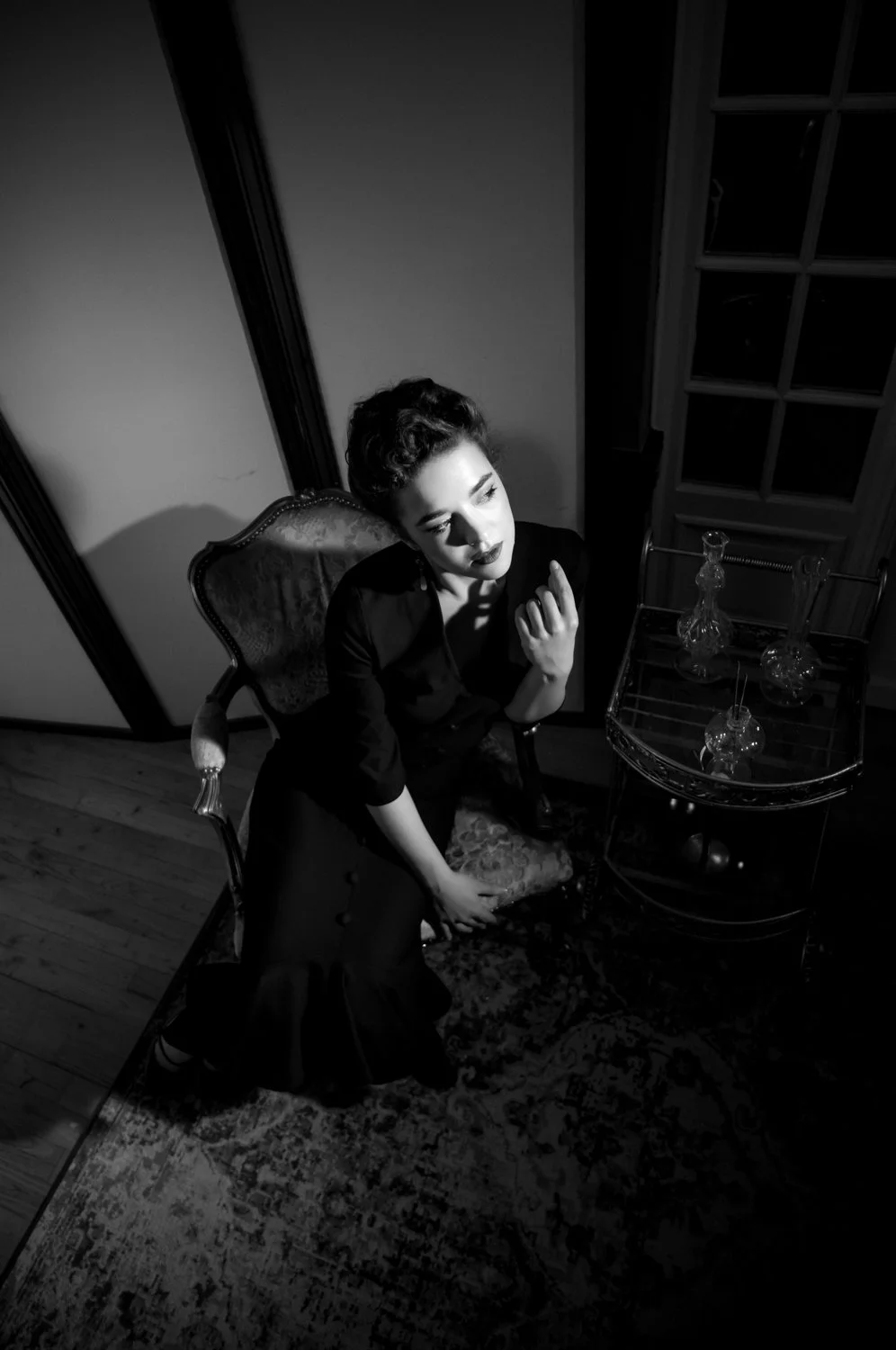
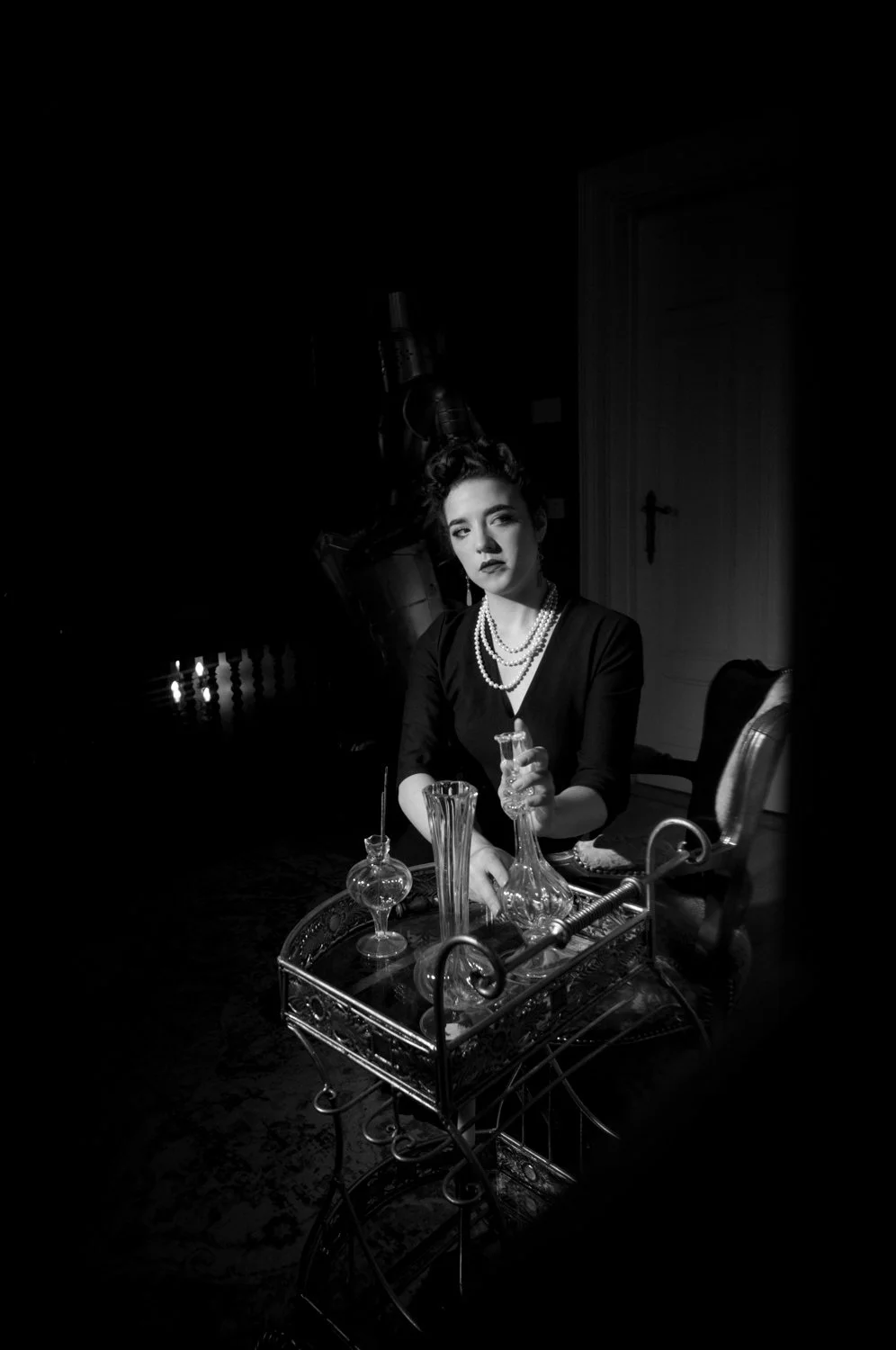
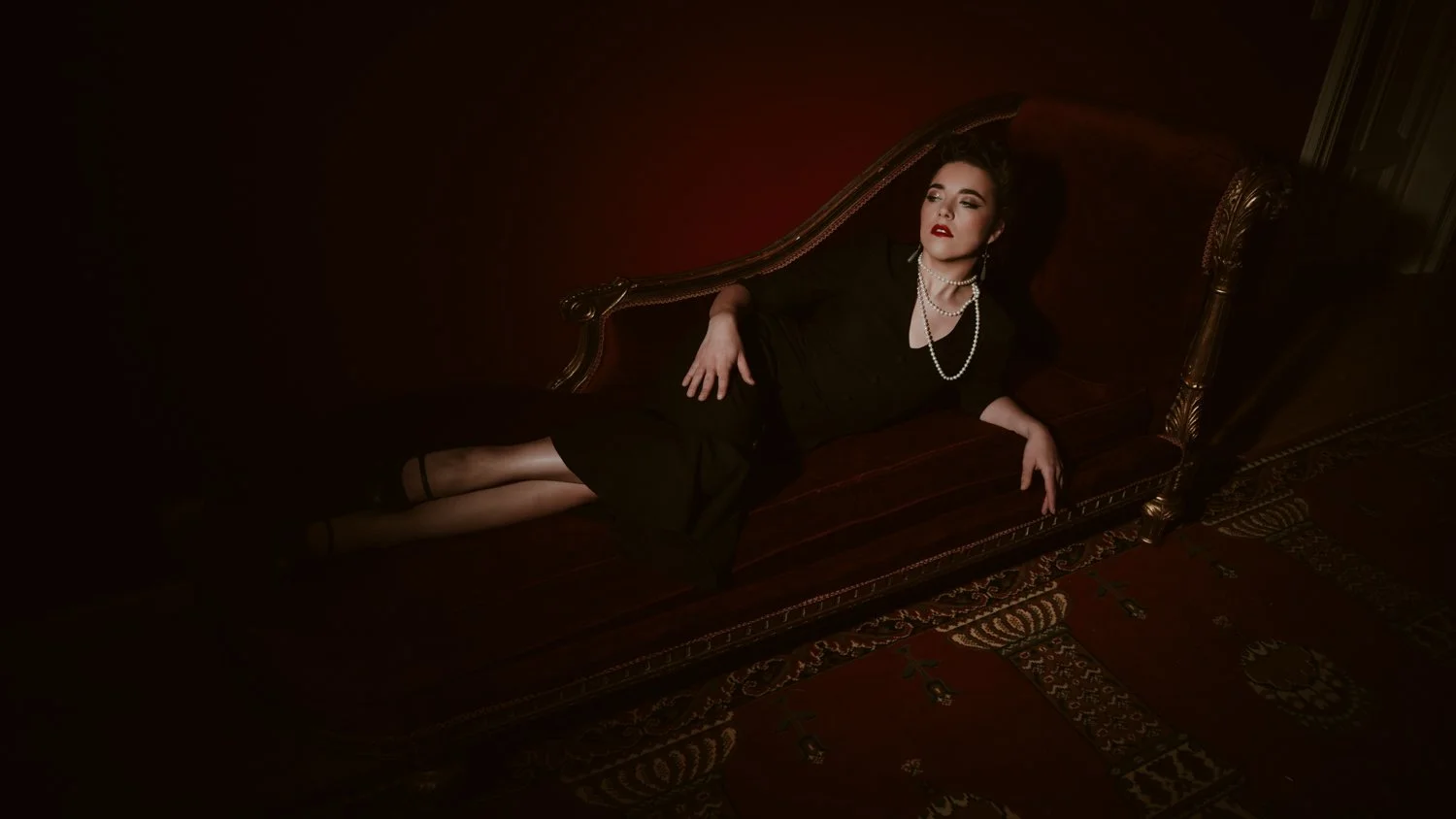
Gallery images of Thypoch Ksana 21mm f3.5

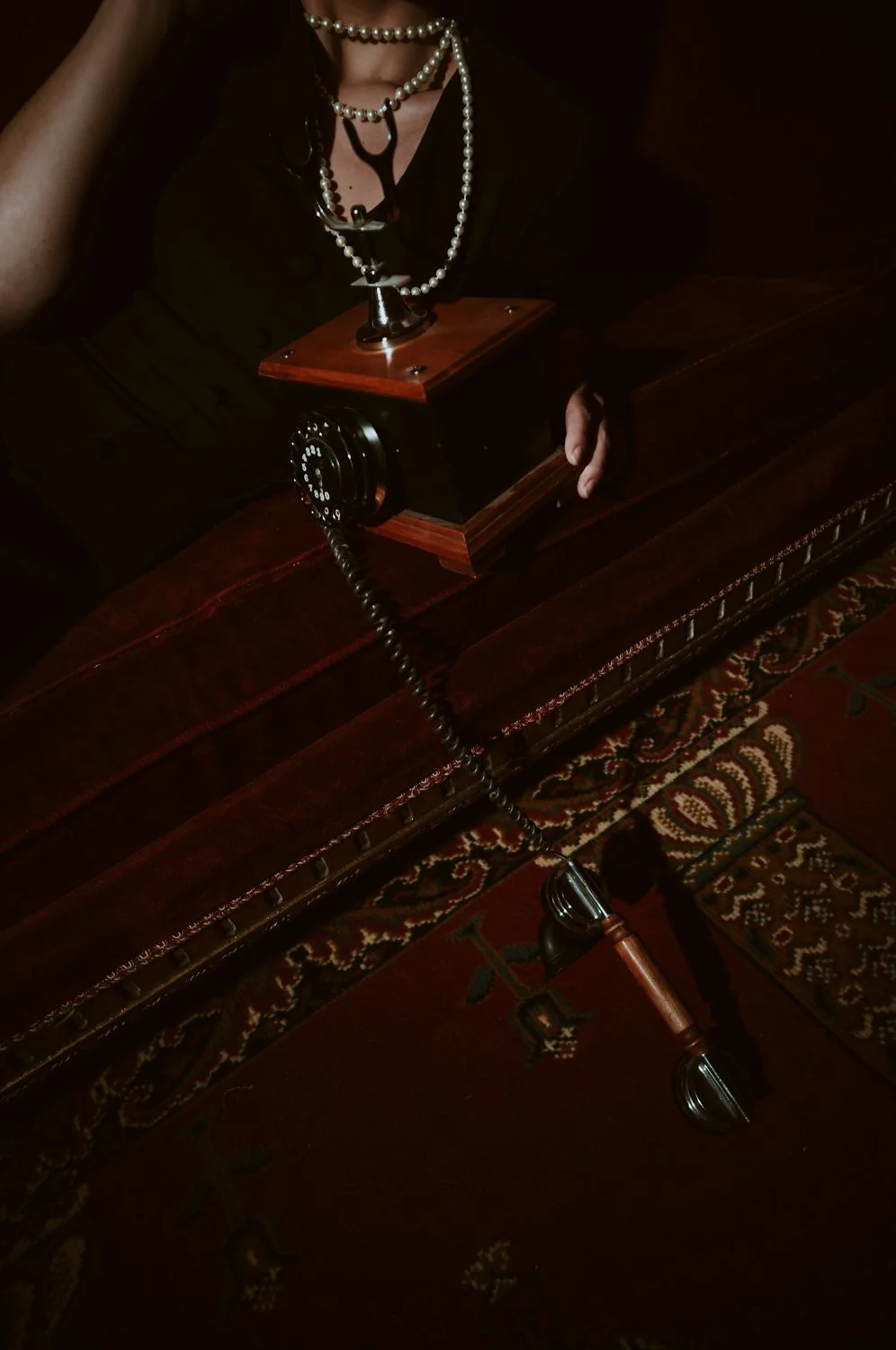

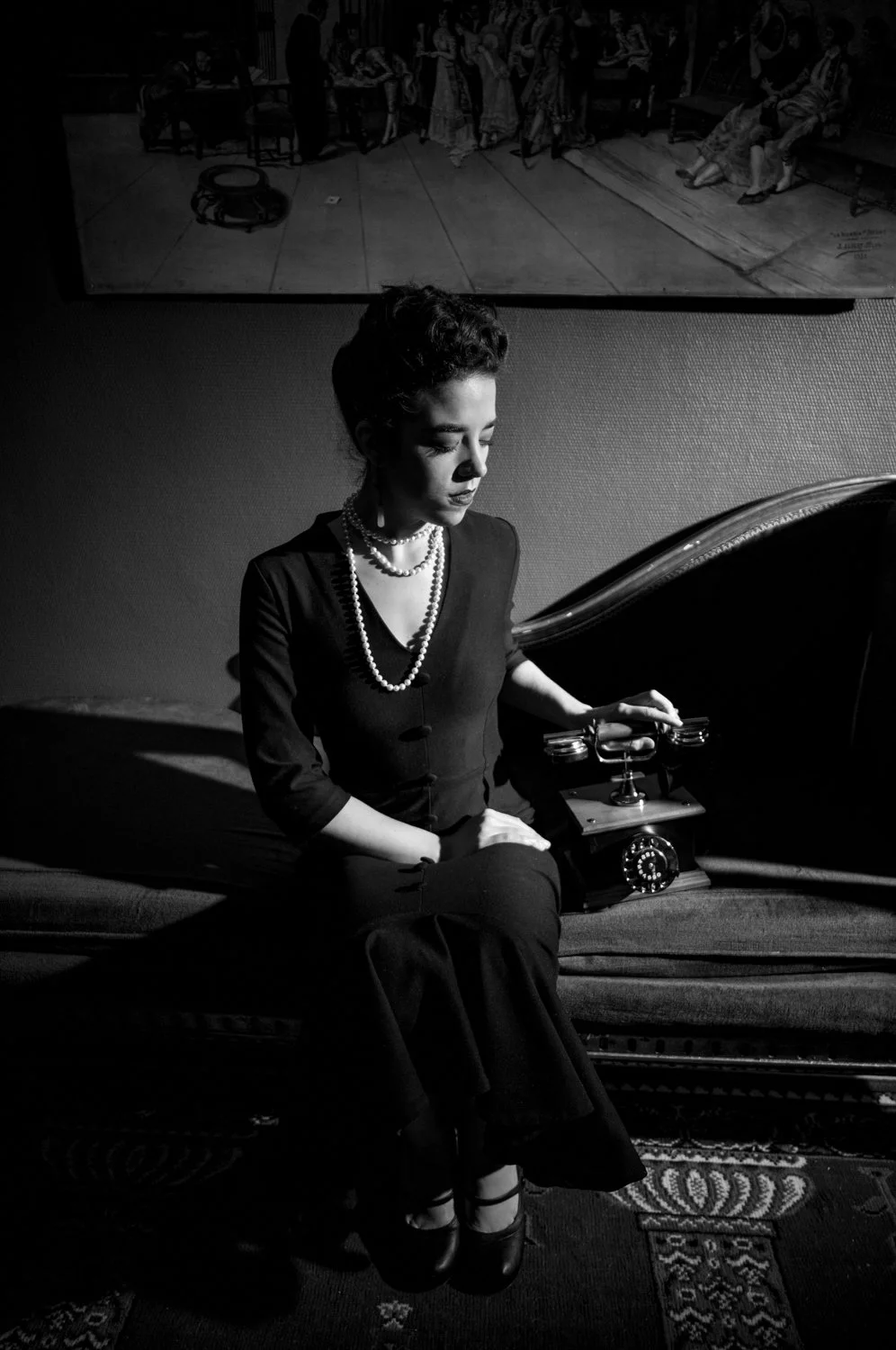
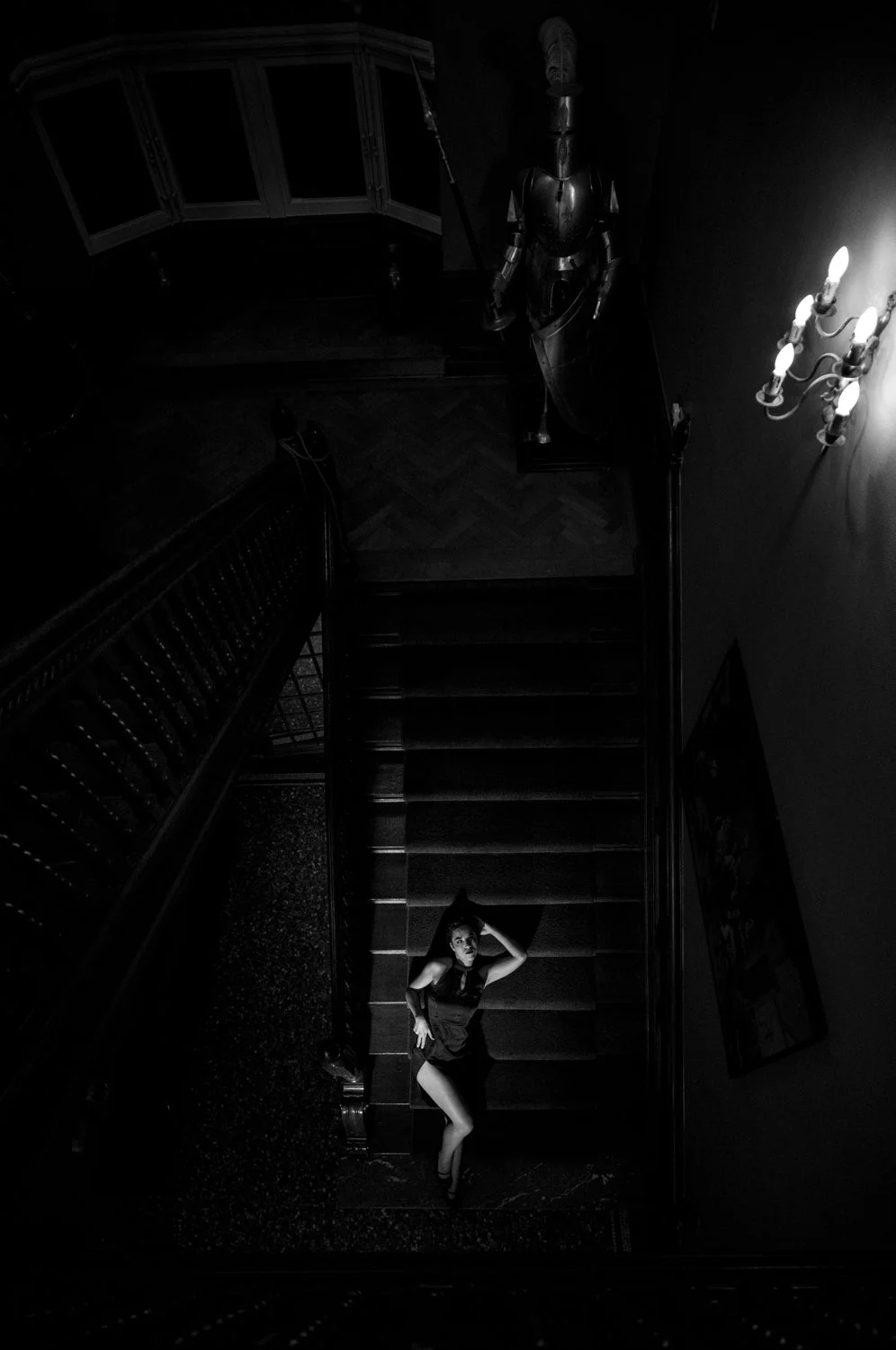
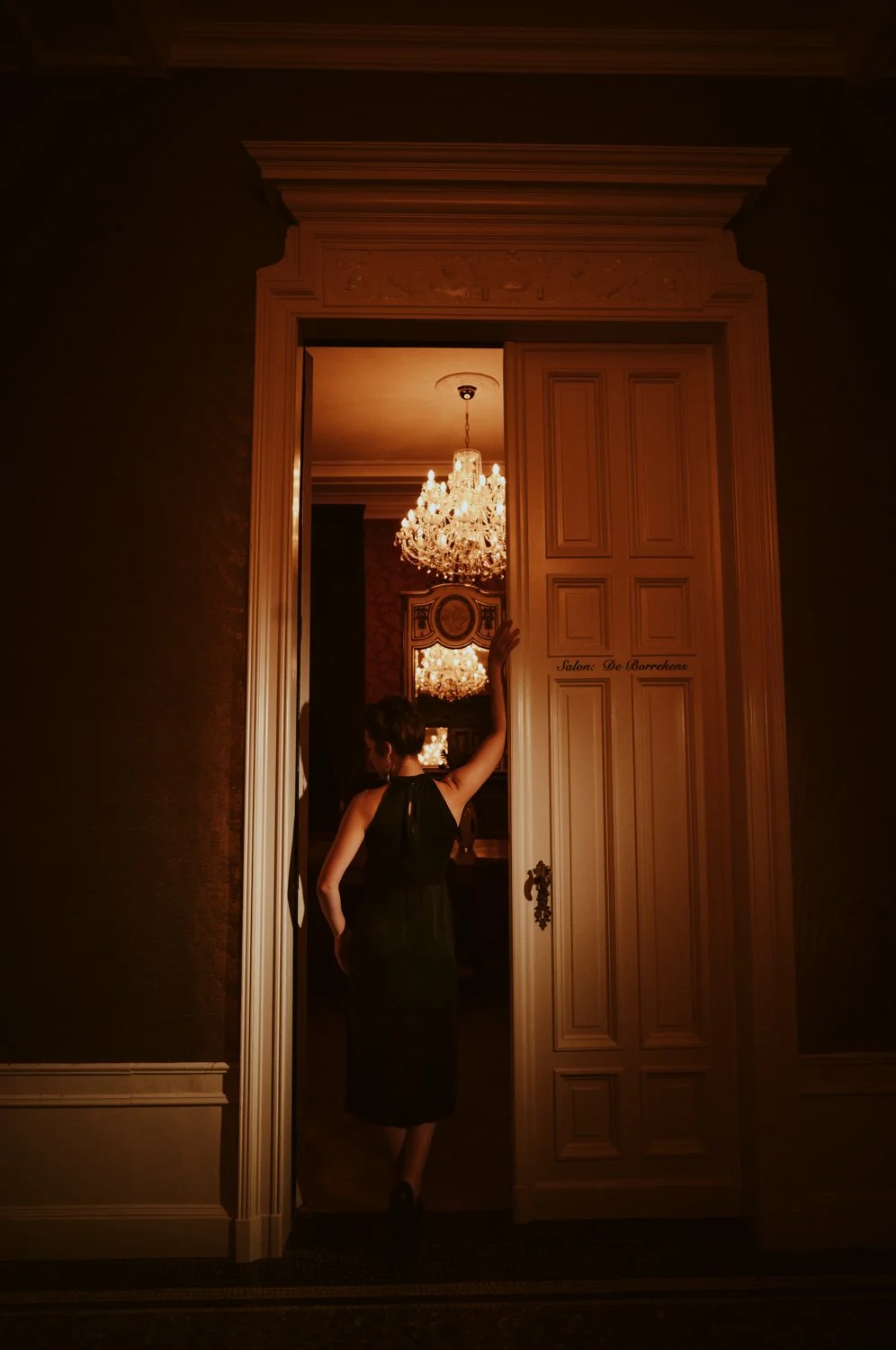


About Milan Swolfs
Milan Swolfs is a fine art portrait photographer from Antwerp, Belgium, renowned for his distinctive blend of burlesque and vintage aesthetics. His work channels the timeless Hollywood glamour of the 1920s and 1930s, capturing both men and women in bold yet elegantly refined portraits.
Beginning his career photographing Europe’s largest burlesque events, Milan later transitioned into fine art photography. As an ambassador for Leica Camera and Harlowe Creators, his work has been featured in LFI (Leica Fotografie International), Medium Format Magazine, and Viewfinder. In 2022, he debuted his solo exhibition, Light of Seduction, at the Leica Store in Porto. Most recently, from late 2024 to early 2025, his latest exhibition, Echoes of Elegance: A Timeless Journey, was showcased at the Leica Store Beaumarchais in Paris.
Milan’s portraits celebrate individuality and classic beauty, reviving the charm and allure of a bygone era.
