
Light Lens Lab 75mm f/2 SPII Review – A Cinematic Leica M Portrait Lens
Vintage rendering, cinematic atmosphere and one of the most interesting modern 75mm lenses for Leica M photography.
By Milan Swolfs
A playful Riviera-inspired portrait showing the elegant subject separation and classic rendering of the 75mm SPII.
The Light Lens Lab Speed Panchro II 75mm f/2 is a vintage-inspired Leica M-mount lens designed for photographers who value character over clinical perfection. In this review, I explore how this 75mm portrait lens performs in real-world use, from environmental portraits to travel photography, and how it compares to Leica alternatives.
Why a 75mm lens works for Leica M portrait photography
The compressed perspective of the 75mm focal length works beautifully for environmental portraiture in the South of France.
The 75mm focal length has always occupied a very particular position within the Leica M system. It sits naturally between the flexibility of a 50mm and the stronger compression of a 90mm, offering a balance that works especially well for portraiture that remains connected to its surroundings.
It is, in many ways, a slightly unusual focal length. Not as intuitive as a 50mm, and not as compressed as a 90mm. But that is exactly why it works.
While I do photograph headshots, they are not the main focus of my portrait work. I tend to move fluidly between environmental portraits, full body compositions, half body framing and tighter portraits within the same session. For that type of approach, 75mm often feels like the most logical choice. It gives enough compression to isolate a subject, while still leaving space for context.
Another reason I keep coming back to 75mm is the minimum focusing distance. At 0.7m, it allows for slightly tighter framing compared to a 50mm, especially for half body shots, without stepping into the compression and distance of a 90mm.
For 90mm work, I already have a lens that fulfils a very specific role in my kit. Nothing quite replaces the Thambar when I am looking for a softer, more interpretive rendering. Because of this, the 75mm becomes an important bridge within my set of lenses.
Over the years I have used several 75mm lenses within the Leica M system. The Noctilux 75 delivers impressive results, but it is not something I would casually carry around. The Summilux 75 is a lens I still regret selling. The APO-Summicron 75 is technically excellent, but for me, it lacked a certain character.
For my work, a strong 75mm needs to remain compact, intuitive to use and offer a rendering that brings something more than just sharpness.
Light Lens Lab as a maturing Leica M lens alternative
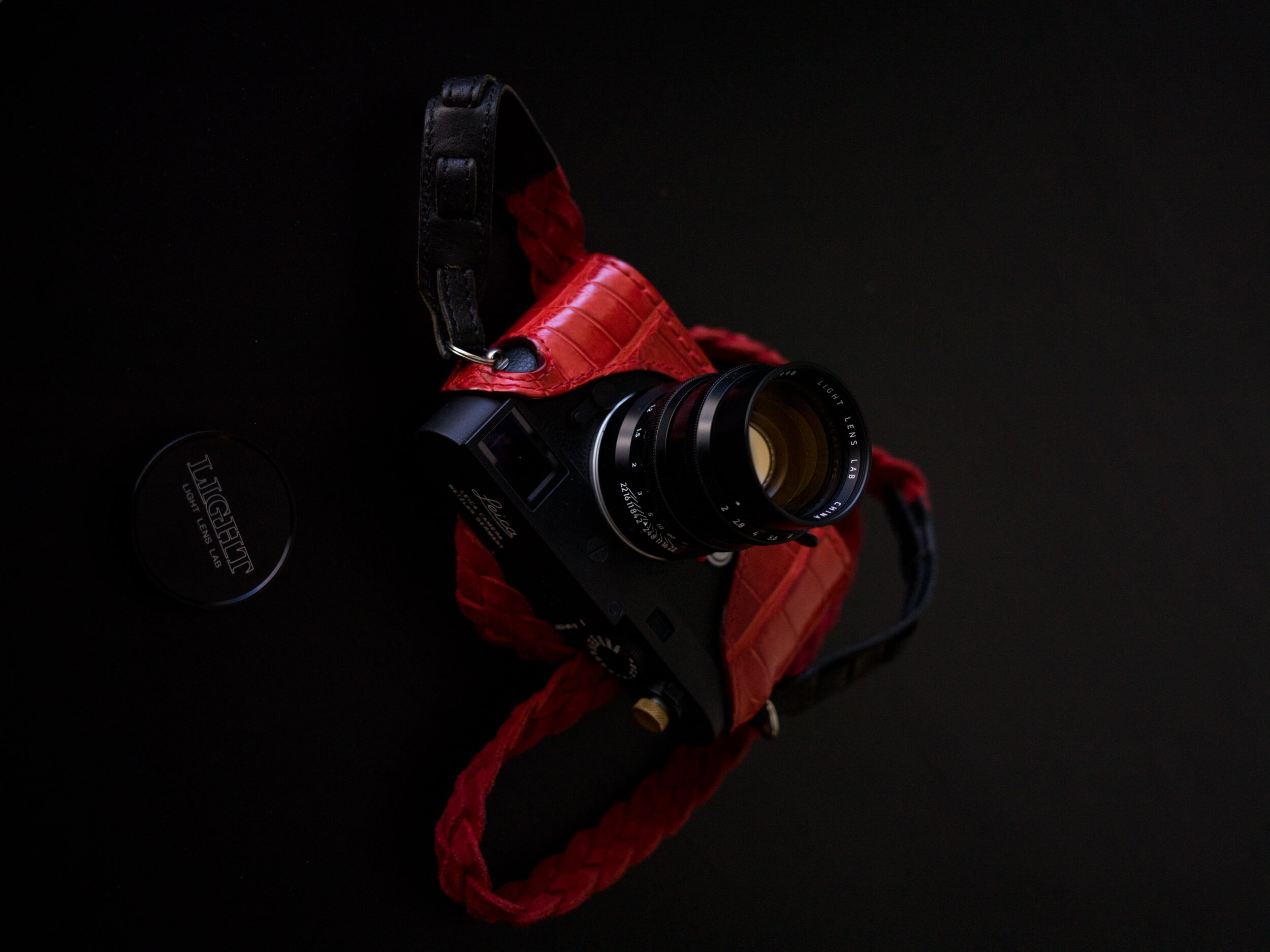
The Light Lens Lab 75mm f/2 SPII mounted on the Leica M11-D, showcasing the compact vintage-inspired design and classic Leica M handling.
Light Lens Lab has gradually evolved into a company that feels increasingly aligned with this philosophy. Earlier lenses such as the Z21 50mm f/1.5 and the 35mm f/1.4 Aspherical Titanium already showed that the brand is moving beyond simple reinterpretations.
Instead, they are bringing back something that is often missing today. Not just designs, but a way of rendering.
At the same time, brands like Thypoch and Light Lens Lab are opening new possibilities. You do not always need to mount a Leica lens on a Leica camera to have a meaningful photographic experience.
We live in a time where Asian lens manufacturers have reached a very high level, both in build quality and optical performance. These lenses are no longer compromises. They are well-built, optically capable and offer a distinct visual identity.
They give photographers access to different rendering styles at a more accessible price point, without taking away from the experience.
ACDK and the attraction to alternative vintage lens rendering
In earlier conversations with Mr. Zhou from Light Lens Lab, one idea kept returning: ACDK.
Angénieux, Cooke, Dallmeyer and Kinoptik.
These are names that represent a different approach to lens design. Less focused on perfection, more focused on rendering and atmosphere.
After years of working with Leica lenses, I found myself increasingly drawn towards these alternative optical philosophies. Not to replace Leica, but to expand what is possible within a set of tools.
The Speed Panchro II series fits naturally within that space. It does not try to replicate a specific lens, but it carries a way of seeing. One that prioritises transitions, softness and interpretation. This is not simply a lens that looks vintage, it feels like a lens with a very deliberate visual direction.
The Speed Panchro II philosophy and optical design
The Light Lens Lab 75mm f/2 SPII mounted on the Leica M11-D with an Angelo Pelle leather case
The Light Lens Lab 75mm f/2 SPII is the second lens in the Speed Panchro line-up. I briefly tried the 50mm version, but not long enough to compare directly. What is clear is that the philosophy carries through, but the 75mm feels slightly more refined and more usable in everyday situations.
The optical design is based on a classic Double Gaussian construction with achromatic elements. It is not designed to eliminate imperfections, but to shape them.
Interestingly, the lens covers more than full frame, extending up to 44 × 33 mm. A small detail, but one that hints at generous optical headroom.
In terms of positioning, the lens sits in an interesting place. Not cheap, but when compared to Leica’s 75mm offerings or rare vintage optics, it offers a strong balance between build quality, performance and character.
Light Lens Lab 75mm f/2 SPII specifications
Optical design: Double Gaussian with achromatic elements
Optical construction: 8 elements in 5 groups
Aperture range: f/2 to f/22
Diaphragm: 12 blades
Minimum focusing distance: 0.7m
Filter thread: E43
Lens mount: Leica M mount
Lens hood: A46 clip-on Reid style hood
Construction: aluminium alloy
Length: 73mm
Diameter: 54mm
Weight: approximately 310g
Handling and usability of the Light Lens Lab 75mm f/2 SPII on Leica M cameras
My version is the black aluminium model. I would not have minded a brass version, especially given the vintage inspiration, but the aluminium construction keeps the lens practical.
The size is excellent. Not too long, not too heavy. It balances well on a Leica M body and feels natural in use. There is a small amount of rangefinder blockage, especially if you would mount the hood, but in practice it never affected how I shoot.
Focusing at f/2 is a breeze. The focus tabs make it intuitive and very precise. Compared to more demanding lenses like the 75mm Noctilux, this feels much easier to work with. My rangefinder calibration was spot on, and the hit rate wide open is very reliable.
Image quality and vintage rendering of the Light Lens Lab 75mm f/2 SPII
The 75mm SPII captures natural expressions beautifully while preserving softness and dimensionality wide open.
The Speed Panchro II has a very distinguishable look straight out of camera.
It requires very little tweaking for my taste. Files already feel balanced, and I often find myself doing only minimal adjustments in post.
Skin tones are rendered particularly well. Slightly muted, without shifting too much towards orange or red. This creates a more natural and timeless look, especially for portrait work.
At f/2, the lens is sharp enough, but it comes with a certain glow. Do not expect APO-level performance. This is not an APO-style lens chasing technical perfection, but a vintage-inspired design with a very deliberate character.
In backlit situations, there is a subtle haze that softens the image slightly. Personally, I like it. It adds atmosphere and works especially well for cinematic portraits.
The bokeh shows some cat’s-eye character towards the edges, with a slight soap bubble tendency. It adds character without becoming distracting.
Flare is not always predictable, but that is part of what makes it interesting to work with. I did not use the hood and preferred to work with it rather than against it.
Stopping down to f/2.8 noticeably increases contrast and sharpness. The lens becomes more controlled, but I personally prefer using it wide open. That is where it becomes interesting.
Chromatic aberrations are present. This is not a lens for those expecting technical perfection.
The character of the SPII only really makes sense once you see the files it produces.
Aperture behaviour of the Light Lens Lab 75mm f/2 SPII
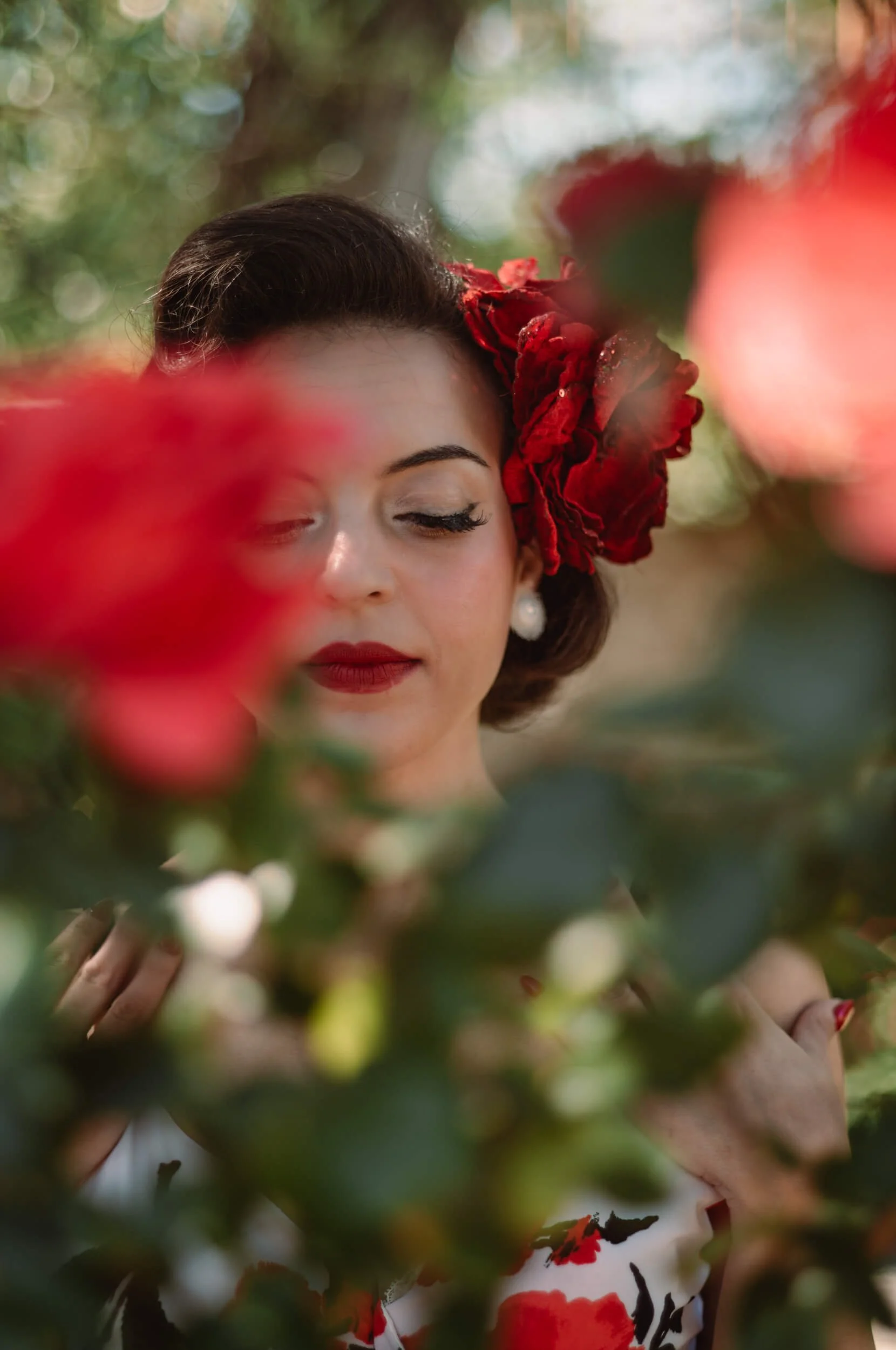
Foreground blur and layered bokeh highlight the painterly rendering style of the Light Lens Lab 75mm f/2 SPII.
At f/2, the lens shows its character. A slight glow, softer transitions and a more atmospheric rendering.
Around f/2.8, it becomes more balanced. Contrast increases, details become more defined, but the character is still there.
From f/4 onwards, it becomes more controlled and structured, though never clinical.
That shift between wide open and stopped down is part of what makes this lens interesting in use.
Most of these images were shot wide open, as that is where the real character of the lens appears.
French Riviera – Model and travel photography with a 75mm Leica M lens
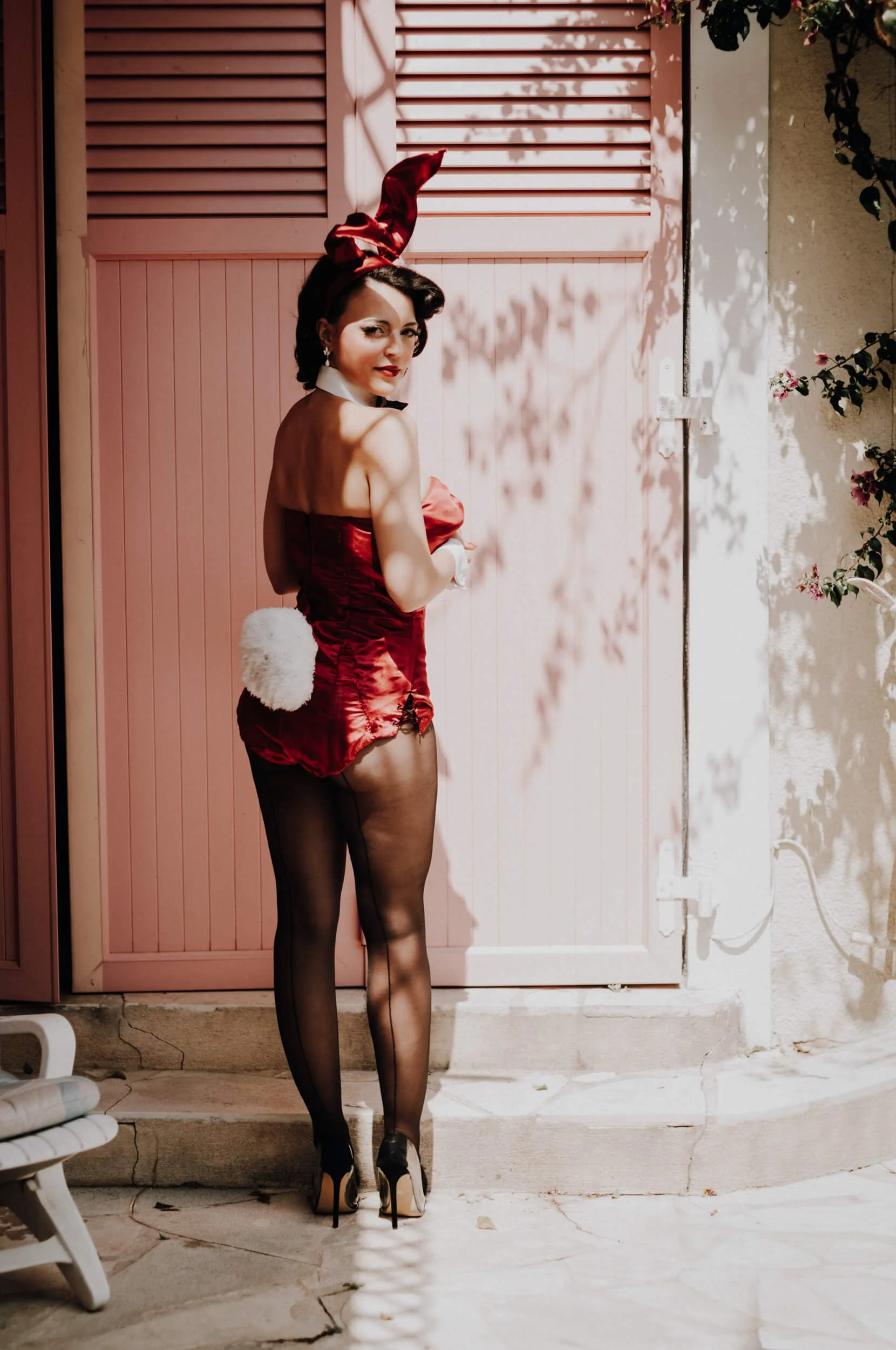
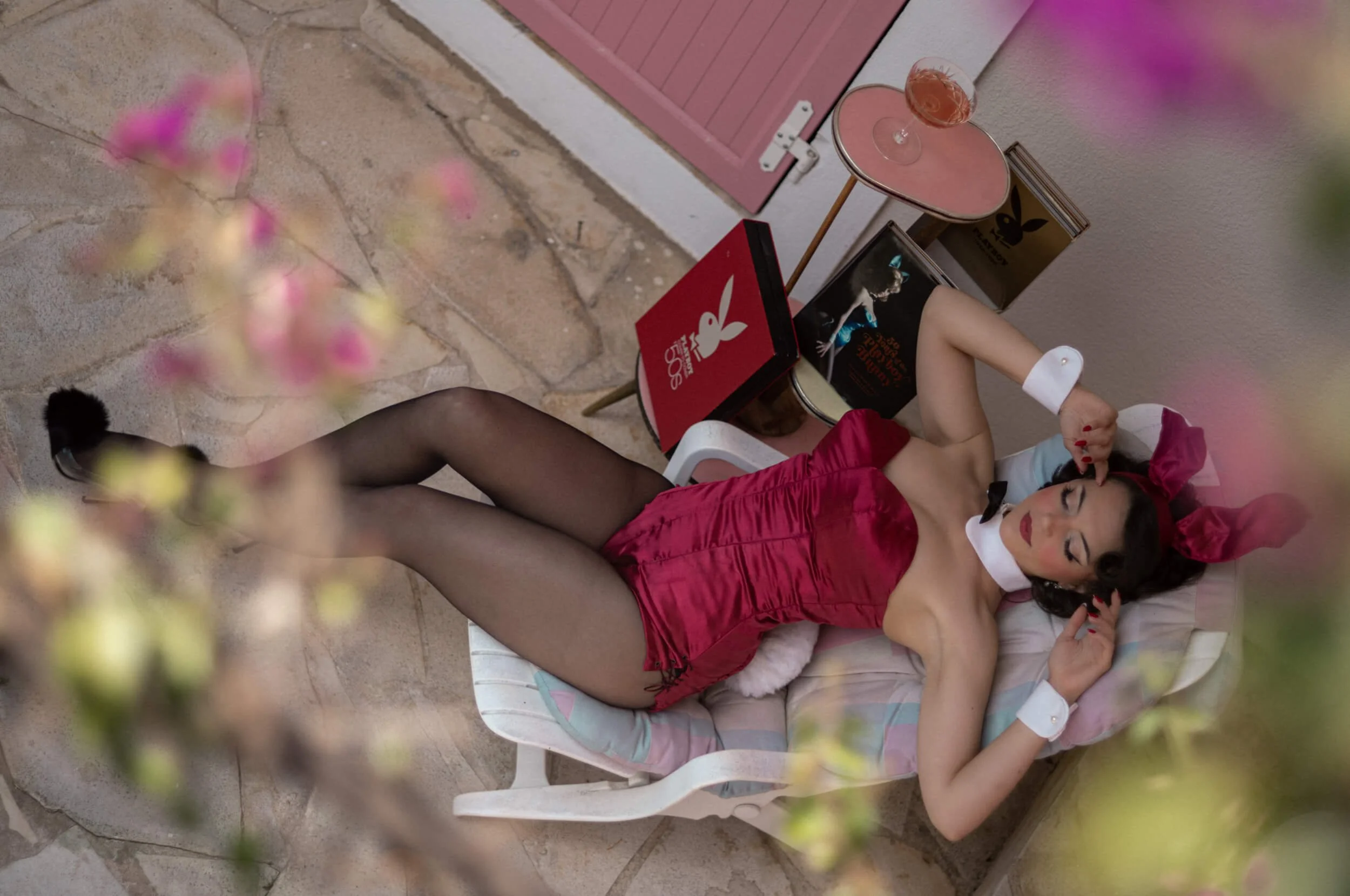
Shot wide open on the Leica M11-D, the lens produces delicate glow and depth while maintaining natural skin tones.
The warm tones and gentle transitions of the 75mm SPII create a distinctly cinematic atmosphere indoors.
I brought the 75mm SPII with me to Nice, paired with the Thypoch Simera 28mm.
A simple setup that allowed me to move quickly between wider scenes and more intimate portraits.
Nice offers strong, directional light. It can be harsh, but also very rewarding when used well.
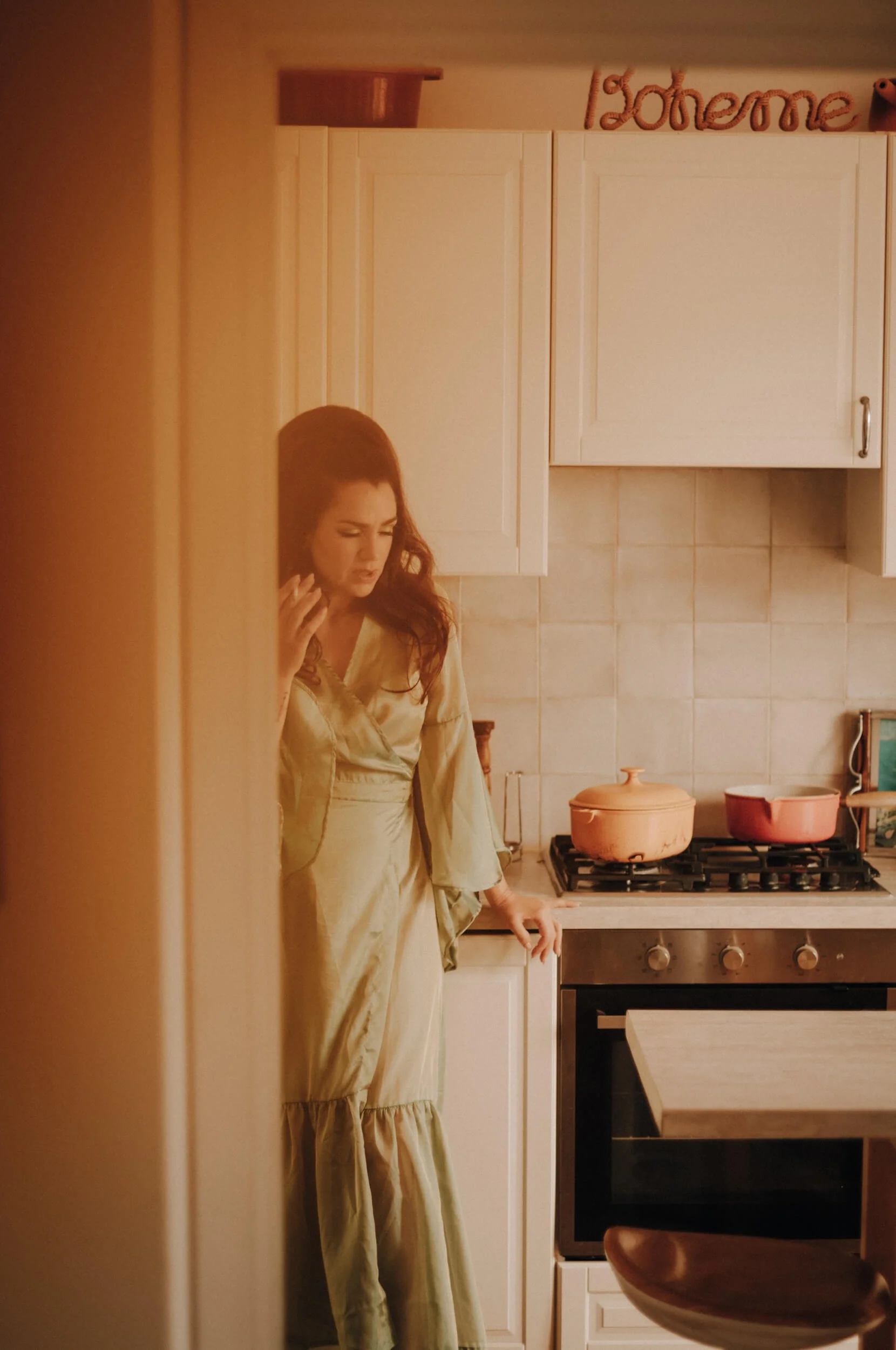
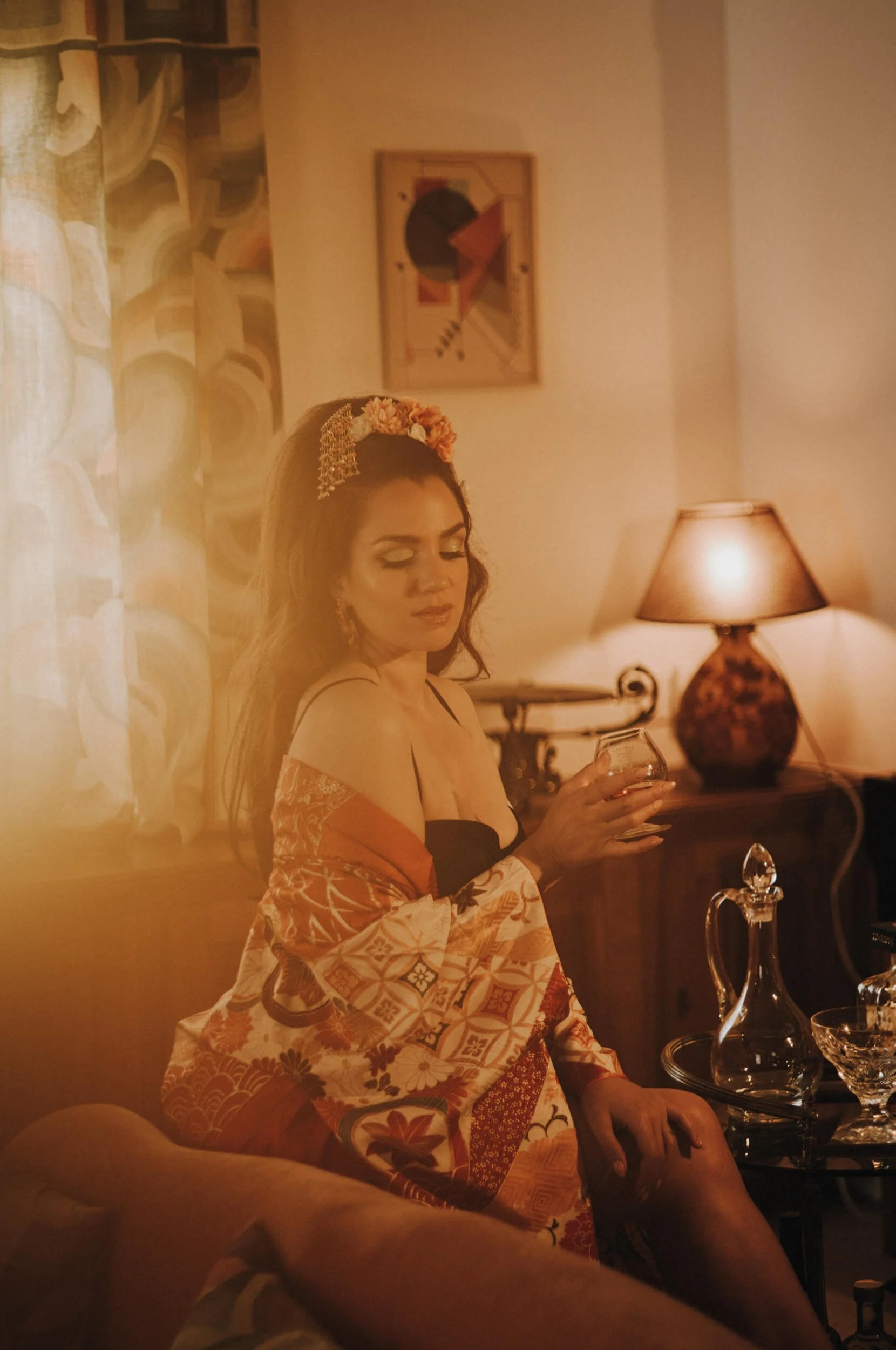
During a shoot with Flo, I worked towards a visual direction inspired by late 60s and early 70s aesthetics. Something between Priscilla Presley and Lana Del Rey.
The lens translated this beautifully.
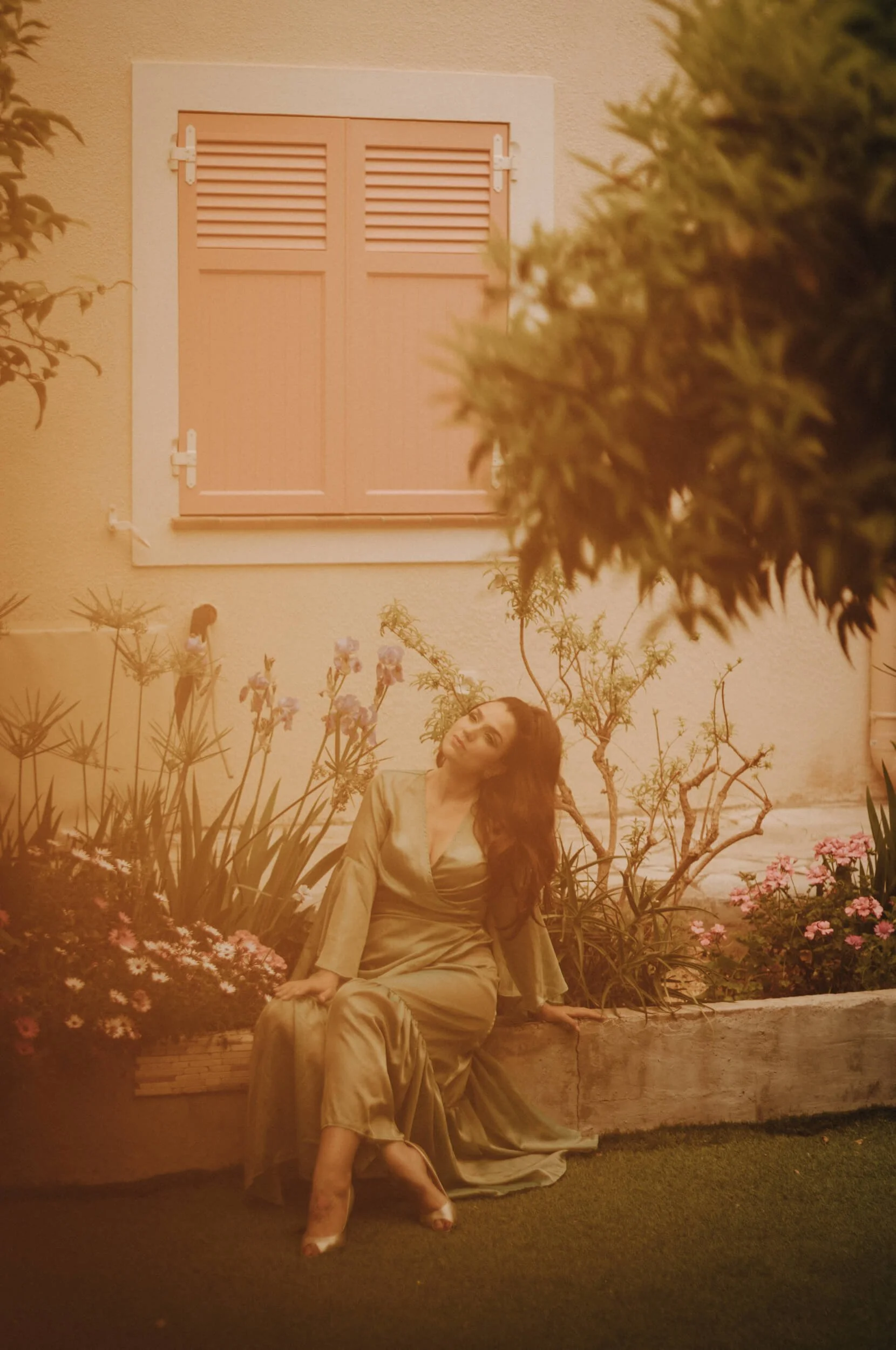
Wide open, there is a gentle haze that softens highlights and enhances the mood. The colours remain slightly muted, which fits perfectly within that aesthetic.
For this kind of late 60s and early 70s aesthetic, the 75mm SPII produces gorgeous tones. The files already feel remarkably refined with very little editing required.
Of course, I still have my own colour palette and I cannot resist doing a bit of fine tuning, but honestly, the files coming out of the Leica M11 already look beautiful with this lens mounted. Sometimes it almost feels as if the lens already applies its own subtle filter to the image.
The combination of softer contrast, pastel colours, smooth skin tones and gentle bokeh gives the images a romantic atmosphere that fits perfectly within the visual language I often search for.
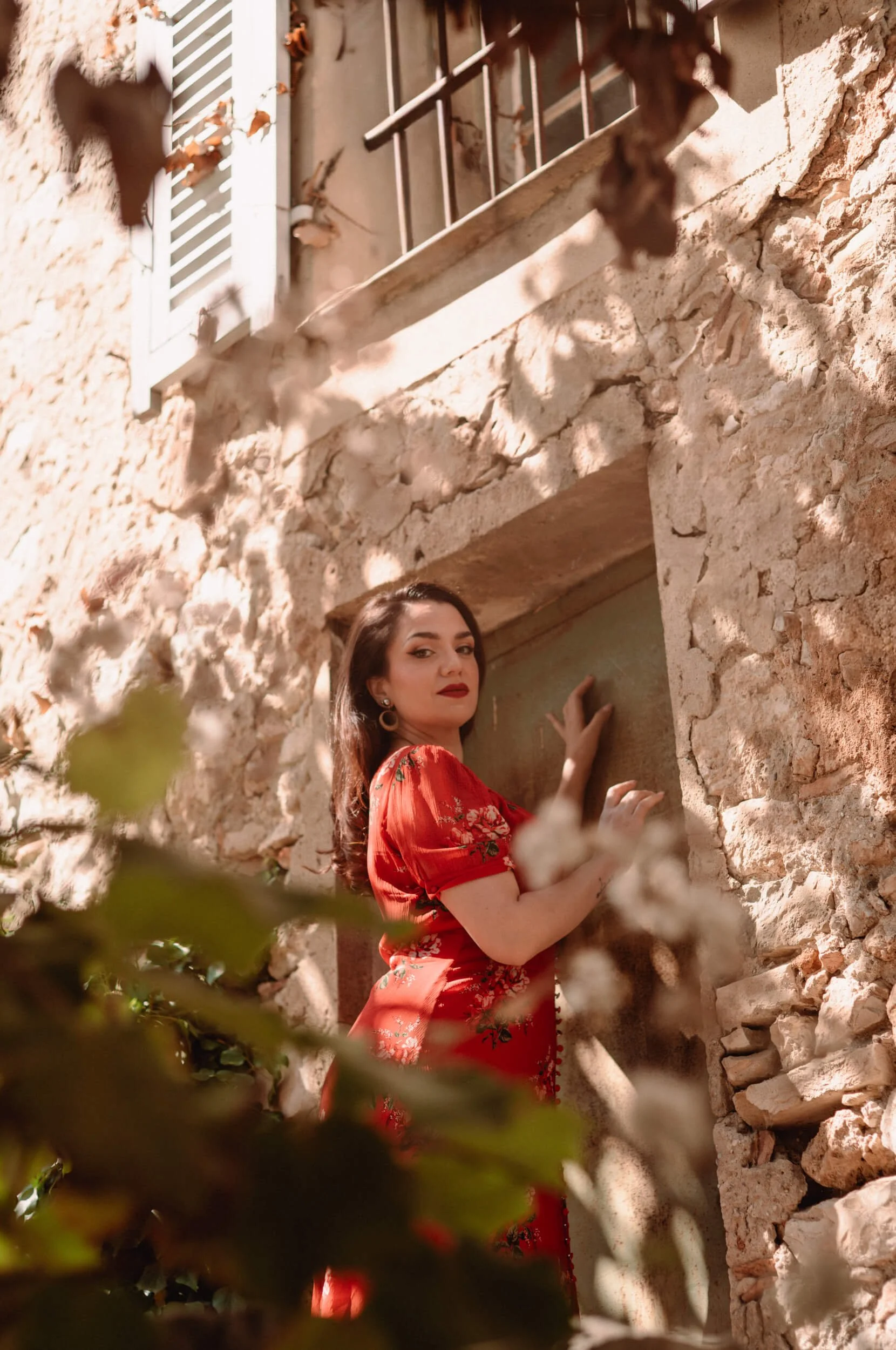
This lens feels almost made for places like the French Riviera. I can easily imagine bringing it through Italy as well. There is something about the way it renders sunlight, skin and faded colours that works beautifully in Mediterranean environments.
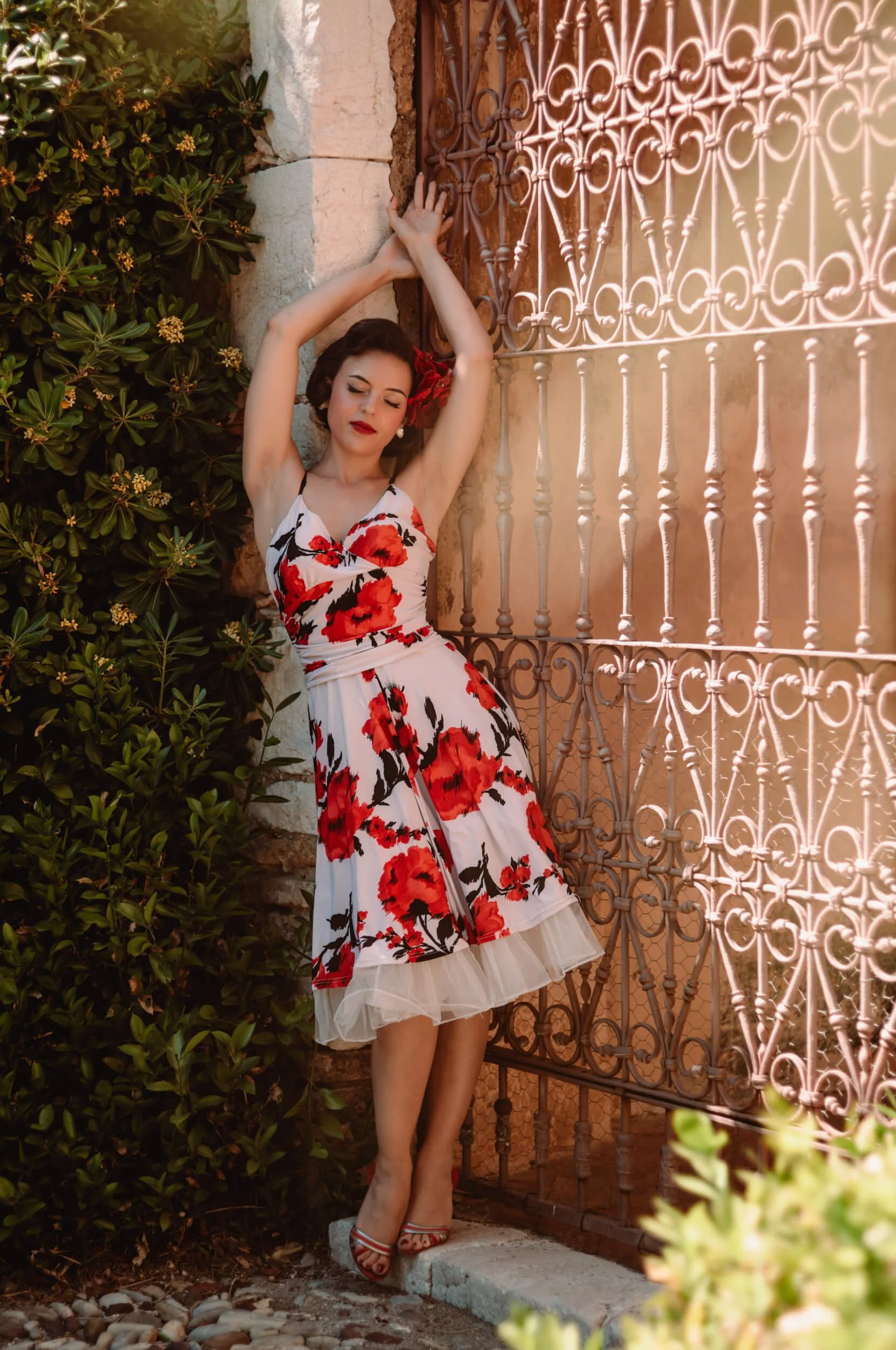
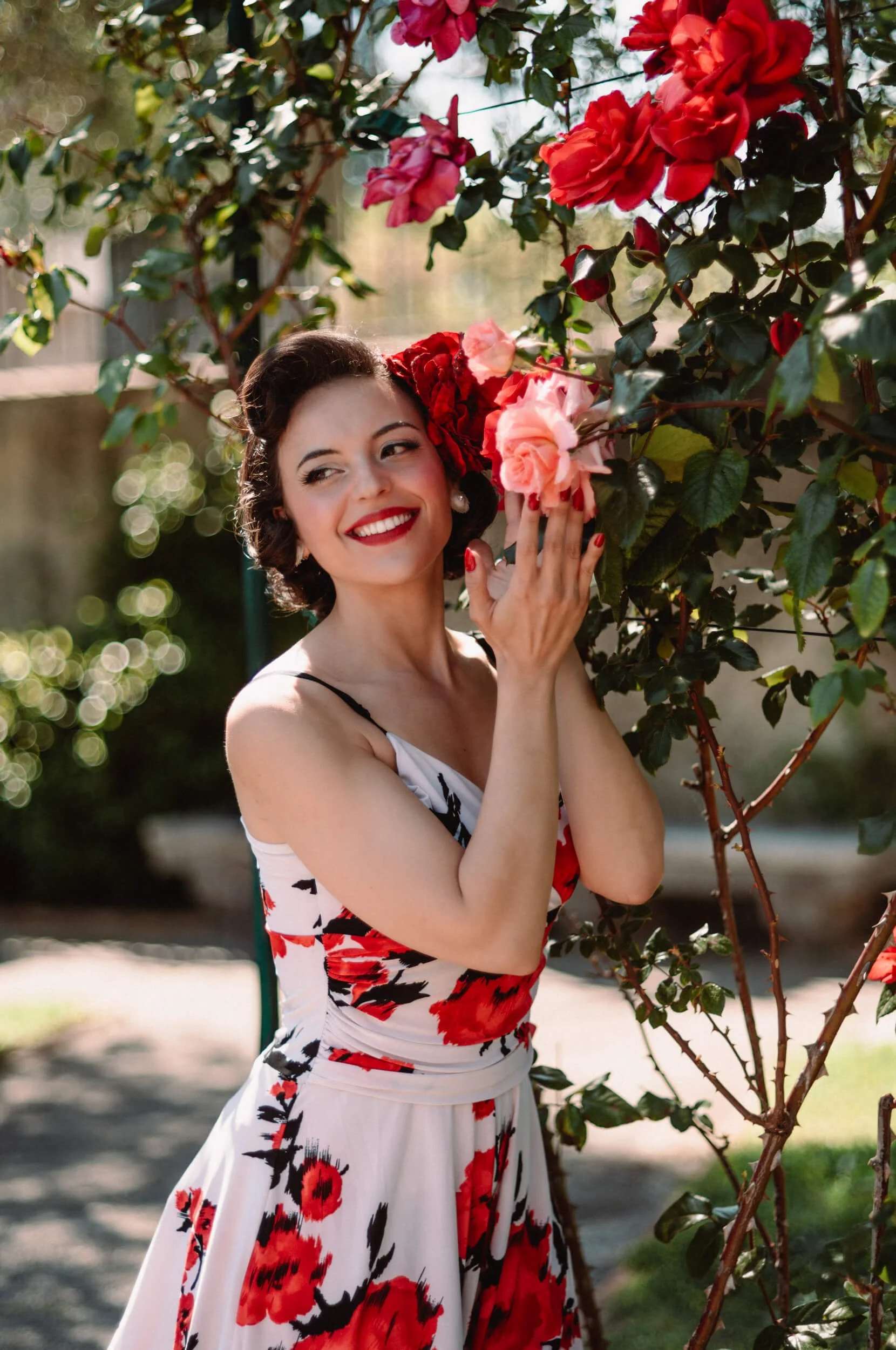
The bokeh never becomes overly distracting. Instead, it adds a soft dreamlike quality to the image, which worked especially well during our visit to the rose garden in Nice.
I also really love the greens coming from this lens. They are slightly muted and restrained, which gives the softer green tones of the French Riviera a very elegant rendering without becoming overly saturated or digital looking.
Building a cinematic look on location
Foreground diffusion and flare give the 75mm SPII a softer cinematic rendering reminiscent of vintage cinema lenses.
As always, I came prepared with a mood board before the shoot.
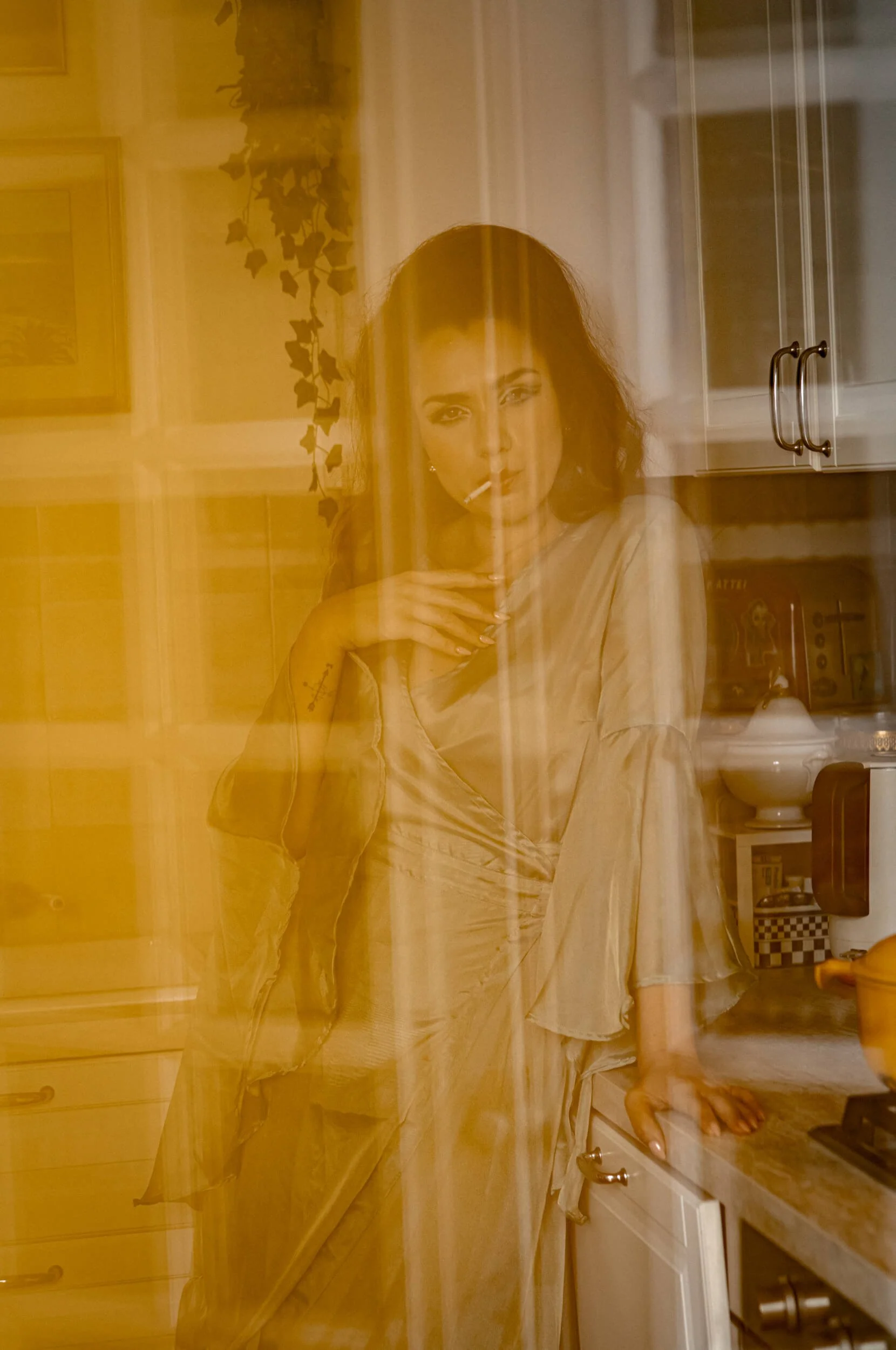
For this one, I was drawn to vintage references from the 70s. One image in particular stood out. It had that typical yellow-orange mist glow. Soft, diffused and slightly dreamlike. Something reminiscent of a David Hamilton-style look.
When I arrived, Flo immediately connected with that direction. We discussed how to translate that mood into the shoot.
The only issue was that I did not bring any diffusion filters. No mist filter, no soft filter. There was no smoke machine, and even something as simple as vaseline was not an option.
So I had to improvise.
The night before the shoot, I started thinking about what I had with me. That is when I remembered the soft plastic colour gels from the Harlowe Avant Max kit.
Instead of only using them on the light, I experimented by holding the gel directly in front of the lens, while using the LED as a hair light. Often positioned in a way that the light would hit the lens slightly.
That combination changed everything.
The gel introduced a soft diffusion, while the light added a warm glow. Together with the natural rendering of the lens, it created exactly the atmosphere we were aiming for.
Not perfectly controlled, but that was part of the charm.
It is a reminder that photography is not always about having the right tools.
Sometimes it is about using what you have and being willing to experiment.
A good photographer should always be ready for a bit of MacGyver thinking.
A moment that stayed with me
One of the moments I will not forget from this trip was a simple scene inside Flo’s house.
A card game between Flo and Bunny Letizia. Vintage cards, a quiet setting, and that subtle tension that builds during a game like that.
A cinematic late-evening scene where the Light Lens Lab 75mm f/2 SPII balances atmosphere, separation and soft rendering on the Leica M11-D.
Most of my work is shot in portrait orientation, but this was one of those moments where it needed to be horizontal. I framed it wider and later cropped it to 16:9 to enhance that cinematic feel. The original wide version can be found at the top of this review.
This is where the 75mm really made sense.
The compression helped isolate the moment while keeping the relationship between both subjects. Flo leaning forward, focused, fully in the game. Letizia turning away slightly, that subtle gesture of losing.
I also travelled light, but I did bring one Harlowe Avant Max 80W LED with a yellow gel. That small addition created a moody atmosphere that pushed the image further into that 60s/70s feeling.
The expression of Flo winning, and Letizia turning away, creates a small story within a single frame.
This is what I enjoy about lenses like this.
Moments like that are exactly why I enjoy working with lenses that have personality. The rendering becomes part of the atmosphere rather than simply recording the scene.
Comparisons with Leica 75mm lenses
Compared to the 75mm Summilux, the Speed Panchro II is less contrasty and more cinematic in its rendering. The Summilux remains the more technically corrected lens, but the SPII introduces a softer atmosphere and gentler transitions that feel closer to vintage cinema optics.
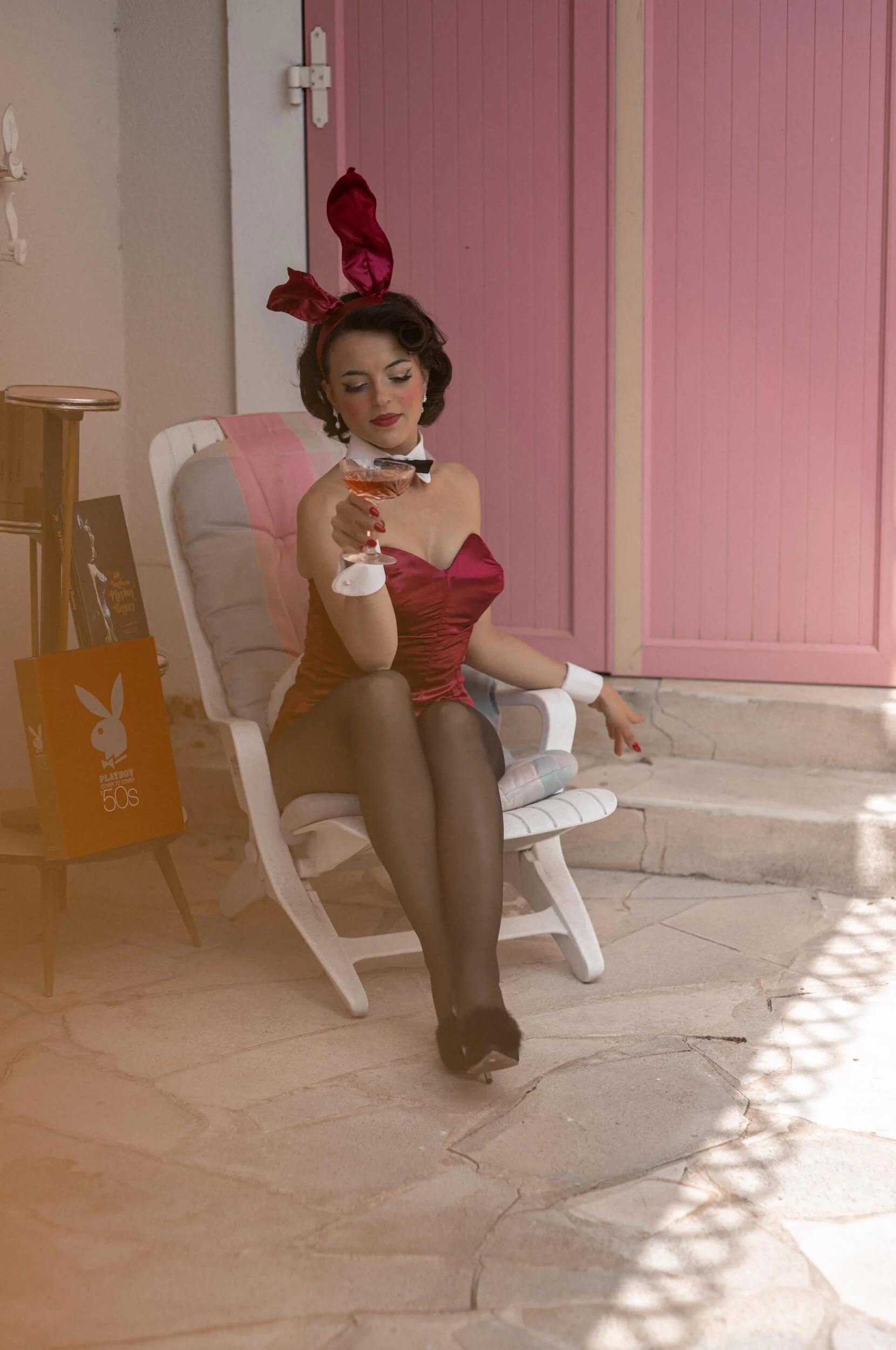
The Leica M11-D and 75mm SPII combination delivers both sharpness and atmosphere in more stylised editorial scenes.
Compared to the 75mm Noctilux, the SPII is simply easier and more enjoyable to live with. The Noctilux can produce stunning results, especially for dedicated portrait work, but it is also a large and demanding lens. The Speed Panchro II feels lighter, faster to focus and far more natural for everyday photography or travel. For relaxed creative shoots, I would honestly reach for this lens more often than the Noctilux.
The 75mm APO-Summicron sits at the opposite end of the spectrum. It is one of the sharpest Leica M lenses from the pre-50 APO Summicron generation, with very high contrast, exceptional correction and a more modern rendering style. Technically, the APO outperforms the SPII in almost every measurable way. But emotionally, they aim for completely different things. The APO-Summicron records a scene with incredible precision, while the Speed Panchro II interprets it with more atmosphere and softness. Personally, I often find the SPII rendering more engaging for portrait work, especially for female portraiture where the gentler transitions and lower contrast create a more flattering and timeless feel straight out of camera.
Compared to the Thambar 90, the Speed Panchro II remains much more controlled. The Thambar is pure softness and diffusion, almost impressionistic at times. The SPII sits somewhere in between vintage softness and modern usability. It keeps enough structure and sharpness to remain versatile, while still offering the atmospheric rendering that makes lenses like this enjoyable to shoot with.
Who should buy the Light Lens Lab 75mm f/2 SPII
Natural light and textured stone walls reveal the subtle vintage character of the 75mm SPII.
The Light Lens Lab Speed Panchro II 75mm f/2 is not a lens for photographers chasing technical perfection or APO-style correction. It is a lens for photographers who value rendering, atmosphere and emotion inside an image.
What makes this lens special is that it offers a very distinctive rendering for a 75mm focal length without becoming exaggerated or gimmicky. The colours are gorgeous straight out of camera, the skin tones are beautifully balanced and the bokeh has that subtle Sonnar-like character without becoming overly distracting.
Skin looks soft, luminous and flattering, but never artificially blurred or overly dreamy. Very often the files already look refined straight out of the Leica M11 with little need for heavy editing afterwards.
For this kind of late 60s and early 70s inspired aesthetic, the rendering feels almost perfect. The softer contrast, pastel palette and gentle transitions immediately create a cinematic atmosphere without requiring heavy post processing. During the shoots in Nice, especially inside the rose garden sequences, the lens produced exactly the kind of dreamy romantic atmosphere I was hoping for.
The bokeh never becomes nervous or overly distracting. Instead, it adds softness and depth in a very natural way. Combined with the muted greens and slightly restrained colours, it renders the French Riviera beautifully. There is something about the way this lens handles sunlight, skin and faded Mediterranean tones that feels incredibly elegant. I can already imagine how beautiful this lens would perform throughout Italy as well.
The lens adds something extra to the image. A certain glow. A slight built-in haze in backlit situations. Flare that feels atmospheric rather than destructive. Combined with the smoother transitions and the muted palette, it creates images that feel cinematic and romantic without overcooking the effect.
What impressed me most is the balance.
The lens clearly has character, but it still remains controlled. It never collapses into chaos like some vintage lenses can. There is enough sharpness and structure to keep portraits believable while still giving the image a softer, more emotional rendering.
This is one of those lenses that reminds me why I moved away from purely technical perfection in the first place. It is also why I would rather pick up a 75mm like this, with a bit less contrast, more atmosphere and a weight that makes it enjoyable to carry and actually use.
For photographers looking for something slightly longer than a traditional 50mm, this is a beautiful option. Especially for half body portraits, closer framing and more intimate storytelling moments, the focal length works wonderfully.
The SPII rewards photographers who enjoy building mood and atmosphere inside the frame rather than chasing technical perfection.
Final thoughts on the Light Lens Lab 75mm f/2 SPII
The Light Lens Lab Speed Panchro II 75mm f/2 is a lens that grows on you.
Within my own kit, it sits between the softness of the Thambar and the structure of modern Leica lenses.
Lenses like this remind me why I gradually moved away from purely technical perfection in the first place.
It is also why I would rather pick up a 75mm like this, with a bit less contrast, a bit more character and a weight that makes it easy to carry and actually use. It feels like a lens you bring because you want to shoot, not because you feel you should.
It is one of those lenses that makes you want to keep shooting.
Rich colours and smooth background rendering give the rose garden portraits a timeless cinematic feel.
Skin tones look very pleasing. There is a softness to the skin, but it never becomes too soft or artificial. It stays balanced.
And that is really where this lens sits.
What makes the SPII so enjoyable is precisely that balance between control and character.
You don’t always need to put a Leica lens on your Leica camera. Light Lens Lab opens up a different way of working. More accessible, but still very well built, with a strong character and a clear identity.
It is not a lens you buy because you need it, but one you keep because you enjoy using it.
Gallery – Light Lens Lab 75mm f/2 SPII






Interested in the 75mm f/2 SPII?
Light Lens Lab 75mm f/2 SPII showing the vintage-inspired construction, focus tab and classic optical design.
If you are curious to try the Light Lens Lab 75mm f/2 SPII yourself, Light Lens Lab offers a few ways to get a small discount and at the same time support my work:
👉 You can use my referral link to get 5% off your purchase:
Or, if you prefer, you can use this coupon code at checkout to get 5% off:
The discount code is MILAN
Using either helps support my projects and future reviews. Thank you.
Thank You
Thank you David from Light Lens Lab for the conversations and insights.
Florence Agrati for the modelling, the creative input and locations.
Letizia for modelling and bringing the Riviera atmosphere to life.
Frances Folies for makeup.
About Milan Swolfs
Milan Swolfs is a fine art portrait photographer from Antwerp, Belgium, renowned for his distinctive blend of burlesque and vintage aesthetics. His work channels the timeless Hollywood glamour of the 1920s and 1930s, capturing both men and women in bold yet elegantly refined portraits.
Beginning his career photographing Europe’s largest burlesque events, Milan later transitioned into fine art photography. As an ambassador for Leica Camera and Harlowe Creators, his work has been featured in LFI (Leica Fotografie International), Medium Format Magazine, and Viewfinder. In 2022, he debuted his solo exhibition, Light of Seduction, at the Leica Store in Porto. Most recently, from late 2024 to early 2025, his latest exhibition, Echoes of Elegance: A Timeless Journey, was showcased at the Leica Store Beaumarchais in Paris.
Milan’s portraits celebrate individuality and classic beauty, reviving the charm and allure of a bygone era.
